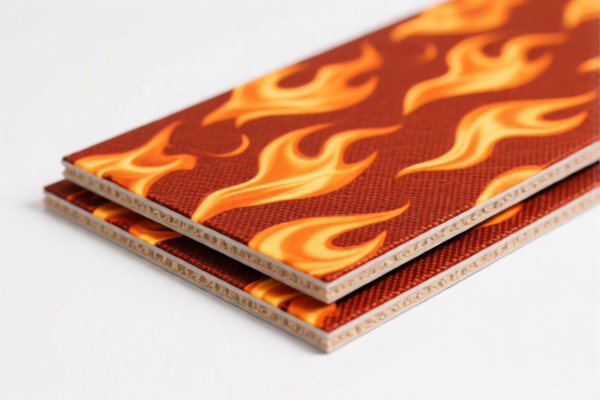
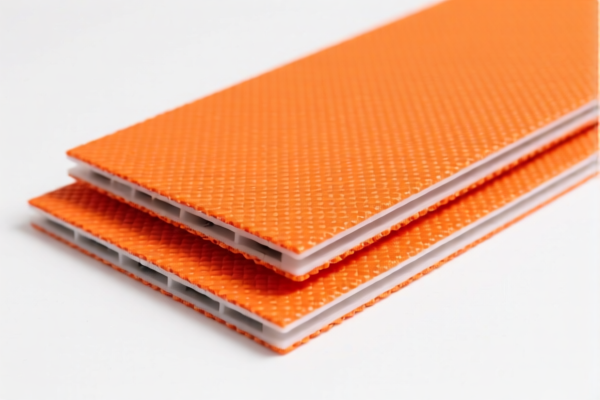
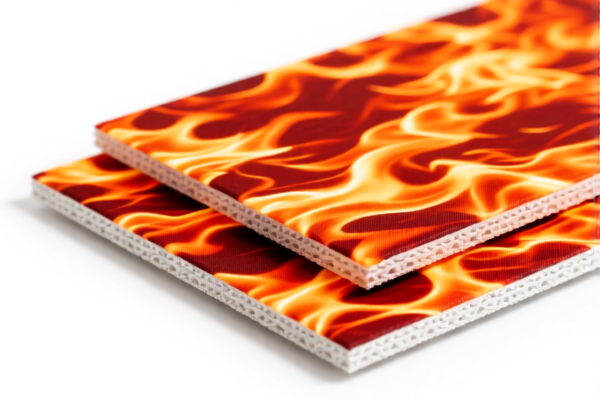
pvc纺织品涂层阻燃板
CN → US| HS Code | Tariff Rate | Origin | Destination | Doc |
|---|---|---|---|---|
| 5903102010 | 35.0% | CN | US | Official Doc |
| 3921121500 | 41.5% | CN | US | Official Doc |
| 6307909891 | 24.5% | CN | US | Official Doc |
| 3921121100 | 39.2% | CN | US | Official Doc |
| 5903102090 | 35.0% | CN | US | Official Doc |
Product Images
AI Analysis
Here is a professional, wiki-style guide tailored to your input "PVC Textile Coating Flame Retardant Board" (PVC 纺织品涂层阻燃板), based strictly on the provided data.
🛡️ PVC Textile Coating Flame Retardant Board
(阻燃防污PVC涂层纺织品 / PVC-Coated Flame Retardant Textile)
🌐 HS Code Master Guide & Customs Strategy | 2026 Tariff Breakdown | Professional Classification Report
📌 I. Product Definition & Classification Logic: What is this "Board"?
In international trade, "PVC Textile Coating Flame Retardant Board" is a composite material, not a rigid solid board. It consists of: 1. Base Material: Textile fabric (Woven/Knitted). 2. Coating: Polyvinyl Chloride (PVC). 3. Function: Flame Retardant & Stain Resistant (Functional properties).
⚠️ Critical Classification Conflict:
This product sits on the boundary between Chapter 39 (Plastics) and Chapter 59 (Textiles). - If viewed primarily as Plastic with textile reinforcement → HS 3921. - If viewed primarily as Textile impregnated/coated with plastic → HS 5903. - If viewed as a Finished Textile Article (e.g., tarpaulins, bags) → HS 6307.
📦 II. HS Code Classification Analysis (Based on Provided Data)
The following table details the 5 matching HS Codes derived from your input data, their logic, and the resulting tax burden.
| HS Code | Classification Logic & Summary | Key Attributes | Total Tax Rate |
|---|---|---|---|
| 5903.10.20.10 | ✅ Match Success: Fits "Textiles impregnated/coated with PVC". Logic: "PVC" (Polymer) + "Textile" (Fabric). Functional claims (Flame Retardant) do not conflict with the base definition. |
Primary: Textile-based coating | 35.0% |
| 3921.12.15.00 | ✅ Match Success: Fits "Plastic sheets/films with textile reinforcement". Logic: PVC polymer + Textile material combined + Sheet/Film form. |
Primary: Plastic-based composite | 41.5% |
| 6307.90.98.91 | ⚠️ Potential Match: Fits "Other made-up textile articles". Logic: Classified as a finished textile product. Excluded items (masks/flags) do not apply. Material matches "Other". |
Primary: Finished Textile Product | 24.5% |
| 3921.12.11.00 | ✅ Match Success: Fits "Textile + Plastic Composite". Logic: PVC material + Coated textile form. Matches basic attributes of textile/plastic composites. |
Primary: Composite Material | 39.2% |
| 5903.10.20.90 | ✅ Match Success: The "Other/General" PVC Textile category. Logic: "PVC" (Material) + "Coated" (Process) + "Textiles" (Base). No conflict found. |
Primary: Textile-based (General) | 35.0% |
🔍 Data Insight:
The Total Tax ranges from 24.5% to 41.5%. The difference depends entirely on whether Customs views the item as a Plastic Composite (39xx) or a Textile (59xx/63xx).
💰 III. 2026 Tariff & Tax Structure Breakdown
✅ Origin: China (CN)
✅ Market: United States (US)
✅ Applicable Regimes: Basic Duty + Section 301 (Additional) + Section 122 (New)
🎯 1. Textile-Based Classifications (HS 5903.10.20)
(Codes: 5903.10.20.10 & 5903.10.20.90)
Total Tax: 35.0%
| Tax Component | Rate | Description |
|---|---|---|
| Basic Duty (MFN) | 0.0% | No standard duty for coated textiles under these subheadings. |
| Section 301 (Additional) | 25.0% | USITC "Additional Duty" for China-origin goods. |
| Section 122 (New) | 10.0% | Specific tariff under Section 122 (China-related policy). |
| 🚀 Grand Total | 35.0% | Formula: CIF × 35% |
📌 Note: This is the lowest cost bracket if you can prove the textile nature is dominant (Chapter 59).
🎯 2. Plastic-Based Classifications (HS 3921.12)
(Codes: 3921.12.15.00 & 3921.12.11.00)
Total Tax: 39.2% – 41.5%
| Tax Component | Rate | Description |
|---|---|---|
| Basic Duty (MFN) | 4.2% – 6.5% | Varies by specific subheading (Plastic Sheets). |
| Section 301 (Additional) | 25.0% | Standard 301 tariff for plastics. |
| Section 122 (New) | 10.0% | Specific tariff under Section 122. |
| 🚀 Grand Total | 39.2% – 41.5% | Formula: CIF × (4.2/6.5 + 25 + 10)% |
📌 Note: Higher tax because the "Plastic" component triggers a basic duty that Textile codes do not have.
🎯 3. Finished Textile Article (HS 6307.90)
(Code: 6307.90.98.91)
Total Tax: 24.5% (The "Goldilocks" Zone)
| Tax Component | Rate | Description |
|---|---|---|
| Basic Duty (MFN) | 7.0% | Standard duty for made-up textile articles. |
| Section 301 (Additional) | 7.5% | Lower Section 301 rate compared to raw materials. |
| Section 122 (New) | 10.0% | Applies to all China-origin goods. |
| 🚀 Grand Total | 24.5% | Formula: CIF × 24.5% |
📌 Critical Strategy: This is the LOWEST TAX option. However, it requires proving the product is a "Finished Article" (e.g., a specific tarpaulin, cover, or assembly) rather than just raw "Coated Fabric."
🛠️ IV. Customs Clearance Strategy & Recommendations
✅ 1. Strategic Classification (The "Tax Arbitrage")
| Goal | Recommended HS Code | Why? |
|---|---|---|
| Minimize Tax | 6307.90.98.91 (24.5%) | If the "Board" is a finished product (e.g., a specific curtain, cover, or bag), this yields the lowest total tax. |
| Material Compliance | 5903.10.20.10 (35.0%) | If selling as raw/coated fabric, this is the safest "Textile" classification with 0% Base Duty. |
| Avoid | 3921.12.15.00 (41.5%) | Highest Risk. Unless the product is strictly a plastic sheet with fabric reinforcement (not flexible textile), avoid this high tax bracket. |
✅ 2. Documentation Checklist (Mandatory)
To justify 6307 (Finished Article) or 5903 (Textile) over 3921 (Plastic):
| Document | Requirement | Purpose |
|---|---|---|
| 📄 Technical Data Sheet (TDS) | Must highlight "Textile Base" > "Plastic Weight %" | Proves textile is the essential character (Chapter 59/63 rule). |
| 📄 Composition Analysis | Breakdown: e.g., "50% Cotton/Poly + 50% PVC Coating" | Prevents classification as "Pure Plastic" (Chapter 39). |
| 📄 Functional Declaration | Explicitly state: "Flame Retardant Finish" | Confirms no conflict with classification definitions. |
| 📄 Product Photos | Show Flexibility (Rolling) vs. Rigidity | If it rolls, it's Textile (5903/6307). If it's rigid, it risks 3921. |
| 📄 End-Use Description | "For [Tarpaulin/Bag/Cover]" not just "PVC Board" | Helps justify 6307 (Made-up article) over raw material. |
✅ 3. Practical Filing Tips (Pro-Tips)
🔥 Rule of Thumb: "The stronger the textile bond, the lower the tax."
- Avoid the word "Board" (硬性板材) in English Declarations:
- ❌ Bad: "PVC Coated Flame Retardant Board" (Suggests plastic/rigid).
- ✅ Good: "PVC Coated Flame Retardant Textile Fabric" or "PVC Coated Flame Retardant Tarpaulin".
- If Rigid (Truly a Board):
- If the product is actually a rigid composite board (cannot be rolled), you must use 3921.12.
- Strategy: Prepare for 39.2% - 41.5% tax immediately. Do not try to force it into Textile codes if it is rigid.
- If Flexible (Rolls up):
- Strongly argue for 5903.10 or 6307.90.
- Benefit: You save 10% to 17% in total duties compared to plastic codes.
✅ 4. Section 122 & 301 Warning
| Clause | Impact |
|---|---|
| Section 301 (25%) | Applies to ALL 5 HS Codes listed in your data. Cannot be avoided via classification change alone. |
| Section 122 (10%) | Applies to ALL 5 HS Codes. New policy targeting specific China imports. |
| Mitigation | The only way to reduce tax is to classify under 6307.90.98.91, which lowers the Basic and 301 components slightly (Total 24.5% vs 41.5%). |
🌍 V. Global Market Comparison (Hypothetical 2026)
| Market | Best Fit HS Code | Est. Total Tax | Risk Level |
|---|---|---|---|
| 🇺🇸 USA | 6307.90.98.91 (24.5%) | 24.5% | 🟡 Medium (Requires "Finished" proof) |
| 🇺🇸 USA | 5903.10.20.10 (35.0%) | 35.0% | 🟢 Low (Safe if flexible) |
| 🇺🇸 USA | 3921.12.15.00 (41.5%) | 41.5% | 🔴 High (Highest cost) |
| 🇪🇺 EU | 5903.10 | ~0% | 🟢 Very Low (No 301/122) |
| 🇯🇵 Japan | 5903.10 | ~0% | 🟢 Very Low (No 301/122) |
📌 VI. Conclusion: Action Plan
- Verify Physical State: Is your product flexible (rolls) or rigid (board)?
- Flexible → Target 6307.90.98.91 (24.5%) or 5903.10.20.10 (35.0%).
- Rigid → Accept 3921.12.11.00/15.00 (39.2% - 41.5%).
- Update Product Names: Change "Board" to "Fabric", "Tarpaulin", or "Cover" in your commercial invoice if the item is flexible.
- Prepare Evidence: Have the Composition Report ready to prove the textile is the primary material (for 5903/6307 claims).
- Budget for Tariffs:
- Best Case: 24.5% (Finished Textile)
- Worst Case: 41.5% (Plastic Composite)
🚀 Final Advice:
"If it bends, it's textile. If it breaks, it's plastic."
Fight for the 6307 classification to save ~17% in duties compared to the plastic route.
✨ Professional Customs Broker Note:
Classification disputes are common for "PVC Textile" products. Always file an Advance Ruling (if possible) to secure the 24.5% or 35.0% rate before shipping.
Customer Reviews
About HS Code Classification
The Harmonized System (HS) is an internationally standardized nomenclature developed by the World Customs Organization (WCO) to classify traded products. Over 200 countries use the HS system as the basis for customs tariffs, trade statistics, and import/export regulations.
Each HS code follows a hierarchical structure:
- Chapter (2 digits) — Broad category of goods (e.g., Chapter 84: Machinery and Mechanical Appliances)
- Heading (4 digits) — More specific grouping within the chapter
- Subheading (6 digits) — Internationally standardized breakdown, used by all WCO member countries
- National subdivisions (8-10 digits) — Country-specific extensions for further classification, such as US HTSUS 10-digit codes
Correct HS code classification is essential for smooth customs clearance, accurate duty payment, and compliance with trade regulations. Misclassification can lead to customs delays, overpayment of duties, or penalties.
When importing from CN to US, the applicable tariff rates may include:
- Most-Favored-Nation (MFN) rate — The standard duty rate applied to WTO members
- General rate — Applied to countries without trade agreements
- Trade remedy duties — Additional tariffs such as Section 301 (anti-dumping), Section 232 (national security), or countervailing duties
The information provided on this page is for reference purposes only. For official classification, please consult with your local customs authority or a licensed customs broker.