rabbit ornament
CN → US| HS Code | Tariff Rate | Origin | Destination | Doc |
|---|---|---|---|---|
| 3926400090 | 15.3% | CN | US | Official Doc |
| 3926400010 | 15.3% | CN | US | Official Doc |
| 6913105000 | 17.5% | CN | US | Official Doc |
| 6913905000 | 23.5% | CN | US | Official Doc |
| 4420190000 | 13.2% | CN | US | Official Doc |
| 4420908000 | 38.2% | CN | US | Official Doc |
Product Images
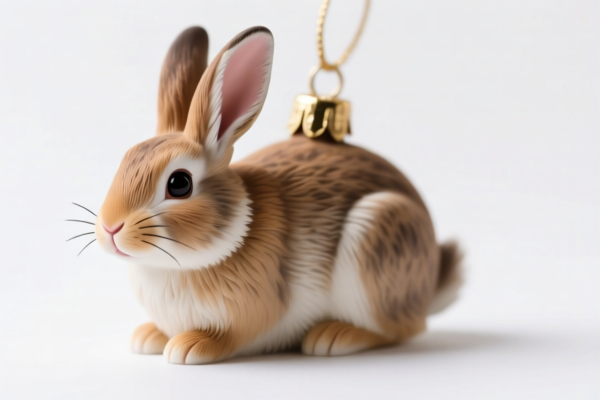
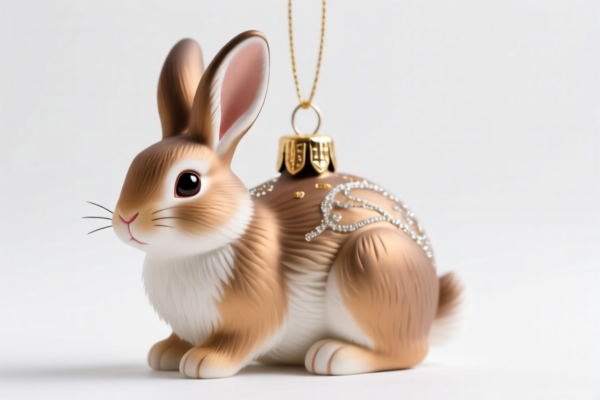
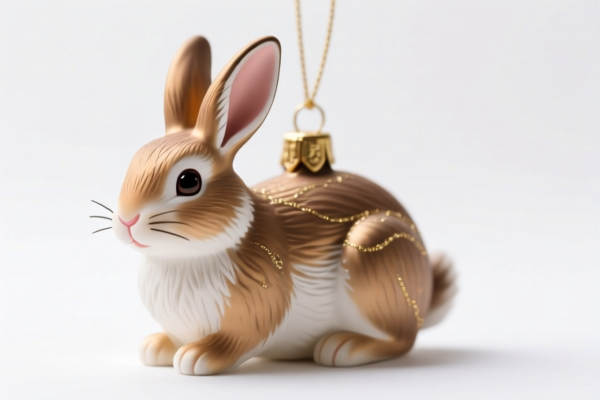
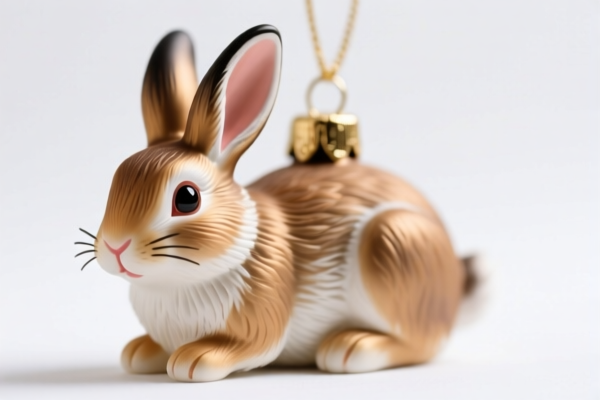
AI Analysis
🐇 Rabbit Ornaments (Statuettes & Decorative Figurines)
🌐 HS Code Reference & Customs Clearance Guide | 2026 Tariff Structure Analysis | Professional Strategy for US Importers
📌 I. Product Definition: What Exactly is a "Rabbit Ornament"?
Rabbit ornaments are decorative items shaped like rabbits, typically used for home decor, garden decoration, or gift-giving. In international trade, they are classified not by the animal they depict, but by the material they are made from. The material dictates the HS Code and the applicable duty rate.
Based on the provided data, rabbit ornaments generally fall into four main material categories: 1. Porcelain/China (Ceramic) 2. Other Ceramics (Stone ware, earthenware, etc.) 3. Wood 4. Plastics
⚠️ Critical Distinction:
- If the rabbit is made of high-fired white ceramic (porcelain), it falls under 6913.10.
- If it is made of other ceramics (e.g., terracotta, stoneware), it falls under 6913.90.
- If it is wooden, it falls under 4420.19 or 4420.90.
- If it is plastic, it falls under 3926.40.
📦 II. HS Code Classification Details (2026 Authoritative Cross-Reference)
| HS Code | Material Category | Product Description | Typical Use Case |
|---|---|---|---|
6913.10.50.00 |
Porcelain or China | Statuettes and other ornamental ceramic articles: Of porcelain or china: Other | High-quality, white, translucent ceramic rabbits; fine china figurines. |
6913.90.50.00 |
Other Ceramic | Statuettes and other ornamental ceramic articles: Other: Other: Other | Terracotta, stoneware, or earthenware rabbits; painted ceramic figures not classified as porcelain. |
4420.19.00.00 |
Wood (Statuettes) | Statuettes and other ornaments: Other | Carved wooden rabbit figurines, wooden decorative pieces. |
4420.90.80.00 |
Wood (Other) | Other: Other: Other | Wooden ornamental articles not specifically described as "statuettes" (e.g., wooden plaques, complex inlaid wood pieces). |
3926.40.00.90 |
Plastic (Other) | Statuettes and other ornamental articles: Other | Plastic rabbit figurines, resin statues (if classified as plastic), decorative plastic items. |
3926.40.00.10 |
Plastic (Bows/Decor) | Statuettes and other ornamental articles: Bows and similar products for decorative purposes | Plastic rabbit-themed bows, gift packaging decorations, ribbon-like plastic ornaments. |
🔍 Key Clarification:
- Porcelain vs. Other Ceramic: The distinction lies in the manufacturing process and material composition. Porcelain is finer, whiter, and more translucent. If unsure, assume "Other Ceramic" (6913.90) unless confirmed as fine porcelain.
- Wood Statuettes vs. Other Wood: If the item is distinctly shaped like a rabbit (a statuette), use4420.19. If it’s a wooden plaque with a rabbit carved on it, it might fall under4420.90.
- Plastic Items: Most plastic figurines go to3926.40.00.90. Only items specifically designed as "bows" or "decorative ribbons" use.10.
💰 III. 2026 Latest Tariff Rate Details (Section 301 & IEEPA Surcharges)
✅ Applicable Country: United States (US)
✅ Country of Origin: China (CN)
✅ Effective Time: Current rates apply (including Section 301 surcharges)
🎯 1. 6913.10.50.00 — Porcelain Rabbit Ornaments
| Item | Detail |
|---|---|
| Base Tariff | 0.0% |
| Section 301 Surcharge | 7.5% |
| Total Tariff | 7.5% |
| Tax Calculation | CIF Value × 7.5% |
| De Minimis Eligibility | ❌ No (Section 301 goods are generally excluded from de minimis exemption under current enforcement trends) |
| Legal Basis | Section 301 (USITC Footnote) |
📌 Explanation:
- Porcelain figurines have a 0% base duty, but a 7.5% surcharge applies due to Section 301 tariffs on Chinese ceramics.
- This is a moderate tariff burden compared to other materials.
🎯 2. 6913.90.50.00 — Other Ceramic Rabbit Ornaments
| Item | Detail |
|---|---|
| Base Tariff | 6.0% |
| Section 301 Surcharge | 7.5% |
| Total Tariff | 13.5% |
| Tax Calculation | CIF Value × 13.5% |
| De Minimis Eligibility | ❌ No |
| Legal Basis | Section 301 (USITC Footnote) |
📌 Explanation:
- "Other ceramics" carry a 6% base duty plus a 7.5% surcharge.
- Total tax is 13.5%, which is significantly higher than porcelain.
- Tip: If your product can be classified as "porcelain," it saves 6% in base duties.
🎯 3. 4420.19.00.00 — Wooden Rabbit Statuettes
| Item | Detail |
|---|---|
| Base Tariff | 3.2% |
| Section 301 Surcharge | 0.0% |
| Total Tariff | 3.2% |
| Tax Calculation | CIF Value × 3.2% |
| De Minimis Eligibility | ❌ No (Check current IEEPA rules; generally, Section 301 wood products are not exempt) |
| Legal Basis | Base rate only (No surcharge) |
📌 Explanation:
- Wooden statuettes have the lowest total tax rate (3.2%) because they are not subject to the 7.5% Section 301 surcharge (based on the provided data).
- This makes wooden rabbits the most cost-effective option for US importation among the listed materials.
🎯 4. 4420.90.80.00 — Other Wooden Ornamental Articles
| Item | Detail |
|---|---|
| Base Tariff | 3.2% |
| Section 301 Surcharge | 25.0% |
| Total Tariff | 28.2% |
| Tax Calculation | CIF Value × 28.2% |
| De Minimis Eligibility | ❌ No |
| Legal Basis | Section 301 (Higher tier) |
📌 Explanation:
- If the wooden item is not strictly a "statuette" but falls under "Other," it incurs a 25% surcharge.
- Total tax is 28.2%, which is very high.
- Crucial: Ensure your wooden rabbit is described as a "statuette" or "ornament" fitting4420.19to avoid this 25% penalty.
🎯 5. 3926.40.00.90 — Plastic Rabbit Ornaments
| Item | Detail |
|---|---|
| Base Tariff | 5.3% |
| Section 301 Surcharge | 0.0% |
| Total Tariff | 5.3% |
| Tax Calculation | CIF Value × 5.3% |
| De Minimis Eligibility | ❌ No |
| Legal Basis | Base rate only (No surcharge) |
📌 Explanation:
- Plastic ornaments have a 5.3% total tax and no Section 301 surcharge.
- This is a competitive rate, lower than ceramics but higher than wooden statuettes.
🎯 6. 3926.40.00.10 — Plastic Bows/Decorative Items
| Item | Detail |
|---|---|
| Base Tariff | 5.3% |
| Section 301 Surcharge | 0.0% |
| Total Tariff | 5.3% |
| Tax Calculation | CIF Value × 5.3% |
| De Minimis Eligibility | ❌ No |
| Legal Basis | Base rate only (No surcharge) |
📌 Explanation:
- If your product is a "bow" or "ribbon-like" plastic decoration (even if rabbit-shaped), it falls here.
- Same tax rate as general plastic ornaments (5.3%).
🛠️ IV. Customs Clearance Practical Advice (Pitfall Avoidance Guide)
✅ 1. Material Declaration is Key
| Material | Correct HS Code | Wrong HS Code | Consequence |
|---|---|---|---|
| Porcelain | 6913.10.50.00 |
6913.90.50.00 |
Overpayment of 6% base duty |
| Other Ceramic | 6913.90.50.00 |
6913.10.50.00 |
Risk of misclassification, potential penalty if found to be "other ceramic" |
| Wood (Statuette) | 4420.19.00.00 |
4420.90.80.00 |
Overpayment of 25% surcharge! ($28.2% vs 3.2%) |
| Plastic | 3926.40.00.90 |
3926.40.00.10 |
Minor description error, but same tax rate (5.3%) |
📌 Golden Rule:
- "Wooden Rabbit Statuette" →4420.19.00.00(3.2%)
- "Wooden Decorative Plaque with Rabbit" →4420.90.80.00(28.2%)
- The difference is 25%! Be precise in your product description.
✅ 2. Documentation Checklist
| Document | Required | Notes |
|---|---|---|
| Commercial Invoice | ✔️ | Must state "Rabbit Ornament" and specify material (e.g., "Wooden," "Porcelain," "Plastic") |
| Product Description | ✔️ | Detailed description: "Hand-painted wooden rabbit figurine, height 10cm, decorative purpose" |
| Material Certification | ✔️ | For wood: Fumigation certificate or ISPM 15 marking if required |
| Photos | ✔️ | Clear images showing the item’s shape and material |
| HS Code Confirmation | ✔️ | If possible, obtain a Binding Ruling from US CBP for complex cases |
✅ 3. Special Considerations
- Wooden Products: Ensure the wood is properly fumigated or heat-treated if required by USDA APHIS. Mislabeling wood can lead to detention.
- Ceramics: If the item is fragile, use appropriate packaging and declare "Fragile" to avoid handling damage during customs inspection.
- Plastic Items: If the item contains lead paint or non-compliant materials, it may fail FDA/CPSC regulations. Ensure compliance with safety standards.
🌍 V. Global Market Comparison (2026)
| Country/Region | Recommended HS Code | Estimated Duty (China Origin) | Notes |
|---|---|---|---|
| 🇺🇸 United States | Varies by Material | 3.2% – 28.2% | Section 301 surcharges apply to most categories |
| 🇨🇳 China | Varies | 5% – 10% | Lower base duties, no Section 301 |
| 🇪🇺 European Union | Varies | 4.5% – 7.5% | No Section 301; standard EU tariffs apply |
| 🇬🇧 United Kingdom | Varies | 4.5% – 7.5% | Post-Brexit tariffs; no US Section 301 |
| 🇦🇺 Australia | Varies | 5% | No Section 301; free trade agreements may apply |
📌 Conclusion:
- US Importers face the highest tariff burden due to Section 301 surcharges.
- Wooden statuettes (4420.19.00.00) are the most tax-efficient option at 3.2%.
- Plastic items (3926.40.00.90) are competitive at 5.3%.
- Avoid4420.90.80.00if possible, as the 28.2% rate is prohibitive.
📌 VI. Common Mistakes & Pitfalls (Blood-Teach Lessons)
❌ Mistake 1: Labeling a wooden rabbit as "Other Wooden Article" → 4420.90.80.00
👉 Result: Pays 28.2% instead of 3.2%. Loss of 25% in profit.
❌ Mistake 2: Assuming all ceramics are porcelain → 6913.10.50.00
👉 Result: If it’s actually stoneware, customs may reclassify it to 6913.90.50.00 (13.5%) and assess back duties + penalties.
❌ Mistake 3: Ignoring Section 301 surcharges
👉 Result: Quoting prices without including 7.5%–25% surcharges leads to unexpected costs.
❌ Mistake 4: Using vague descriptions like "Decorative Item"
👉 Result: Customs may assign a higher tariff rate or delay clearance for inspection.
✅ Correct Practice:
"Wooden Rabbit Statuette, Hand-Painted, 10cm Height, Decorative Use" →
4420.19.00.00(3.2%)
"Porcelain Rabbit Figurine, White, 8cm, Decorative" →6913.10.50.00(7.5%)
🎯 VII. Conclusion: Smart Classification Saves Money!
🎯 Remember This Rule:
🔹 "Wood Statuette: 3.2% | Plastic: 5.3% | Porcelain: 7.5% | Other Ceramic: 13.5% | Other Wood: 28.2%"
🔹 "Material Matters, Description is Key, Section 301 is Real!"
📌 Pro Tip:
If you are importing large volumes, consider pre-classifying your products with a licensed customs broker to ensure the correct HS Code. A small error in classification can cost thousands of dollars in unexpected duties.
📣 Next Steps:
📞 Contact a Customs Broker: Verify the exact HS Code based on your product’s material and design.
📋 Prepare Documentation: Ensure invoices clearly state the material and purpose.
🚀 Optimize Your Supply Chain: Consider sourcing from non-China origins if Section 301 tariffs become prohibitive.
✨ Professional Customs Clearance Starts with Accurate Classification!
💼 Every Percent Saved is Profit Gained!
Customer Reviews
About HS Code Classification
The Harmonized System (HS) is an internationally standardized nomenclature developed by the World Customs Organization (WCO) to classify traded products. Over 200 countries use the HS system as the basis for customs tariffs, trade statistics, and import/export regulations.
Each HS code follows a hierarchical structure:
- Chapter (2 digits) — Broad category of goods (e.g., Chapter 84: Machinery and Mechanical Appliances)
- Heading (4 digits) — More specific grouping within the chapter
- Subheading (6 digits) — Internationally standardized breakdown, used by all WCO member countries
- National subdivisions (8-10 digits) — Country-specific extensions for further classification, such as US HTSUS 10-digit codes
Correct HS code classification is essential for smooth customs clearance, accurate duty payment, and compliance with trade regulations. Misclassification can lead to customs delays, overpayment of duties, or penalties.
When importing from CN to US, the applicable tariff rates may include:
- Most-Favored-Nation (MFN) rate — The standard duty rate applied to WTO members
- General rate — Applied to countries without trade agreements
- Trade remedy duties — Additional tariffs such as Section 301 (anti-dumping), Section 232 (national security), or countervailing duties
The information provided on this page is for reference purposes only. For official classification, please consult with your local customs authority or a licensed customs broker.