radar apparatus and navigational apparatus
CN → US| HS Code | Tariff Rate | Origin | Destination | Doc |
|---|---|---|---|---|
| 9014208040 | 35.0% | CN | US | Official Doc |
| 9014208080 | 35.0% | CN | US | Official Doc |
| 8526910040 | 35.0% | CN | US | Official Doc |
| 8526910020 | 35.0% | CN | US | Official Doc |
Product Images
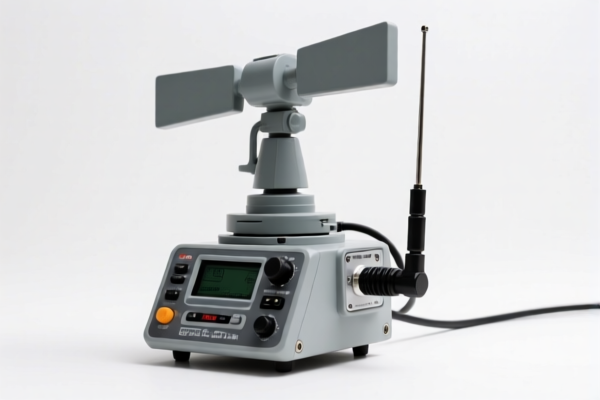
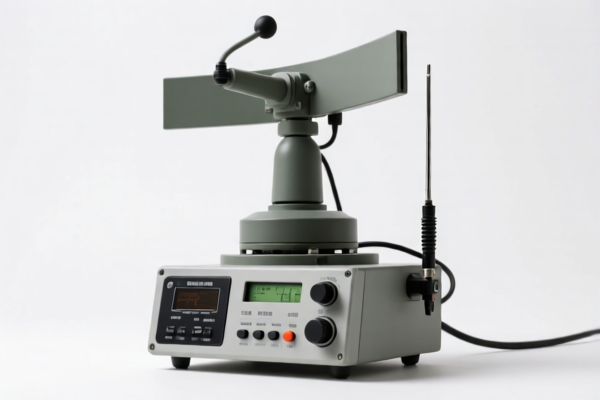
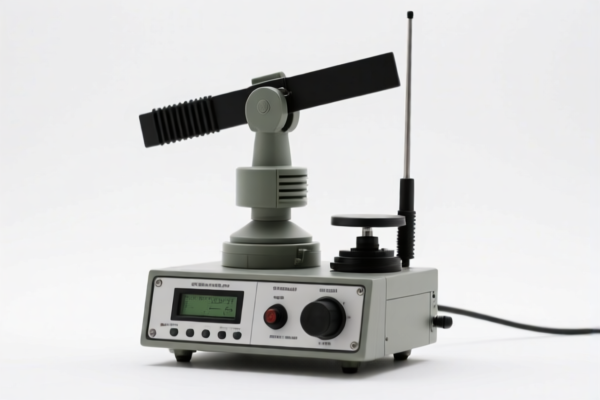
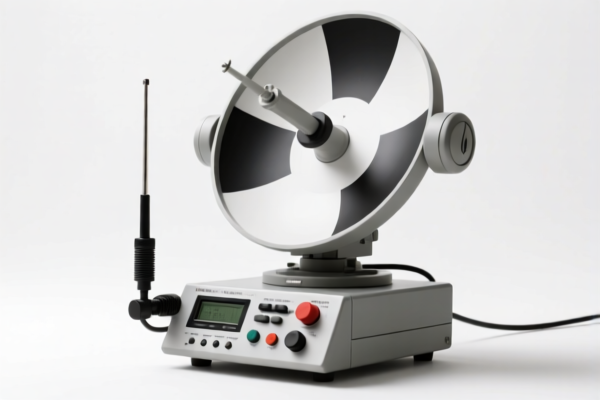
AI Analysis
📡 Radar & Navigational Apparatus: The Ultimate US Import Guide 2026
🌐 HS Code Reference & Customs Clearance Guide | 2026 Latest Tariff Analysis | Professional Strategy
📌 Part 1: Product Definition & Classification: Do You Really Understand "Navigation Equipment"?
Radar and navigational apparatus are the "eyes and ears" of modern maritime, aviation, and terrestrial logistics. In international trade, these devices are not just simple electronics; they are precision instruments governed by strict Harmonized System (HS) codes.
Depending on the technology (radar vs. non-radar) and application (marine vs. general), the HS code changes drastically, as does the tax burden.
⚠️ Key Distinction Point:
- Radar Apparatus: Uses radio waves to detect range, angle, or velocity of objects. Typically falls under Chapter 85.
- Non-Radar Navigation Apparatus: GPS receivers, compasses, gyroscopes, and inertial navigation systems. Typically falls under Chapter 90.
- Material/Function Conflict: If a device combines radar and GPS, it is usually classified by its principal function or the component that gives the device its essential character.
📦 Part 2: HS Code Classification Details (2026 Latest Tariff Authority Comparison)
Based on the provided data, here are the four precise HS Codes for Navigation Apparatus. Note that despite different codes, the total tax rate is identical for US imports from China due to current trade policies.
| HS Code | Product Description | Summary/Usage Match | Key Characteristics |
|---|---|---|---|
9014.20.80.40 |
Navigational Apparatus | Purpose-matched, no material conflict | Specific navigational tools not elsewhere specified. |
9014.20.80.80 |
Navigational Apparatus (Other) | Belongs to residual/other categories, perfect purpose match | The "catch-all" for navigation devices that don't fit other specific sub-headings. |
8526.91.00.40 |
Navigational Apparatus | High compatibility with "Radio Navigation Aids" | Often includes radar-like systems or radio-based positioning aids. |
8526.91.00.20 |
Navigational Apparatus | Consistent with "Radio Navigation Aids," no functional/material conflict | Similar to above, specifically for radio-based navigation support. |
🔍 Critical Insight:
- All four codes listed in the data are for Navigation Apparatus.
- Codes9014.20...generally refer to non-radar navigation instruments (e.g., GPS, gyrocompasses).
- Codes8526.91...generally refer to radar apparatus or radio navigation aids.
- However, for customs duty purposes in this specific dataset, they all share the same 35% total tax rate when importing from China to the US.
💰 Part 3: 2026 Latest Tariff Rate Breakdown (Including Surtaxes & Policy Surcharges)
✅ Applicable Country: United States (US)
✅ Country of Origin: China (CN)
✅ Effective Time: Current policies apply (Section 301 + IEEPA)
🎯 Universal Tax Rate for All Listed HS Codes
| Item | Content |
|---|---|
| Base Tariff Rate | 0.0% (Most navigation aids have 0% MFN base rate) |
| Section 301 Surtax | +25.0% (USITC Footnote: Trade Remedy Surtax) |
| Section 122 / IEEPA Surtax | +10.0% (Additional tariff for China-origin goods) |
| Total Tax Rate | 35.0% |
| Tax Calculation | CIF Value × 35% |
| De Minimis Exemption | ❌ Not Applicable (High-value navigation equipment usually exceeds $800 threshold or is excluded from 321 provisions) |
| Legal Basis Path | USITC:301 → IEEPA:122 → HS Code: 9014.20/8526.91 |
📌 Explanation:
- "Base Tariff 0%": Under normal Most Favored Nation (MFN) rules, navigation equipment often has low or zero base tariffs to encourage technological adoption.
- "Section 301 Surtax 25%": This is the punitive tariff imposed on Chinese goods under Section 301 of the Trade Act. It applies to almost all electronics and industrial goods.
- "Section 122/IEEPA 10%": This is an additional surcharge specifically targeting Chinese imports, often cited as the "122 Clause Tariff" in customs software.
- Total 35%: This is a very high effective tax rate. It significantly impacts profit margins. Cost calculation must include this 35% on top of shipping and insurance.
🛠️ Part 4: Customs Clearance Practical Advice (Battle-Tested Pitfall Avoidance)
✅ 1. Required Documentation Checklist (Non-Negotiable)
| Document | Must Provide | Reason |
|---|---|---|
| ✅ Product Specification Sheet | ✔️ | Details technology type (Radar vs. GPS), frequency, power output. |
| ✅ Technical Diagram/Manual | ✔️ | Proves function. Essential to distinguish between 9014 (non-radar) and 8526 (radio/radar). |
| ✅ Product Photos (Including Nameplate) | ✔️ | Shows model number, FCC ID, and brand. |
| ✅ FCC Certification | ✔️ | Mandatory for any electronic device emitting radio frequency. Without it, goods will be seized. |
| ✅ Commercial Invoice | ✔️ | Must clearly state "Navigational Apparatus" and origin "China". |
| ✅ Certificate of Origin (CO) | ✔️ | Confirms Chinese origin to apply correct surtaxes. |
| ✅ Packing List | ✔️ | Details items per carton to avoid weight/discrepancy issues. |
✅ 2. Declaration Strategy (Key Mantra)
🔥 “Function First, Technology Second, Name Precise, Tax Clear!”
| Scenario | Correct Declaration | Wrong Practice | Consequence |
|---|---|---|---|
| GPS Receiver (Non-Radar) | 9014.20.80.40 or .80 |
Misdeclare as 8526 (Radar) |
Potential audit for code mismatch, though rate is same, description must match. |
| Marine Radar | 8526.91.00.40 or .20 |
Misdeclare as 9014 (Navigation) |
Customs may flag for missing radar-specific certifications. |
| Combination Unit (Radar + GPS) | Classify by Principal Function | Split declaration | Risk of penalty for undervaluation or misclassification. |
| Spare Parts for Navigation | 9014.90 or 8526.99 |
Declare as "Finished Goods" | Overpayment of tax or denial of entry. |
✅ 3. Special Case Handling
| Situation | Handling Advice |
|---|---|
| OEM Custom Navigation Devices | Provide customer orders + design specs to prove specific use case. Avoid generic terms like "Electronics." |
| Devices with Wi-Fi/Bluetooth | Ensure FCC Part 15/24/27 compliance is explicitly stated. Missing FCC ID = Seizure Risk. |
| Marine vs. Automotive GPS | Marine/GPS may require additional safety certifications (e.g., IMO standards) if declared for maritime use. |
| Export from China | Ensure Export Control License if the navigation tech is dual-use (civilian/military). |
🌍 Part 5: Global Market Customs Comparison (2026 Latest)
| Country/Region | Recommended HS Code | Tariff Rate (China Origin) | Certification Requirement | Notes |
|---|---|---|---|---|
| 🇺🇸 USA | 9014.20 / 8526.91 |
35% (0% Base + 25% Sec 301 + 10% IEEPA) | FCC Mandatory | Highest tax burden due to trade wars. |
| 🇨🇳 China | 9014.20 / 8526.91 |
0% - 5% | CCC (if applicable) | Low import tax, easy clearance. |
| 🇪🇺 EU | 9014.20 / 8526.91 |
0% - 4% | CE + RoHS + WEEE | No Section 301 surtaxes. |
| 🇬🇧 UK | 9014.20 / 8526.91 |
0% - 4% | UKCA + CE | Post-Brexit rules apply. |
| 🇦🇺 Australia | 9014.20 / 8526.91 |
5% | RCM + ACCC | Moderate tariff, no punitive surtaxes. |
📌 Conclusion:
- The USA is the only major market with a 35% effective tariff on Chinese navigation/radar equipment due to Section 301 and IEEPA.
- Cost Advantage: Consider sourcing from Vietnam, Malaysia, or Thailand for US exports to avoid the 35% penalty (subject to rules of origin checks).
📌 Part 6: Common Mistakes & Pitfall Avoidance (Lessons Learned)
❌ Mistake 1: Declaring a Radar System as "GPS Receiver"
👉 Consequence: If the device emits radio waves for detection, it is Radar/8526, not Navigation/9014. Misdeclaration can lead to seizure if FCC categories are violated.
❌ Mistake 2: Ignoring FCC Certification
👉 Consequence: CBP and FCC will block entry. No FCC ID on the device = Automatic Rejection.
❌ Mistake 3: Not specifying Principal Function for Combo Devices
👉 Consequence: Customs officer may assign the wrong code, leading to delays or audits. Always provide a technical brief.
❌ Mistake 4: Underestimating the 35% Total Tax
👉 Consequence: Profit margins evaporate. Quoting FOB prices without including US customs costs leads to financial loss.
✅ Correct Approach:
“Marine Radar & GPS Combo Unit, Model XYZ, FCC ID: ABC123, Origin: China, CIF Value: $10,000, HS Code: 8526.91.00.40”
🎯 Part 7: Conclusion: Professional Declaration, Time-Saving, Cost-Efficient!
🎯 Remember the Mantra:
🔹 “FCC First, Function Clear, Tax 35%, Don’t Ignore!”
🔹 “HS Code Determines Survival, Tax Rate Determines Profit, Declaration Determines Speed!”
📌 Pro Tip:
If your navigation equipment is originating from Vietnam, Mexico, Thailand, or Malaysia, you may avoid the 25% Section 301 tax, potentially reducing the total rate to 10% (IEEPA only) or even 0% if trade agreements apply.
Recommendation: Apply for Pre-Ruling (Advance Ruling) from US Customs and Border Protection (CBP) to lock in the correct HS Code and tax rate before shipping.
📣 Take Action Now:
📞 Contact Professional Customs Broker + Provide Product Specs + Apply for HS Code Pre-Ruling
🚀 Let your Navigation Apparatus Clear Smoothly, Enter Efficiently, and Maximize Profit!
✨ Professional Customs Clearance Starts with Accurate Classification!
💼 Every Cent of Cost Deserves Precise Calculation!
Customer Reviews
About HS Code Classification
The Harmonized System (HS) is an internationally standardized nomenclature developed by the World Customs Organization (WCO) to classify traded products. Over 200 countries use the HS system as the basis for customs tariffs, trade statistics, and import/export regulations.
Each HS code follows a hierarchical structure:
- Chapter (2 digits) — Broad category of goods (e.g., Chapter 84: Machinery and Mechanical Appliances)
- Heading (4 digits) — More specific grouping within the chapter
- Subheading (6 digits) — Internationally standardized breakdown, used by all WCO member countries
- National subdivisions (8-10 digits) — Country-specific extensions for further classification, such as US HTSUS 10-digit codes
Correct HS code classification is essential for smooth customs clearance, accurate duty payment, and compliance with trade regulations. Misclassification can lead to customs delays, overpayment of duties, or penalties.
When importing from CN to US, the applicable tariff rates may include:
- Most-Favored-Nation (MFN) rate — The standard duty rate applied to WTO members
- General rate — Applied to countries without trade agreements
- Trade remedy duties — Additional tariffs such as Section 301 (anti-dumping), Section 232 (national security), or countervailing duties
The information provided on this page is for reference purposes only. For official classification, please consult with your local customs authority or a licensed customs broker.