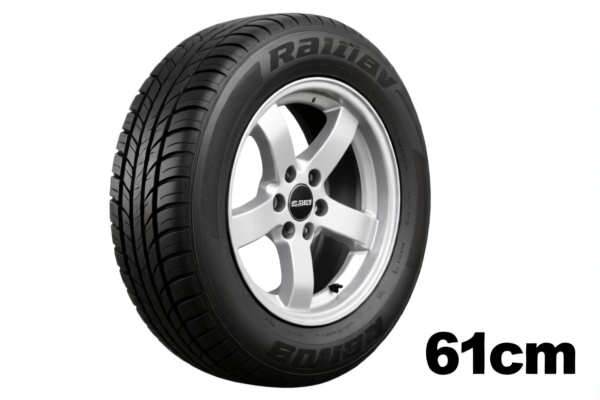
radial engineering tire wheel diameter up to 61 cm
CN → US| HS Code | Tariff Rate | Origin | Destination | Doc |
|---|---|---|---|---|
| 8708704560 | 37.5% | CN | US | Official Doc |
| 4011808010 | 38.4% | CN | US | Official Doc |
| 4011802010 | 39.0% | CN | US | Official Doc |
Product Images
AI Analysis
🚜 Engineering Radial Tires (Wheel Diameter Up to 61 cm)
🌐 HS Code Reference & Clearance Guide | 2026 Latest Tariff Analysis | Professional Customs Strategy
📌 I. Product Definition & Classification: Do You Really Understand "Engineering Tires"?
Engineering radial tires are specialized rubber tires designed for off-road heavy machinery, such as excavators, loaders, and mining trucks. In international trade, the classification hinges on two critical factors:
1. Construction Type: Radial (indicated by "Radial" in the description).
2. Rim Size: The wheel diameter/rim size is explicitly stated as "up to 61 cm".
⚠️ Key Distinction:
- If the tire is for road vehicles (cars, trucks) → It likely falls under 8708.70 (Parts of Motor Vehicles).
- If the tire is for off-road/engineering equipment AND rim size ≤ 61cm → It falls under 4011.80 (Other Pneumatic Tires).
- Critical Note: The mention of "Engineering" strongly suggests non-road use. Combined with the specific rim size limit, this pushes the classification toward Chapter 40 (Rubber Products) rather than Chapter 87 (Vehicle Parts).
📦 II. HS Code Classification Details (2026 Latest Tariff Authority Comparison)
| HS Code | Product Description | Application Scenario | Key Limiting Factor |
|---|---|---|---|
8708.70.45.60 |
Parts of motor vehicles: Wheels, other than cast or stamped, of aluminum, other | Road vehicles, cars, light trucks | ❌ Mismatch: "Engineering" implies off-road. "Tires" are not "Wheels" (hardware), but rubber products. High tax burden due to misclassification risk. |
4011.80.80.10 |
Other pneumatic rubber tires, new, radial: Of a kind used on construction or industrial handling vehicles | Excavators, loaders, forklifts, mining trucks | ✅ Match: Fits "Engineering" use. Rim size ≤ 61cm is a key constraint for this subheading. |
4011.80.20.10 |
Other pneumatic rubber tires, new, radial: Other | General off-road engineering tires | ✅ Match: "Radial", "Tires", "Rim Size up to 61cm". Broad category for engineering tires. |
🔍 Focus Reminder:
-8708.70.45.60is a weak match because it classifies "Wheels" (rims/hubs), not "Tires" (rubber). Unless the product is literally just the aluminum rim, this code is likely incorrect for a tire.
-4011.80codes are the correct category for pneumatic rubber tires.
- The distinction between4011.80.80.10and4011.80.20.10often depends on specific national tariff schedules, but both reflect the correct product nature (rubber tires for engineering use).
💰 III. 2026 Latest Tariff Rate Detailed Explanation (Including Surcharges & Policy Add-ons)
✅ Applicable Country: United States (US)
✅ Origin: China (CN)
✅ Effective Date: November 10, 2025 onwards (for subsequent imports)
🎯 1. 8708.70.45.60 —— Parts of Motor Vehicles (Wheels)
| Item | Content |
|---|---|
| Base Rate | 2.5% (ad valorem) |
| USITC Surtax (Section 301) | +25.0% |
| IEEPA Surtax (Section 122) | +10.0% |
| Total Tax Rate | 37.5% |
| Tax Calculation | CIF Value × 37.5% |
| De Minimis Eligibility | ❌ Not Eligible |
| Legal Basis Path | USITC:8708.70.45.60 → FOOTNOTE:301 → IEEPA:122 |
📌 Explanation:
- This code is likely incorrect for tires. If misclassified, customs may assess this rate on the wrong base.
- 37.5% is a high burden, primarily driven by the 25% Section 301 tariff and 10% IEEPA tariff.
🎯 2. 4011.80.80.10 —— Other Pneumatic Rubber Tires (Engineering Use, Rim ≤ 61cm)
| Item | Content |
|---|---|
| Base Rate | 3.4% (ad valorem) |
| USITC Surtax (Section 301) | +25.0% |
| IEEPA Surtax (Section 122) | +10.0% |
| Total Tax Rate | 38.4% |
| Tax Calculation | CIF Value × 38.4% |
| De Minimis Eligibility | ❌ Not Eligible |
| Legal Basis Path | USITC:4011.80.80.10 → FOOTNOTE:301 → IEEPA:122 |
📌 Note:
- This is the most precise match if the tire is specifically for construction/industrial handling vehicles with a rim size ≤ 61cm.
- The base rate is slightly higher than 8708 (3.4% vs 2.5%), but the product nature is correctly identified.
- Total 38.4% must be budgeted for.
🎯 3. 4011.80.20.10 —— Other Pneumatic Rubber Tires (Radial)
| Item | Content |
|---|---|
| Base Rate | 4.0% (ad valorem) |
| USITC Surtax (Section 301) | +25.0% |
| IEEPA Surtax (Section 122) | +10.0% |
| Total Tax Rate | 39.0% |
| Tax Calculation | CIF Value × 39.0% |
| De Minimis Eligibility | ❌ Not Eligible |
| Legal Basis Path | USITC:4011.80.20.10 → FOOTNOTE:301 → IEEPA:122 |
📌 Note:
- This is a broader category for radial tires. If the "Engineering" or "Rim Size ≤ 61cm" details are not specific enough for4011.80.80.10, this becomes the default.
- Total 39.0% is the highest among the matches, but it remains the correct chapter (40) for rubber tires.
🛠️ IV. Clearance Practical Advice (Battle-Tested Pitfall Avoidance Guide)
✅ 1. Document Checklist (Absolutely Essential)
| Document | Required | Explanation |
|---|---|---|
| ✅ Product Specification Sheet | ✔️ | Must clearly state "Radial", "Engineering/Off-Road Use", and "Rim Size: ≤ 61cm". |
| ✅ Product Photos (Including Tread/Brand) | ✔️ | To prove it is a tire, not a wheel rim. |
| ✅ Commercial Invoice | ✔️ | Description must be precise: "Radial Pneumatic Tires for Engineering Equipment, Rim Size Up to 61cm". |
| ✅ Packing List | ✔️ | Ensure quantity matches invoice. |
| ✅ Country of Origin Certificate | ✔️ | To confirm China origin for tariff calculation. |
| ✅ Third-Party Test Report | ✔️ | DOT, ECE, or relevant safety standards to prove compliance. |
✅ 2. Declaration Tips (Key Mnemonics)
🔥 "Radial Tire, Engineering Use, Rim 61, Code 4011!"
| Scenario | Correct Declaration | Error to Avoid |
|---|---|---|
| Tire for Excavator | 4011.80.80.10 or 4011.80.20.10 |
❌ Using 8708.70 (Parts of Cars) |
| Rim Size > 61cm | Check other subheadings (e.g., 4011.80.90) |
❌ Forcing "Up to 61cm" limit |
| Aluminum Rim Only | 8708.70.45.60 |
❌ Calling it a "Tire" |
📌 Warning:
- Do not declare tires as "Parts of Motor Vehicles" (8708) unless they are specifically for road cars/trucks. Engineering tires belong in Chapter 40.
- Misclassification leads to audits, delays, and penalties.
✅ 3. Special Circumstance Handling
| Scenario | Handling Suggestion |
|---|---|
| Mixed Shipment | Declare tires and rims separately. Tires → 4011, Rims → 8708 or 8708. |
| Used Tires | ❌ Banned in the US. Only new tires are allowed. |
| OEM Custom Tires | Provide design drawings and client orders to prove "Engineering Use". |
| Rim Size Ambiguity | If rim size is exactly 61cm, it falls under "Up to 61cm". If 61.1cm, it does not. Be precise. |
🌍 V. Global Main Market Clearance Comparison (2026 Latest)
| Country/Region | Recommended HS Code | Tariff (China Origin) | Certification Requirements | Notes |
|---|---|---|---|---|
| 🇺🇸 USA | 4011.80.80.10 / 4011.80.20.10 |
38.4% - 39.0% | DOT, EPA (if applicable) | High tariffs due to 301/122. |
| 🇨🇳 China | 4011.80.80.10 |
~6-10% | CCC (if required) | Lower tariffs. |
| 🇪🇺 EU | 4011.80.80 |
~0-3% | ECE R75, ECE R54 | No Section 301 surcharge. |
| 🇦🇺 Australia | 4011.80.80 |
~5% | SAA/RCM | Moderate tariffs. |
| 🇯🇵 Japan | 4011.80.80 |
~0-10% | JIS | Varies by specific type. |
📌 Conclusion:
- USA has the highest effective tariff (~38-39%) due to political trade measures.
- EU and Asia offer more favorable rates but require strict safety certifications (ECE, JIS).
- Strategic Advice: For US imports, calculate the total landed cost including 38.4% tariff. Consider sourcing from non-China origins (e.g., Vietnam, Thailand) if possible to mitigate IEEPA/301 tariffs.
📌 VI. Common Mistakes & Pitfall Guide (Blood Lessons)
❌ Mistake 1: Declaring engineering tires as "Car Tires" (4011.11)
👉 Consequence: Wrong classification, potential seizure, back taxes.
👉 Fix: Clearly state "Engineering/Off-Road Use".
❌ Mistake 2: Ignoring the "Rim Size" limit
👉 Consequence: If rim size > 61cm, 4011.80.80.10 is invalid.
👉 Fix: Verify exact rim dimensions. If > 61cm, use 4011.80.90 or other subheadings.
❌ Mistake 3: Confusing "Tire" with "Wheel/Rim"
👉 Consequence: Using 8708 for rubber tires is a major error.
👉 Fix: "Tire" = Rubber (4011), "Wheel/Rim" = Metal/Hardware (8708).
❌ Mistake 4: Not accounting for IEEPA 122 Tariff
👉 Consequence: Underestimating cost by 10%.
👉 Fix: Always add 10% IEEPA surcharge for China-origin goods.
✅ Correct Declaration Example:
"Radial Pneumatic Rubber Tires for Construction Machinery, Rim Size 20-24 Inches (Up to 61cm), New, Model XYZ, DOT Certified, Country of Origin: China"
🎯 VII. Conclusion: Precise Classification Saves Money!
🎯 Remember Mnemonic:
🔹 "Radial Tire, Engineering Use → Code 4011!"
🔹 "Rim ≤ 61cm → Subheading 80.10!"
🔹 "Don't Mix Tires with Wheels → 4011 vs 8708!"
🔹 "China Origin → Add 35% Tariff (25% 301 + 10% 122)!"
📌 Pro Tip:
- If you are importing aluminum rims separately, classify them under 8708.70.45.60 (37.5% total tax).
- If you are importing tires, classify them under 4011.80.80.10 (38.4% total tax).
- Always apply for an Advance Ruling from CBP if the product nature is ambiguous to avoid post-import audits.
📣 Immediate Action:
📞 Consult a licensed customs broker + Provide Product Specs + Apply for HS Code Advance Ruling
🚀 Ensure smooth clearance, avoid delays, and protect your margins!
✨ Professional Clearance Starts with Accurate Classification!
💼 Every percentage point of tax is a point of profit!
Customer Reviews
About HS Code Classification
The Harmonized System (HS) is an internationally standardized nomenclature developed by the World Customs Organization (WCO) to classify traded products. Over 200 countries use the HS system as the basis for customs tariffs, trade statistics, and import/export regulations.
Each HS code follows a hierarchical structure:
- Chapter (2 digits) — Broad category of goods (e.g., Chapter 84: Machinery and Mechanical Appliances)
- Heading (4 digits) — More specific grouping within the chapter
- Subheading (6 digits) — Internationally standardized breakdown, used by all WCO member countries
- National subdivisions (8-10 digits) — Country-specific extensions for further classification, such as US HTSUS 10-digit codes
Correct HS code classification is essential for smooth customs clearance, accurate duty payment, and compliance with trade regulations. Misclassification can lead to customs delays, overpayment of duties, or penalties.
When importing from CN to US, the applicable tariff rates may include:
- Most-Favored-Nation (MFN) rate — The standard duty rate applied to WTO members
- General rate — Applied to countries without trade agreements
- Trade remedy duties — Additional tariffs such as Section 301 (anti-dumping), Section 232 (national security), or countervailing duties
The information provided on this page is for reference purposes only. For official classification, please consult with your local customs authority or a licensed customs broker.