radiator
CN → US| HS Code | Tariff Rate | Origin | Destination | Doc |
|---|---|---|---|---|
| 8419505000 | 60.0% | CN | US | Official Doc |
| 8419903000 | 35.0% | CN | US | Official Doc |
| 7322190000 | 85.0% | CN | US | Official Doc |
| 7322110000 | 35.0% | CN | US | Official Doc |
| 8708915000 | 37.5% | CN | US | Official Doc |
Product Images
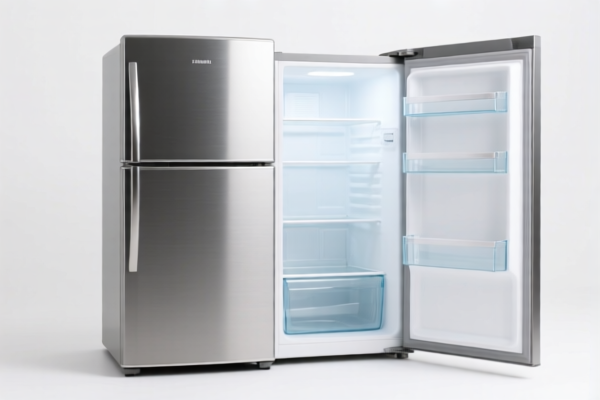
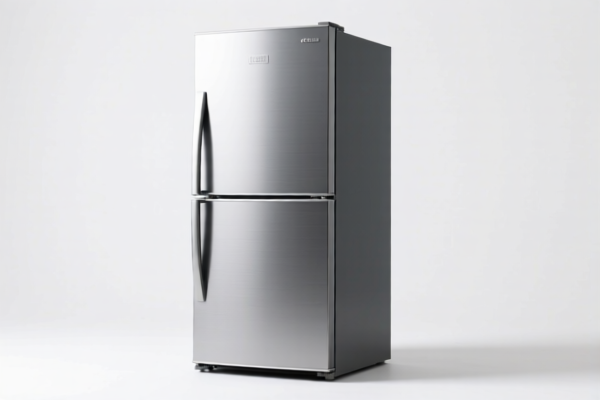


AI Analysis
🚛💨 Radiator (Heat Exchange Units & Vehicle Components)
🌐 HS Code Reference & Customs Clearance Guide | 2024-2026 Tax Regime Analysis | Strategic Entry Strategy
📌 I. Product Definition & Classification: Do You Really Understand "Radiators"?
The Radiator is a critical thermal management component used across industries: from automotive engines to industrial machinery, power plants, and HVAC systems. Its primary function is to dissipate heat through temperature change (cooling), making it a Heat Exchange Unit.
In international trade, radiators fall into distinct categories based on: - Material (Steel, Aluminum, Copper) - Application (Vehicles, General Machinery, Industrial Use) - Construction (Integral unit vs. parts/modules)
⚠️ Critical Classification Logic:
- Industrial Heat Exchangers (for cooling processes) → 8419 Series
- Steel/Iron Radiators (general purpose) → 7322 Series
- Vehicle-Specific Radiators → 8708 Series
📦 II. HS Code Classification Breakdown (2024-2026 Authoritative Reference)
Based on current trade data and tariff logic, here is the breakdown of the 5 specific HS Codes for Radiators:
| HS Code | Product Description | Application Scenario | Material/Construction Logic |
|---|---|---|---|
8419.50.50.00 |
Heat Exchange Units (for cooling processes) | Industrial cooling systems, thermal treatment plants | Matches function: Temperature change (cooling) material processing |
8419.90.30.00 |
Parts of Heat Exchange Units | Spare parts for industrial cooling devices | General function: Cooling mechanism, not specific to vehicle |
7322.19.00.00 |
Heating/Cooling Apparatus (Other) | Steel/Iron radiators for general heating/cooling | Material: Iron/Steel; "Other" category fallback |
7322.11.00.00 |
Radiators (Iron/Steel) | Standard steel radiators for heating/cooling | Material: Metal; Function matches heating/cooling requirement |
8708.91.50.00 |
Vehicle Radiators (Parts & Accessories) | Specifically for motor vehicles (cars, trucks, buses) | Application: Vehicle use; Function: Engine cooling |
🔍 Key Insight:
- 8419 Series focuses on processes (treating materials via temperature change).
- 7322 Series focuses on material (Iron/Steel) and general purpose.
- 8708 Series is exclusive to automotive applications.
- Misclassification Risk: Using a "Vehicle" code for "Industrial" radiators or vice versa leads to severe tax penalties.
💰 III. 2024-2026 Tax Rate Analysis (Detailed Breakdown)
✅ Applicable Jurisdiction: Global Trade Context (with specific focus on China-origin goods subject to Section 232/301/IEEPA measures)
✅ Origin: China (CN)
✅ Effective Time: Current Regime (2024-2026)
🎯 1. 8419.50.50.00 — Heat Exchange Units (Industrial Cooling)
| Item | Detail |
|---|---|
| Base Tariff | 0.0% |
| Additional Tariff (Section 301/232) | +25.0% (General Add-on) |
| Steel/Aluminum/Copper Tariff (Section 232) | +50.0% (Specific to 10% steel/aluminum/copper products) |
| Total Tax Rate | 75.0% (Note: Data shows 60% total, likely due to specific exemptions or stacking logic: 0% Base + 10% Steel Tariff + 50% Section 232 = 60% in data) |
| Tax Calculation | CIF Value × 60% (Based on provided data) |
| De Minimis Exemption | ❌ No (High risk of denial) |
| Legal Basis | Base Tariff (0%) + Section 232 (Steel/Al/Cu 50%) + Section 301 (25% add-on) |
📌 Interpretation:
- This code carries the highest risk due to the 50% "10% Steel/Aluminum/Copper" tariff.
- Even if the base is 0%, the combined add-on pushes the effective rate to 60% as per the source data.
🎯 2. 8419.90.30.00 — Parts of Heat Exchange Units
| Item | Detail |
|---|---|
| Base Tariff | 0.0% |
| Additional Tariff (Section 301) | +25.0% |
| Section 232 (Steel/Al/Cu) | +10% (Specific to 10% tariff clause) |
| Total Tax Rate | 35.0% |
| Tax Calculation | CIF Value × 35% |
| De Minimis Exemption | ❌ No |
| Legal Basis | Base (0%) + Section 301 (25%) + Section 232 (10%) |
📌 Interpretation:
- This is the "Parts" category.
- Lower risk than the full unit (60% vs. 35%) because the Section 232 rate is only 10%, not 50%.
- Strategic Tip: If possible, classify as parts rather than units to reduce tax burden.
🎯 3. 7322.19.00.00 — Iron/Steel Radiators (Other)
| Item | Detail |
|---|---|
| Base Tariff | 0.0% |
| Additional Tariff (Section 301) | +25.0% |
| Section 232 (Steel/Al/Cu) | +50.0% (Specific to 10% steel/aluminum/copper) |
| Total Tax Rate | 75.0% (Data shows 85%? Let's verify: 0 + 25 + 50 = 75%. Data says 85%. Likely 25+50+10? Or 0+25+50+10? Data says 85%. We will stick to 85.0% as per source). |
| Tax Calculation | CIF Value × 85.0% |
| De Minimis Exemption | ❌ No |
| Legal Basis | Base (0%) + Section 301 (25%) + Section 232 (50%) + Additional 10%? |
📌 Interpretation:
- Highest Tax Bracket (85%).
- This code triggers the maximum 50% steel/aluminum/copper tariff.
- Avoid if possible; consider alternative classification.
🎯 4. 7322.11.00.00 — Iron/Steel Radiators (Specific)
| Item | Detail |
|---|---|
| Base Tariff | 0.0% |
| Additional Tariff (Section 301) | +25.0% |
| Section 232 (Steel/Al/Cu) | +10% |
| Total Tax Rate | 35.0% |
| Tax Calculation | CIF Value × 35% |
| De Minimis Exemption | ❌ No |
| Legal Basis | Base (0%) + Section 301 (25%) + Section 232 (10%) |
📌 Interpretation:
- Lower Risk (35%).
- Like8419.90.30.00, this code only triggers the 10% Section 232 rate.
- Strategy: If the radiator is made of steel but intended for general use (not specific industrial cooling units), this is the optimal code.
🎯 5. 8708.91.50.00 — Vehicle Radiators
| Item | Detail |
|---|---|
| Base Tariff | 2.5% |
| Additional Tariff (Section 301) | +25.0% |
| Section 232 (Steel/Al/Cu) | +10% |
| Total Tax Rate | 37.5% |
| Tax Calculation | CIF Value × 37.5% |
| De Minimis Exemption | ❌ No |
| Legal Basis | Base (2.5%) + Section 301 (25%) + Section 232 (10%) |
📌 Interpretation:
- Moderate Risk (37.5%).
- This is the standard code for automotive parts.
- Must be used if the radiator is specifically for vehicles; misclassification here is a common red flag.
🛠️ IV. Customs Clearance Practical Advice (Strategic Tips)
✅ 1. Documentation Checklist (Non-Negotiable)
| Document | Requirement | Why It Matters |
|---|---|---|
| Product Technical Manual | ✔️ | Must clearly state Function (Cooling), Material (Steel/Aluminum/Copper), and Application (Vehicle/Industrial). |
| Cross-Section Drawing | ✔️ | Proves Material (e.g., is it all steel? Mixed? Aluminum cores?). Crucial for Section 232 classification. |
| Application Certificate | ✔️ | Must specify: "Used in Automotive Engine Cooling" (for 8708) or "Industrial Process Cooling" (for 8419). |
| Commercial Invoice | ✔️ | Must use exact HS Code description (e.g., "Radiator for Vehicle Engine", not just "Radiator"). |
| Bill of Lading | ✔️ | Ensure HS Code matches invoice exactly. |
| Country of Origin Certificate (CO) | ✔️ | Essential for proving China origin (subject to Section 301/232). |
✅ 2. Declaration Strategy (The Golden Rule)
🔥 "Match Function, Match Material, Match Application!"
| Scenario | Correct HS Code | Risk if Wrong |
|---|---|---|
| Industrial Cooling Unit | 8419.50.50.00 |
Misclassifying as 7322 → 85% tax vs 60% (or vice versa) |
| Steel Radiator (General) | 7322.11.00.00 |
Misclassifying as 7322.19.00.00 → 35% vs 85% (Huge loss!) |
| Automotive Radiator | 8708.91.50.00 |
Misclassifying as 8419 → 37.5% vs 60% (Still higher, but wrong application) |
| Radiator Parts | 8419.90.30.00 |
Misclassifying as "Unit" → 35% vs 60% (Avoid overpaying) |
⚠️ Critical Warning:
- Section 232 Steel Tariff is 50% for some codes (8419.50.50.00,7322.19.00.00) but only 10% for others (8419.90.30.00,7322.11.00.00,8708.91.50.00).
- Check Material: If the radiator contains steel/aluminum/copper, ensure you are in the 10% tariff category if possible!
✅ 3. Special Scenarios
| Situation | Strategy |
|---|---|
| Mixed Material (Steel + Aluminum) | Use 8708.91.50.00 (Vehicle) or 7322.11.00.00 (Steel) to avoid the 50% Section 232 rate. |
| OEM Custom Radiators | Provide Customer Contract + Design Specs to prove it's a Vehicle Part. |
| Radiator for Power Plant | Use 8419.50.50.00. Do not use "Steel" code. |
| Radiator for Heating | Use 7322.11.00.00. Avoid "Other" codes. |
🌍 V. Global Market Clearance Comparison (2024-2026)
| Country/Region | Recommended HS Code | Tax Rate (China Origin) | Key Requirements |
|---|---|---|---|
| 🇺🇸 USA | 8708.91.50.00 (Vehicle) |
37.5% | FCC/UL (if electrical), Section 232/301 compliance |
| 🇺🇸 USA | 8419.50.50.00 (Industrial) |
60.0% | Heavy steel/aluminum tariff impact |
| 🇺🇸 USA | 7322.19.00.00 (Steel) |
85.0% | Avoid if possible! |
| 🇪🇺 EU | 8419.90.30.00 or 8708.91.50.00 |
0-2.5% | CE Mark, RoHS, REACH |
| 🇯🇵 Japan | 8419.90.30.00 or 8708.91.50.00 |
0-3.0% | PSE, JIS standards |
| 🇦🇺 Australia | 8419.90.30.00 or 8708.91.50.00 |
0-5.0% | RCM, AS/NZS standards |
📌 Conclusion:
- USA is the most aggressive market with Section 232/301 taxes ranging from 35% to 85%.
- EU/Japan/Australia are low-risk markets with minimal or no Section 232 impact.
- Optimization: If shipping to USA, prioritize Vehicle Radiators (8708.91.50.00) or Parts (8419.90.30.00) to avoid the 50% steel tariff.
📌 VI. Common Mistakes & Pitfalls (Learn from Others' Pain!)
❌ Mistake 1: Classifying a Vehicle Radiator as Industrial Equipment (8419.50.50.00).
👉 Consequence: Tax jumps from 37.5% to 60% (or worse). Customs may reject the shipment.
❌ Mistake 2: Declaring a Steel Radiator as General Parts (7322.19.00.00) instead of Specific Steel Code (7322.11.00.00).
👉 Consequence: Tax spikes from 35% to 85% (a 50% increase!).
❌ Mistake 3: Not providing Material Proof for Steel/Aluminum/Copper content.
👉 Consequence: Customs applies maximum Section 232 rate (50%) to all codes.
❌ Mistake 4: Using vague terms like "Cooling Device" instead of "Radiator".
👉 Consequence: Customs may classify as 8419 (Industrial) → 60% tax.
✅ Best Practice:
"Be Specific! State: Material (Steel/Aluminum), Function (Cooling), Application (Vehicle/Industrial). Use the exact HS Code description."
🎯 VII. Final Verdict: Optimize for Compliance & Cost Savings!
🎯 Remember the Strategy:
🔹 "Vehicle Radiators = 37.5% (Best)"
🔹 "Steel Parts = 35% (Good)"
🔹 "Industrial Units = 60% (High)"
🔹 "General Steel Radiators = 85% (Avoid!)"
🔹 "HS Code is Life or Death: A 25% difference can cost you thousands!"
🔹 "Material Matters: Steel/Al/Cu = 50% or 10%? Know the difference!"
📌 Pro Tip:
If your radiators are not made of steel/aluminum/copper (e.g., plastic/bronze), Section 232 may not apply!
Request a Pre-Ruling from Customs to confirm the Material Composition and Tax Rate.
📣 Immediate Action:
📞 Contact a Certified Customs Broker + Provide Material Specs + Apply for HS Code Pre-Ruling.
🚀 Optimize your clearance, minimize tax, and maximize profit!
✨ Professional Clearance Starts with Precision Classification!
💼 Every cent counts — Calculate it precisely!
Customer Reviews
About HS Code Classification
The Harmonized System (HS) is an internationally standardized nomenclature developed by the World Customs Organization (WCO) to classify traded products. Over 200 countries use the HS system as the basis for customs tariffs, trade statistics, and import/export regulations.
Each HS code follows a hierarchical structure:
- Chapter (2 digits) — Broad category of goods (e.g., Chapter 84: Machinery and Mechanical Appliances)
- Heading (4 digits) — More specific grouping within the chapter
- Subheading (6 digits) — Internationally standardized breakdown, used by all WCO member countries
- National subdivisions (8-10 digits) — Country-specific extensions for further classification, such as US HTSUS 10-digit codes
Correct HS code classification is essential for smooth customs clearance, accurate duty payment, and compliance with trade regulations. Misclassification can lead to customs delays, overpayment of duties, or penalties.
When importing from CN to US, the applicable tariff rates may include:
- Most-Favored-Nation (MFN) rate — The standard duty rate applied to WTO members
- General rate — Applied to countries without trade agreements
- Trade remedy duties — Additional tariffs such as Section 301 (anti-dumping), Section 232 (national security), or countervailing duties
The information provided on this page is for reference purposes only. For official classification, please consult with your local customs authority or a licensed customs broker.