radiator cap
CN → US| HS Code | Tariff Rate | Origin | Destination | Doc |
|---|---|---|---|---|
| 7412200085 | 88.0% | CN | US | Official Doc |
| 8481903000 | 22.5% | CN | US | Official Doc |
| 7412200045 | 88.0% | CN | US | Official Doc |
| 7324900000 | 85.0% | CN | US | Official Doc |
| 8481909085 | 85.0% | CN | US | Official Doc |
Product Images

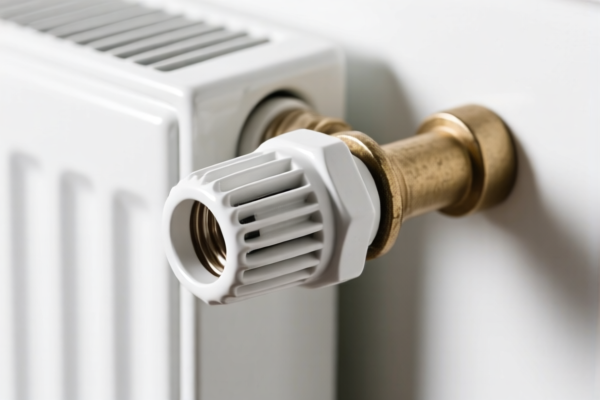
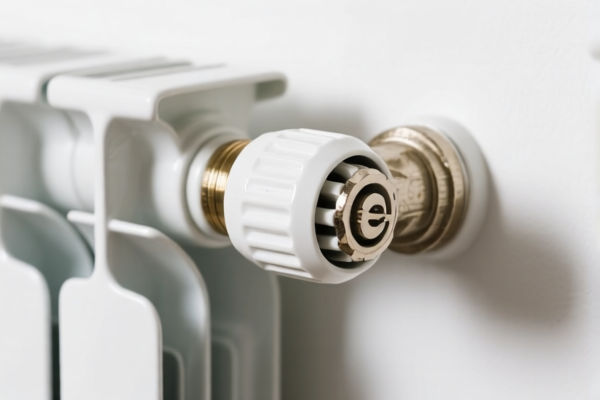
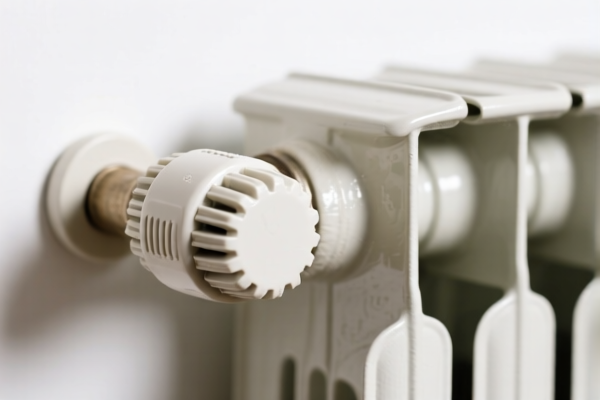
AI Analysis
🛡️ Radiator Cap: The High-Stakes Valve in Global Trade
🌐 HS Code Classification & Customs Clearance Guide | 2026 Tariff Analysis | Strategic Import Strategy
📌 I. Product Definition: What Exactly is a "Radiator Cap"?
A Radiator Cap is a critical pressure-regulating component in thermal management systems (automotive, industrial, or HVAC). In international trade, its classification is highly sensitive to material composition and functional design. It is rarely treated as a standalone consumer good; instead, it is categorized as a pipe fitting, valve accessory, or sanitary ware part depending on its makeup.
⚠️ The "Material Trap":
- Copper/Aluminum Alloys: Often classified under Pipe Fittings (Chapter 74) due to conductive properties and shape.
- Iron/Steel: Frequently classified under Valve Parts (Chapter 84) or Sanitary Ware (Chapter 73).
- Mixed Materials: If plastic components dominate internal seals, it may still be classified by the main structural metal, leading to high tariffs.
📦 II. HS Code Classification Matrix (Based on Provided Data)
| HS Code | Product Description & Reasoning | Primary Material Inference |
|---|---|---|
| 7412.20.00.85 | Pipe Fittings: Classified as "Other pipe fittings" because the cap is a metallic (copper/aluminum) component attached to tubes. | Copper Alloy / Aluminum |
| 8481.90.30.00 | Valve Parts: Classified as a part of a "valve/cock" apparatus, assuming iron or steel construction for pressure regulation. | Iron / Steel |
| 7412.20.00.45 | Pipe Fittings: Specifically categorized as a "cap-type" accessory for pipes, inferred as copper alloy. | Copper Alloy |
| 7324.90.00.00 | Sanitary/Pipe Parts: Classified under sanitary ware or pipe accessories, often iron/steel, fitting the "part" inclination. | Iron / Steel |
| 8481.90.90.85 | Valve Parts: Broad classification for "other parts" of valves, allowing for mixed materials (metal/plastic). | Metal / Plastic Mix |
🔍 Key Insight:
The distinction between 7412 (Copper/Aluminum Fittings) and 8481/7324 (Steel/Iron Valves/Sanitary) is the primary driver of tariff differences. Misidentifying the material can lead to severe underpayment or overpayment risks.
💰 III. Detailed Tariff Breakdown (2026 US Market)
✅ Applicable Country: United States (US)
✅ Origin: China (CN)
✅ Impact: High tariff burden due to Section 301 and Section 232 related clauses.
🎯 1. Copper/Aluminum Classifications (7412.20.00.85 & 7412.20.00.45)
These codes carry the highest financial risk due to the叠加 (stacking) of multiple punitive tariffs.
| Item | Detail |
|---|---|
| Base Duty Rate | 3.0% |
| Section 301 Add-on | 25.0% |
| Section 232 Add-on | 50.0% (Specific to "Steel, Aluminum, Copper Products" under Clause 122) |
| Total Tax Rate | 88.0% |
| Calculation Basis | CIF Value × 88% |
| Legal Reference Path | Base Tariff → USITC Footnote 9903.88.01 → Section 232 (Copper/Steel/Aluminum) |
📌 Explanation:
- The 50% Section 232 tariff is the killer here. It applies specifically to certain metal products deemed a national security risk. - The 25% Section 301 tariff applies to all Chinese goods in this category. - Result: An 88% effective duty rate makes importing copper/aluminum radiator caps from China extremely costly without mitigation strategies.
🎯 2. Steel/Iron Valve Classifications (8481.90.30.00)
This is the most "balanced" option if the material is correctly identified as steel/iron valve parts.
| Item | Detail |
|---|---|
| Base Duty Rate | 5.0% |
| Section 301 Add-on | 7.5% |
| Section 232 Add-on | Not explicitly listed in the 22.5% total, implying possible exclusion or lower specific rate for this subheading. |
| Total Tax Rate | 22.5% |
| Calculation Basis | CIF Value × 22.5% |
| Legal Reference Path | Base Tariff → USITC Footnote |
📌 Explanation:
- This code avoids the massive 50% Section 232 surcharge that applies to raw copper/aluminum fittings. - Critical Note: This classification assumes the item is a part of a valve, not just a generic pipe cap. The functional argument (pressure regulation via valve mechanism) must be strong.
🎯 3. Steel/Iron Sanitary/Pipe Parts (7324.90.00.00 & 8481.90.90.85)
These codes represent the "High Risk / High Penalty" category for steel goods.
| Item | Detail |
|---|---|
| Base Duty Rate | 0.0% |
| Section 301 Add-on | 25.0% |
| Section 232 Add-on | 50.0% (Copper/Steel/Aluminum Clause 122) |
| Total Tax Rate | 85.0% |
| Calculation Basis | CIF Value × 85% |
| Legal Reference Path | Base Tariff → Section 232 (Steel/Copper/Aluminum) |
📌 Explanation:
- Although the base duty is 0%, the 50% Section 232 and 25% Section 301 tariffs create an 85% effective rate. - This applies to iron/steel sanitary ware or other valve parts that do not fit the specific "Valve Part" definition of8481.90.30.00.
🛠️ IV. Customs Clearance Strategic Advice (Practical Pitfall Avoidance)
✅ 1. Documentation Checklist (Non-Negotiable)
| Document | Requirement | Why It Matters |
|---|---|---|
| Material Certification | ✅ Essential | Must explicitly state % composition (e.g., "99% Copper", "Stainless Steel 304"). Customs will test if disputed. |
| Technical Data Sheet | ✔️ | Shows internal structure. Is it a simple cap or a pressurized valve assembly? |
| Photographs | ✔️ | Clear shots of the cap, threading, and internal spring mechanism. |
| Commercial Invoice | ✔️ | Description must match HS Code logic (e.g., "Steel Radiator Valve Part" vs. "Copper Pipe Cap"). |
✅ 2. Classification Strategy (The "Golden Rules")
🔥 Rule 1: Material is King
- If Copper/Aluminum: Prepare for 88%. Consider sourcing from non-China origins (Vietnam, Mexico) to avoid Section 232/301. - If Steel/Iron: Argue for 8481.90.30.00 (22.5%) by proving it is a "Part of a Valve." Avoid7324(85%) and8481.90.90(85%) unless you cannot prove valve functionality.🔥 Rule 2: Functional Description
- Do NOT simply label as "Radiator Cap" without context. - Better Description: "Iron-Steel Pressure Regulating Valve Part for Automotive Radiator System" → Supports8481.90.30.00. - Worse Description: "Copper Pipe End Cap" → Supports7412.20.00.85(88% tax).
✅ 3. Special Circumstances Handling
| Scenario | Recommendation |
|---|---|
| Mixed Materials | If the cap is steel with a plastic seal, still classify by the main structural metal (Steel). But argue for 8481.90.90.85 or 8481.90.30.00 to avoid the 50% Section 232 if possible. |
| OEM Custom Parts | Provide engineering drawings showing how the cap interfaces with a valve mechanism. This strengthens the case for 8481 (Valve Parts). |
| High Volume Imports | Apply for a Binding Ruling (Pre-Ruling) from US Customs and Border Protection (CBP) before shipping. This locks in the HS code and prevents audits. |
🌍 V. Global Market Comparison (2026)
| Country/Region | Recommended HS Code | Est. Tariff (China Origin) | Key Requirement |
|---|---|---|---|
| 🇺🇸 USA | 8481.90.30.00 (Best Case) |
22.5% | Proof of Valve Functionality |
| 🇺🇸 USA | 7412.20.00.85 (Worst Case) |
88.0% | Copper/Aluminum Material Proof |
| 🇨🇳 China | 8481.90.30.00 |
5.0% | Standard Import Procedures |
| 🇪🇺 EU | 8481.90.30.00 |
~0-5% | CE Marking (if applicable) |
| 🇬🇧 UK | 8481.90.30.00 |
~5% | UKCA Marking |
📌 Conclusion:
The US market is the most punitive for radiator caps due to Section 232 and 301 tariffs. The difference between 22.5% and 88% is a 65.5% margin difference. Accurate material identification and functional classification are not just administrative tasks; they are profit preservation strategies.
📌 VI. Common Errors & Pitfalls (Lessons Learned)
❌ Mistake 1: Assuming all "Caps" are pipe fittings.
👉 Result: If it’s a steel valve part, you pay 85% instead of 22.5%.
💡 Fix: Use functional descriptions ("Valve Part") for steel items.
❌ Mistake 2: Ignoring Section 232 on Aluminum/Copper.
👉 Result: Unexpected 50% surcharge on copper caps.
💡 Fix: Verify material specs. If copper, consider non-China sourcing.
❌ Mistake 3: Inconsistent Documentation.
👉 Result: CBP examination, delays, and potential misclassification penalties.
💡 Fix: Ensure Invoice, Packing List, and Material Certs all align on "Material" and "Function."
🎯 VII. Final Recommendation: Professional Clearance, Cost Optimization!
🎯 Action Plan:
1. Identify Material: Copper/Aluminum? → Expect 88%. Steel/Iron? → Aim for 22.5%.
2. Define Function: Is it a simple cap or a pressure-regulating valve part?
3. Draft Description: "Steel Radiator Valve Pressure Regulator Part, Model XYZ"
4. Request Pre-Ruling: Submit to CBP if import volume is significant.
💼 Remember:
"A few cents on material specs can save thousands on duties. Classify by Function and Material, Not Just by Name!"
✨ Smart Clearance, Smart Savings!
💼 Your Profit Margin Depends on Your HS Code Choice!
Customer Reviews
About HS Code Classification
The Harmonized System (HS) is an internationally standardized nomenclature developed by the World Customs Organization (WCO) to classify traded products. Over 200 countries use the HS system as the basis for customs tariffs, trade statistics, and import/export regulations.
Each HS code follows a hierarchical structure:
- Chapter (2 digits) — Broad category of goods (e.g., Chapter 84: Machinery and Mechanical Appliances)
- Heading (4 digits) — More specific grouping within the chapter
- Subheading (6 digits) — Internationally standardized breakdown, used by all WCO member countries
- National subdivisions (8-10 digits) — Country-specific extensions for further classification, such as US HTSUS 10-digit codes
Correct HS code classification is essential for smooth customs clearance, accurate duty payment, and compliance with trade regulations. Misclassification can lead to customs delays, overpayment of duties, or penalties.
When importing from CN to US, the applicable tariff rates may include:
- Most-Favored-Nation (MFN) rate — The standard duty rate applied to WTO members
- General rate — Applied to countries without trade agreements
- Trade remedy duties — Additional tariffs such as Section 301 (anti-dumping), Section 232 (national security), or countervailing duties
The information provided on this page is for reference purposes only. For official classification, please consult with your local customs authority or a licensed customs broker.