rain cover for baby car seat
CN → US| HS Code | Tariff Rate | Origin | Destination | Doc |
|---|---|---|---|---|
| 9401806023 | 35.0% | CN | US | Official Doc |
| 3926909989 | 22.8% | CN | US | Official Doc |
| 9401806021 | 35.0% | CN | US | Official Doc |
| 9503000071 | 10.0% | CN | US | Official Doc |
| 8708998180 | 37.5% | CN | US | Official Doc |
Product Images
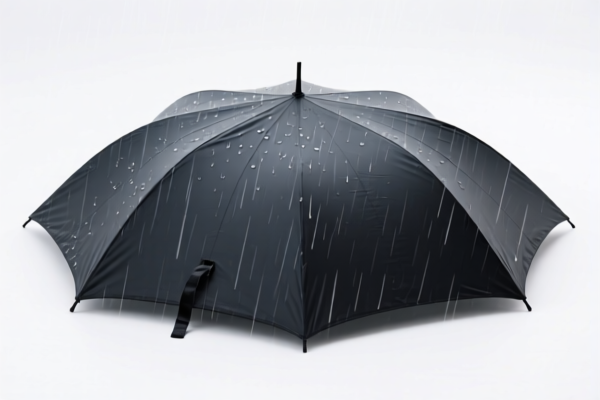
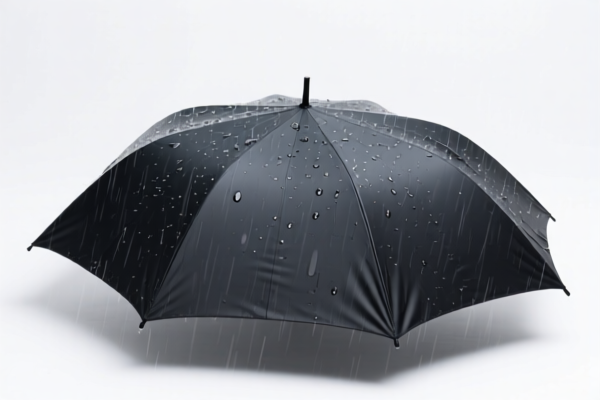
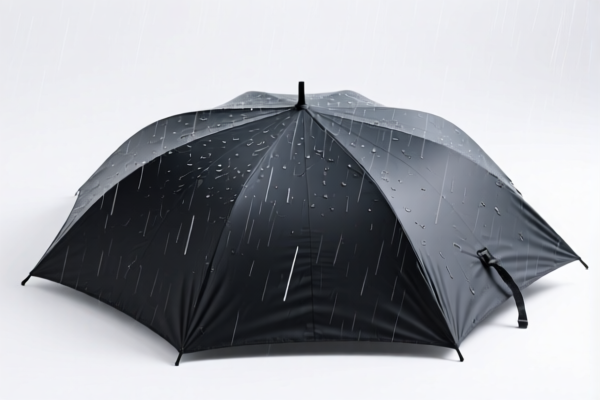
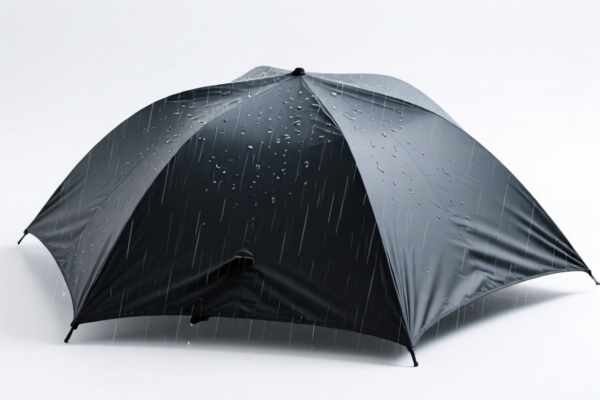
AI Analysis
🍼 Baby Car Seat Rain Cover (Baby Car Seat Accessories)
🌐 HS Code Reference & Customs Clearance Guide | 2026 Latest Tariff Analysis | Professional Clearance Strategy
📌 Part 1: Product Definition & Classification: Do You Really Understand "Rain Covers"?
A Baby Car Seat Rain Cover is an accessory designed to protect infants from wind, rain, and dust while seated in a car seat. In international trade, its classification is critical because it sits at the intersection of vehicle accessories, children's safety equipment, and textile/plastic goods.
The classification depends heavily on the primary material, function, and intended use:
1. As a Child Safety Accessory (Specific Use): If marketed primarily as part of the child restraint system or essential for child safety/comfort in a vehicle, it may fall under Chapter 94 (Furniture) or Chapter 87 (Vehicles).
2. As a Textile/Plastic Product (General Use): If made of plastic or fabric and not strictly defined as a safety device component, it may fall under Chapter 39 (Plastics) or Chapter 61/63 (Textiles).
⚠️ Key Distinction:
- If it is integrated or sold as part of a "Child Car Seat" system → 9401.80.xx (Children's car seats).
- If it is a loose accessory made of plastic/polyester → 3926.90.xx (Other plastic articles) or 8708.99.xx (Vehicle parts).
- If it is a general infant care item → 9503.00.xx (Toys/Infant goods).
📦 Part 2: HS Code Classification Details (2026 Latest Tariff Authoritative Comparison)
Based on the provided data , here are the possible classifications and their tax implications for imports into the US (assuming Chinese origin based on "122 Clause" references):
| HS Code | Product Description | Application Scenario | Primary Characteristic |
|---|---|---|---|
9401.80.60.23 |
Other Child Safety Seats | Matched to baby car seat usage; categorized as other child safety seats | Safety Equipment: Treated as part of the car seat family |
3926.90.99.89 |
Other Articles of Plastics | Matched to products made of plastic and other materials; belongs to the "other articles" catch-all category | Material-Based: Classified as a plastic accessory, not a safety device |
9401.80.60.21 |
Children's Seats | Matched to children's seat category; reasonable inference based on other categories | General Children's Furniture: Broad category for children's seating |
9503.00.00.71 |
Infant Safety Equipment | Matched to infant safety equipment; belongs to the children's goods category | Consumer Goods: Classified as a general infant care/safety item |
8708.99.81.80 |
Vehicle Accessories | Matched to automotive-related products; belongs to vehicle attachment usage category | Auto Part: Classified as an accessory to the motor vehicle itself |
🔍 Critical Reminder:
- High Tariff Risk: Classifications under 9401 (Car Seats) and 8708 (Vehicle Parts) attract Section 301 (25%) and IEEPA (10%) tariffs, totaling 35%-37.5%.
- Lower Tariff Option: Classification under 3926 (Plastics) or 9503 (Children's Goods) may result in lower total tariffs (22.8% and 10% respectively), if the product can be legally justified as such.
- Do Not Misclassify: Declaring a safety-rated car seat cover as a "plastic bag" or "toy" to avoid taxes is a high-risk audit trigger.
💰 Part 3: 2026 Latest Tariff Rate Breakdown (Including Surtaxes & Policy Add-ons)
✅ Applicable Country: United States (US)
✅ Origin: China (CN)
✅ Effective Date: Includes Section 301 and IEEPA tariffs active in 2026
🎯 1. 9401.80.60.23 & 9401.80.60.21 —— Child Car Seat Categories
| Item | Content |
|---|---|
| Base Duty Rate | 0% (ad valorem) |
| USITC Surtax (Section 301) | +25% |
| IEEPA Surtax (China-specific) | +10% |
| Total Tax Rate | 35.0% |
| Tax Calculation | CIF Value × 35% |
| De Minimis Exemption | ❌ Not Eligible (Section 321 exemption usually excludes textile/plastic goods or those with high tariffs) |
| Legal Basis Path | USITC:9401.80.60.xx → FOOTNOTE:Section301 → IEEPA:9903.01.24 |
📌 Explanation:
- These codes classify the product as a child safety seat or children's furniture.
- The 35% total tariff is high but standard for "baby car seats" imported from China.
- Risk: If the product is just a cover (not a seat), customs may challenge this classification as "over-taxed" by auditors if a cheaper code is available, OR "under-taxed" if they deem it a vehicle part.
🎯 2. 3926.90.99.89 —— Plastic Articles (Other)
| Item | Content |
|---|---|
| Base Duty Rate | 5.3% |
| USITC Surtax (Section 301) | +7.5% |
| IEEPA Surtax (China-specific) | +10% |
| Total Tax Rate | 22.8% |
| Tax Calculation | CIF Value × 22.8% |
| De Minimis Exemption | ❌ Not Eligible |
| Legal Basis Path | USITC:3926.90.99.89 → FOOTNOTE:Section301 → IEEPA:9903.01.24 |
📌 Explanation:
- This code applies if the rain cover is made primarily of plastic (e.g., PVC, PE) and is classified as an "other plastic article."
- 22.8% is significantly lower than 35%.
- Key Condition: You must prove it is not a safety device component but a general plastic accessory. Documentation must emphasize material (plastic) over function (safety).
🎯 3. 9503.00.00.71 —— Children's Products (Infant Safety)
| Item | Content |
|---|---|
| Base Duty Rate | 0% |
| USITC Surtax (Section 301) | 0% |
| IEEPA Surtax (China-specific) | +10% |
| Total Tax Rate | 10.0% |
| Tax Calculation | CIF Value × 10% |
| De Minimis Exemption | ❌ Not Eligible |
| Legal Basis Path | USITC:9503.00.00.71 → IEEPA:9903.01.24 |
📌 Explanation:
- This is the most favorable tax rate at 10%.
- Applicable if the product is classified as "Infant Safety Equipment" or general "Children's Goods" under Chapter 95.
- Risk: Customs may reject this if the product is clearly a vehicle accessory (Chapter 87) or furniture (Chapter 94). Justification must highlight "infant care" rather than "automotive use."
🎯 4. 8708.99.81.80 —— Vehicle Parts (Accessories)
| Item | Content |
|---|---|
| Base Duty Rate | 2.5% |
| USITC Surtax (Section 301) | +25% |
| IEEPA Surtax (China-specific) | +10% |
| Total Tax Rate | 37.5% |
| Tax Calculation | CIF Value × 37.5% |
| De Minimis Exemption | ❌ Not Eligible |
| Legal Basis Path | USITC:8708.99.81.80 → FOOTNOTE:Section301 → IEEPA:9903.01.24 |
📌 Explanation:
- Classifies the item as a part of the vehicle (even if it's a cover).
- Highest total rate (37.5%) due to the high Section 301 surcharge on auto parts.
- Not Recommended unless the product is structurally integrated into the vehicle.
🛠️ Part 4: Customs Clearance Practical Advice (Battle-Tested Pitfall Guide)
✅ 1. Documentation Checklist (Non-negotiable)
| Document | Required | Description |
|---|---|---|
| ✅ Product Specification Sheet | ✔️ | Detail material composition (e.g., 100% Polyester, PVC), dimensions, and usage. |
| ✅ Material Breakdown | ✔️ | Crucial for distinguishing between 3926 (Plastic) and 9401 (Seat). |
| ✅ Product Photos (Labeled) | ✔️ | Show the cover on a car seat, but also close-ups of stitching/material. |
| ✅ Commercial Invoice | ✔️ | Description should match the chosen HS Code logic (e.g., "Plastic Rain Cover" vs. "Car Seat Accessory"). |
| ✅ Origin Certificate | ✔️ | Required for IEEPA tariff calculations. |
| ✅ Customs Ruling (Optional but Recommended) | ✔️ | Apply for a Pre-classification Ruling to lock in a lower tax rate (e.g., 10% or 22.8%). |
✅ 2. Declaration Strategy (Key Mantra)
🔥 "Match Function, Highlight Material, Avoid 'Part'!"
| Scenario | Correct Declaration | Wrong Declaration |
|---|---|---|
| Plastic Cover | "PVC Rain Cover for Infants" → 3926.90.99.89 (22.8%) | "Car Seat Part" → 8708.99.81.80 (37.5%) |
| Fabric Cover | "Infant Safety Rain Cover" → 9503.00.00.71 (10%) | "Car Seat Accessory" → 9401.80.60.23 (35%) |
| Integrated Cover | If sold with seat → "Child Car Seat" → 9401.80.60.23 (35%) | Separating cover to declare as toy → Audit Risk |
📌 Strategic Insight:
- If the product is plastic, fight for 3926.90.99.89 (22.8%).
- If the product is fabric/textile, try to argue for 9503.00.00.71 (10%) as "Infant Safety Equipment."
- Avoid 8708 (37.5%) unless it is a rigid vehicle part.
✅ 3. Special Cases Handling
| Situation | Handling Suggestion |
|---|---|
| OEM Branding | Provide brand license; does not change HS Code but proves commercial legitimacy. |
| Mixed Materials | If >50% plastic → 3926; If >50% fabric → 6307/9503. Be precise! |
| Sold as Kit | If sold with the car seat, the entire kit follows the car seat's HS Code (9401). |
| Drop-shipping | Ensure supplier invoice matches the HS Code declared at US Customs. |
🌍 Part 5: Global Market Comparison (2026 Latest)
| Country/Region | Recommended HS Code | Est. Total Tariff (China Origin) | Certification Required | Notes |
|---|---|---|---|---|
| 🇺🇸 USA | 3926.90.99.89 or 9503.00.00.71 |
10% - 22.8% | CPSIA, ASTM F833 | High scrutiny on "safety" claims. |
| 🇨🇳 China | 9401.80.90.00 |
~5-7% | CCC (if safety device) | Lower tariffs, strict safety standards. |
| 🇪🇺 EU | 9401.80.90 |
0-4% | EN 1888, CE | Strict child safety regulations. |
| 🇬🇧 UK | 9401.80.90 |
0-4% | UKCA, EN 1888 | Post-Brexit rules apply. |
📌 Conclusion:
- USA is the most tax-challenging market due to Section 301 and IEEPA tariffs.
- Strategic Classification is Key: Saving 15-25% in tariffs is possible by correctly identifying the product as "Plastic/Children's Good" vs. "Car Seat/Part."
📌 Part 6: Common Mistakes & Pitfall Guide (Blood-Tested Lessons)
❌ Mistake 1: Declaring a plastic rain cover as a Textile Product to avoid plastic tariffs.
👉 Consequence: Customs checks material composition → Penalty + Back Taxes!
❌ Mistake 2: Declaring as Vehicle Part (8708) when it's clearly an Infant Accessory.
👉 Consequence: Higher tariff (37.5%) than necessary. Missed saving!
❌ Mistake 3: Using "Baby Car Seat Cover" as the name without specifying material.
👉 Consequence: Customs defaults to 9401 (35%) due to ambiguity.
✅ Correct Approach:
"Infant Car Seat Rain Cover, 100% Polyester Fabric, Waterproof Coating, Not a Safety Device, Model XYZ"
→ Supports Classification:9503.00.00.71(10%)
🎯 Part 7: Conclusion: Professional Declaration, Save Cost, Ensure Compliance!
🎯 Remember the Mantra:
🔹 "Material First, Function Second, Avoid 'Part', Chase 'Infant'!"
🔹 "HS Code Determines Fate, 25% Saves You a Fortune, Misdeclaration Costs a Fortune!"
📌 Pro Tip:
If your rain cover is made of 100% Plastic, aim for 3926.90.99.89 (22.8%).
If it is Fabric, argue for 9503.00.00.71 (10%) by emphasizing "Infant Safety Equipment."
Apply for a Customs Ruling before your first shipment to lock in the lower rate!
📣 Immediate Action:
📞 Consult a Customs Broker + Provide Material Specs + Apply for HS Code Pre-Ruling
🚀 Ensure Smooth Clearance, Avoid Delays, Maximize Profit Margins!
✨ Professional Clearance Starts with Precise Classification!
💼 Every Cent of Tariff Saved is Pure Profit!
Customer Reviews
About HS Code Classification
The Harmonized System (HS) is an internationally standardized nomenclature developed by the World Customs Organization (WCO) to classify traded products. Over 200 countries use the HS system as the basis for customs tariffs, trade statistics, and import/export regulations.
Each HS code follows a hierarchical structure:
- Chapter (2 digits) — Broad category of goods (e.g., Chapter 84: Machinery and Mechanical Appliances)
- Heading (4 digits) — More specific grouping within the chapter
- Subheading (6 digits) — Internationally standardized breakdown, used by all WCO member countries
- National subdivisions (8-10 digits) — Country-specific extensions for further classification, such as US HTSUS 10-digit codes
Correct HS code classification is essential for smooth customs clearance, accurate duty payment, and compliance with trade regulations. Misclassification can lead to customs delays, overpayment of duties, or penalties.
When importing from CN to US, the applicable tariff rates may include:
- Most-Favored-Nation (MFN) rate — The standard duty rate applied to WTO members
- General rate — Applied to countries without trade agreements
- Trade remedy duties — Additional tariffs such as Section 301 (anti-dumping), Section 232 (national security), or countervailing duties
The information provided on this page is for reference purposes only. For official classification, please consult with your local customs authority or a licensed customs broker.