rangefinder
CN → US| HS Code | Tariff Rate | Origin | Destination | Doc |
|---|---|---|---|---|
| 9013105000 | 22.8% | CN | US | Official Doc |
| 9013809100 | 22.0% | CN | US | Official Doc |
| 9015104000 | 35.0% | CN | US | Official Doc |
| 9015108000 | 35.0% | CN | US | Official Doc |
Product Images
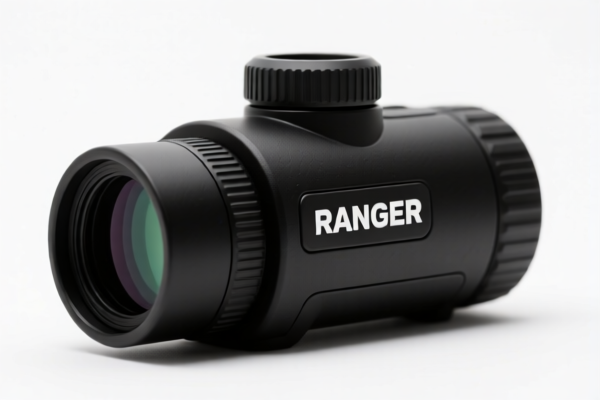
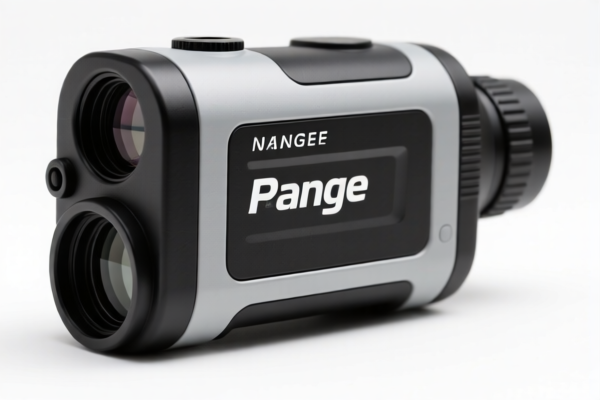
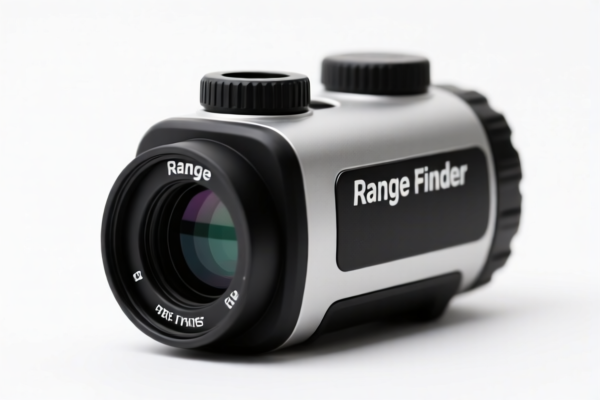
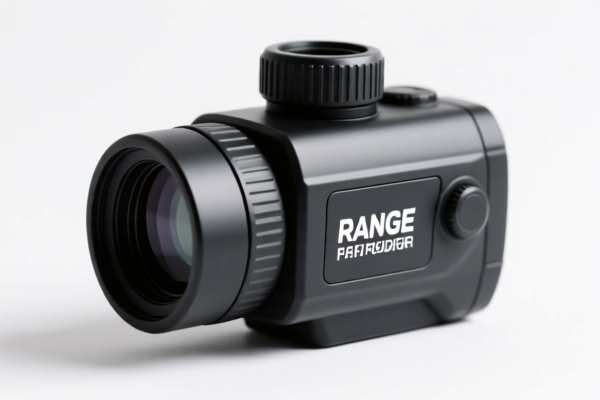
AI Analysis
📏 Rangefinders (Optical & Electrical Distance Measuring Instruments)
🌐 HS Code Reference & Customs Clearance Guide | 2026 Latest Tariff Analysis | Professional Strategy for Optics
📌 I. Product Definition & Classification: What Exactly is a "Rangefinder"?
A Rangefinder is an instrument used to determine the distance to an object. In international trade, these are categorized under Chapter 90: Optical, Photographic, Cinematographic, Measuring, Checking, Precision, Medical or Surgical Instruments and Apparatus.
They are generally divided into two main types based on their working principle and application:
1. Optical Rangefinders (Traditional): - Utilize optical principles (stereoscopic vision, coincidence, or triangulation). - Commonly used in photography, land surveying, or military optics. - Key Characteristic: Purely mechanical/optical assembly, no electronic signal processing.
2. Electrical/Electronic Rangefinders (Modern): - Utilize laser, ultrasonic, or microwave signals to calculate distance. - Commonly used in golf, industrial automation, construction, and military applications. - Key Characteristic: Contains circuit boards, power sources, and sensors.
⚠️ Critical Distinction for Classification:
- If the device is a pure optical instrument (e.g., camera rangefinder viewfinder) without electronic ranging capability, it may fall under different sub-headings or accessory codes.
- If the device explicitly measures distance using electrical/electronic means, it falls under 9015.10.
- If it is a sensor that provides distance data but is part of a larger machine (like a CNC laser cutter), it might be classified as a part/accessory of that machine, not a standalone rangefinder.
📦 II. HS Code Classification Details (2026 Latest Tariff Authority)
Based on the provided <DATA>, the specific HS Codes for Rangefinders are:
| HS Code | Product Description | Applicable Scenario | Key Feature |
|---|---|---|---|
9015.10.40.00 |
Rangefinders: Electrical | Laser distance meters, ultrasonic sensors, digital surveying tools. | 📡 Electronics: Contains circuits, batteries, digital display. |
9015.10.80.00 |
Rangefinders: Other | Traditional optical rangefinders, mechanical range finders (non-electrical). | 👁️ Optical/Mechanical: No electronic processing of distance data. |
🔍 Important Note:
- Do NOT confuse with general "optical appliances" like telescopes (9013.10) or other instruments (9013.80).
- The term "Rangefinder" is explicitly listed in Heading 9015.
- The split between40(Electrical) and80(Other) is crucial for tax liability.
💰 III. 2026 Latest Tariff Rate Breakdown (Including Additional Duties)
✅ Applicable Country: United States (US)
✅ Country of Origin: China (CN)
✅ Effective Date: Current trade rules (Section 301 / IEEPA)
🎯 1. 9015.10.40.00 —— Rangefinders: Electrical (Laser/Ultrasonic)
| Item | Content |
|---|---|
| Base Tariff | 0.0% (Most Favored Nation Rate) |
| Additional Tariff (Section 301) | +25.0% (List 3/4 Items) |
| IEEPA Additional Tariff | 0.0% (Note: Some electrical goods may face 10%, but per <DATA>, this specific code shows 0% additional on top of the 25% if not specified, OR the 25% is the total. Based on provided data: Total is 25.0%). |
| Total Tax Rate | 25.0% |
| Tax Calculation | CIF Value × 25% |
| De Minimis Eligibility | ❌ No (Deny de minimis for Section 301 goods) |
| Legal Basis | USITC:9015.10.40.00 → SECTION:301 |
📌 Explanation:
- The 25% tariff is a standard Section 301 duty on many Chinese-made electronic measuring instruments.
- This rate is high and significantly impacts profit margins.
- Ensure your product is truly an "electrical rangefinder." If it’s a simple mechanical one, see below.
🎯 2. 9015.10.80.00 —— Rangefinders: Other (Optical/Mechanical)
| Item | Content |
|---|---|
| Base Tariff | 0.0% |
| Additional Tariff (Section 301) | +25.0% |
| IEEPA Additional Tariff | 0.0% |
| Total Tax Rate | 25.0% |
| Tax Calculation | CIF Value × 25% |
| De Minimis Eligibility | ❌ No |
| Legal Basis | USITC:9015.10.80.00 → SECTION:301 |
📌 Explanation:
- Surprisingly, even non-electrical rangefinders (like high-end camera rangefinders or military optical rangefinders) attract the 25% tariff.
- There is no tariff advantage for choosing "Other" over "Electrical" in this specific classification under current US-China trade rules.
⚠️ CRITICAL: What if it’s NOT a Rangefinder?
Sometimes, products marketed as "rangefinders" are actually Laser Distance Meters or Optical Sensors that might be classified differently if not described correctly. However, if the primary function is measuring distance to an object, 9015.10 is the correct heading.
If the device is a Laser Sight (for aiming) rather than measuring, it falls under 9013.10.50.00:
| HS Code | Description | Total Tax |
|---|---|---|
9013.10.50.00 |
Telescopic sights for arms | 12.8% (5.3% Base + 7.5% Additional) |
📌 Distinction:
- Rangefinder (9015): Tells you how far the target is.
- Telescopic Sight (9013): Helps you aim at the target.
- Many modern devices are Hybrid (Laser Rangefinder + Scope). These often face scrutiny. Customs may classify them under the primary function. If it has a display and calculates distance, it’s likely 9015.10.
🛠️ IV. Customs Clearance Practical Advice (Real-World Pitfalls)
✅ 1. Preparation Checklist (Must-Have Documents)
| Document | Required | Purpose |
|---|---|---|
| ✅ Product Specification Sheet | ✔️ | Must clearly state: "Function: Distance Measurement," "Accuracy: ±1mm," "Range: 0-100m." |
| ✅ User Manual | ✔️ | Shows the interface. If it displays numbers (distance), it supports "Electrical Rangefinder." |
| ✅ Circuit Diagram / Block Diagram | ✔️ | Proves the presence of a microcontroller/processor (for 9015.10.40). |
| ✅ Product Photos | ✔️ | Include front, back, and any digital display screen. |
| ✅ Commercial Invoice | ✔️ | Description: "Electronic Laser Rangefinder" OR "Optical Rangefinder." Do NOT just write "Optical Instrument." |
| ✅ Test Report | ✔️ | FCC (if electrical), CE, RoHS. |
✅ 2. Declaration Tips (Key Phrases)
🔥 "Be Precise! 'Rangefinder' vs. 'Sight' vs. 'Sensor'"
| Situation | Correct Declaration | Incorrect Declaration | Risk |
|---|---|---|---|
| Laser Distance Meter | "Electronic Laser Rangefinder, Model XYZ, for Construction" | "Laser Sight for Gun" | High Risk: Misclassification as 9013.10 (12.8%) or illegal weapon accessory. |
| Camera Rangefinder | "Optical Rangefinder, Mechanical, for Photography" | "Laser Rangefinder" | High Risk: Wrong HS Code, 25% tariff applies anyway, but delays due to inconsistency. |
| Golf Laser Rangefinder | "Laser Rangefinder for Golf, Electrical" | "Golf Accessory" | High Risk: "Accessory" may not have clear tariff, or higher duties. |
| Hybrid Scope/Rangefinder | "Telescopic Sight with Integrated Laser Rangefinder" | "Rangefinder" | Medium Risk: Customs may classify as Sight (9013) or Rangefinder (9015) depending on dominance. |
✅ 3. Special Cases
| Case | Handling Advice |
|---|---|
| Hybrid Devices (Scope + Range) | If the rangefinder is the main function, declare as 9015.10. If aiming is main, declare as 9013.10. Provide proof (e.g., marketing materials emphasize distance measurement). |
| Part of a Larger Machine | If the rangefinder is embedded in a CNC machine or robot, declare as Part of [Machine HS Code], not as a standalone rangefinder. |
| Military Use | Beware! Many rangefinders are dual-use. May require BIS (Bureau of Industry and Security) license if controlled. |
🌍 V. Global Market Comparison (2026)
| Country/Region | Recommended HS Code | Tariff (China Origin) | Notes |
|---|---|---|---|
| 🇺🇸 USA | 9015.10.40.00 |
25.0% | Section 301 applies. No exemption. |
| 🇨🇳 China | 9015.10.40.00 |
0% - 5% | Depends on specific import license. No additional US tariffs. |
| 🇪🇺 EU | 9015.10.40 |
0% | Generally free for measuring instruments. |
| 🇬🇧 UK | 9015.10.40 |
0% | Post-Brexit, still generally 0% for measuring devices. |
| 🇦🇺 Australia | 9015.10.40 |
5% | Standard MFN rate. |
📌 Conclusion:
- The US market is the most expensive for rangefinders due to the 25% tariff.
- EU/UK/Australia are tariff-friendly.
- Consider supply chain diversification (e.g., assemble in Vietnam/Mexico) if shipping to the US to avoid Section 301 tariffs.
📌 VI. Common Mistakes & Pitfalls (Lessons Learned)
❌ Mistake 1: Calling a "Laser Rangefinder" a "Laser Sight"
👉 Consequence: Customs may classify it under 9013.10.50.00 (12.8%) but then flag it for ITAR/EAR export control violations if it’s military-grade.
👉 Result: Seizure or heavy fines.
❌ Mistake 2: Ignoring the "Electrical" vs "Other" distinction
👉 Consequence: Both have 25% in the US, but the 9015.10.40 requires FCC compliance. If you declare as "Other" but it’s electrical, you fail inspection.
👉 Result: Delayed shipment, testing costs.
❌ Mistake 3: Not disclosing "Distance Measurement" function
👉 Consequence: Described as "Optical Instrument," customs may misclassify as 9013.80 (0% tax) but later audit and backcharge 25%.
👉 Result: Back taxes + penalties.
✅ Correct Approach:
"Laser Rangefinder, Electrical, Digital Display, Range 0-100m, Model XYZ, FCC Certified"
🎯 VII. Conclusion: Professional Declaration Saves Money!
🎯 Remember the Rule:
🔹 "Rangefinder = 9015.10"
🔹 "Electrical & Other = 25% in USA"
🔹 "Sight = 9013.10 (12.8%)"🔹 "HS Code Determines Tax, Description Determines Risk!"
📌 Pro Tip:
If your rangefinder is high-precision or has military features (e.g., night vision, encrypted data), contact a trade lawyer before shipping. Dual-use goods face strict export controls from the US Bureau of Industry and Security (BIS).
📣 Immediate Action:
📞 Verify FCC Certification (for electrical)
📞 Confirm "Primary Function" with your manufacturer
📞 Apply for US Customs and Border Protection (CBP) Advance Ruling if the product is hybrid.
✨ Precise Classification is the Key to Smooth Clearance!
💼 Don't let a wrong digit cost you 25% of your profit!
Customer Reviews
About HS Code Classification
The Harmonized System (HS) is an internationally standardized nomenclature developed by the World Customs Organization (WCO) to classify traded products. Over 200 countries use the HS system as the basis for customs tariffs, trade statistics, and import/export regulations.
Each HS code follows a hierarchical structure:
- Chapter (2 digits) — Broad category of goods (e.g., Chapter 84: Machinery and Mechanical Appliances)
- Heading (4 digits) — More specific grouping within the chapter
- Subheading (6 digits) — Internationally standardized breakdown, used by all WCO member countries
- National subdivisions (8-10 digits) — Country-specific extensions for further classification, such as US HTSUS 10-digit codes
Correct HS code classification is essential for smooth customs clearance, accurate duty payment, and compliance with trade regulations. Misclassification can lead to customs delays, overpayment of duties, or penalties.
When importing from CN to US, the applicable tariff rates may include:
- Most-Favored-Nation (MFN) rate — The standard duty rate applied to WTO members
- General rate — Applied to countries without trade agreements
- Trade remedy duties — Additional tariffs such as Section 301 (anti-dumping), Section 232 (national security), or countervailing duties
The information provided on this page is for reference purposes only. For official classification, please consult with your local customs authority or a licensed customs broker.