raw buffalo hides
CN → US| HS Code | Tariff Rate | Origin | Destination | Doc |
|---|---|---|---|---|
| 4101203500 | 19.9% | CN | US | Official Doc |
| 4101503500 | 19.9% | CN | US | Official Doc |
Product Images
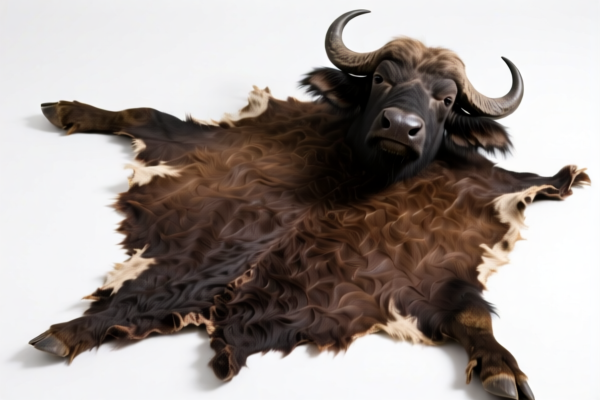
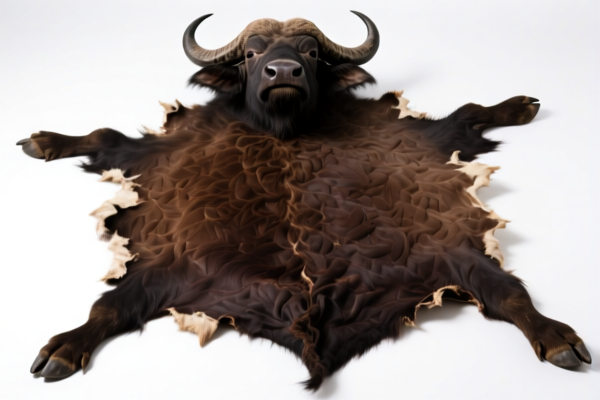
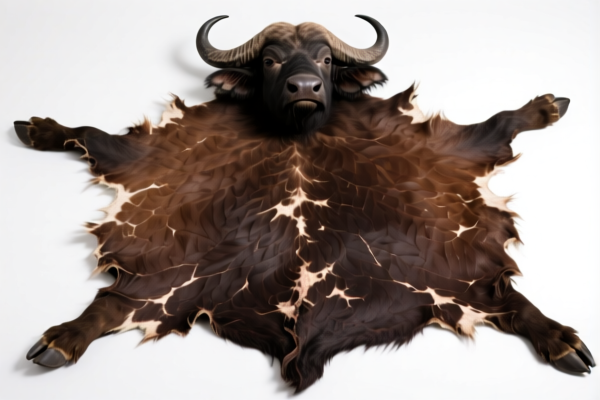
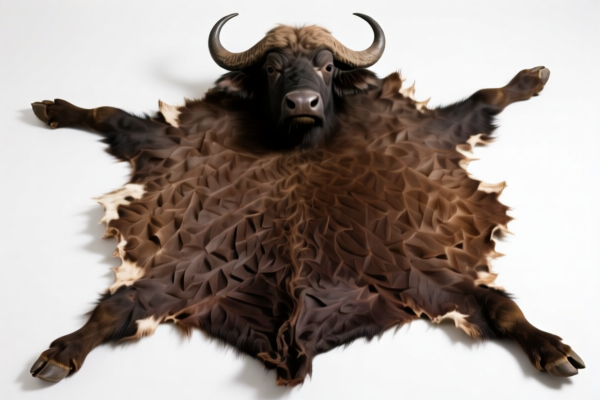
AI Analysis
🐃 Raw Buffalo Hides (未鞣制水牛皮/生牛皮)
🌐 HS Code Reference & Customs Clearance Guide | 2026 Latest Tariff Analysis | Professional Strategy
📌 One: Product Definition & Classification: Do You Really Understand "Raw Hides"?
Raw hides and skins are the fundamental raw materials for the global leather industry. They are animal skins that have been removed from the carcass but not yet tanned, parchment-dressed, or further prepared. In international trade, the classification of raw buffalo/bovine hides depends strictly on two factors: Weight and Preservation Method (fresh, salted, dried, etc.).
⚠️ Key Distinction Points:
- Small Hides/Skins: Defined by specific weight limits based on preservation (e.g., ≤8kg if simply dried, ≤10kg if dry-salted).
- Large Hides/Skins: Defined by weights exceeding these limits (e.g., >16kg for fresh/wet-salted).
- Species: Specifically Buffalo (Bubalus bubalis) or Bovine (Cattle). The data provided specifically highlights Buffalo.
📦 Two: HS Code Classification Details (2026 Latest Tariff Authority Comparison)
Based on the provided data, there are two distinct HS Codes for Raw Buffalo Hides, differentiated primarily by weight and preservation status.
| HS Code | Product Description | Applicable Scenario | Key Criteria |
|---|---|---|---|
4101.20.35.00 |
Whole hides/skins, unsplit, NOT EXCEEDING specified weight limits | Small hides/skins; Simply dried (≤8kg), Dry-salted (≤10kg), or Fresh/Wet-salted/Preserved (≤16kg) | Weight ≤ limits |
4101.50.35.00 |
Whole hides/skins, unsplit, EXCEEDING 16 kg | Large hides/skins; Typically fresh, wet-salted, or otherwise preserved large pelts | Weight > 16 kg |
🔍 Critical Reminder:
- Both codes specifically refer to Buffalo (Of buffalo).
- Both codes refer to Whole hides and skins, unsplit (not split into top grain and flesh).
- Both codes refer to Raw materials (fresh, salted, dried, limed, pickled, or preserved, but not tanned).
💰 Three: 2026 Latest Tariff Rate Details (Base & Additional Taxes)
✅ Applicable Country: China (CN) Import/Export Context (Based on standard tariff structure for HS 4101)
✅ Product: Raw Buffalo Hides
✅ Source Data: Provided<DATA>snippet
🎯 1. 4101.20.35.00 —— Raw Buffalo Hides (Small/Light Weight)
| Item | Content |
|---|---|
| Base Tariff Rate | 0.0% |
| Additional/Surcharge Tariff | 0.0% |
| Total Effective Tax Rate | 0.0% |
| Tax Detail | Base: 0.0%, Surcharge: 0.0% |
📌 Explanation:
- Small-sized raw buffalo hides are often treated as essential raw materials with zero duty to encourage leather processing domestic production.
- No additional trade war tariffs or specific surcharges are applied in this dataset.
🎯 2. 4101.50.35.00 —— Raw Buffalo Hides (Large/Heavy Weight)
| Item | Content |
|---|---|
| Base Tariff Rate | 0.0% |
| Additional/Surcharge Tariff | 0.0% |
| Total Effective Tax Rate | 0.0% |
| Tax Detail | Base: 0.0%, Surcharge: 0.0% |
📌 Explanation:
- Large raw buffalo hides also benefit from a 0.0% tax rate in this specific tariff schedule.
- This reflects a policy favoring the import of raw materials for the leather manufacturing sector.
🛠️ Four: Customs Clearance Practical Advice (Avoiding Pitfalls)
✅ 1. Preparation of Documents (Must-Haves)
| Document | Required | Notes |
|---|---|---|
| ✅ Commercial Invoice | ✔️ | Must clearly state "Raw Buffalo Hides," not "Leather" or "Finished Goods." |
| ✅ Packing List | ✔️ | Must specify individual hide weights and total weight per shipment. |
| ✅ Species Declaration | ✔️ | Explicitly state "Bubalus bubalis" (Buffalo) vs. "Bos taurus" (Cattle). Code 4101.20.35.00 & 4101.50.35.00 are for Buffalo. |
| ✅ Preservation Method | ✔️ | State clearly: Fresh, Salted, Dried, Pickled, etc. This determines the weight limit applicable. |
| ✅ Health/Veterinary Certificate | ✔️ | Critical for animal products. Must certify freedom from diseases like Foot and Mouth. |
| ✅ Tanning Status Declaration | ✔️ | Confirm "Not Tanned" to avoid misclassification as Chapter 41 (Tanned Leather) or 42 (Articles of Leather). |
✅ 2. Declaration Tips (Key Mantras)
🔥 "Weight is King, Preservation Defines Limit, Buffalo is Specific!"
| Scenario | Correct Declaration | Wrong Practice |
|---|---|---|
| Hides < 16kg (Fresh/Wet-Salted) | 4101.20.35.00 |
Misclassifying as 4101.50... → Potential penalty |
| Hides > 16kg (Fresh/Wet-Salted) | 4101.50.35.00 |
Misclassifying as 4101.20... → Under-declaration |
| Dried Hides (≤8kg) | 4101.20.35.00 |
Ignoring the 8kg limit for dried goods |
| Tanned Leather | NOT Chapter 41 Raw | Declaring raw hides when tanned → Wrong HS Code |
✅ 3. Special Circumstances Handling
| Situation | Handling Advice |
|---|---|
| Mixed Weights | Separate shipments by weight/preservation if possible, or declare accurately with individual weights. |
| Dehaired/Split | Data specifies "Whole hides... unsplit." If split or dehaired, check if sub-headings change. The provided codes are for "Other" within unsplit. |
| Preservation Mismatch | Ensure invoice matches physical state. If declared as "Dry" but arrives "Wet," customs may reclassify and assess duties differently. |
🌍 Five: Global Market Comparison (2026 Latest)
| Country/Region | Recommended HS Code | Base Tariff | Additional Notes |
|---|---|---|---|
| 🇨🇳 China (Import) | 4101.20.35.00 / 4101.50.35.00 |
0.0% | Zero duty encourages raw material import. |
| 🇺🇸 USA (Import) | 4101.20.00.00 / 4101.50.00.00 |
Varies (often low) | Subject to veterinary inspections (USDA). |
| 🇪🇺 EU (Import) | 4101 20 / 4101 50 |
Low/Zero | Strict sanitary controls. |
| 🇻🇳 Vietnam (Export) | Same HS | Low | Major leather exporter; raw hides often exported. |
📌 Conclusion:
- China offers 0% duty for these specific raw buffalo hides under the provided data.
- Veterinary and Health Certificates are more critical than tariff rates for clearing animal products globally.
📌 Six: Common Errors & Pitfall Guide (Lessons Learned)
❌ Error 1: Declaring "Leather" instead of "Raw Hides"
👉 Consequence: Wrong HS Code (Chapter 41 vs 41/42), potential penalties.
❌ Error 2: Ignoring Weight Limits for Preservation
👉 Consequence: Misclassification between 4101.20 and 4101.50. E.g., Dried hide >8kg cannot go to 4101.20.
❌ Error 3: Failing to Specify Species (Buffalo vs. Cow)
👉 Consequence: Wrong sub-code. 4101.20.35.00 is specifically for Buffalo. Cattle have different sub-codes.
❌ Error 4: Incomplete Preservation Declaration
👉 Consequence: Customs may reject the declaration or require additional testing to determine weight limits.
✅ Correct Practice:
"Raw Buffalo Hides, Wet-Salted, Unsplit, Whole, Avg Weight 18kg per skin, USDA Certified, HS 4101.50.35.00"
🎯 Seven: Conclusion: Precision in Classification Saves Money!
🎯 Remember the Mantra:
🔹 "Buffalo is Key, Weight Defines Code."
🔹 "Under 16kg (Wet) → 4101.20... Over 16kg → 4101.50..."
🔹 "Tax is 0%, but Documents are Critical!"
📌 Pro Tip:
If your hides are tanned, they do NOT fall under these codes. They fall under 4104 (Tanned Bovine/Buffalo Leather). Always distinguish between Raw and Tanned.
📣 Immediate Action:
📞 Verify individual hide weights on your packing list.
✅ Confirm "Buffalo" species on veterinary certificate.
🚀 Use 4101.20.35.00 for small/light raw hides and 4101.50.35.00 for large/heavy raw hides.
✨ Professional Clearance Starts with Accurate Classification!
💼 Your Raw Hides are 0% Taxed, Don't Let Bad Documentation Cost You!
Customer Reviews
About HS Code Classification
The Harmonized System (HS) is an internationally standardized nomenclature developed by the World Customs Organization (WCO) to classify traded products. Over 200 countries use the HS system as the basis for customs tariffs, trade statistics, and import/export regulations.
Each HS code follows a hierarchical structure:
- Chapter (2 digits) — Broad category of goods (e.g., Chapter 84: Machinery and Mechanical Appliances)
- Heading (4 digits) — More specific grouping within the chapter
- Subheading (6 digits) — Internationally standardized breakdown, used by all WCO member countries
- National subdivisions (8-10 digits) — Country-specific extensions for further classification, such as US HTSUS 10-digit codes
Correct HS code classification is essential for smooth customs clearance, accurate duty payment, and compliance with trade regulations. Misclassification can lead to customs delays, overpayment of duties, or penalties.
When importing from CN to US, the applicable tariff rates may include:
- Most-Favored-Nation (MFN) rate — The standard duty rate applied to WTO members
- General rate — Applied to countries without trade agreements
- Trade remedy duties — Additional tariffs such as Section 301 (anti-dumping), Section 232 (national security), or countervailing duties
The information provided on this page is for reference purposes only. For official classification, please consult with your local customs authority or a licensed customs broker.