raw crocodile hide
CN → US| HS Code | Tariff Rate | Origin | Destination | Doc |
|---|---|---|---|---|
| 4115100000 | 35.0% | CN | US | Official Doc |
| 4106400000 | 35.0% | CN | US | Official Doc |
| 4302196000 | 38.5% | CN | US | Official Doc |
| 4106910000 | 38.3% | CN | US | Official Doc |
| 4302197500 | 36.7% | CN | US | Official Doc |
Product Images
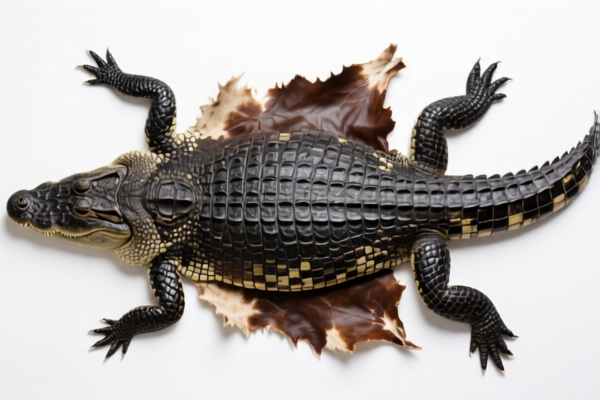
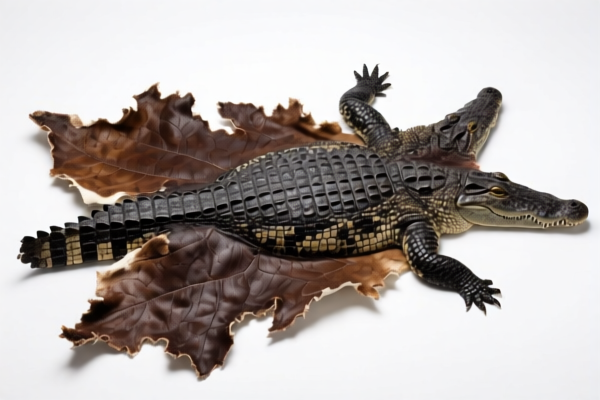
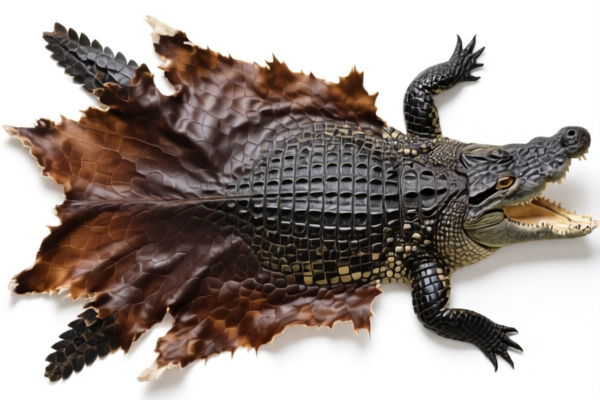
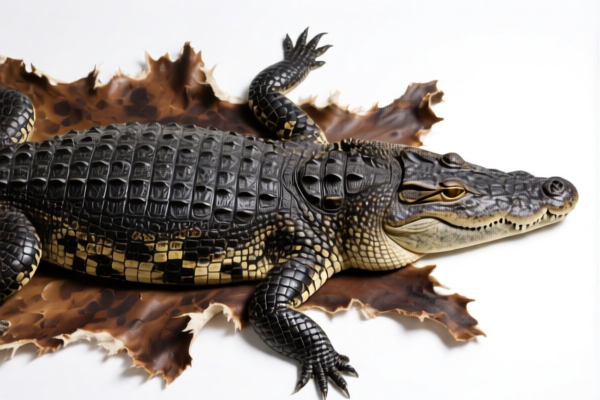
AI Analysis
🐊 Raw Crocodile Hide
🌐 HS Code Classification & Customs Clearance Guide | 2026 Latest Tariff Analysis | Professional Strategy for Raw Animal Skins
📌 I. Product Definition: What Exactly is "Raw Crocodile Hide"?
Raw Crocodile Hide refers to the skin of crocodilians (such as Nile crocodile, American crocodile, or saltwater crocodile) that has been removed from the animal and has undergone minimal processing. Crucially, it has not been fully tanned, dressed, or finished for direct use in luxury goods. In international trade, the state of preservation (e.g., salted, fresh, dried) and the extent of chemical treatment dictate the classification.
⚠️ Critical Distinction:
- Raw/Preserved Skins (Salted, Fresh, Dried): Often fall under Chapter 41 (Raw Hides and Skins).
- Tanned/Finished Skins: Fall under Chapter 41 (Leather) or Chapter 43 (Fur).
- "Raw" vs. "Semi-Tanned": If the hide has undergone preliminary tanning (e.g., limed, pickled), it may still be considered "semi-tanned leather" under Chapter 41, not raw. However, for many raw hides that are simply preserved, customs often looks at whether the "raw hide" definition in Heading 41.01/41.02 is met. Note: The provided data suggests interpretations leading to both Chapter 41 (Leather) and Chapter 43 (Fur) depending on specific processing status.
📦 II. HS Code Classification Details (Based on Provided Data)
The following table maps the potential HS Codes based on the provided data, explaining the logic for each. Note that "Raw Crocodile Hide" can be ambiguous, leading to different interpretations depending on whether it is viewed as "Leather" or "Fur" and its specific preparation state.
| HS Code | Product Description | Logic from Data Summary | Total Tax Rate | Tax Breakdown |
|---|---|---|---|---|
| 4115.10.00.00 | Prepared Crocodile Leather | Material Match: Crocodile skin is classified as "leather." Form Match: "Refined/Prepared" implies sheets or plates. Logic: Fits the material requirement for composite or prepared leather. |
35.0% | Base: 0.0% Add. Tariff: 25.0% Section 301/122 Tariff: 10% |
| 4106.40.00.00 | Crocodile Skins, Tanned or Half-Tanned | Material Match: "Crocodile" fits "Reptile Skins." Processing Match: "Refined" does not change the fundamental nature of reptile skin. Logic: Classified under Reptile Skins (Ch 41) if tanned/half-tanned. |
35.0% | Base: 0.0% Add. Tariff: 25.0% Section 301/122 Tariff: 10% |
| 4302.19.60.00 | Dressed Crocodile Fur/Skins | Material Match: Crocodile skin considered "fur/skin" (Chapter 43). Form Match: "Refined" implies dressed/finished skin. Logic: Fits the category for dressed fur skins. |
38.5% | Base: 3.5% Add. Tariff: 25.0% Section 301/122 Tariff: 10% |
| 4106.91.00.00 | Other Tanned Crocodile Leather | Material Match: Crocodile considered "Other Animal." Processing Match: "Refined" usually implies tanning. Logic: Fits "Other animals' tanned or half-tanned leather." |
38.3% | Base: 3.3% Add. Tariff: 25.0% Section 301/122 Tariff: 10% |
| 4302.19.75.00 | Dressed Crocodile Fur (Specific Category) | Material Match: Crocodile skin categorized under "Fur." Form Match: "Refined" implies dyed/finished. Logic: Fits tanned/dressed fur skins. |
36.7% | Base: 1.7% Add. Tariff: 25.0% Section 301/122 Tariff: 10% |
🔍 Key Observation:
The primary differentiator between the 35.0% rate (Headings 4106/4115) and the 36-38%+ rates (Heading 4302) is whether customs classifies the item as Leather (Ch 41) or Fur (Ch 43).
- Chapter 41 (Leather): Generally 0% base tariff + 25% Add. Tariff + 10% Section 122/301 Tariff = 35-38.3% (depending on base).
- Chapter 43 (Fur): Generally has a base tariff (1.7%-3.5%) + 25% Add. Tariff + 10% Section 122/301 Tariff = 36.7-38.5%.
Note: The "10%" tariff listed in the data is referred to as "122 Clause Tariff" in the source, which likely corresponds to specific trade remedy actions or recent executive orders impacting Chinese-origin goods.
💰 III. 2026 Latest Tariff Rate Breakdown (US Market)
✅ Applicable Country: United States (US)
✅ Origin: China (CN) (Assumed based on "Section 122/301" context in data)
✅ Effective Time: Post-November 2025 policies
🎯 1. Low-Tier Classification: 4106.40.00.00 / 4115.10.00.00 (Leather Interpretation)
| Item | Detail |
|---|---|
| Base Tariff | 0.0% |
| USITC Additional Tariff | +25.0% (Section 301 / Trade Act) |
| Section 122 / 301 Additional Tariff | +10.0% |
| Total Effective Rate | 35.0% |
| Calculation | CIF Value × 35% |
| De Minimis Exemption | ❌ Not Applicable (Deny de minimis for these HS codes from China) |
| Legal Basis | USITC Headings 4106/4115 → Section 301 → Section 122/Executive Order |
📌 Explanation:
- These codes are classified under Chapter 41 (Leather).
- The base rate is 0%, but the 25% and 10% surcharges drive the cost.
- This is the most favorable tax rate among the provided options.
🎯 2. High-Tier Classification: 4302.19.60.00 / 4106.91.00.00 (Fur/Other Leather Interpretation)
| Item | Detail |
|---|---|
| Base Tariff | 3.3% - 3.5% (Varies by specific subheading) |
| USITC Additional Tariff | +25.0% |
| Section 122 / 301 Additional Tariff | +10.0% |
| Total Effective Rate | 38.3% - 38.5% |
| Calculation | CIF Value × 38.3%~38.5% |
| De Minimis Exemption | ❌ Not Applicable |
| Legal Basis | USITC Headings 4302/4106 → Section 301 → Section 122 |
📌 Explanation:
- 4302.19.60.00 and 4106.91.00.00 carry a non-zero base tariff.
- This makes them approximately 3-4% more expensive than the 0% base leather codes.
- Classification as "Fur" (Ch 43) or "Other Animal Leather" (Ch 41 specific subhead) triggers the base duty.
🛠️ IV. Customs Clearance Practical Advice
✅ 1. Critical Documentation Checklist
| Document | Required? | Purpose |
|---|---|---|
| ✅ Commercial Invoice | ✔️ | Must specify "Raw Crocodile Hide," species (e.g., Crocodylus niloticus), and processing state (Salted/Dried). |
| ✅ CITES Permit | ✔️ | Mandatory. Crocodile species are protected under CITES. Import requires an Import Permit and Export Permit from relevant wildlife authorities. |
| ✅ Bill of Lading / Air Waybill | ✔️ | Standard shipping docs. |
| ✅ Certificate of Origin | ✔️ | Required for Section 301/122 tariff determination. |
| ✅ Species Declaration | ✔️ | Clearly state the species. Misidentification can lead to severe penalties. |
| ✅ Processing Description | ✔️ | Detail if "raw," "salted," "tanned," or "dressed." This determines Chapter 41 vs. 43. |
✅ 2. Classification Strategy & Tips
🔥 "Species Matters, Process Defines, CITES Saves You!"
| Scenario | Recommended HS Code | Reasoning |
|---|---|---|
| Salted/Dried, Minimal Processing | 4106.40.00.00 |
Classified as Reptile Skin (Leather) in Ch 41. Lowest base rate (0%). |
| Tanned/Finished, Luxury Grade | 4115.10.00.00 or 4302.19.60.00 |
If treated as composite leather or dressed fur, rate increases. Verify if "Leather" or "Fur" classification is more appropriate for your specific product finish. |
| Mixed Shipment | Separate Declaration | Do not mix raw hides with finished goods. Each must be declared with its specific HS Code. |
📌 Important Note:
- CITES Compliance is Non-Negotiable: Without valid CITES permits, the goods will be confiscated, and the importer may face fines or criminal charges.
- "Raw" Definition: Ensure the hide is not considered "tanned" if you want to argue for Chapter 41 base rates. If it is fully tanned and dressed, customs may insist on Chapter 43 if it's considered "fur-like" or high-value finished skin.
✅ 3. Common Pitfalls to Avoid
| Mistake | Consequence |
|---|---|
| ❌ Under-declaring Species | e.g., Saying "Reptile Skin" without specifying "Crocodile." → CITES Violation + Seizure |
| ❌ Ignoring Processing State | Claiming "Raw" when it is "Tanned" to avoid higher tariffs. → Penalty for Misclassification |
| ❌ Missing CITES Permits | No permit. → 100% Seizure + Fine |
| ❌ Incorrect Origin | Misdeclaring origin to avoid Section 301/122 tariffs. → Heavy Fines + Landed Cost Adjustment |
🌍 V. Global Market Comparison (2026)
| Country/Region | Recommended HS Code | Est. Tariff (US Origin Context) | Key Requirements | Notes |
|---|---|---|---|---|
| 🇺🇸 USA | 4106.40.00.00 |
35.0% | CITES + Section 301/122 | Highest compliance burden. |
| 🇨🇳 China | 4106.40.00.00 |
~10-15% (Varies) | CITES + Wildlife Dept Approval | Import quotas may apply. |
| 🇪🇺 EU | 4106.40.00.00 |
~10-12% | CITES + EUTR (EU Timber Regulation equivalent for skins) | Strict traceability. |
| 🇬🇧 UK | 4106.40.00.00 |
~10-12% | CITES + UKCA Marking (if applicable) | Post-Brexit rules apply. |
| 🇦🇺 Australia | 4106.40.00.00 |
~5-10% | CITES + EPBC Act | Biosecurity checks. |
📌 Conclusion:
- The USA has the most complex tariff structure due to Section 301/122 surcharges.
- CITES is a global requirement; ensure permits are obtained before shipment.
- Chapter 41 vs. Chapter 43: This is the key battleground for duty optimization. Proper documentation of the "raw" or "tanned" state is critical.
📌 VI. Final Recommendation for Importers
- Verify Species & Processing: Before shipping, confirm the exact species and processing level with your supplier.
- Secure CITES Permits: Apply for CITES permits in the country of export and import at least 4-6 weeks in advance.
- Pre-Classification: Consider applying for an IRS Ruling or CBP Binding Ruling (if in the US) to confirm the HS Code (
4106.40.00.00vs.4302.19.60.00) and mitigate risk. - Budget for Tariffs: Include the 35-38.5% total duty cost in your landed cost calculation. Do not underestimate the impact of Section 301/122 tariffs.
- Professional Broker: Use a licensed customs broker experienced in wildlife products and Chapter 41/43 classifications.
🎯 Remember:
🔹 "CITES First, HS Code Second, Tariff Third!"
🔹 "One wrong declaration, one seized shipment!"
🔹 "Optimize Chapter 41 (Leather) for lower base rates, but ensure compliance!"
📣 Action Item:
📞 Contact your customs broker today.
📄 Request CITES permit application forms.
📝 Prepare detailed product descriptions for HS Code validation.
✨ Smart Compliance, Smarter Business!
💼 Protect your supply chain with precision.
Customer Reviews
About HS Code Classification
The Harmonized System (HS) is an internationally standardized nomenclature developed by the World Customs Organization (WCO) to classify traded products. Over 200 countries use the HS system as the basis for customs tariffs, trade statistics, and import/export regulations.
Each HS code follows a hierarchical structure:
- Chapter (2 digits) — Broad category of goods (e.g., Chapter 84: Machinery and Mechanical Appliances)
- Heading (4 digits) — More specific grouping within the chapter
- Subheading (6 digits) — Internationally standardized breakdown, used by all WCO member countries
- National subdivisions (8-10 digits) — Country-specific extensions for further classification, such as US HTSUS 10-digit codes
Correct HS code classification is essential for smooth customs clearance, accurate duty payment, and compliance with trade regulations. Misclassification can lead to customs delays, overpayment of duties, or penalties.
When importing from CN to US, the applicable tariff rates may include:
- Most-Favored-Nation (MFN) rate — The standard duty rate applied to WTO members
- General rate — Applied to countries without trade agreements
- Trade remedy duties — Additional tariffs such as Section 301 (anti-dumping), Section 232 (national security), or countervailing duties
The information provided on this page is for reference purposes only. For official classification, please consult with your local customs authority or a licensed customs broker.