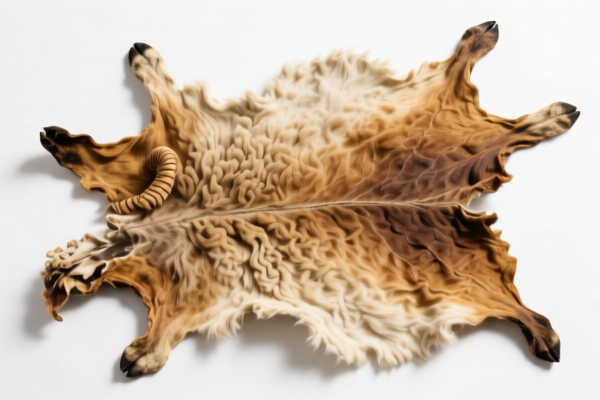
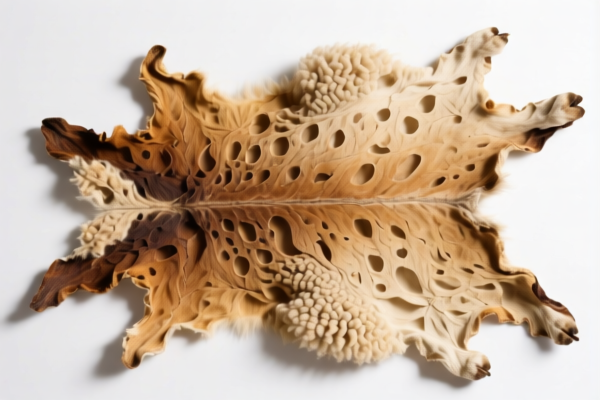
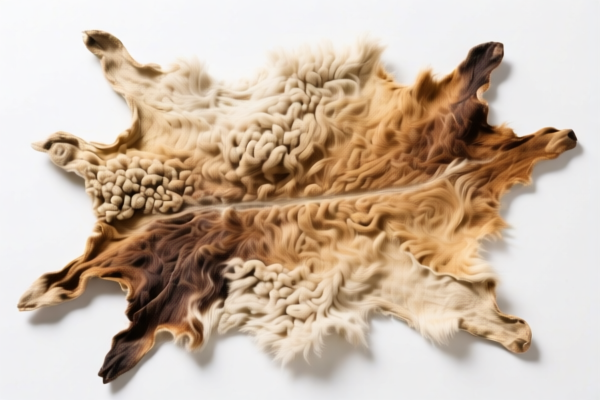
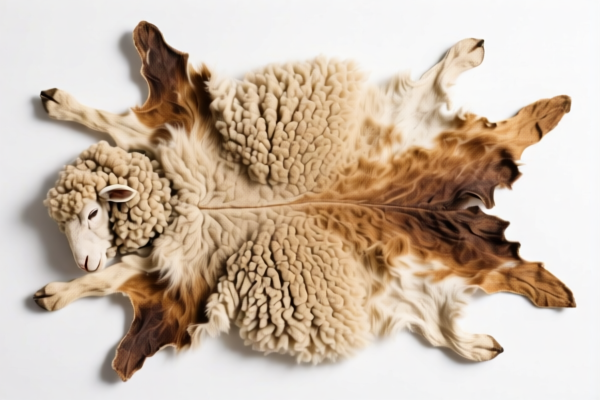
raw dry sheepskin
CN → US| HS Code | Tariff Rate | Origin | Destination | Doc |
|---|---|---|---|---|
| 4301900000 | 10.0% | CN | US | Official Doc |
| 5101111000 | 35.0% | CN | US | Official Doc |
| 4301300000 | 10.0% | CN | US | Official Doc |
| 4102101000 | 17.5% | CN | US | Official Doc |
| 5101112000 | 35.0% | CN | US | Official Doc |
Product Images
AI Analysis
🐑 Raw Dry Sheepskin: HS Code Classification & US Customs Clearance Guide (2026)
🌐 HS Code Reference & Clearance Guide | 2026 Latest Tariff Rules | Professional Clearance Strategy
📌 I. Product Definition & Classification: What is "Raw Dry Sheepskin"?
Raw Dry Sheepskin refers to the skin of sheep or lambs that has been removed from the carcass, typically cured (salted or dried), but has not undergone tanning, plucking, or further processing. In international trade, it is crucial to distinguish between leather hides (classified under Chapter 41) and fur skins/fleece (classified under Chapter 43 or 51).
The classification depends heavily on the physical state and commercial intent: 1. Fur Skins (Chapter 43): If the wool is intact and intended for fur manufacturing (e.g., shearling, pelts for coats). 2. Raw Hides (Chapter 41): If the wool is partially removed or it is considered a "hide" for leather production. 3. Raw Wool/Fleece (Chapter 51): If it is classified as raw wool material rather than a skin/pelt.
⚠️ Key Distinction Point:
- If the wool is intact and it is treated as a fur pelt → Chapter 43 (HS 4301)
- If it is treated as a raw hide for leather (wool may be removed) → Chapter 41 (HS 4102)
- If it is treated as raw wool material (not as a skin) → Chapter 51 (HS 5101)
📦 II. HS Code Classification Matrix (2026 Latest Tariff Data)
| HS Code | Product Description | Application Scenario | Key Characteristics |
|---|---|---|---|
4301.90.00.00 |
Other Raw Fur Skins | General raw sheepskin/pelts, not specifically lamb/shearling | • Raw sheepskin/pelt • Material: Sheepskin (Fur category) • Form: Raw fur skin |
4301.30.00.00 |
Raw Skins of Lambs and Similar Animals | Lamb pelts, shearling skins, high-value fur raw materials | • Raw sheep/lamb skin • Fits "Lamb" category • Form: Raw fur skin |
4102.10.10.00 |
Raw Sheepskins (excluding Lamb) | Raw hides for leather production, wool potentially removed | • Raw sheepskin/lambskin • Material: Sheep/Lambskin • Form: Pre-tanning primary form |
5101.11.10.00 |
Wool & Fine Animal Hair, Greasy, Not Scoured | Raw wool/fleece classified as fiber, not skin | • Raw sheepskin/wolf • Material: Wool/Fleece • Form: Raw fleece |
5101.11.20.00 |
Wool, Greasy, Not Scoured or Improved | Raw wool/fleece, unsorted/uncombed | • Raw sheepskin/wolf • Material: Wool/Fleece • Form: Unsorted/Uncombed |
🔍 Crucial Reminder:
- "Raw Dry Sheepskin" is ambiguous in customs declarations.
- If you intend to use it for fur garments, use Chapter 43 (4301.xxxx).
- If you intend to use it for leather goods, use Chapter 41 (4102.10.10.00).
- Misclassification can lead to severe tariff penalties due to the high additional duties.
💰 III. 2026 Latest Tariff Rate Breakdown (Detailed Tax Clauses)
✅ Applicable Country: United States (US)
✅ Country of Origin: China (CN)
✅ Effective Date: 2025/2026 (Including subsequent imports)
🎯 1. 4301.90.00.00 – Other Raw Fur Skins (Sheep)
| Item | Content |
|---|---|
| Base Duty Rate | 0.0% (Ad valorem) |
| Section 301 Additional Duty | +0.0% (Not subject to the 25% surcharge under this specific code in the provided data) |
| IEEPA 122-Clause Duty | +10.0% (Specific 122-clause tariff for China) |
| Total Tax Rate | 10.0% |
| Tax Calculation | CIF Value × 10% |
| De Minimis Exemption | ❌ Not Applicable (Generally, fur products are scrutinized; even if low value, classification dictates duty) |
| Legal Basis | Base: 0% + IEEPA 122-Cl: 10% |
📌 Interpretation:
- This code has a low total tax burden (10%) compared to wool/fleece categories.
- It is suitable for fur pelts where the wool is preserved.
- The "122-Clause" refers to specific trade restriction measures against China.
🎯 2. 4301.30.00.00 – Raw Skins of Lambs
| Item | Content |
|---|---|
| Base Duty Rate | 0.0% |
| Section 301 Additional Duty | +0.0% |
| IEEPA 122-Clause Duty | +10.0% |
| Total Tax Rate | 10.0% |
| Tax Calculation | CIF Value × 10% |
| De Minimis Exemption | ❌ Not Applicable |
| Legal Basis | Base: 0% + IEEPA 122-Cl: 10% |
📌 Interpretation:
- Ideal for lamb skins or high-quality shearling.
- Same favorable tariff structure as general raw fur skins.
🎯 3. 4102.10.10.00 – Raw Sheepskins (Leather Category)
| Item | Content |
|---|---|
| Base Duty Rate | 0.0% |
| Section 301 Additional Duty | +7.5% (Partial Section 301 surcharge) |
| IEEPA 122-Clause Duty | +10.0% |
| Total Tax Rate | 17.5% |
| Tax Calculation | CIF Value × 17.5% |
| De Minimis Exemption | ❌ Not Applicable |
| Legal Basis | Base: 0% + Sec301: 7.5% + IEEPA 122-Cl: 10% |
📌 Interpretation:
- Higher tax burden (17.5%) than fur skins.
- Used when the sheepskin is declared as a hide for leather production.
- The 7.5% Section 301 duty applies here, reflecting stricter scrutiny on raw leather materials.
🎯 4. 5101.11.10.00 – Greasy Wool/Fleece (Not Scoured)
| Item | Content |
|---|---|
| Base Duty Rate | 0.0% |
| Section 301 Additional Duty | +25.0% |
| IEEPA 122-Clause Duty | +10.0% |
| Total Tax Rate | 35.0% |
| Tax Calculation | CIF Value × 35% |
| De Minimis Exemption | ❌ Not Applicable |
| Legal Basis | Base: 0% + Sec301: 25% + IEEPA 122-Cl: 10% |
📌 Interpretation:
- High tax burden (35%).
- Apply this only if the product is explicitly declared as raw wool/fleece (fiber), not as a skin/pelt.
- The 25% Section 301 duty is fully applicable.
🎯 5. 5101.11.20.00 – Unsorted/Uncombed Greasy Wool
| Item | Content |
|---|---|
| Base Duty Rate | 0.0% |
| Section 301 Additional Duty | +25.0% |
| IEEPA 122-Clause Duty | +10.0% |
| Total Tax Rate | 35.0% |
| Tax Calculation | CIF Value × 35% |
| De Minimis Exemption | ❌ Not Applicable |
| Legal Basis | Base: 0% + Sec301: 25% + IEEPA 122-Cl: 10% |
📌 Interpretation:
- Same as above.
- Use only for raw wool materials that are unsorted/uncombed.
- Do not use for sheepskins/pelts.
🛠️ IV. Practical Clearance Advice (Pitfall Avoidance Guide)
✅ 1. Required Documentation Checklist
| Document | Mandatory? | Notes |
|---|---|---|
| ✅ Product Specification | ✔️ | Clearly state: "Raw Dry Sheepskin," wool length, curing method (salted/dried). |
| ✅ Commercial Invoice | ✔️ | Must specify HS Code, Origin (China), and Unit Price. |
| ✅ Packing List | ✔️ | Detail weight, quantity, and packaging type. |
| ✅ Curing Certificate | ✔️ | Proof that skins are properly cured (prevents biological contamination issues). |
| ✅ Fur/Leather Declaration | ✔️ | Explicitly state whether it is for fur (Ch 43) or leather (Ch 41). |
| ✅ Origin Certificate (CO) | ✔️ | Required for origin verification. |
✅ 2. Classification Strategy (Key Mantra)
🔥 “Fur for Coats (4301), Leather for Shoes (4102), Wool for Fiber (5101)!”
| Scenario | Correct HS Code | Tax Rate | Risk of Misclassification |
|---|---|---|---|
| Intact wool pelt for fashion/fur | 4301.90.00.00 or 4301.30.00.00 |
10% | Low risk if declared as fur. |
| Sheepskin for leather tanning | 4102.10.10.00 |
17.5% | High risk if declared as fur (lower tax). |
| Raw wool fleece (no skin structure) | 5101.11.10.00 |
35% | Very High risk! |
📌 Critical Advice:
- Do NOT declare "Raw Sheepskin" as "Wool" unless it is truly fiber only.
- Do NOT declare "Raw Sheepskin" as "Leather" if it is clearly a fur pelt.
- The 122-Clause (10%) applies to all these codes, but the Section 301 varies significantly (0%, 7.5%, or 25%).
✅ 3. Special Cases
| Case | Handling Advice |
|---|---|
| Mixed Batches | If a shipment contains both lamb skins and adult sheep skins, declare separately. |
| Salted vs. Dried | Both are considered "Raw." Specify in the invoice. |
| Biosecurity | Ensure no soil or organic debris. Customs may inspect for disease. |
| Value Declaration | High-value fur skins may attract anti-dumping scrutiny. Ensure accurate CIF value. |
🌍 V. Global Market Comparison (2026)
| Country/Region | Recommended HS Code | Tax Rate (China Origin) | Certification | Notes |
|---|---|---|---|---|
| 🇺🇸 USA | 4301.90.00.00 |
10% (Fur) / 17.5% (Leather) | No special cert | Highest scrutiny on origin. |
| 🇨🇳 China | 4301.90.00.00 |
~5-10% | None | Domestic trade lower tax. |
| 🇪🇺 EU | 4301.90.00.00 |
0-4% (Varies) | None | Less punitive than US. |
| 🇬🇧 UK | 4301.90.00.00 |
0-4% | None | Post-Brexit rules apply. |
📌 Conclusion:
- The US market has the most complex tariff structure due to Section 301 and IEEPA 122-Clause.
- China-origin raw sheepskins face 10%–35% duty depending on classification.
- Fur classification (Ch 43) is generally more tax-efficient (10%) than Wool classification (Ch 51, 35%).
📌 VI. Common Errors & Pitfalls (Lessons Learned)
❌ Error 1: Declaring "Raw Sheepskin" as "Wool" to avoid leather duties
👉 Consequence: 35% tax instead of 10-17.5%, plus potential fraud penalties.
❌ Error 2: Not specifying "Raw" in the description
👉 Consequence: Customs may assume it is processed leather, leading to different duty rates and inspection delays.
❌ Error 3: Ignoring the 122-Clause (10%)
👉 Consequence: Underpayment of duty, leading to back taxes + interest.
✅ Correct Practice:
“Raw Dry Sheepskin, Salted, for Fur Manufacturing, Origin: China, HS: 4301.90.00.00”
🎯 VII. Conclusion: Professional Declaration, Cost Savings!
🎯 Remember the Mantra:
🔹 “Fur is 10%, Leather is 17.5%, Wool is 35%!”
🔹 “Specify ‘Raw’ clearly, avoid misclassification!”
🔹 “122-Clause is always 10% for China!”
📌 Tip:
If your sheepskin is high-value shearling, consider using 4301.30.00.00 (Lamb category) for a cleaner classification under Fur.
Pre-clearance ruling (Advance Ruling) is recommended for large shipments to avoid customs disputes.
📣 Immediate Action:
📞 Consult a licensed customs broker + Provide product photos + Confirm intended use (Fur vs. Leather)
🚀 Ensure your commercial invoice matches the exact HS Code and tariff rate.
✨ Professional Clearance Starts with Accurate Classification!
💼 Every Percent of Duty Saved is Pure Profit!
Customer Reviews
About HS Code Classification
The Harmonized System (HS) is an internationally standardized nomenclature developed by the World Customs Organization (WCO) to classify traded products. Over 200 countries use the HS system as the basis for customs tariffs, trade statistics, and import/export regulations.
Each HS code follows a hierarchical structure:
- Chapter (2 digits) — Broad category of goods (e.g., Chapter 84: Machinery and Mechanical Appliances)
- Heading (4 digits) — More specific grouping within the chapter
- Subheading (6 digits) — Internationally standardized breakdown, used by all WCO member countries
- National subdivisions (8-10 digits) — Country-specific extensions for further classification, such as US HTSUS 10-digit codes
Correct HS code classification is essential for smooth customs clearance, accurate duty payment, and compliance with trade regulations. Misclassification can lead to customs delays, overpayment of duties, or penalties.
When importing from CN to US, the applicable tariff rates may include:
- Most-Favored-Nation (MFN) rate — The standard duty rate applied to WTO members
- General rate — Applied to countries without trade agreements
- Trade remedy duties — Additional tariffs such as Section 301 (anti-dumping), Section 232 (national security), or countervailing duties
The information provided on this page is for reference purposes only. For official classification, please consult with your local customs authority or a licensed customs broker.