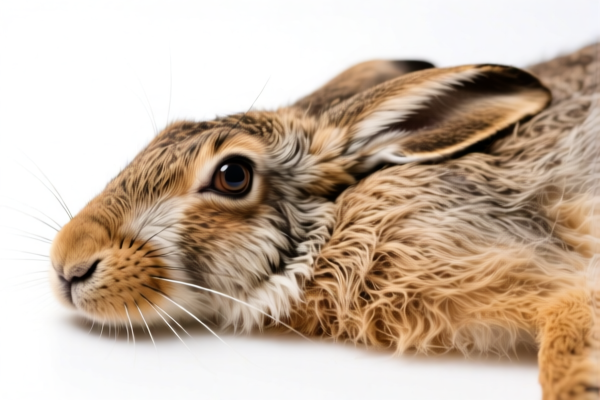
raw hare skins with head
CN → US| HS Code | Tariff Rate | Origin | Destination | Doc |
|---|---|---|---|---|
| 4301900000 | 10.0% | CN | US | Official Doc |
| 4301800202 | 17.5% | CN | US | Official Doc |
| 4103901130 | 17.5% | CN | US | Official Doc |
| 4103901190 | 17.5% | CN | US | Official Doc |
| 4303100060 | 39.0% | CN | US | Official Doc |
Product Images



AI Analysis
🐇 Raw Hare Skins with Head (毛皮类原皮)
🌐 HS Code Reference & Customs Clearance Guide | 2026 Latest Tariff Analysis | Professional Clearance Strategy
📌 Part 1: Product Definition & Classification: What Exactly Are "Raw Hare Skins with Head"?
Raw Hare Skins with Head are unprocessed animal pelts where the head is still attached. In international trade, these fall under the category of raw hides and skins. However, their classification depends heavily on whether they are treated specifically as "fur skins" (Chapter 43) or general "raw hides/skins" (Chapter 41). The key determinant is the commercial use and processing state.
⚠️ Key Distinction Point:
- If used primarily for fur garments, lining, or luxury fur goods → Classified under Chapter 43 (Fur Skins).
- If used for leather production or considered general raw hides without specific fur treatment context → Classified under Chapter 41 (Leather).
- The presence of the head is a physical characteristic that must be declared accurately but does not automatically dictate the chapter; it confirms the "whole skin" status.
📦 Part 2: HS Code Classification Details (Based on Provided Data)
| HS Code | Product Description | Summary Logic | Total Tax Rate |
|---|---|---|---|
4301.90.00.00 |
Raw Fur Skins (Other), Hare | Chapter 43 Logic: Considered "fur skins" for merchant use. Fits the definition of raw fur skins including heads. | 10.0% |
4103.90.11.30 |
Other Raw Hides & Skins | Chapter 41 Logic: Treated as "other raw hides." Fits the "catch-all" category for unprepared hides. Includes head. | 17.5% |
4103.90.11.90 |
Other Raw Hides & Skins | Chapter 41 Logic: Unprepared raw hide material attribute. Excludes specific species like deer/goat, so it falls here. Includes head. | 17.5% |
4301.80.02.02 |
Raw Fur Skins (Other) | Chapter 43 Logic: Explicitly matches "Hare" material. Head/tail intact fits the "raw skin including head" morphology. | 17.5% |
4303.10.00.60 |
Furskins and Other Fur, Worked | Chapter 43 Logic: Treated as "worked fur" (other than mink). Head fits the "other" material requirement. | 39.0% |
🔍 Critical Note:
- Chapter 43 (4301/4303) items are generally for fur use. - Chapter 41 (4103) items are generally for leather use. - The tax rate varies significantly based on the specific subheading chosen, ranging from 10% to 39%.
💰 Part 3: 2026 Latest Tariff Rate Breakdown (Including Surcharges & Policy Add-ons)
✅ Applicable Country: United States (US)
✅ Origin: China (CN)
✅ Effective Date: November 10, 2025 (including subsequent imports)
🎯 1. 4301.90.00.00 — Raw Fur Skins (Other), Hare with Head
| Item | Detail |
|---|---|
| Base Duty | 0.0% |
| Section 301 Surtax | 0.0% |
| Section 122 Tariff | +10.0% |
| Total Tax Rate | 10.0% |
| Tax Calculation | CIF Value × 10% |
| De Minimis Exemption | ❌ Not Eligible (deny_de_minimis) |
| Legal Basis Path | Section 122: 10% applied to raw fur skins from China. |
📌 Explanation:
- This is the most favorable classification for raw hare skins if they are clearly intended for the fur industry. - Only the Section 122 Tariff (10%) applies. No Base Duty or Section 301 Surtax is listed for this specific code in the provided data. - Lowest Risk/Cost among Chapter 43 options.
🎯 2. 4103.90.11.30 & 4103.90.11.90 — Other Raw Hides & Skins
| Item | Detail |
|---|---|
| Base Duty | 0.0% |
| Section 301 Surtax | +7.5% |
| Section 122 Tariff | +10.0% |
| Total Tax Rate | 17.5% |
| Tax Calculation | CIF Value × 17.5% |
| De Minimis Exemption | ❌ Not Eligible (deny_de_minimis) |
| Legal Basis Path | Section 301: 7.5% + Section 122: 10% |
📌 Explanation:
- These codes fall under Chapter 41 (Leather). - They incur both a Section 301 Surtax (7.5%) and a Section 122 Tariff (10%). - Higher cost than4301.90.00.00. Suitable if the skins are destined for leather processing or if customs authorities classify them as general hides rather than "fur skins."
🎯 3. 4301.80.02.02 — Raw Fur Skins (Other), Hare with Head
| Item | Detail |
|---|---|
| Base Duty | 0.0% |
| Section 301 Surtax | +7.5% |
| Section 122 Tariff | +10.0% |
| Total Tax Rate | 17.5% |
| Tax Calculation | CIF Value × 17.5% |
| De Minimis Exemption | ❌ Not Eligible (deny_de_minimis) |
| Legal Basis Path | Section 301: 7.5% + Section 122: 10% |
📌 Explanation:
- Despite being in Chapter 43, this specific subheading attracts the Section 301 Surtax. - The total rate is 17.5%, same as Chapter 41 codes. - Use this only if the product description specifically requires this subheading (e.g., specific fur trade declarations).
🎯 4. 4303.10.00.60 — Furskins, Worked (Other)
| Item | Detail |
|---|---|
| Base Duty | 4.0% |
| Section 301 Surtax | +25.0% |
| Section 122 Tariff | +10.0% |
| Total Tax Rate | 39.0% |
| Tax Calculation | CIF Value × 39.0% |
| De Minimis Exemption | ❌ Not Eligible (deny_de_minimis) |
| Legal Basis Path | Base: 4.0% + Section 301: 25.0% + Section 122: 10.0% |
📌 Explanation:
- HIGHEST RISK & COST. - This code implies worked furskins (processed/transformed), not just raw. If your goods are merely "raw with head," classifying here is likely incorrect and leads to severe overpayment. - Only use if the skins have undergone significant tanning or preparation that changes their status from "raw" to "worked."
🛠️ Part 4: Customs Clearance Practical Advice (Real-World Pitfall Avoidance)
✅ 1. Preparation Checklist (Mandatory Documents)
| Document | Required | Notes |
|---|---|---|
| ✅ Commercial Invoice | ✔️ | Must clearly state "Raw Hare Skins with Head". Do not use vague terms like "Animal Parts." |
| ✅ Packing List | ✔️ | Specify quantity, weight, and number of skins. Confirm "Head Attached." |
| ✅ Species Declaration | ✔️ | Explicitly declare species: "Oryctolagus cuniculus" or "Hare." |
| ✅ End-Use Statement | ✔️ | State whether for fur garments (Chapter 43) or leather production (Chapter 41). This is crucial for correct HS Code selection. |
| ✅ Photos of Goods | ✔️ | Show the head is attached, and the skin is raw (un-tanned). |
| ✅ CITES Documentation | ⚠️ | Check Appendix Status: Some hare species may be listed under CITES. If so, additional permits are required. |
📌 Note:
- Raw skins are generally exempt from some end-use restrictions, but import permits may still be required depending on the origin and species. - Section 122 and Section 301 taxes apply strictly to Chinese-origin goods.
✅ 2. Declaration Strategy (Key Tips)
🔥 "Be Specific: Raw vs. Worked, Fur vs. Hide, Head Attached."
| Scenario | Correct HS Code | Incorrect HS Code | Consequence |
|---|---|---|---|
| Raw Hare Skins, for Fur Use | 4301.90.00.00 |
4303.10.00.60 |
Avoid 39% tax! Correctly declare as "Raw" to get 10%. |
| Raw Hare Skins, for Leather | 4103.90.11.30 or 4103.90.11.90 |
4301.90.00.00 |
If misclassified, customs may reclassify and apply 17.5%. |
| Worked/Tanned Hare Skins | 4303.10.00.60 |
4301.90.00.00 |
Ensure goods are truly "worked." Raw goods misclassified here face penalties. |
| Skins without Head | Same Codes | Same Codes | Important: If heads are removed, some classifiers might view them differently. Keep heads attached to match the provided data summary. |
✅ 3. Special Circumstances Handling
| Situation | Recommendation |
|---|---|
| CITES-Listed Species | If the hare species is protected (e.g., certain wild populations), apply for CITES Pre-Import Permit before shipment. Failure to do so results in seizure. |
| Mixed Shipments | If shipment contains hare skins and other animal products, separate declarations are recommended. Do not mix "raw hare skins" with "tanned leather" in one HS Code line. |
| Duty Drawback | If imported for manufacturing and then re-exported, explore Duty Drawback claims for the 10-39% taxes paid. |
| Valuation | Ensure CIF Value is accurately declared. Customs may query low-valued raw skins if they seem below market price. |
🌍 Part 5: Global Market Clearance Comparison (2026)
| Country/Region | Recommended HS Code | Tax Rate (China Origin) | Certification | Notes |
|---|---|---|---|---|
| 🇺🇸 USA | 4301.90.00.00 |
10% | None | Lowest Tax. Requires strict "Raw" declaration. |
| 🇺🇸 USA | 4103.90.11.30 |
17.5% | None | Higher tax. Use if Chapter 41 is mandated. |
| 🇪🇺 EU | 4301.10 (Similar) |
Varies (Check Local) | CE (if processed) | EU may have different fur labeling laws. |
| 🇨🇳 China | 4301.10 |
5-10% | None | Re-importing? Check bonded warehouse options. |
| 🇬🇧 UK | 4301.10 |
VAT + Duty | No Fur Marking | Post-Brexit rules apply. Check UK TRACES for animal products. |
📌 Conclusion:
- USA is the primary focus due to Section 122 and 301 taxes.
-4301.90.00.00is the optimal choice for raw hare skins intended for fur, minimizing tax to 10%.
- Avoid4303.10.00.60unless skins are truly "worked," as the 39% tax is prohibitive.
📌 Part 6: Common Errors & Pitfalls (Lessons Learned)
❌ Error 1: Declaring "Hare Skins" without specifying "Raw" or "With Head"
👉 Consequence: Customs may reclassify as "Worked" or "Leather," leading to higher duties (17.5%-39%) and delays.
❌ Error 2: Using 4303.10.00.60 for Raw Skins
👉 Consequence: Paying 39% tax instead of 10%. Massive cost increase.
❌ Error 3: Ignoring CITES Requirements
👉 Consequence: Seizure, fines, and legal action if the hare species is protected.
❌ Error 4: Mixing Raw and Tanned Skins in One Declaration
👉 Consequence: Customs may reject the entire shipment or apply the highest tax rate to all items.
✅ Correct Declaration Example:
"Raw Hare Skins (Oryctolagus cuniculus), With Head, Unprepared, For Fur Garment Manufacturing, Origin: China"
🎯 Part 7: Conclusion: Professional Clearance, Save Costs, Ensure Compliance!
🎯 Remember the Mantra:
🔹 "Raw is King: Choose 4301.90 for 10%. Avoid 4303.10's 39%. Declare 'With Head' and 'Raw' clearly!"
🔹 "Chapter 43 for Fur, Chapter 41 for Leather. Misclassification = 17.5%-39% Tax!"
📌 Pro Tip:
If your hare skins are not from China (e.g., Canada, Russia), Section 301 and Section 122 taxes may not apply. Verify the Country of Origin on your Certificate of Origin to potentially reduce taxes to 0%-5%.
📣 Immediate Action:
📞 Consult a licensed customs broker.
📄 Prepare detailed product descriptions and photos.
🚀 Ensure accurate HS Code classification to save up to 29% in taxes!
✨ Professional clearance starts with precise classification!
💼 Every cent of duty is worth calculating carefully!
Customer Reviews
About HS Code Classification
The Harmonized System (HS) is an internationally standardized nomenclature developed by the World Customs Organization (WCO) to classify traded products. Over 200 countries use the HS system as the basis for customs tariffs, trade statistics, and import/export regulations.
Each HS code follows a hierarchical structure:
- Chapter (2 digits) — Broad category of goods (e.g., Chapter 84: Machinery and Mechanical Appliances)
- Heading (4 digits) — More specific grouping within the chapter
- Subheading (6 digits) — Internationally standardized breakdown, used by all WCO member countries
- National subdivisions (8-10 digits) — Country-specific extensions for further classification, such as US HTSUS 10-digit codes
Correct HS code classification is essential for smooth customs clearance, accurate duty payment, and compliance with trade regulations. Misclassification can lead to customs delays, overpayment of duties, or penalties.
When importing from CN to US, the applicable tariff rates may include:
- Most-Favored-Nation (MFN) rate — The standard duty rate applied to WTO members
- General rate — Applied to countries without trade agreements
- Trade remedy duties — Additional tariffs such as Section 301 (anti-dumping), Section 232 (national security), or countervailing duties
The information provided on this page is for reference purposes only. For official classification, please consult with your local customs authority or a licensed customs broker.