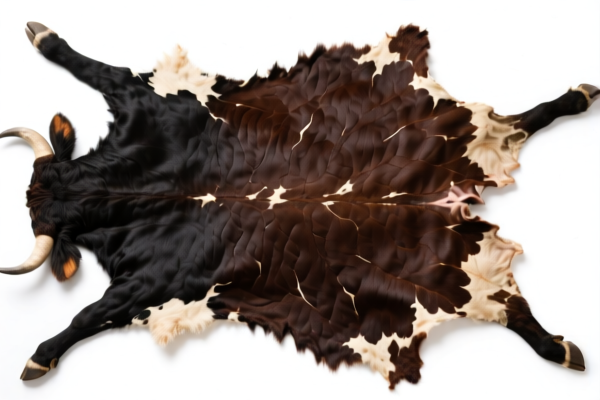
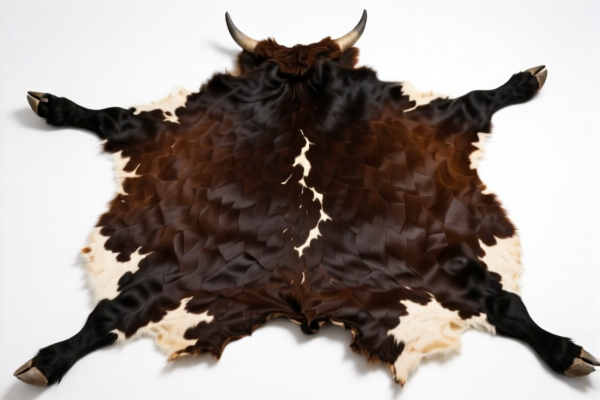
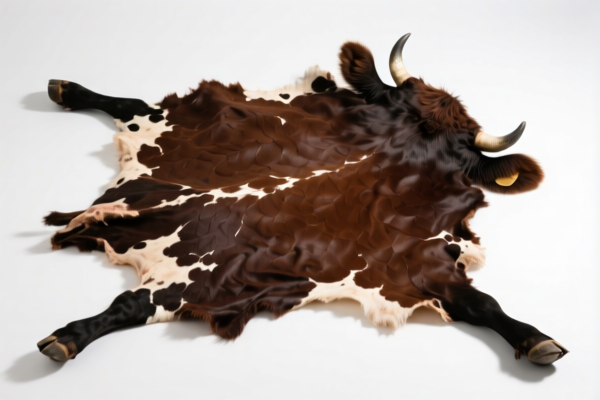
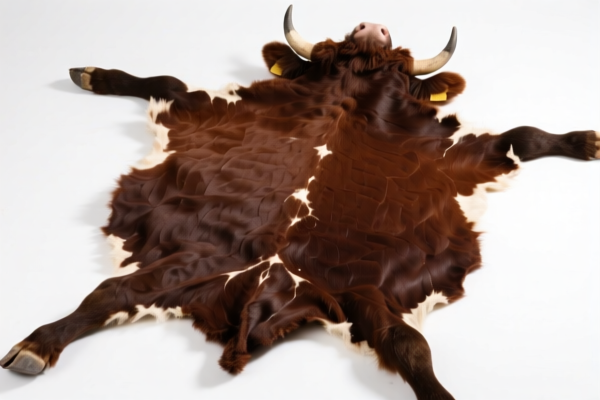
raw hides
CN → US| HS Code | Tariff Rate | Origin | Destination | Doc |
|---|---|---|---|---|
| 4101201010 | 17.5% | CN | US | Official Doc |
| 4101901020 | 17.5% | CN | US | Official Doc |
Product Images
AI Analysis
🐄 Raw Hides & Skins (Bovine/Equine) – The Foundation of Leather Industry
🌐 HS Code Reference & Customs Clearance Guide | 2026 Latest Tariff Analysis | Professional Strategy
📌 Part I: Product Definition & Classification – Do You Know What "Raw Hides" Really Are?
Raw Hides and Skins are the untreated, unprocessed hides and skins of animals, primarily bovine (cattle, buffalo) or equine (horse, donkey, mule). They are the raw material for the global leather industry. In international trade, they are strictly defined by their state of preservation and physical characteristics.
⚠️ Key Distinction:
- Raw Hides: Not tanned, parchment-dressed, or further prepared. Only preserved via salting, drying, liming, or pickling.
- Bovine vs. Equine: This guide focuses on Bovine (including Buffalo) and Equine animals as per HS Code 4101.
- Weight Thresholds Matter: Classification often depends on the weight of the skin and its preservation method.
📦 Part II: HS Code Classification Details (2026 Latest Tariff Authority)
Based on the provided data, there are two primary HS Codes for Bovine Raw Hides/Skins, differentiated by size (weight) and preservation method.
| HS Code | Product Description | Weight Limit (Preservation Method) | Tax Rate (China to US) |
|---|---|---|---|
4101.20.10.10 |
Whole hides and skins, unsplit, of bovine animals, not pretanned | • ≤8 kg when simply dried • ≤10 kg when dry-salted • ≤16 kg when fresh, wet-salted, or otherwise preserved |
7.5% (Base: 0% + Additional: 7.5%) |
4101.90.10.20 |
Other raw hides/skins of bovine animals, including butts, bends, bellies, not pretanned | • Fresh or wet-salted • Other (does not meet the weight limits above) |
7.5% (Base: 0% + Additional: 7.5%) |
🔍 Critical Note:
- Both codes carry a Total Tax Rate of 7.5% for imports from China to the US.
-4101.20.10.10is for whole, unsplit hides within strict weight limits.
-4101.90.10.20captures all other cases: split hides, heavy hides, or those not meeting the specific weight thresholds of the first code.
💰 Part III: 2026 Latest Tariff Rate Breakdown
✅ Applicable Country: United States (US)
✅ Origin: China (CN)
✅ Effective Date: Current applicable rates as per provided data
🎯 1. 4101.20.10.10 – Whole, Unsplit Bovine Hides (Lightweight/Properly Preserved)
| Item | Details |
|---|---|
| Base Tariff | 0% (ad valorem) |
| Additional Tariff (Section 301/IEEPA) | +7.5% |
| Total Tariff Rate | 7.5% |
| Tax Calculation | CIF Value × 7.5% |
| De Minimis Exemption | ❌ Not Applicable (Raw hides are generally excluded from de minimis thresholds if declared as commercial goods) |
| Legal Basis | HS Code 4101.20.10.10 → Additional Tariff Footnote |
📌 Explanation:
- The 0% base rate reflects the standard Most Favored Nation (MFN) treatment for raw animal products.
- The 7.5% additional tariff is applied due to trade policies (e.g., Section 301 tariffs on Chinese goods).
- Total Cost Impact: Importers must budget for a 7.5% duty on the CIF value.
🎯 2. 4101.90.10.20 – Other Bovine Raw Hides/Skins (Split, Heavy, or Other Preservations)
| Item | Details |
|---|---|
| Base Tariff | 0% (ad valorem) |
| Additional Tariff (Section 301/IEEPA) | +7.5% |
| Total Tariff Rate | 7.5% |
| Tax Calculation | CIF Value × 7.5% |
| De Minimis Exemption | ❌ Not Applicable |
| Legal Basis | HS Code 4101.90.10.20 → Additional Tariff Footnote |
📌 Explanation:
- Same tariff structure as above.
- This code is a "catch-all" for hides that don’t fit the precise criteria of4101.20.10.10(e.g., split hides, bellies, or heavy hides).
- Key Takeaway: Regardless of whether you use4101.20.10.10or4101.90.10.20, the total tax burden is identical at 7.5%.
🛠️ Part IV: Customs Clearance Practical Advice (Avoiding Pitfalls)
✅ 1. Required Documentation Checklist
| Document | Mandatory? | Description |
|---|---|---|
| ✅ Commercial Invoice | ✔️ | Must clearly state: “Raw Hides/Skins of Bovine Animals,” HS Code, Country of Origin, and Preservation Method (Fresh, Wet-Salted, Dry-Salted, Dried). |
| ✅ Packing List | ✔️ | Details weight per skin, total number of skins, and packaging type (e.g., bales, crates). |
| ✅ Certificate of Origin (CO) | ✔️ | Essential for verifying origin and applying correct tariff rates. |
| ✅ Phytosanitary/Veterinary Certificate | ✔️ | CRITICAL: Raw hides are subject to strict biosecurity rules. Must confirm absence of diseases (e.g., Foot-and-Mouth Disease, Anthrax) and proper preservation to prevent bacterial growth. |
| ✅ Product Photos | ✔️ | Clear images of the hides showing condition, preservation method, and markings. |
| ✅ Bill of Lading/Air Waybill | ✔️ | Standard shipping document. |
✅ 2. Classification Tips (Key口诀)
🔥 “Weight Matters, Preservation Defines!”
| Scenario | Correct HS Code | Reason |
|---|---|---|
| Whole hide, unsplit, dried (≤8 kg) | 4101.20.10.10 |
Meets weight and preservation criteria. |
| Whole hide, unsplit, dry-salted (≤10 kg) | 4101.20.10.10 |
Meets weight and preservation criteria. |
| Whole hide, unsplit, fresh/wet-salted (≤16 kg) | 4101.20.10.10 |
Meets weight and preservation criteria. |
| Split hides, bellies, or butts | 4101.90.10.20 |
Not “whole and unsplit.” |
| Hides over weight limits | 4101.90.10.20 |
Fails the specific thresholds of 4101.20.10.10. |
| Equine hides (Horse/Mule) | Check other HS Codes (e.g., 4101.90.90) | Provided data is Bovine only. Equine hides have different subheadings. |
✅ 3. Special Circumstances Handling
| Situation | Handling Advice |
|---|---|
| Mixed Shipments | Separate Bovine and Equine hides. Equine hides are not covered by the provided data. Misclassification leads to penalties. |
| Preservation Method Change | If hides transition from fresh to wet-salted, ensure documentation reflects the actual state at import. Do not misdeclare fresh as dry-salted to manipulate weight limits. |
| Biosecurity Risks | Ensure hides are properly cured. Wet, unpreserved hides may be rejected or destroyed by USDA/APHIS. Always include a Veterinary Certificate. |
| OEM/Custom Orders | Even if for a specific customer, the classification depends on the physical state of the hide, not the end-use. |
🌍 Part V: Global Market Comparison (2026 Latest)
| Country/Region | Recommended HS Code (Bovine Raw Hides) | Tariff Rate (China Origin) | Key Requirements | Notes |
|---|---|---|---|---|
| 🇺🇸 USA | 4101.20.10.10 or 4101.90.10.20 |
7.5% (Total) | Veterinary Certificate, CO | Highest risk due to additional tariffs. |
| 🇨🇳 China | 4101.20.10.10 or 4101.90.10.20 |
~0-9% (Varies) | Import License (if applicable) | Raw hides are a strategic resource. |
| 🇪🇺 EU | 4101.20 or 4101.90 |
0% (Most cases) | Veterinary Health Certificate | Strict animal welfare and biosecurity rules. |
| 🇮🇳 India | 4101.20 or 4101.90 |
~0-5% | Veterinary Certificate | Major importer of raw hides for leather industry. |
📌 Conclusion:
- The USA imposes a 7.5% additional tariff on top of the 0% base rate.
- Biosecurity is the biggest non-tariff barrier globally. Ensure proper preservation and certification.
- Equine hides are excluded from this specific data; use separate HS codes for horse/donkey hides.
📌 Part VI: Common Mistakes & Pitfalls (Lessons Learned)
❌ Mistake 1: Ignoring the weight limit for 4101.20.10.10
👉 Consequence: If a dried hide weighs 9 kg, it cannot use 4101.20.10.10. Must use 4101.90.10.20. While the tariff is the same, misdeclaration can lead to audits and delays.
❌ Mistake 2: Misdeclaring preservation method
👉 Consequence: Declaring “dry-salted” when hides are “fresh” violates veterinary regulations. Result: Seizure, destruction, or heavy fines.
❌ Mistake 3: Confusing Bovine with Equine hides
👉 Consequence: Equine hides have different HS codes (e.g., 4101.90.90). Using 4101 codes for horse hides is incorrect and leads to customs rejection.
❌ Mistake 4: Assuming De Minimis applies
👉 Consequence: Raw hides are typically excluded from de minimis exemptions (e.g., $800 threshold in the US) because they are subject to agricultural and veterinary controls.
✅ Correct Approach:
“Bovine Raw Hides, Wet-Salted, Unsplit, Total Weight 15kg, Cured to Prevent Bacterial Growth, Certified by [Country] Veterinary Authority”
🎯 Part VII: Conclusion – Precision in Classification Saves Money and Time
🎯 Remember the Golden Rules:
🔹 “Weight and Preservation Define the Code.”
🔹 “7.5% Total Tax for Bovine Hides to the US.”
🔹 “Biosecurity Certificates are Non-Negotiable.”
📌 Pro Tip:
If you are importing large volumes, consider applying for an Advance Ruling from US Customs and Border Protection (CBP) to confirm the HS Code. This provides legal certainty and prevents unexpected duties during audit.
📣 Immediate Action:
📞 Consult a licensed customs broker + Provide detailed preservation specs + Obtain Veterinary Certificates
🚀 Ensure smooth customs clearance, avoid biosecurity holds, and manage costs effectively!
✨ Professional Classification Starts Here!
💼 Every Hide Counts – Get It Right the First Time!
Customer Reviews
About HS Code Classification
The Harmonized System (HS) is an internationally standardized nomenclature developed by the World Customs Organization (WCO) to classify traded products. Over 200 countries use the HS system as the basis for customs tariffs, trade statistics, and import/export regulations.
Each HS code follows a hierarchical structure:
- Chapter (2 digits) — Broad category of goods (e.g., Chapter 84: Machinery and Mechanical Appliances)
- Heading (4 digits) — More specific grouping within the chapter
- Subheading (6 digits) — Internationally standardized breakdown, used by all WCO member countries
- National subdivisions (8-10 digits) — Country-specific extensions for further classification, such as US HTSUS 10-digit codes
Correct HS code classification is essential for smooth customs clearance, accurate duty payment, and compliance with trade regulations. Misclassification can lead to customs delays, overpayment of duties, or penalties.
When importing from CN to US, the applicable tariff rates may include:
- Most-Favored-Nation (MFN) rate — The standard duty rate applied to WTO members
- General rate — Applied to countries without trade agreements
- Trade remedy duties — Additional tariffs such as Section 301 (anti-dumping), Section 232 (national security), or countervailing duties
The information provided on this page is for reference purposes only. For official classification, please consult with your local customs authority or a licensed customs broker.