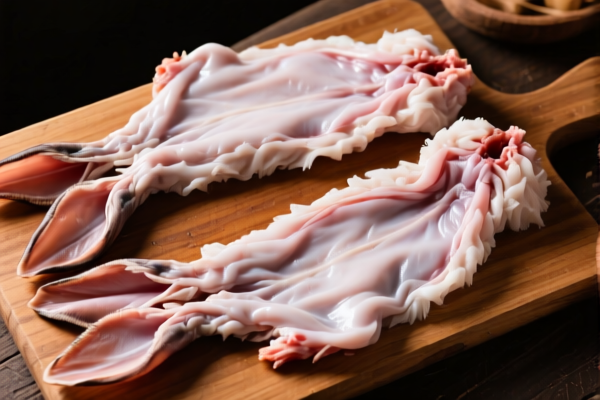
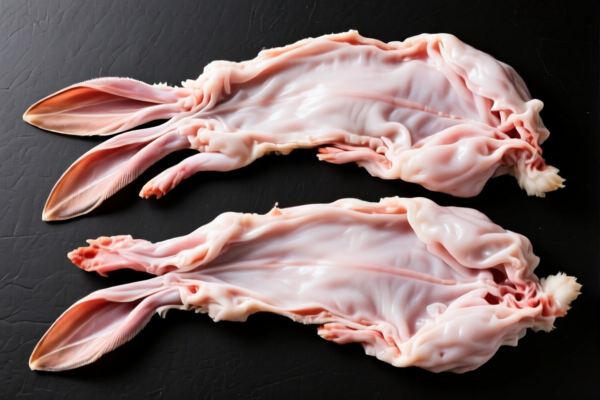
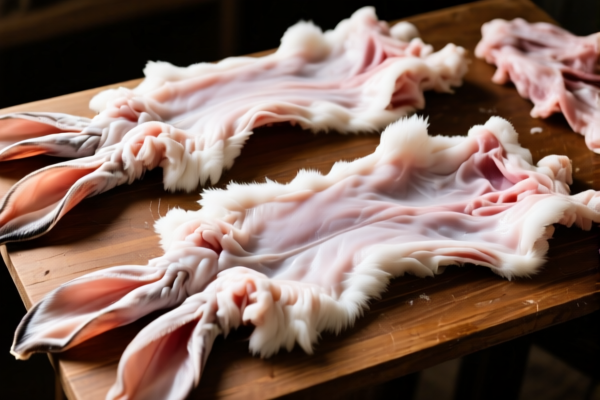
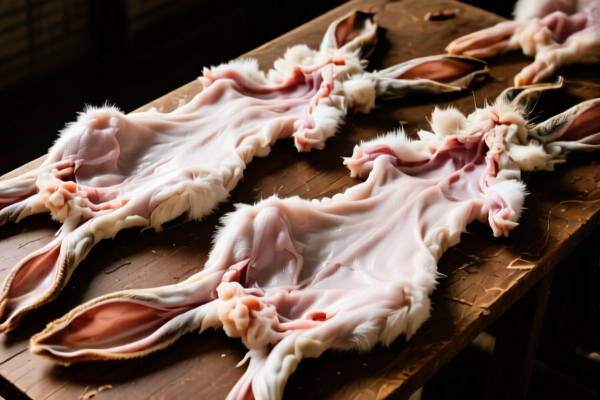
raw lamb skin preserved, un tanned
CN → US| HS Code | Tariff Rate | Origin | Destination | Doc |
|---|---|---|---|---|
| 4102291090 | 17.5% | CN | US | Official Doc |
| 4103901200 | 17.5% | CN | US | Official Doc |
| 4103901190 | 17.5% | CN | US | Official Doc |
| 4103901130 | 17.5% | CN | US | Official Doc |
| 4102101000 | 17.5% | CN | US | Official Doc |
Product Images
AI Analysis
🐑 Raw Lamb Skin Preserved, Untanned – HS Code & Duty Guide 2026
🌐 HS Code Classification & Customs Clearance Master Guide | 2026 Updated Tariff Breakdown | Expert-Level Compliance Strategy
📌 I. Product Definition & Classification: What Is “Raw Lamb Skin Preserved, Untanned”?
Raw lamb skin preserved, un-tanned refers to sheep hides or skins from lambs that have been treated to prevent decay (e.g., salted, chemically preserved, or dried) but have not undergone any tanning process (no chromium, vegetable, or synthetic tanning agents applied).
⚠️ Key Distinction: - ✅ Preserved but Untanned: Retains natural structure, no chemical transformation → Classified as raw hide
- ❌ If tanned or processed into leather: Would fall under different HS codes (e.g., 4102, 4103, 4111)🔍 Common Forms: - Salted lamb skins - Dried lamb pelts - Skins preserved with formalin or other agents - Skins without hair (flesh side exposed) or with hair intact
✅ This product is NOT leather, and must not be declared as such — misclassification leads to duty miscalculation, penalties, or seizure.
📦 II. HS Code Classification Breakdown (2026 Official Tariff Matrix)
| HS Code | Product Description | Classification Basis | Tax Rate |
|---|---|---|---|
4102.29.10.90 |
Raw lamb skin, preserved, un-tanned | Matches "Lamb skins, not further worked" under subheading 4102.29 | 17.5% |
4103.90.12.00 |
Raw lamb skin (lambskin), preserved, un-tanned | Matches "Other raw skins of sheep or lambs" | 17.5% |
4103.90.11.90 |
Raw sheep skin, without hair, preserved, un-tanned | Fits "Other raw skins of sheep or lambs, not further worked" | 17.5% |
4103.90.11.30 |
Raw sheep skin, un-tanned, preserved, not pre-tanned | Matches "Other raw skins of sheep or lambs, not further worked" | 17.5% |
4102.10.10.00 |
Raw sheep skin, preserved, un-tanned | Matches "Raw skins of sheep or lambs, not further worked" | 17.5% |
📌 All five codes are valid for raw, preserved, un-tanned lamb/ sheep skin — the only difference is sub-subheading specificity.
✅ Best Practice: Use the most precise HS Code based on skin type (lamb vs. sheep) and presence of hair.
💰 III. 2026 Tariff Breakdown – Detailed Tax Clause Analysis
✅ Applicable Country: United States (US)
✅ Origin: China (CN)
✅ Effective Date: November 10, 2025 (including future imports)
🎯 1. HS Code 4102.29.10.90 – Raw Lamb Skin, Preserved, Untanned
| Tax Component | Rate | Legal Basis | Notes |
|---|---|---|---|
| Base Duty | 0.0% | HTSUS 4102.29.10 | Standard tariff for unprocessed animal hides |
| Section 301 (USITC) Add-on | +7.5% | USITC Footnote 9903.88.01 | Imposed under Section 301 of the Trade Act of 1974 |
| Section 122 (IEEPA) Add-on | +10.0% | IEEPA: 9903.01.24 | From the International Emergency Economic Powers Act |
| Total Effective Duty | 17.5% | — | — |
📌 Legal Pathway:
IEEPA:9903.01.24→USITC:4102.29.10.90→FOOTNOTE:9903.88.01
🎯 2. HS Code 4103.90.12.00 – Raw Lamb Skin (Lambskin), Preserved, Untanned
| Tax Component | Rate | Legal Basis | Notes |
|---|---|---|---|
| Base Duty | 0.0% | HTSUS 4103.90.12 | Applies to lamb skins not classified under 4102.29 |
| Section 301 (USITC) Add-on | +7.5% | USITC Footnote 9903.88.01 | Same as above |
| Section 122 (IEEPA) Add-on | +10.0% | IEEPA: 9903.01.24 | Applies to all goods from China |
| Total Effective Duty | 17.5% | — | — |
📌 Key Insight:
- This code is used when the skin is not classified under 4102.29 (e.g., due to size, hair retention, or processing method). - Same total tax as4102.29.10.90.
🎯 3. HS Code 4103.90.11.90 – Raw Sheep Skin, Without Hair, Preserved, Untanned
| Tax Component | Rate | Legal Basis | Notes |
|---|---|---|---|
| Base Duty | 0.0% | HTSUS 4103.90.11 | For sheep skins without hair |
| Section 301 (USITC) Add-on | +7.5% | USITC Footnote 9903.88.01 | Applies to all Chinese-origin goods |
| Section 122 (IEEPA) Add-on | +10.0% | IEEPA: 9903.01.24 | Emergency powers tariff |
| Total Effective Duty | 17.5% | — | — |
📌 Note:
- "Without hair" means flesh side exposed (no wool or hair). - Still subject to full 17.5% due to China origin.
🎯 4. HS Code 4103.90.11.30 – Raw Sheep Skin, Un-tanned, Preserved, Not Pre-tanned
| Tax Component | Rate | Legal Basis | Notes |
|---|---|---|---|
| Base Duty | 0.0% | HTSUS 4103.90.11 | General category for untreated sheep skins |
| Section 301 (USITC) Add-on | +7.5% | USITC Footnote 9903.88.01 | Applies to all Chinese goods |
| Section 122 (IEEPA) Add-on | +10.0% | IEEPA: 9903.01.24 | From national emergency powers |
| Total Effective Duty | 17.5% | — | — |
📌 Use Case:
- For skins not pre-tanned or not further processed. - Even if partially cleaned, as long as no tanning agents used, this code applies.
🎯 5. HS Code 4102.10.10.00 – Raw Sheep Skin, Preserved, Untanned
| Tax Component | Rate | Legal Basis | Notes |
|---|---|---|---|
| Base Duty | 0.0% | HTSUS 4102.10.10 | For raw sheep skins not further worked |
| Section 301 (USITC) Add-on | +7.5% | USITC Footnote 9903.88.01 | Applies to all China-origin goods |
| Section 122 (IEEPA) Add-on | +10.0% | IEEPA: 9903.01.24 | Emergency tariff |
| Total Effective Duty | 17.5% | — | — |
📌 Best Fit:
- Use when the skin is not lamb, not further processed, and preserved. - Same tax rate as all others.
🛠️ IV. Customs Clearance Best Practices (Pro Tips to Avoid Penalties)
✅ 1. Required Documentation (MUST-HAVE)
| Document | Required? | Why It Matters |
|---|---|---|
| ✅ Commercial Invoice | ✔️ | Must clearly state: "Raw lamb skin, preserved, un-tanned" |
| ✅ Packing List | ✔️ | Include weight, quantity, and condition (e.g., salted, dried) |
| ✅ Bill of Lading / Air Waybill | ✔️ | Proves shipment origin and route |
| ✅ Certificate of Origin (CO) | ✔️ | Critical for tariff determination |
| ✅ Product Photos (with label) | ✔️ | Show skin type, hair presence, preservation method |
| ✅ Lab Test Report (if preserved with chemicals) | ✔️ | Prove no tanning agents used |
| ✅ Customs Declaration Form (CBP Form 7501) | ✔️ | Must match HS Code exactly |
✅ 2.申报技巧(Critical Rules to Remember)
🔥 “No Tanning = No Leather = No Higher Tariff!”
| Scenario | Correct HS Code | Wrong Code | Risk |
|---|---|---|---|
| Salted lamb skin, no tanning | 4102.29.10.90 |
4111.90.10.00 (leather) |
45%+ duty |
| Dried sheep skin, no hair | 4103.90.11.90 |
4102.10.10.00 |
Tax underreporting |
| Preserved but not tanned | 4103.90.12.00 |
4103.90.11.30 |
Compliance risk |
| Skin with hair intact | 4102.29.10.90 |
4103.90.11.90 |
Misclassification |
✅ Pro Tip:
Use “Preserved, un-tanned, raw” in the product description and HS Code on the invoice.
✅ 3. Special Cases & Risk Mitigation
| Situation | Recommended Action |
|---|---|
| Skin preserved with formalin or chemicals | Provide lab report proving no tanning agents used |
| Mixed lamb and sheep skins | Declare by type — do not combine in one entry |
| Import from Vietnam, Mexico, or Turkey | Check for IEEPA exemption — may qualify for 0% tariff |
| Re-import of used skins | Must declare as "used" — may trigger different rules |
| Customs audit or inquiry | Have all documentation ready — especially photos and test reports |
🌍 V. Global Market Tariff Comparison (2026)
| Country | Recommended HS Code | Base Duty | 附加税 | Total Duty | Notes |
|---|---|---|---|---|---|
| 🇺🇸 USA | 4102.29.10.90 etc. |
0% | +7.5% +10% | 17.5% | All Chinese origin goods subject |
| 🇨🇳 China | 4102.29.10.90 |
5% | 0% | 5% | Domestic trade — lower duty |
| 🇪🇺 EU | 4102.29.10.90 |
0% | 0% | 0% | If origin is EU or eligible country |
| 🇦🇺 Australia | 4102.29.10.90 |
0% | 0% | 0% | No additional tariffs |
| 🇯🇵 Japan | 4102.29.10.90 |
0% | 0% | 0% | Free trade agreement benefits |
📌 Key Insight:
- USA is the only market with 17.5% total tariff on this product from China. - Vietnam/Mexico/Turkey origin may avoid IEEPA/Section 301 — worth considering.
📌 VI. Common Mistakes & How to Avoid Them (Real-World Risks)
❌ Mistake 1: Declaring raw skin as “leather” or “tanned hide”
👉 Result: Duty jumps from 17.5% to 45%+ — huge overpayment
❌ Mistake 2: Using generic term “animal skin” without specifying “lamb” or “sheep”
👉 Result: Customs may reject or request clarification → delayed clearance
❌ Mistake 3: Not including photos or lab reports
👉 Result: Customs may flag for inspection → costly delays
❌ Mistake 4: Combining lamb and sheep skins in one shipment
👉 Result: May be reclassified as lower-value item → loss of tariff benefits
✅ Correct Declaration Example:
"Raw lamb skin, preserved (salted), un-tanned, not further worked, 100 kg, origin: China, HS Code: 4102.29.10.90"
🎯 VII. Final Verdict: Why This Matters
🔥 “One wrong HS Code = 17.5% extra duty = $10,000+ in extra cost per container!”
✅ Your skin is raw, preserved, un-tanned → You pay 17.5% in the US, but only 0% in EU/AU/JAP
✅ Use the correct HS Code → Avoid penalties, delays, and overpayment
📣 Immediate Action Plan
📞 Contact a licensed customs broker with your product photos, preservation method, and origin
📄 Request an HS Code pre-ruling (Advance Ruling) for high-value shipments
🌐 Consider sourcing from Vietnam/Mexico to avoid 17.5% US tariff
📂 Always keep lab reports and preservation records for 5 years
✨ Pro Tip:
“If it’s not tanned, it’s not leather — and it’s not 45% duty. It’s 17.5% — but only if you declare it right.”
💼 Your product’s value is in the skin — but your profit depends on the HS Code.
🔐 Precise classification = Smooth clearance = Maximized margins.
📣 Ready to Ship?
✅ Get your HS Code confirmed today
🚀 Avoid the 17.5% trap — declare right, pay right, move fast!
✨ Smart Customs, Smarter Business.
🛡️ Your shipment deserves precision — not guesswork.
Customer Reviews
About HS Code Classification
The Harmonized System (HS) is an internationally standardized nomenclature developed by the World Customs Organization (WCO) to classify traded products. Over 200 countries use the HS system as the basis for customs tariffs, trade statistics, and import/export regulations.
Each HS code follows a hierarchical structure:
- Chapter (2 digits) — Broad category of goods (e.g., Chapter 84: Machinery and Mechanical Appliances)
- Heading (4 digits) — More specific grouping within the chapter
- Subheading (6 digits) — Internationally standardized breakdown, used by all WCO member countries
- National subdivisions (8-10 digits) — Country-specific extensions for further classification, such as US HTSUS 10-digit codes
Correct HS code classification is essential for smooth customs clearance, accurate duty payment, and compliance with trade regulations. Misclassification can lead to customs delays, overpayment of duties, or penalties.
When importing from CN to US, the applicable tariff rates may include:
- Most-Favored-Nation (MFN) rate — The standard duty rate applied to WTO members
- General rate — Applied to countries without trade agreements
- Trade remedy duties — Additional tariffs such as Section 301 (anti-dumping), Section 232 (national security), or countervailing duties
The information provided on this page is for reference purposes only. For official classification, please consult with your local customs authority or a licensed customs broker.