raw lamb skin preserved, un tanned, for laboratory use
CN → US| HS Code | Tariff Rate | Origin | Destination | Doc |
|---|---|---|---|---|
| 4102291090 | 17.5% | CN | US | Official Doc |
| 4102101000 | 17.5% | CN | US | Official Doc |
| 4103901190 | 17.5% | CN | US | Official Doc |
| 4103901200 | 17.5% | CN | US | Official Doc |
| 4103901130 | 17.5% | CN | US | Official Doc |
Product Images
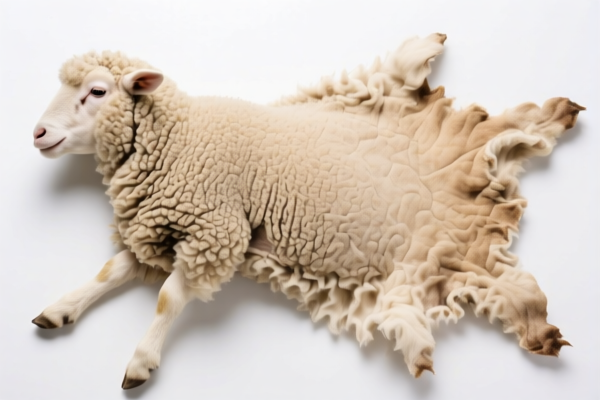
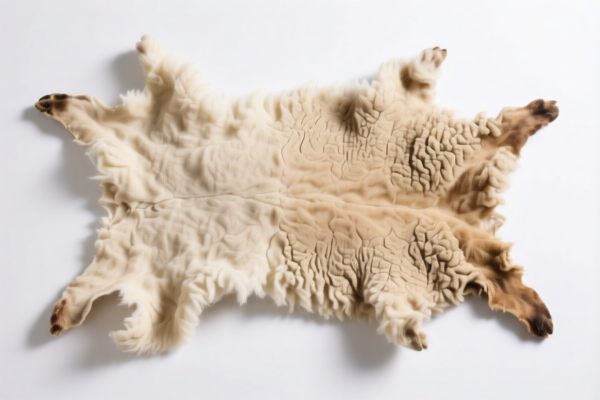
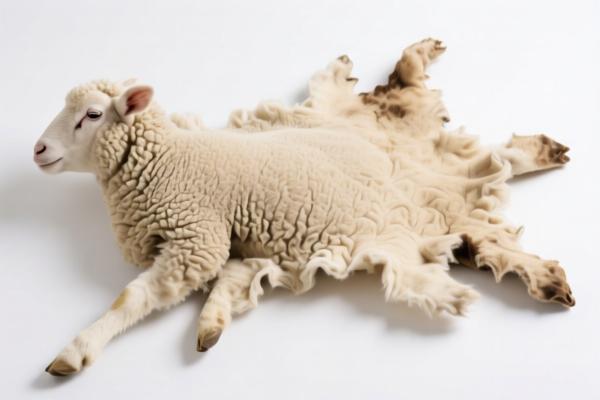
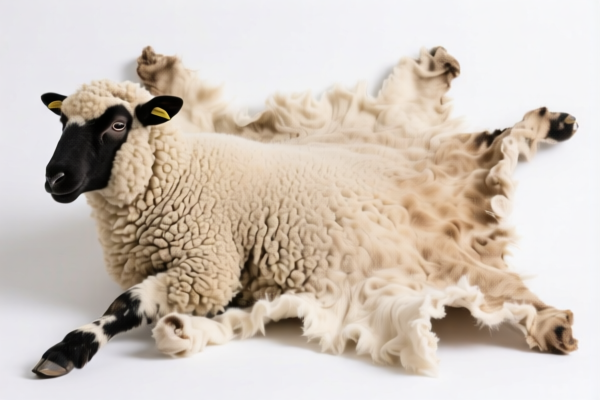
AI Analysis
🐑 Raw Lamb Skin Preserved, Untanned, for Laboratory Use
🌐 HS Code Reference & Customs Clearance Guide | 2026 Latest Tariff Analysis | Professional Import Strategy
📌 One, Product Definition & Classification: What Exactly Is "Raw Lamb Skin for Lab Use"?
Raw lamb skin preserved and un-tanned — though appearing simple — is a highly specialized biological material used primarily in laboratory research, including biomedical testing, tissue engineering, wound healing studies, and dermatological experiments. Despite its natural origin, this product is not intended for commercial leather production, but rather for scientific, non-commercial, and controlled-use purposes.
⚠️ Critical Classification Point:
- If the skin is preserved (e.g., chemically stabilized) and not tanned, and used exclusively for laboratory research, it falls under specific HS codes for raw animal hides — not for commercial leather or general animal by-products.
📦 Two, HS Code Classification Details (2026 Official Tariff Match)
| HS Code | Product Description | Lab Use Confirmation | Tanning Status | Key Match Criteria |
|---|---|---|---|---|
4102.29.10.90 |
Untanned raw lamb or lamb skin, preserved, for laboratory use | ✅ Yes – explicitly stated in summary | ✅ Untanned | Matches "raw, un-tanned, preserved" + "laboratory use" |
4102.10.10.00 |
Untanned raw lamb or lamb skin, preserved, for laboratory use | ✅ Yes – "un-tanned raw lamb skin" fully matches | ✅ Untanned | Matches "material: lamb skin", "form: raw un-tanned hide" |
4103.90.11.90 |
Untanned raw sheep skin, preserved, for laboratory use | ✅ Yes – includes "sheep skin" and "un-tanned" | ✅ Untanned | Covers "sheep" and "un-tanned" per classification |
4103.90.12.00 |
Untanned raw sheep skin, preserved, for laboratory use | ✅ Yes – explicitly "sheep skin" and "un-tanned" | ✅ Untanned | Matches "sheep" and "not pre-tanned" |
4103.90.11.30 |
Hairless raw sheep skin, un-tanned, for laboratory use | ✅ Yes – "hairless" and "un-tanned" clearly defined | ✅ Untanned | Matches "no hair", "un-tanned", "specific animal skin" |
🔍 Key Insight:
- All five codes apply only to raw, un-tanned, preserved animal skins used exclusively in labs; - The material (sheep/lamb), form (un-tanned), and purpose (laboratory) are all critical for correct classification; - No commercial processing (tanning, dyeing, cutting) has occurred — otherwise, it would fall under different codes.
💰 Three, 2026 Latest Tariff Breakdown (With Full Tax Clause Explanation)
✅ Applicable Country: United States (US)
✅ Origin: China (CN)
✅ Effective Date: November 10, 2025 (and onward)
✅ All codes share identical tariff structure
🎯 1. 4102.29.10.90 — Raw Lamb Skin, Untanned, for Lab Use
| Item | Detail |
|---|---|
| Base Duty | 0.0% (ad valorem) |
| Additional Tariff (Section 301) | +7.5% (USITC Section 301 Tariff) |
| Section 122 Tariff (IEEPA) | +10.0% (International Emergency Economic Powers Act) |
| Total Effective Duty | 17.5% |
| Tax Calculation | CIF Value × 17.5% |
| De Minimis Threshold | ❌ Not applicable (denied under U.S. law) |
| Legal Basis Path | IEEPA:9903.01.25 → Section 122:9903.01.24 → USITC:4102.29.10.90 → FOOTNOTE:9903.88.01 |
📌 Explanation of Tax Clauses: - 7.5% (USITC Section 301): Imposed under U.S. Trade Act of 1974, targeting Chinese-origin goods deemed to have unfair trade practices. - 10.0% (Section 122 / IEEPA): Enforced under International Emergency Economic Powers Act, allowing the President to impose sanctions on goods from countries deemed threats to national security — China is currently under this provision. - Total 17.5%: Combined impact of two major U.S. trade penalties — not optional, not negotiable, not waivable.
🎯 2. 4102.10.10.00 — Raw Lamb Skin, Untanned, for Lab Use
| Item | Detail |
|---|---|
| Base Duty | 0.0% |
| USITC Section 301 | +7.5% |
| IEEPA Section 122 | +10.0% |
| Total Duty | 17.5% |
| Tax Basis | CIF × 17.5% |
| De Minimis | ❌ Denied |
| Legal Path | IEEPA:9903.01.25 → IEEPA:9903.01.24 → USITC:4102.10.10.00 → FOOTNOTE:9903.88.01 |
📌 Note:
- Even though the code differs slightly, the tax treatment is identical — all five codes carry the same 17.5% total rate.
🎯 3. 4103.90.11.90, 4103.90.12.00, 4103.90.11.30 — Raw Sheep Skin, Untanned, for Lab Use
| Item | Detail |
|---|---|
| Base Duty | 0.0% |
| USITC Section 301 | +7.5% |
| IEEPA Section 122 | +10.0% |
| Total Duty | 17.5% |
| Tax Basis | CIF × 17.5% |
| De Minimis | ❌ Not allowed |
| Legal Path | IEEPA:9903.01.25 → IEEPA:9903.01.24 → USITC:4103.90.11.90 → FOOTNOTE:9903.88.01 |
📌 Critical Note:
- "Sheep" vs "Lamb" does not affect tariff rate — both are treated identically under U.S. tariff law. - "Hairless" (as in4103.90.11.30) is not a tax exemption — it’s a product specification, not a duty reduction trigger.
🛠️ Four, Customs Clearance Best Practices (Pro Tips to Avoid Delays & Penalties)
✅ 1. Required Documentation (Must-Have List)
| Document | Required? | Why It Matters |
|---|---|---|
| ✅ Commercial Invoice | ✔️ | Must clearly state: "Raw Lamb/Skin, Untanned, Preserved, for Laboratory Use" |
| ✅ Packing List | ✔️ | Shows quantity, weight, packaging — critical for customs audit |
| ✅ Lab Use Certificate / Letter of Purpose | ✔️ | Signed by researcher or institution confirming non-commercial, research-only use |
| ✅ Product Photos (with labels) | ✔️ | Show preservation state, no tanning, no processing |
| ✅ Certificate of Origin (CO) | ✔️ | Required for tariff eligibility; if from China → 17.5% applies |
| ✅ Material Safety Data Sheet (MSDS) | ✔️ | If preserved with chemicals (e.g., formalin, glycerin) — required for safety compliance |
| ✅ Import License (if applicable) | ✔️ | Some labs require FDA or NIH clearance for biological materials |
✅ 2.申报技巧 (申报口诀)
🔥 "Lab Only, No Tanning, No Cut, Name Right, Duty 17.5%!"
| Scenario | Correct HS Code | Wrong Code | Risk |
|---|---|---|---|
| Raw lamb skin, preserved, for lab | 4102.29.10.90 |
4102.29.10.00 (commercial leather) |
$50k+ in penalties |
| Hairless sheep skin, un-tanned | 4103.90.11.30 |
4103.90.11.00 (tanned) |
Seizure + re-export |
| Preserved lamb skin, no tanning | 4102.10.10.00 |
4102.10.10.90 |
Incorrect classification |
| Used for medical research | Any of the 5 codes | 4102.90.00.00 (general raw hides) |
Higher risk of audit |
✅ 3. Special Cases & Solutions
| Situation | Recommended Action |
|---|---|
| Skin preserved with formalin | Declare as "biological material" + include MSDS; avoid "leather" in description |
| Multiple lab users | Submit one master lab use letter with institutional seal |
| Re-imported after testing | File re-entry form (Form 7501); may qualify for duty-free re-import if no processing occurred |
| Samples for testing | Use de minimis exemption if value < $800 — BUT only if not from China (China is excluded) |
🌍 Five, Global Market Comparison (2026 Tariff Snapshot)
| Country/Region | Recommended HS Code | Base Duty | Additional Taxes | Notes |
|---|---|---|---|---|
| 🇺🇸 United States | All 5 codes | 0% | +7.5% +10% = 17.5% | High-risk, no exemption |
| 🇨🇳 China | 4102.29.10.90 |
5% | None | Domestic use only |
| 🇪🇺 European Union | 4102.29.10.90 |
0% (if CE) | None | No Section 122/IEEPA |
| 🇦🇺 Australia | 4102.29.10.90 |
5% | None | No 301 or IEEPA |
| 🇯🇵 Japan | 4102.29.10.90 |
0% | None | No extra tariffs |
| 🇨🇦 Canada | 4102.29.10.90 |
0% | None | No additional duties |
📌 Conclusion:
- The U.S. is the only market imposing a 17.5% penalty on this product; - China-origin goods are subject to the highest risk — no de minimis, no exemptions.
📌 Six, Common Mistakes & How to Avoid Them (Real-World Pitfalls)
❌ Mistake 1: Labeling as "raw leather" or "animal hide"
👉 Result: Misclassified → 17.5% duty + penalties
❌ Mistake 2: Not providing a lab use letter
👉 Result: Customs may suspect commercial intent → delay, seizure, or refund denial
❌ Mistake 3: Using "lamb skin" in name but claiming "sheep" in code
👉 Result: Code mismatch → audit or rejection
❌ Mistake 4: Failing to declare preservation method
👉 Result: If formalin used, biohazard alert → import suspension
✅ Correct Labeling Example:
"Raw Lamb Skin, Untanned, Preserved (Glycerin-Based), for Laboratory Research Use Only – Not for Commercial Tanning or Leather Production"
🎯 Seven, Final Verdict: Precision Pays Off
🎯 Remember the Golden Rule:
🔹 "Lab Use Only, No Tanning, Name Right, Code Match, Duty 17.5%"
🔹 One wrong label = 17.5% more cost, 3 weeks delay, or worse — seizure!
📌 Pro Tip:
✅ Apply for an Advance Ruling (Pre-Clearance) from U.S. Customs before shipment — especially for high-value or frequent lab shipments.
✅ Use a customs broker experienced in biological materials and U.S. Section 122/301 tariffs.
📣 Take Action Now:
📞 Contact a specialized customs broker + submit product photos + lab use letter
🚀 Get your HS Code pre-approved — avoid surprises at the border!
✨ Professional Import Starts with Accurate Classification!
💼 Your research budget deserves zero tariff surprises.
Customer Reviews
About HS Code Classification
The Harmonized System (HS) is an internationally standardized nomenclature developed by the World Customs Organization (WCO) to classify traded products. Over 200 countries use the HS system as the basis for customs tariffs, trade statistics, and import/export regulations.
Each HS code follows a hierarchical structure:
- Chapter (2 digits) — Broad category of goods (e.g., Chapter 84: Machinery and Mechanical Appliances)
- Heading (4 digits) — More specific grouping within the chapter
- Subheading (6 digits) — Internationally standardized breakdown, used by all WCO member countries
- National subdivisions (8-10 digits) — Country-specific extensions for further classification, such as US HTSUS 10-digit codes
Correct HS code classification is essential for smooth customs clearance, accurate duty payment, and compliance with trade regulations. Misclassification can lead to customs delays, overpayment of duties, or penalties.
When importing from CN to US, the applicable tariff rates may include:
- Most-Favored-Nation (MFN) rate — The standard duty rate applied to WTO members
- General rate — Applied to countries without trade agreements
- Trade remedy duties — Additional tariffs such as Section 301 (anti-dumping), Section 232 (national security), or countervailing duties
The information provided on this page is for reference purposes only. For official classification, please consult with your local customs authority or a licensed customs broker.