raw lambskins
CN → US| HS Code | Tariff Rate | Origin | Destination | Doc |
|---|---|---|---|---|
| 4102103000 | 12.0% | CN | US | Official Doc |
| 4102293000 | 19.5% | CN | US | Official Doc |
| 4301300000 | 10.0% | CN | US | Official Doc |
| 4301900000 | 10.0% | CN | US | Official Doc |
| 5101112000 | 35.0% | CN | US | Official Doc |
Product Images
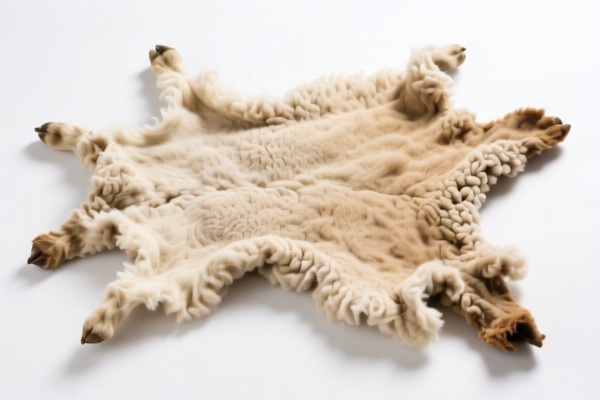
AI Analysis
🐑 Raw Lambskins – Comprehensive HS Code & Tariff Guide (2026 Edition)
🌐 HS Code Classification & Customs Clearance Strategy | 2026 Updated Tariff Rules | Expert-Level Compliance Blueprint
📌 1. Product Definition & Classification: What Exactly Are "Raw Lambskins"?
Raw lambskins refer to unprocessed sheep hides obtained from lambs (young sheep), not subjected to any tanning or鞣制 (tanning) process. These are considered primary agricultural products and fall under the category of raw animal skins.
⚠️ Key Classification Criteria: - Source: Lamb (young sheep), not adult sheep or goat - Processing Level: Untanned, unprocessed, raw hide - Form: Whole skins, pieces, or fragments - Use: Raw material for leather production (e.g., in footwear, garments, accessories)
🔍 Critical Distinction: - If tanned or processed → Not raw → Different HS Code (e.g., 4111, 4112) - If with wool/fur attached → May fall under 4301 (fur skins)
📦 2. HS Code Breakdown (2026 Official Tariff Schedule)
| HS Code | Product Description | Classification Reason | Tax Rate |
|---|---|---|---|
4102.10.30.00 |
Raw lambskins, not tanned or otherwise processed | Matches "raw" and "lambskin" directly; no processing | 12.0% |
4102.29.30.00 |
Raw sheep or lamb skins, not tanned, including lambskin | Covers raw sheep/lamb skins; specifically includes lambskin | 19.5% |
4301.30.00.00 |
Raw sheep or lamb skins, with wool or fur on, not tanned | Includes raw lambskins with wool/fur attached; qualifies as raw fur skin | 10.0% |
4301.90.00.00 |
Raw sheep or lamb skins, not tanned, not specified | General category for raw skins; fits raw lambskin fragments or unspecified pieces | 10.0% |
5101.11.20.00 |
Raw sheep or lamb skins with wool or fur on, not combed or brushed, not modified | Applies when wool/fur is intact and unprocessed; highly specific | 35.0% |
✅ Note:
-4102.10.30.00and4102.29.30.00are for raw lambskins only (no wool/fur) -4301.30.00.00and4301.90.00.00are for raw skins with wool/fur -5101.11.20.00is the highest tariff — only applies if wool/fur is unprocessed and unmodified
💰 3. 2026 Tariff Breakdown (Detailed Tax Clause Analysis)
✅ Applicable Country: United States (US)
✅ Origin: China (CN)
✅ Effective Date: November 10, 2025 (inclusive)
✅ Applicable to: All raw lambskins imported into the US
🎯 1. 4102.10.30.00 – Raw Lambskins (No Wool/Fur)
| Tax Component | Rate | Legal Basis | Notes |
|---|---|---|---|
| Base Duty | 2.0% | Standard tariff rate | Ad valorem |
| Section 301 (USITC) | 0.0% | No additional USITC tariff | Not listed under Section 301 |
| Section 122 (IEEPA) | 10.0% | International Emergency Economic Powers Act (IEEPA) | Applies to China-origin goods |
| Total Tariff | 12.0% | — | — |
📌 Explanation:
- No USITC 25% add-on (unlike electronics or steel)
- IEEPA 10% applies due to China origin
- Total = 2% + 10% = 12%
- No de minimis exemption → Must pay full 12%
🎯 2. 4102.29.30.00 – Raw Sheep or Lamb Skins (No Wool/Fur)
| Tax Component | Rate | Legal Basis | Notes |
|---|---|---|---|
| Base Duty | 2.0% | Standard tariff | Ad valorem |
| Section 301 (USITC) | 7.5% | USITC Footnote 9903.88.01 | Applies to certain animal skins |
| Section 122 (IEEPA) | 10.0% | IEEPA: 9903.01.25 | Applies to China-origin goods |
| Total Tariff | 19.5% | — | — |
📌 Explanation:
- 7.5% USITC = From Section 301 (trade remedy)
- 10% IEEPA = From international emergency powers
- Total = 2% + 7.5% + 10% = 19.5%
- Highest tariff among all lambskin codes
- No de minimis → Must pay full amount
🎯 3. 4301.30.00.00 – Raw Sheep or Lamb Skins With Wool/Fur
| Tax Component | Rate | Legal Basis | Notes |
|---|---|---|---|
| Base Duty | 0.0% | Standard tariff | No base duty |
| Section 301 (USITC) | 0.0% | Not listed under 301 | No additional USITC tariff |
| Section 122 (IEEPA) | 10.0% | IEEPA: 9903.01.25 | Applies to China-origin goods |
| Total Tariff | 10.0% | — | — |
📌 Explanation:
- No base duty → Lower starting point
- IEEPA 10% applies due to China origin
- Total = 10%
- Best option if wool/fur is present and you can prove it
🎯 4. 4301.90.00.00 – Raw Sheep or Lamb Skins (General, No Wool/Fur)
| Tax Component | Rate | Legal Basis | Notes |
|---|---|---|---|
| Base Duty | 0.0% | Standard tariff | No base duty |
| Section 301 (USITC) | 0.0% | Not listed | No USITC add-on |
| Section 122 (IEEPA) | 10.0% | IEEPA: 9903.01.25 | Applies to China-origin goods |
| Total Tariff | 10.0% | — | — |
📌 Explanation:
- Same as4301.30.00.00
- Applies to fragments, pieces, or unspecified raw skins
- 10% total — same as with wool/fur
- Best for scrap or irregular pieces
🎯 5. 5101.11.20.00 – Raw Sheep or Lamb Skins With Wool/Fur (Unprocessed)
| Tax Component | Rate | Legal Basis | Notes |
|---|---|---|---|
| Base Duty | 0.0% | Standard tariff | No base duty |
| Section 301 (USITC) | 25.0% | USITC: 9903.88.01 | Applies to unprocessed wool/fur skins |
| Section 122 (IEEPA) | 10.0% | IEEPA: 9903.01.25 | Applies to China-origin goods |
| Total Tariff | 35.0% | — | — |
📌 Explanation:
- 25% USITC = From Section 301 (trade remedy)
- 10% IEEPA = From international emergency powers
- Total = 35% → Highest tariff in the list
- Only applies if wool/fur is unprocessed and unmodified
- Avoid this code if possible — it’s a trap for unprocessed fur skins
🛠️ 4. Customs Clearance Best Practices (Pro Tips to Avoid Penalties)
✅ 1. Documentation Checklist (Must-Have)
| Document | Required? | Why It Matters |
|---|---|---|
| ✅ Commercial Invoice | ✔️ | Must specify "Raw Lambskin, Unprocessed, No Tanning" |
| ✅ Packing List | ✔️ | Show whole skins, pieces, or fragments |
| ✅ Product Photos (Clear) | ✔️ | Show skin surface, edges, wool/fur if present |
| ✅ Certificate of Origin (CO) | ✔️ | Prove China origin → triggers IEEPA |
| ✅ Third-Party Test Report | ✔️ | Optional but helpful (e.g., for "raw" status) |
| ✅ HS Code Pre-Ruling (if high-value) | ✔️ | Highly recommended for >$100k shipments |
✅ 2.申报技巧 (申报口诀)
🔥 "Raw ≠ Tanned, Wool ≠ Processed, Code = Tax!"
| Scenario | Correct HS Code | Wrong Code | Risk |
|---|---|---|---|
| Raw lambskin, no wool | 4102.10.30.00 |
4301.30.00.00 |
Higher tax |
| Raw lambskin, with wool | 4301.30.00.00 |
5101.11.20.00 |
35% vs 10% → 25% extra! |
| Fragments/pieces | 4301.90.00.00 |
4102.29.30.00 |
Higher tax |
| Wool unprocessed | 5101.11.20.00 |
4301.30.00.00 |
35% vs 10% → 25% extra! |
⚠️ Warning:
- Misclassifying a wool-covered skin as "raw" (4102) instead of "with wool" (4301) → 35% tariff instead of 10%
- This is a common mistake → leads to duty audits, penalties, and delays
✅ 3. Special Cases & Solutions
| Case | Solution |
|---|---|
| Lambskin with wool, but wool is trimmed | Use 4301.30.00.00 (if wool still attached) |
| Lambskin with wool, but wool is partially removed | Use 4301.90.00.00 (fragments) |
| Lambskin with wool, but processed (e.g., brushed) | Use 5101.11.20.00 → 35% tariff |
| Lambskin with wool, but origin is Vietnam/Mexico | Apply for IEEPA exemption → 0% IEEPA → 10% total |
| High-value shipment (> $100k) | Apply for Advance Ruling (Pre-Approval) → Lock in HS Code & Tax |
🌍 5. Global Market Comparison (2026)
| Country | Recommended HS Code | Tariff | Certification | Notes |
|---|---|---|---|---|
| 🇺🇸 USA | 4102.10.30.00 |
12.0% | None | IEEPA 10% applies |
| 🇨🇳 China | 4102.10.30.00 |
5% | CCC | No IEEPA |
| 🇪🇺 EU | 4102.10.30.00 |
0% | CE | No extra tariffs |
| 🇦🇺 Australia | 4102.10.30.00 |
5% | RCM | No IEEPA |
| 🇯🇵 Japan | 4102.10.30.00 |
0% | PSE | No IEEPA |
📌 Insight:
- USA has the highest tariff due to IEEPA + USITC
- China-origin goods face IEEPA 10% → Critical to track origin
- Vietnam/Mexico origin? → May qualify for IEEPA exemption → 0% IEEPA
📌 6. Common Mistakes & How to Avoid Them
❌ Mistake 1: Using 4102.10.30.00 for a wool-covered lambskin
👉 Result: Tax jumps from 10% to 35%
✅ Fix: Use 4301.30.00.00 or 5101.11.20.00 based on wool condition
❌ Mistake 2: Not distinguishing between raw and tanned
👉 Result: Misclassification → duty audit, penalties, delays
❌ Mistake 3: Assuming all lambskins are the same
👉 Result: Paying 19.5% instead of 10%
✅ Fix: Know wool status, processing level, and origin
🎯 7. Final Verdict: How to Minimize Tariff Risk
🔥 Golden Rule:
"If wool is on, use 4301. If wool is off, use 4102. If wool is unprocessed, avoid 5101!"
🎯 Best Strategy: - Prove wool/fur status with photos and description
- Use origin country wisely (Vietnam/Mexico = lower risk)
- Apply for pre-ruling for high-value shipments
- Never assume — verify HS Code before shipment
📣 Call to Action: Secure Your Shipment Today!
📞 Contact a certified customs broker
📄 Submit product photos, specs, and origin
🚀 Get your HS Code pre-approved — avoid 35% tax traps!
✨ Pro Tip:
If your lambskin has wool/fur, and you're shipping from China, you’re paying 10% IEEPA.
But if you ship from Vietnam, and prove origin, you may avoid IEEPA entirely → Total = 0%!
📌 Remember:
🔹 HS Code = Tax Rate
🔹 Wool = Higher Tax (if unprocessed)
🔹 Origin = IEEPA Trigger
🔹 Pre-ruling = Peace of Mind
💼 Your shipment’s success starts with one correct HS Code.
🚀 Get it right — save thousands, avoid penalties, ship with confidence!
Customer Reviews
About HS Code Classification
The Harmonized System (HS) is an internationally standardized nomenclature developed by the World Customs Organization (WCO) to classify traded products. Over 200 countries use the HS system as the basis for customs tariffs, trade statistics, and import/export regulations.
Each HS code follows a hierarchical structure:
- Chapter (2 digits) — Broad category of goods (e.g., Chapter 84: Machinery and Mechanical Appliances)
- Heading (4 digits) — More specific grouping within the chapter
- Subheading (6 digits) — Internationally standardized breakdown, used by all WCO member countries
- National subdivisions (8-10 digits) — Country-specific extensions for further classification, such as US HTSUS 10-digit codes
Correct HS code classification is essential for smooth customs clearance, accurate duty payment, and compliance with trade regulations. Misclassification can lead to customs delays, overpayment of duties, or penalties.
When importing from CN to US, the applicable tariff rates may include:
- Most-Favored-Nation (MFN) rate — The standard duty rate applied to WTO members
- General rate — Applied to countries without trade agreements
- Trade remedy duties — Additional tariffs such as Section 301 (anti-dumping), Section 232 (national security), or countervailing duties
The information provided on this page is for reference purposes only. For official classification, please consult with your local customs authority or a licensed customs broker.