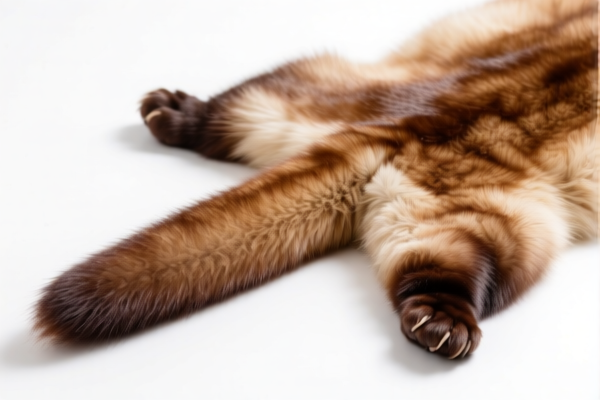
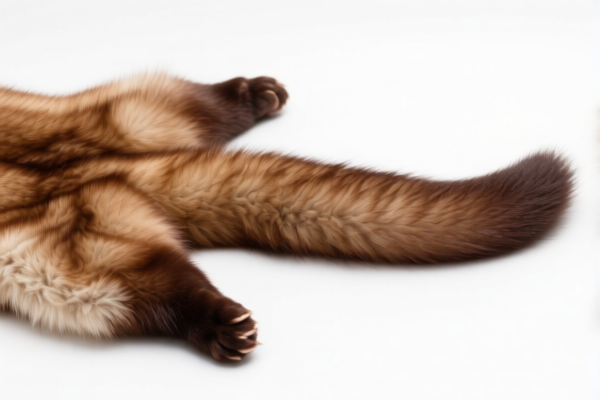
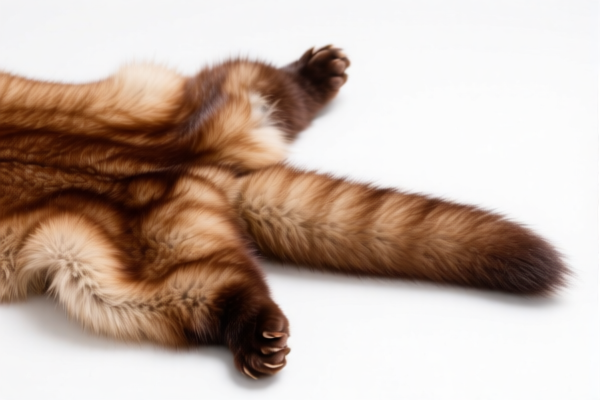
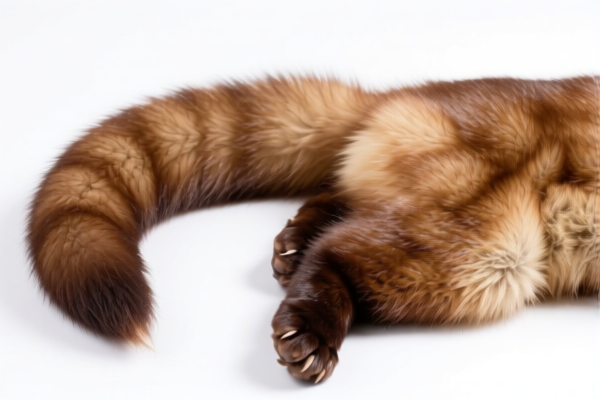
raw mink skins with tail
CN → US| HS Code | Tariff Rate | Origin | Destination | Doc |
|---|---|---|---|---|
| 4103901190 | 17.5% | CN | US | Official Doc |
| 4103901140 | 17.5% | CN | US | Official Doc |
Product Images
AI Analysis
🦨 Raw Mink Skins with Tail (Preserved, Not Tanned)
🌐 HS Code Reference & Customs Clearance Guide | 2026 Latest Tariff Analysis | Professional Strategy
📌 I. Product Definition & Classification: What Are "Raw Mink Skins with Tail"?
Raw Mink Skins with Tail refer to the pelts of mink (Neovison vison or Martes vison) that have been removed from the animal and preserved but have not undergone tanning, parchment-dressing, or further preparation. The presence of the tail is a critical descriptive element that distinguishes the product from trimmed hides, but it does not change the fundamental classification as a "raw hide or skin."
In international trade, these goods fall under Chapter 41: Raw Hides and Skins (other than furskins) and leather. Even though mink is often associated with fur, unless the skin has been tanned or dressed for use as fur, it is treated as a raw material.
⚠️ Key Distinction:
- If the skin is fresh, salted, dried, limed, pickled, or otherwise preserved but not tanned → Classified under HS 4103.
- If the skin has been tanned or further prepared (e.g., dyed, stretched, finished for fur wearables) → Classified under Chapter 43 (Furskins).
- Tail Presence: The tail is included in the skin if it is attached. It does not constitute a separate article for classification purposes unless cut off and traded separately (which is rare for raw pelts).
📦 II. HS Code Classification Details (2026 Latest Tariff Authority)
Based on the provided data, there are two primary HS Codes depending on the specific sub-category of "Other" raw hides. Since Mink is not Goats/Kids, it falls under the "Other" category.
| HS Code | Product Description | Applicable Scenario | Tax Rate (China Origin to US) |
|---|---|---|---|
4103.90.11.90 |
Other raw hides and skins (fresh, salted, dried, limed, pickled or otherwise preserved), not pretanned. Other: Not pretanned, Other. | Raw Mink skins with tail, not pretanned, not goats/kids. | 7.5% (7.5% additional tax, 0% base) |
4103.90.11.40 |
Other raw hides and skins... Other: Not pretanned. Of goats or kids. | NOT APPLICABLE to Mink. This code is for goat/kid skins. | 0.0% |
🔍 Critical Note:
- Mink is not Goat/Kid. Therefore, HS Code4103.90.11.40is incorrect for Mink skins.
- The correct code is4103.90.11.90, which covers "Other" raw hides and skins (including Mink) that are not pretanned.
- Tax Implication: The total additional tax rate is 7.5%.
💰 III. 2026 Latest Tariff Rate Breakdown
✅ Applicable Country: United States (US)
✅ Origin: China (CN)
✅ Effective Time: 2025-11-10 onwards
🎯 1. 4103.90.11.90 —— Raw Mink Skins with Tail (Not Pretanned)
| Item | Content |
|---|---|
| Base Tariff | 0.0% (ad valorem) |
| Additional Tax (Section 301 / IEEPA) | +7.5% |
| Total Tax Rate | 7.5% |
| Tax Calculation | CIF Value × 7.5% |
| De Minimis Eligibility | ❌ No (Generally, raw hides/skins are not eligible for de minimis exemption due to high risk of misclassification and veterinary controls) |
| Legal Basis Path | HS: 4103.90.11.90 → Additional Tax: 7.5% |
📌 Explanation:
- The 0% base tariff applies to raw hides and skins under Chapter 41 in many trade agreements.
- However, a 7.5% additional tax is applied to Chinese-origin goods in this category.
- Total Cost Impact: For every $10,000 CIF value, you pay $750 in additional duties.
- No Base Duty + No Additional Duty = 0%? NO. The data explicitly states a 7.5% total tax for4103.90.11.90.
🛠️ IV. Customs Clearance Practical Advice (Battle-Tested Guide)
✅ 1. Required Documentation Checklist (Non-Negotiable)
| Document | Mandatory? | Description |
|---|---|---|
| ✅ Commercial Invoice | ✔️ | Must clearly state: "Raw Mink Skins with Tail, Preserved, Not Tanned" |
| ✅ Packing List | ✔️ | Detail count, weight, and whether tails are attached. |
| ✅ Vet Certificate / Health Certificate | ✔️ | Critical for Animal Products. Must confirm no anthrax, rabies, or other zoonotic diseases. |
| ✅ Preservation Method Statement | ✔️ | Specify if salted, dried, or chemically preserved. Impacts bio-security risk. |
| ✅ HS Code Pre-Ruling | ✔️ | Recommended to confirm 4103.90.11.90 vs. 4302 (Tanned Fur). |
| ✅ Import License (if applicable) | ✔️ | Check if specific permits for wildlife/fur raw materials are needed (CITES may apply depending on species origin). |
✅ 2. Declaration Best Practices (Key Mantra)
🔥 "Raw, Not Tanned, Tail Attached, Vet Cleared!"
| Scenario | Correct Declaration | Incorrect Declaration |
|---|---|---|
| Raw Mink with Tail | 4103.90.11.90 - Raw Mink Skins, Preserved |
4302 (Tanned Fur) → Penalty + Higher Tax |
| Tanned Mink Fur | 4302.xxxx |
4103.90.11.90 → Misclassification |
| Mink Skins (No Tail) | 4103.90.11.90 |
Same HS Code, but description must reflect "trimmed" |
| Goat Skins | 4103.90.11.40 |
4103.90.11.90 → 0% Tax vs 7.5% Tax (Misclassification Risk) |
📌 Warning:
- Do NOT declare as "Fur" or "Tanned Fur" if they are raw. This will trigger veterinary inspections and potential rejection.
- Do NOT use HS4103.90.11.40for Mink. It is exclusively for Goats/Kids. Using it for Mink is a clear misclassification and will lead to audits and fines.
✅ 3. Special Considerations
| Issue | Handling Advice |
|---|---|
| CITES Compliance | Mink is generally not listed in CITES Appendix I/II for commercial farming, but verify the source country. Wild-caught mink may require permits. |
| Biosecurity | Salted skins are preferred over wet/fresh skins for lower risk. Ensure no prohibited preservatives are used. |
| Valuation | Customs may scrutinize low-value declarations. Provide proof of value (e.g., auction prices, factory invoices). |
| Tail Presence | Ensure the tail is attached. If tails are cut off, it is still 4103.90.11.90, but the description should be "Trimmed Mink Hides." |
🌍 V. Global Market Comparison (2026)
| Country/Region | Recommended HS Code | Tax Rate | Certification | Notes |
|---|---|---|---|---|
| 🇺🇸 USA | 4103.90.11.90 |
7.5% | Vet Certificate | No de minimis. High scrutiny on animal products. |
| 🇨🇳 China | 4103.90.11.90 |
~5-10% | Import License | Varies by trade agreement. |
| 🇪🇺 EU | 4103.90.11 |
~5-15% | REACH/Vet Cert | Strict hygiene standards for raw hides. |
| 🇯🇵 Japan | 4103.90.11 |
~3-6% | Quarantine Cert | Strict biosecurity checks. |
📌 Conclusion:
- The US 7.5% additional tax is significant but manageable compared to other trade-war categories (e.g., 25% or 100%).
- Veterinary documentation is the biggest hurdle, not the tax itself.
📌 VI. Common Mistakes & Pitfalls (Lessons Learned)
❌ Mistake 1: Declaring Raw Mink as "Tanned Fur" (4302)
👉 Consequence: If caught, it’s misclassification. If it is raw, it may be rejected for lacking proper tanning documentation or for biosecurity risks.
👉 Penalty: Back taxes + fines + shipment delay.
❌ Mistake 2: Using HS 4103.90.11.40 (Goats) for Mink
👉 Consequence: 0% tax vs 7.5% tax. Customs will detect this via product description or physical inspection.
👉 Penalty: Misclassification fraud, potential civil penalties.
❌ Mistake 3: Ignoring Vet Certificates
👉 Consequence: Shipment held at port for weeks.
👉 Penalty: Storage fees, potential destruction of goods if disease risk is suspected.
❌ Mistake 4: Claiming "De Minimis" Exemption
👉 Consequence: Raw animal products are often excluded from de minimis.
👉 Penalty: Entry rejection, additional brokerage fees.
✅ Correct Practice:
"Raw Mink Pelts, with Tails Attached, Salted, Preserved, Not Tanned. HS: 4103.90.11.90. Vet Cert Attached."
🎯 VII. Conclusion: Professional Declaration, Smooth Clearance!
🎯 Remember the Mantra:
🔹 "Raw, Not Tanned, Mink is NOT Goat!"
🔹 "Vet Cert is Mandatory, Tail is Part of the Skin!"
🔹 "7.5% Tax is Predictable, Misclassification is NOT!"
📌 Pro Tip:
- If you are importing Tanned Mink Fur (for clothing), you must use Chapter 43 (4302.xxxx), which has different tax rates and regulations. Do not confuse Raw (41) with Tanned (43).
- Always obtain a Vet Certificate before shipping.
- For large volumes, consider applying for an Advance Ruling to confirm 4103.90.11.90 applicability.
📣 Act Now:
📞 Contact a licensed customs broker + Provide Vet Cert + Declare
4103.90.11.90
🚀 Ensure your Raw Mink Skins clear customs smoothly, legally, and profitably!
✨ Professional Clearance Starts with Accurate Classification!
💼 Every Shipment’s Value Depends on Precision!
Customer Reviews
About HS Code Classification
The Harmonized System (HS) is an internationally standardized nomenclature developed by the World Customs Organization (WCO) to classify traded products. Over 200 countries use the HS system as the basis for customs tariffs, trade statistics, and import/export regulations.
Each HS code follows a hierarchical structure:
- Chapter (2 digits) — Broad category of goods (e.g., Chapter 84: Machinery and Mechanical Appliances)
- Heading (4 digits) — More specific grouping within the chapter
- Subheading (6 digits) — Internationally standardized breakdown, used by all WCO member countries
- National subdivisions (8-10 digits) — Country-specific extensions for further classification, such as US HTSUS 10-digit codes
Correct HS code classification is essential for smooth customs clearance, accurate duty payment, and compliance with trade regulations. Misclassification can lead to customs delays, overpayment of duties, or penalties.
When importing from CN to US, the applicable tariff rates may include:
- Most-Favored-Nation (MFN) rate — The standard duty rate applied to WTO members
- General rate — Applied to countries without trade agreements
- Trade remedy duties — Additional tariffs such as Section 301 (anti-dumping), Section 232 (national security), or countervailing duties
The information provided on this page is for reference purposes only. For official classification, please consult with your local customs authority or a licensed customs broker.