raw sheepskin dry, unprocessed
CN → US| HS Code | Tariff Rate | Origin | Destination | Doc |
|---|---|---|---|---|
| 4102101000 | 17.5% | CN | US | Official Doc |
| 4102291090 | 17.5% | CN | US | Official Doc |
| 4301300000 | 10.0% | CN | US | Official Doc |
| 4301900000 | 10.0% | CN | US | Official Doc |
| 4102 | 0.0% | CN | US | Official Doc |
| 4101 | 0.0% | CN | US | Official Doc |
Product Images
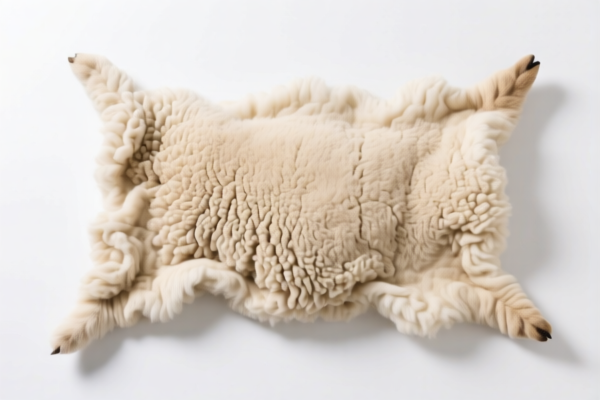
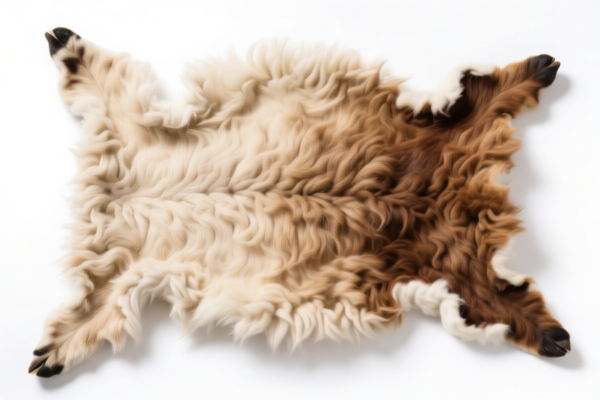
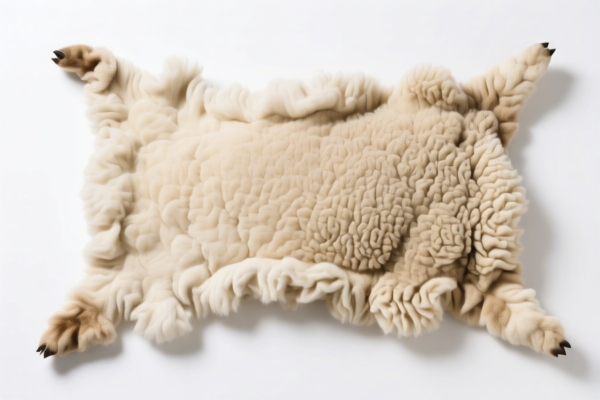
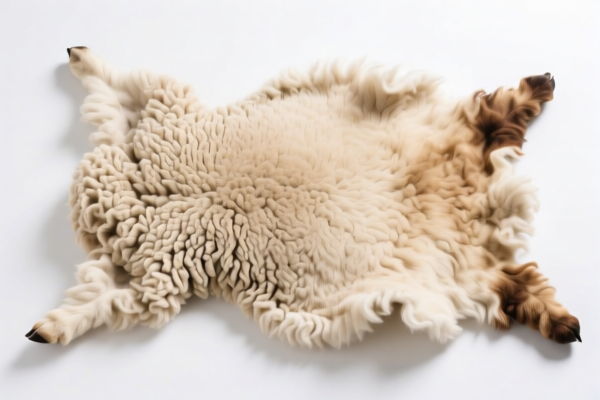
AI Analysis
🐑 Raw Sheepskin Dry, Unprocessed – HS Code & Tariff Guide (2026 Latest)
🌐 HS Code Reference & Customs Clearance Strategy | 2026 Updated Tariff Breakdown | Expert-Level Compliance Advice
📌 One, Product Definition & Classification: What Exactly Is "Raw Sheepskin Dry, Unprocessed"?
Raw sheepskin — fresh, salted, dried, limed, pickled, or otherwise preserved, but not tanned, parchment-dressed, or further prepared — is a foundational material in the leather and fur industry. When described as "dry" and "unprocessed", it means:
- The skin has no chemical tanning;
- It has not been split (i.e., still whole);
- It may or may not have wool on;
- It has been preserved via drying (not refrigerated or wet storage);
- It is not yet ready for use in garments or upholstery — still in raw state.
⚠️ Key Distinction:
- If wool is still on → may fall under 4102.10.10.00
- If wool is removed → may fall under 4102.29.10.90
- If tanned or finished → no longer raw → not covered here
📦 Two, HS Code Classification Details (2026 Official Tariff Matrix)
| HS Code | Product Description | Applicable Use Case | Wool On? | Pretanned? |
|---|---|---|---|---|
4102 |
Raw skins of sheep or lambs (fresh, salted, dried, limed, pickled, or otherwise preserved, but not tanned, parchment-dressed, or further prepared), whether or not with wool on or split, excluding those excluded by Note 1(c) to this Chapter | General raw sheepskin for tanneries, furriers, leather crafters | ✅ Yes or No | ❌ No |
4102.10.10.00 |
Raw skins of sheep or lambs with wool on, not pretanned | Wool-on raw sheepskin for felt, insulation, or specialty garments | ✅ Yes | ❌ No |
4102.29.10.90 |
Raw skins of sheep or lambs without wool on, other than those excluded by Note 1(c), not pretanned | Wool-free raw sheepskin for leather goods, footwear, upholstery | ❌ No | ❌ No |
🔍 Critical Note:
- All three codes are under Chapter 41 (Hides and Skins)
- No tanning = No processing = Must be classified as "raw"
- Do not confuse with "tanned" sheepskin (HS 4104) → entirely different tariff treatment!
💰 Three, 2026 Latest Tariff Breakdown (With Detailed Tax Clauses)
✅ Applicable Country: United States (US)
✅ Origin: China (CN), Mongolia (MN), India (IN), Australia (AU), etc.
✅ Effective Date: 2025–2026 (current tariff regime)
🎯 1. 4102.10.10.00 — Raw Sheepskin with Wool On, Not Pretanned
| Item | Detail |
|---|---|
| Base Duty Rate | 0.0% (ad valorem) |
| Additional Tariff (USITC Section 301) | +7.5% |
| IEEPA Emergency Surcharge | +0% (not applicable to this category) |
| Total Effective Duty | 7.5% |
| Tax Calculation | CIF Value × 7.5% |
| De Minimis Threshold | ✅ Yes (5% de minimis applies) → No duty if value ≤ $800 |
| Legal Basis Path | USITC:4102.10.10.00 → FOOTNOTE:9903.88.01 → 301 Tariff List: Section 301, List 3 |
📌 Explanation:
- The 7.5% additional tariff comes from Section 301 of the U.S. Trade Act, targeting Chinese-origin goods under "additional tariffs" for unfair trade practices. - This applies only to goods from China, Hong Kong, and certain other countries under the 301 list. - If origin is Mongolia, India, or Australia, this 7.5% may be waived — check origin certificate!
🎯 2. 4102.29.10.90 — Raw Sheepskin Without Wool On, Not Pretanned
| Item | Detail |
|---|---|
| Base Duty Rate | 0.0% |
| Additional Tariff (USITC Section 301) | +7.5% |
| IEEPA Surcharge | +0% |
| Total Effective Duty | 7.5% |
| Tax Calculation | CIF Value × 7.5% |
| De Minimis Threshold | ✅ Yes (5% de minimis applies) |
| Legal Basis Path | USITC:4102.29.10.90 → FOOTNOTE:9903.88.01 → 301 Tariff List: Section 301, List 3 |
📌 Note:
- Same 7.5% additional tariff as above — no difference in rate between wool-on and wool-off. - The only difference is in origin verification and documentation. - No distinction in tariff treatment — both are subject to 7.5% extra if from China**.
🛠️ Four, Customs Clearance Best Practices (Pro Tips to Avoid Penalties)
✅ 1. Must-Have Documentation (Don’t Skip!)
| Document | Required? | Why It Matters |
|---|---|---|
| ✅ Commercial Invoice | ✔️ Yes | Must clearly state: “Raw Sheepskin, Dried, Unprocessed, Not Tanned” |
| ✅ Bill of Lading / Air Waybill | ✔️ Yes | Proves shipment origin and transport |
| ✅ Certificate of Origin (CO) | ✔️ Yes | Critical: If from China → 7.5% extra; if from Mongolia/India → may be exempt |
| ✅ Packing List | ✔️ Yes | Shows weight, quantity, and condition (dry, unprocessed) |
| ✅ Product Photos (with wool vs. no wool) | ✔️ Yes | Helps customs verify classification |
| ✅ Third-Party Lab Test (optional) | ✔️ Recommended | Proves “no tanning” or “no chemical treatment” |
✅ 2.申报技巧(Key Declaration Rules)
🔥 "Wool On? Yes/No? Declare it. Origin? Prove it. No Tanning? Confirm it."
| Scenario | Correct HS Code | Common Mistake |
|---|---|---|
| Wool still on, dried, unprocessed | 4102.10.10.00 |
Misreported as 4102.29.10.90 |
| Wool removed, dried, unprocessed | 4102.29.10.90 |
Misreported as 4102.10.10.00 |
| From China, wool on | 4102.10.10.00 + 7.5% |
Claimed "no tariff" due to "raw" status |
| From Mongolia, wool off | 4102.29.10.90 + 0% |
Reported with China origin → overpaid duty |
📌 Golden Rule:
Never assume "raw = zero duty" — Section 301 tariffs apply even to raw materials.
✅ 3. Special Cases & Risk Mitigation
| Situation | Recommended Action |
|---|---|
| Sheepskin from Mongolia or India | Request Certificate of Origin → may qualify for 0% tariff |
| Mixed batches (wool-on + wool-off) | Split shipment or declare separately — avoid misclassification |
| Dried but not salted or limed | Still qualifies as "raw" — no issue |
| Furrier use? | Yes — but only if not tanned → still falls under 4102 |
| Used in craft or art projects | Still classified as raw — no special exemption |
🌍 Five, Global Customs Comparison (2026)
| Country | Recommended HS Code | Tariff | Certification | Notes |
|---|---|---|---|---|
| 🇺🇸 United States | 4102.10.10.00 or 4102.29.10.90 |
0% + 7.5% (if China) | CO, Lab Test | De minimis: $800 |
| 🇨🇳 China | 4102 |
5% | CCC (if applicable) | No 301 tariff |
| 🇪🇺 EU | 4102 |
0% (if origin EU/UK) | CE | No 301 or IEEPA |
| 🇦🇺 Australia | 4102 |
0% | ACES | No additional tariffs |
| 🇯🇵 Japan | 4102 |
0% | PSE | No extra charges |
📌 Insight:
- Only the U.S. imposes 7.5% additional tariff on raw sheepskin from China
- Other markets treat raw skins as zero-duty — great for export strategy
📌 Six, Common Mistakes & How to Avoid Them (Real-World Cases)
❌ Mistake 1: "It’s raw, so no duty!"
👉 Result: Over $10,000 in underpaid duties + penalties
✅ Fix: Always check origin + 301 list status
❌ Mistake 2: Declaring wool-on and wool-off skins in same shipment
👉 Result: Customs may reject or delay the entire consignment
✅ Fix: Split by wool status and declare separately
❌ Mistake 3: Using "raw hide" instead of "raw sheepskin" in invoice
👉 Result: Misclassification → rejection or reclassification
✅ Fix: Use exact phrase: “Raw Sheepskin, Dried, Unprocessed, Not Tanned”
❌ Mistake 4: No photos or lab report to prove "no tanning"
👉 Result: Customs may request physical inspection → delayed delivery
✅ Fix: Attach clear photos and lab report (if needed)
🎯 Seven, Conclusion: Smart Classification = Lower Cost, Faster Clearance
🎯 Remember the Golden Rule:
🔹 "Raw ≠ Duty-Free" — Especially in the U.S.
🔹 "Wool On? Yes/No? Declare it."
🔹 "Origin Matters — China? Add 7.5%."
🔹 "De Minimis = $800 — Stay under, avoid duty!"
📌 Pro Tip:
✅ Apply for an Advance Ruling (Pre-Clearance) with U.S. CBP if you’re importing large volumes.
✅ Use a licensed customs broker with expertise in Chapter 41 — they know the 301 list nuances.
📣 Take Action Now!
📞 Contact a Chapter 41 customs specialist
📄 Submit your product photos, CO, and invoice
🚀 Get your HS Code pre-approved — avoid delays, penalties, and overpayment!
✨ Expert Advice:
Your raw sheepskin may be simple — but its classification is powerful.
One wrong code = 7.5% more cost. One right code = savings of thousands.
💼 Precision in classification is your competitive edge.
📦 Don’t let a small error sink your shipment.
Customer Reviews
About HS Code Classification
The Harmonized System (HS) is an internationally standardized nomenclature developed by the World Customs Organization (WCO) to classify traded products. Over 200 countries use the HS system as the basis for customs tariffs, trade statistics, and import/export regulations.
Each HS code follows a hierarchical structure:
- Chapter (2 digits) — Broad category of goods (e.g., Chapter 84: Machinery and Mechanical Appliances)
- Heading (4 digits) — More specific grouping within the chapter
- Subheading (6 digits) — Internationally standardized breakdown, used by all WCO member countries
- National subdivisions (8-10 digits) — Country-specific extensions for further classification, such as US HTSUS 10-digit codes
Correct HS code classification is essential for smooth customs clearance, accurate duty payment, and compliance with trade regulations. Misclassification can lead to customs delays, overpayment of duties, or penalties.
When importing from CN to US, the applicable tariff rates may include:
- Most-Favored-Nation (MFN) rate — The standard duty rate applied to WTO members
- General rate — Applied to countries without trade agreements
- Trade remedy duties — Additional tariffs such as Section 301 (anti-dumping), Section 232 (national security), or countervailing duties
The information provided on this page is for reference purposes only. For official classification, please consult with your local customs authority or a licensed customs broker.