raw sheepskin unprocessed, unfurled
CN → US| HS Code | Tariff Rate | Origin | Destination | Doc |
|---|---|---|---|---|
| 4103901190 | 17.5% | CN | US | Official Doc |
| 4102291090 | 17.5% | CN | US | Official Doc |
| 4102101000 | 17.5% | CN | US | Official Doc |
| 4103901130 | 17.5% | CN | US | Official Doc |
| 4103901190 | 17.5% | CN | US | Official Doc |
Product Images
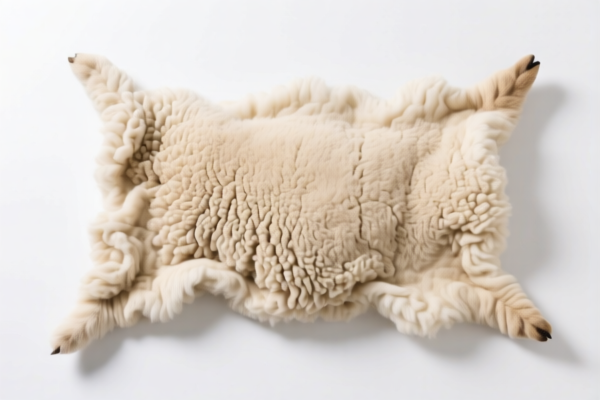
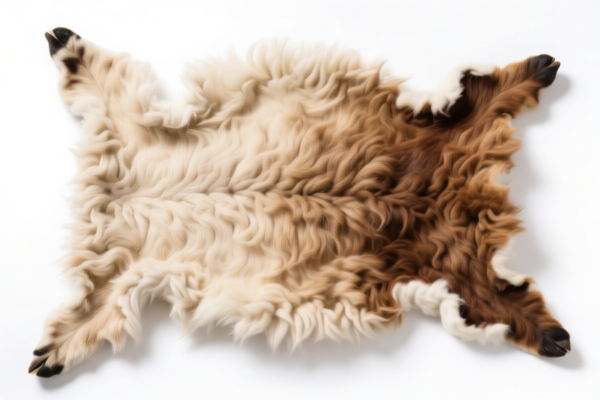
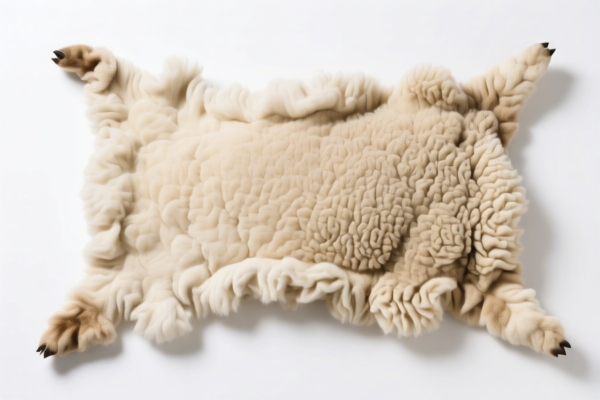
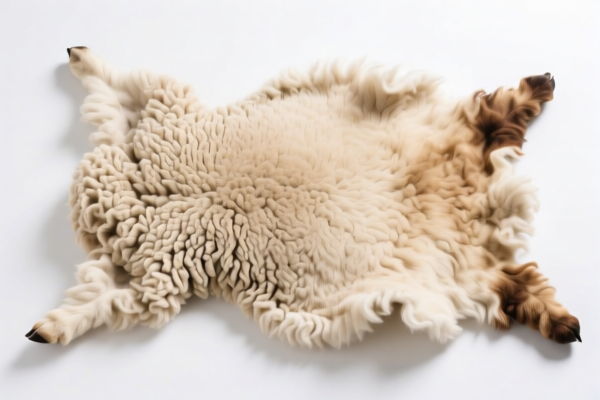
AI Analysis
🐑 Raw Sheepskin (Unprocessed, Unfurled)
🌐 HS Code Classification & Customs Clearance Guide | 2026 Latest Tariff Analysis | Professional Entry Strategy
📌 I. Product Definition & Classification: What Exactly is "Raw Sheepskin"?
Raw sheepskin, in its natural state before any significant processing (such as tanning or fur removal), is classified under Chapter 41 of the Harmonized System (HS). The key characteristics that define its classification are: 1. Material: Sheepskin (from sheep). 2. State: Unprocessed/Unfurled (not shorn or removed from the body). 3. Processing Level: Unpre-tanned or Untanned (dried, salted, or limed, but not yet converted into leather).
⚠️ Critical Distinction:
- If the skin is untanned but fur is retained → Typically falls under 4102 (Sheepskin, not shorn, not split).
- If the skin is untanned and fur is removed/unfurled → Typically falls under 4103 (Other unpre-tanned or untanned hides and skins, including lambskins).
- Do NOT confuse with processed leather (Chapter 41, Heading 4104+), which requires tanning.
📦 II. HS Code Classification Details (2026 Latest Tariff Authority Comparison)
Based on the provided data, here are the precise HS codes applicable to raw, unprocessed, unfurled sheepskin, along with the rationale for each.
| HS Code | Product Description | Matching Rationale | State/Condition |
|---|---|---|---|
4102.29.10.90 |
Sheepskin, not shorn, not split, other than wool-shorn or lambskin | Matches material: Sheepskin. Condition: Unfurled/unshorn. This code specifically targets sheepskins that retain their natural state without wool-shearing processing. | Unfurled, Unpre-tanned |
4102.10.10.00 |
Sheepskin, not shorn, not split, other than wool-shorn or lambskin | Matches material: Sheepskin. Condition: Untanned. This is the primary code for raw sheepskin that has not undergone any tanning process. | Untanned, Unprocessed |
4103.90.11.30 |
Other unpre-tanned or untanned hides and skins, of sheep or lamb | Matches material: Sheepskin. Condition: Unpre-tanned. This code applies if the skin is considered "other" than the specific not-shorn category, often used for skins that are dried/salted but not fully tanned. | Unpre-tanned, Specific Animal Category |
4103.90.11.90 |
Other unpre-tanned or untanned hides and skins, other | Matches material: Sheepskin. Condition: Unprocessed/Dried. This is a residual category for sheepskins that do not fit into the more specific subheadings, often for dried, unfurled skins. | Dried, Unprocessed, Unfurled |
🔍 Key Insight:
- All listed HS codes share the same total tax rate of 17.5% due to the identical tariff structure for raw animal skins from China to the US under current trade policies.
- The difference lies in the precise physical state: Not shorn/unfurled (4102) vs. General unpre-tanned/other (4103).
- Customs Recommendation: Provide detailed photos showing the fur side and skin side to determine if it is "not shorn" (4102) or "unfurled/general" (4103).
💰 III. 2026 Latest Tariff Rate Breakdown (Including Additional Duties)
✅ Applicable Country: United States (US)
✅ Country of Origin: China (CN)
✅ Effective Date: November 10, 2025 (and onwards for subsequent imports)
🎯 1. Applicable HS Codes: 4102.29.10.90, 4102.10.10.00, 4103.90.11.30, 4103.90.11.90
| Item | Detail |
|---|---|
| Base Tariff Rate | 0.0% (Ad valorem) – Raw hides/skins often have low base rates. |
| Section 301 Additional Duty | +7.5% – Under USITC Footnote 9903.88.01 (China-specific). |
| IEEPA Additional Duty | +10% – Under International Emergency Economic Powers Act (China/Heritage goods). |
| Total Tax Rate | 17.5% |
| Duty Calculation | CIF Value × 17.5% |
| De Minimis Exemption | ❌ Not Eligible (deny_de_minimis) |
| Legal Basis Path | IEEPA:9903.01.25 → IEEPA:9903.01.24 → USITC:4102.x.x.x.x / 4103.x.x.x.x → FOOTNOTE:9903.88.01 |
📌 Explanation:
- 0% Base Rate: Reflects the low strategic value of raw agricultural/animal products in base trade agreements.
- 7.5% Section 301 Duty: Applied due to China’s trade practices, impacting a wide range of goods including raw materials.
- 10% IEEPA Duty: A recent addition targeting specific Chinese-origin goods, including raw hides and skins.
- Total 17.5%: This is a significant cost factor for importers. Must be factored into landed cost calculations.
🛠️ IV. Customs Clearance Practical Advice (Battle-Tested Pitfall Guide)
✅ 1. Required Documentation Checklist (Mandatory)
| Document | Required? | Notes |
|---|---|---|
| ✅ Product Specification Sheet | ✔️ | Must state: "Raw Sheepskin, Unprocessed, Unfurled, Dried/Salted" |
| ✅ Photos (Front & Back) | ✔️ | Clear images of fur and skin side to prove "unprocessed" state |
| ✅ Commercial Invoice | ✔️ | Must specify HS Code and Country of Origin (China) |
| ✅ Packing List | ✔️ | Weight, quantity, and packaging type (e.g., bales, crates) |
| ✅ Certificate of Origin (CO) | ✔️ | To verify China origin and apply applicable duties |
| ✅ Treatment Certificate | ✔️ | If salted or treated, provide details to avoid biosecurity holds |
✅ 2. Declaration Tips (Key Mnemonic)
🔥 “Raw State, Unfurled, No Tanning, HS 4102/4103!”
| Scenario | Correct Declaration | Incorrect Declaration |
|---|---|---|
| Sheepskin with fur intact | 4102.10.10.00 or 4102.29.10.90 |
Misdeclare as 4103 → Risk of reclassification & penalty |
| Sheepskin, fur removed, dried | 4103.90.11.90 or 4103.90.11.30 |
Misdeclare as 4104 (Leather) → Major penalty! |
| Tanned Sheepskin | 4104.xxxx |
Declare as "Raw" → Customs Hold & Rejection |
| Mixed Bales (Raw & Tanned) | Split Declaration | Combine into one HS → Audit Flag |
✅ 3. Special Cases Handling
| Case | Handling Advice |
|---|---|
| Salted vs. Dried | Specify treatment method. Salted skins may face additional biosecurity inspections. |
| OEM/Custom Orders | Provide buyer’s specification sheet to prove "unprocessed" intent. |
| Biosecurity Check | Raw animal products may require USDA inspection. Allow extra 3-5 days for clearance. |
| Origin Verification | Ensure CO matches invoice. Discrepancies can lead to duty evasion flags. |
🌍 V. Global Market Comparison (2026 Latest)
| Country/Region | Recommended HS Code | Tariff Rate | Certification | Notes |
|---|---|---|---|---|
| 🇺🇸 United States | 4102.29.10.90 / 4103.90.11.90 |
17.5% (China Origin) | USDA Inspection | High additional duties; strict biosecurity |
| 🇨🇳 China | 4102.10.10.00 |
0% | N/A | No additional duties for imports |
| 🇪🇺 European Union | 4102.10.00 |
0% | CE/Ecolabel (if applicable) | No additional duties; strict animal welfare rules |
| 🇯🇵 Japan | 4102.10.00 |
5% | J-MARC | Standard tariff applies |
| 🇬🇧 United Kingdom | 4102.10.00 |
5% | UKCA | Post-Brexit tariffs apply |
📌 Conclusion:
- The US market has the highest cost barrier for raw sheepskin from China due to 17.5% total duty.
- EU and Japan offer more favorable terms, but with strict animal welfare and biosecurity requirements.
- Importers to the US must budget for 17.5% duty plus potential USDA inspection fees.
📌 VI. Common Mistakes & Pitfalls (Lessons Learned)
❌ Mistake 1: Declaring "Leather" when it is "Raw Sheepskin"
👉 Consequence: HS Code mismatch → Customs Seizure & Fine
❌ Mistake 2: Ignoring "Unfurled" vs. "Shorn" distinction
👉 Consequence: Incorrect HS Code (4103 vs 4102) → Audit Risk & Delay
❌ Mistake 3: Not providing photos of fur side
👉 Consequence: Customs cannot verify "unprocessed" state → Hold for Inspection
❌ Mistake 4: Combining raw and tanned skins in one shipment
👉 Consequence: Dual Declaration Required → If not done, penalties apply
✅ Correct Practice:
“Raw Sheepskin, Unprocessed, Unfurled, Dried, HS 4102.29.10.90, Origin: China, Treated: Salted”
🎯 VII. Conclusion: Precise Declaration, Cost Control, Smooth Clearance!
🎯 Remember the Mnemonic:
🔹 “Raw State, No Tanning, HS 4102/4103, 17.5% Duty!”
🔹 “Photos Prove Unprocessed, Split Declaration Saves Fines!”
📌 Pro Tip:
If your sheepskin is originating from Vietnam, Mexico, or Thailand, you may qualify for IEEPA Exemption, reducing the duty to 0%~5%.
Recommend Pre-Ruling Application with US Customs to avoid clearance delays.
📣 Immediate Action:
📞 Contact Professional Broker + Provide Product Photos + Apply for HS Code Pre-Ruling
🚀 Ensure Smooth Clearance, Cost Control, and Profit Maximization!
✨ Professional Customs Clearance Starts with Accurate Classification!
💼 Every Cent of Duty Matters in Raw Material Trade!
Customer Reviews
About HS Code Classification
The Harmonized System (HS) is an internationally standardized nomenclature developed by the World Customs Organization (WCO) to classify traded products. Over 200 countries use the HS system as the basis for customs tariffs, trade statistics, and import/export regulations.
Each HS code follows a hierarchical structure:
- Chapter (2 digits) — Broad category of goods (e.g., Chapter 84: Machinery and Mechanical Appliances)
- Heading (4 digits) — More specific grouping within the chapter
- Subheading (6 digits) — Internationally standardized breakdown, used by all WCO member countries
- National subdivisions (8-10 digits) — Country-specific extensions for further classification, such as US HTSUS 10-digit codes
Correct HS code classification is essential for smooth customs clearance, accurate duty payment, and compliance with trade regulations. Misclassification can lead to customs delays, overpayment of duties, or penalties.
When importing from CN to US, the applicable tariff rates may include:
- Most-Favored-Nation (MFN) rate — The standard duty rate applied to WTO members
- General rate — Applied to countries without trade agreements
- Trade remedy duties — Additional tariffs such as Section 301 (anti-dumping), Section 232 (national security), or countervailing duties
The information provided on this page is for reference purposes only. For official classification, please consult with your local customs authority or a licensed customs broker.