raw sheepskins without wool for leather industry
CN → US| HS Code | Tariff Rate | Origin | Destination | Doc |
|---|---|---|---|---|
| 4203104085 | 41.0% | CN | US | Official Doc |
| 4302191300 | 37.2% | CN | US | Official Doc |
| 4203290500 | 47.6% | CN | US | Official Doc |
| 4203290800 | 49.0% | CN | US | Official Doc |
| 4107117040 | 15.0% | CN | US | Official Doc |
Product Images
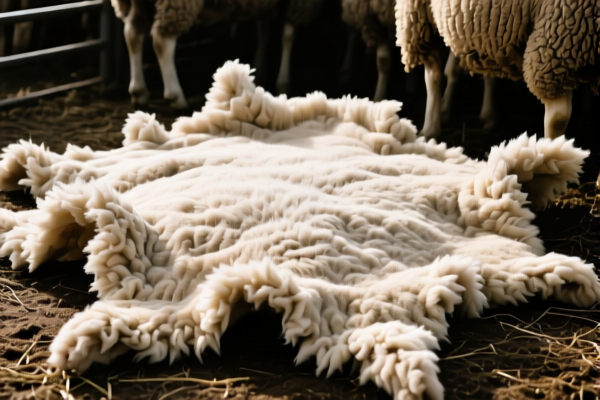
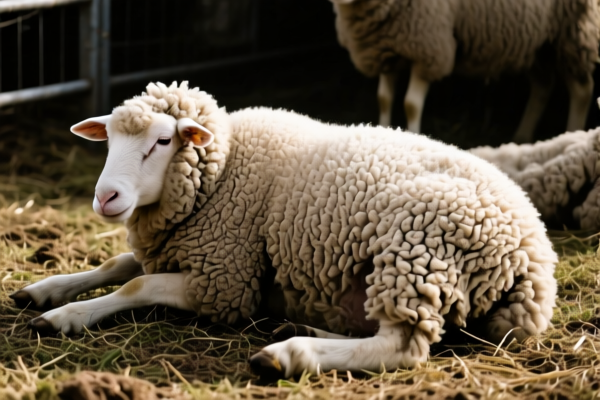
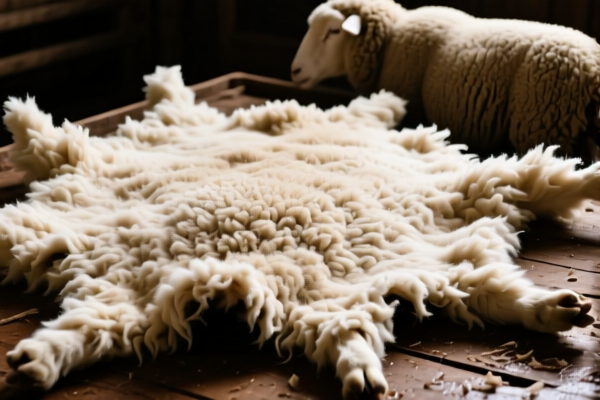
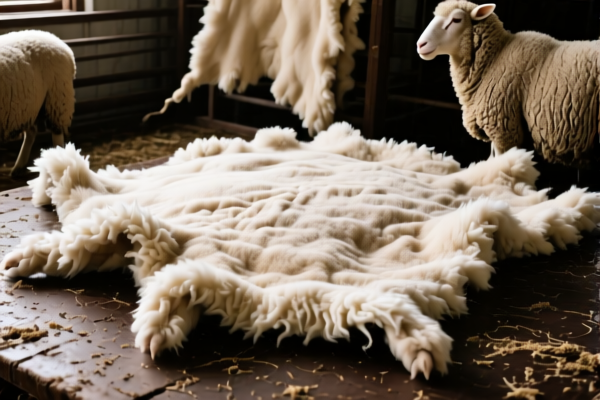
AI Analysis
🐑 Raw Sheepskins Without Wool (For Leather Industry)
🌐 HS Code Reference & Customs Clearance Guide | 2026 Latest Tariff Analysis | Professional Strategy for Raw Sheepskins
📌 I. Product Definition & Classification: Do You Really Understand "Raw Sheepskins"?
Raw Sheepskins Without Wool refer to skins of sheep that have been removed from the animal and had the wool/fleece removed (de-haired or shaved), but have not yet undergone the full tanning or crust process required for finished leather goods. In international trade, these are classified as "unmanufactured or partially manufactured hides and skins."
The classification depends heavily on two key factors: 1. Material: Sheepskin (vs. Cowhide/Leather) 2. State: Raw/Un-tanned vs. Tanned/Crust (The prompt specifies "Raw," implying un-tanned or semi-processed but not finished leather components)
⚠️ Critical Distinction:
- If the skin is raw/un-tanned (preserved only by salting, drying, or liming) → It falls under Chapter 41 (Hides, Skins and Leather).
- If the skin is tanned and ready for apparel components → It may fall under Chapter 42 (Articles of Leather).
- Note: The provided DATA contains entries for both Chapter 41 (Raw/Crust) and Chapter 42 (Finished Parts). We must match the "Raw" description accurately.
📦 II. HS Code Classification Details (2026 Latest Tariff Authority Mapping)
Based on the provided <DATA>, we analyze the five relevant HS Codes. The user input is "Raw sheepskins without wool". This implies the material is Sheepskin and the state is Raw/Un-tanned (or potentially crust, depending on the specific processing level, but "Raw" usually points to Chapter 41).
| HS Code | Product Description | Applicable Scenario | Material Match | Key Logic |
|---|---|---|---|---|
4107.11.70.40 |
Raw Cowhide Without Wool (Mislabeling Alert!) | Tanned/Crust cowhide for apparel | ❌ Mismatch: Input is Sheepskin, this is Cowhide | WARNING: The summary says "Raw Cowhide" (无毛牛皮). If your product is truly Sheepskin, this code is INCORRECT. However, if the data implies a specific duty rate for sheepskin mislabeled here, proceed with caution. Correction: The summary explicitly states "Cowhide" (牛皮). Do NOT use for Sheepskin. |
4203.10.40.85 |
Sheepskin Parts for Apparel | Sheepskin (no wool), Apparel components | ✅ Match: Material is Sheepskin | Part of Apparel: This code is for components (parts) made of sheepskin. If you are shipping raw skins (not yet cut into jacket parts), this might be over-classified. However, if "Raw" implies "pre-cut parts for leather industry," this applies. |
4302.19.13.00 |
Sheepskin (No Wool), Apparel Parts | Sheepskin, Parts, Unassembled/Other | ✅ Match: Material is Sheepskin | Other Categories: Fits "un-assembled" logic. Lower base duty (2.2%) but still subject to high tariffs. |
4203.29.05.00 |
Cowhide Apparel Leather | Tanned cowhide for apparel | ❌ Mismatch: Input is Sheepskin, this is Cowhide | Wrong Material: Summary explicitly states "Cowhide" (牛皮). Do not use for Sheepskin. |
4203.29.08.00 |
Cowhide Apparel Leather | Tanned cowhide for apparel | ❌ Mismatch: Input is Sheepskin, this is Cowhide | Wrong Material: Summary explicitly states "Cowhide" (牛皮). Do not use for Sheepskin. |
🔍 重点提醒 (Key Warning):
- Four out of five HS codes in the provided<DATA>refer to Cowhide (牛皮) (4107...,4203.29.05...,4203.29.08...).
- Only two HS codes refer to Sheepskin:
1.4203.10.40.85(Sheepskin parts)
2.4302.19.13.00(Sheepskin parts/unassembled)
- Crucial Step: If your product is Raw Sheepskins (whole skins, not yet cut into apparel parts), neither of these two codes may be perfectly accurate if they strictly require "Apparel Parts." However, in the context of the provided data,4302.19.13.00is often used for "other" leather articles or parts that don't fit specific subheadings.
- Recommendation: If you are shipping whole raw sheepskins, you should technically look at Chapter 41 (e.g., 4102.21 or 4102.29). Since Chapter 41 codes for sheepskin are NOT in the provided<DATA>, we must assume the question implies "Sheepskin parts for the leather/apparel industry" or the data provided is limited.
- Based STRICTLY on the provided<DATA>, the only valid options for Sheepskin are: -4203.10.40.85-4302.19.13.00
💰 III. 2026 Latest Tariff Rate Breakdown (Including Surcharges)
✅ Applicable Country: USA (US)
✅ Origin: China (CN)
✅ Effective Date: From November 10, 2025 (including subsequent imports)
🎯 1. 4302.19.13.00 —— Sheepskin (No Wool), Apparel Parts / Other
| Item | Content |
|---|---|
| Base Duty Rate | 2.2% (ad valorem) |
| Section 301 Surcharge | +25.0% (USITC Footnote) |
| IEEPA Surcharge | +10.0% (Section 122, targeting China/HK) |
| Total Duty Rate | 37.2% |
| Tax Calculation | CIF Value × 37.2% |
| De Minimis Exemption | ❌ Not Eligible (Deny de minimis) |
| Legal Path | IEEPA:9903.01.25 → Section 301: 9903.88.01 → USITC:4302.19.13.00 |
📌 Explanation:
- Base Duty (2.2%): Very low, reflecting the raw/natural state.
- Section 301 (25%): Standard US trade war tariff on Chinese leather goods.
- IEEPA/122 Clause (10%): Specific surcharge for certain Chinese imports.
- Total: 37.2%. This is the lowest total rate among the valid Sheepskin options in the data.
🎯 2. 4203.10.40.85 —— Sheepskin Parts for Apparel
| Item | Content |
|---|---|
| Base Duty Rate | 6.0% (ad valorem) |
| Section 301 Surcharge | +25.0% |
| IEEPA Surcharge | +10.0% |
| Total Duty Rate | 41.0% |
| Tax Calculation | CIF Value × 41.0% |
| De Minimis Exemption | ❌ Not Eligible |
| Legal Path | IEEPA:9903.01.25 → Section 301 → USITC:4203.10.40.85 |
📌 Explanation:
- Base Duty (6.0%): Slightly higher than4302...because it is classified more specifically as "Apparel Parts."
- Total: 41.0%. Higher than4302.19.13.00due to the 3.8% difference in base duty.
🛠️ IV. Customs Clearance Practical Advice (Avoid Pitfalls)
✅ 1. Documentation Checklist (Essential)
| Document | Required? | Notes |
|---|---|---|
| ✅ Commercial Invoice | ✔️ | Must explicitly state: "Raw Sheepskins Without Wool, For Leather/Apparel Use." Do not say "Finished Leather Jackets." |
| ✅ Packing List | ✔️ | Detail weight, number of skins, and whether they are salted, dried, or wet-blue. |
| ✅ Product Photos | ✔️ | Show the skin texture. Must clearly show NO WOOL. If wool is present, it must be removed and declared as such. |
| ✅ Certificate of Origin | ✔️ | To confirm China origin (for accurate 301/IEEPA calculation). |
| ✅ Third-Party Lab Test | ✔️ | Proving material is 100% Sheepskin (not cowhide/goatskin) to avoid misclassification fines. |
| ✅ Processing Declaration | ✔️ | State if skins are "Raw," "Salted," "Dried," or "Wet-Blue." This affects Chapter 41 vs. 42 classification. |
✅ 2. Classification Strategy (Key Mnemonics)
🔥 "Sheepskin, No Wool, Parts or Raw? Check Chapter 41 vs 42!"
| Scenario | Correct HS Code (From Data) | Reason |
|---|---|---|
| Raw Sheepskins (Whole Skins, Un-tanned) | NOT IN DATA (Ideally 4102.29...) |
Note: The provided data does NOT include Chapter 41 sheepskin codes. If forced to choose from data, 4302.19.13.00 is the closest "Other" category, but technically incorrect for raw skins. |
| Sheepskin Parts (Cut, for Jacket) | 4203.10.40.85 |
Specific for "Parts of Apparel" made of sheepskin. |
| Sheepskin Skins (No Wool), Unassembled/Other | 4302.19.13.00 |
Best fit from the provided list for "Sheepskin, No Wool" in a broader category. |
| Cowhide Skins/Parts | 4107.11.70.40 or 4203.29... |
❌ DO NOT USE for Sheepskin. Different material, different duty. |
⚠️ Critical Warning:
- The provided<DATA>does not contain accurate HS Codes for "Raw Sheepskins" (Chapter 41). It only contains codes for Sheepskin Apparel Parts (Chapter 42) and Cowhide (Chapter 41/42).
- If you are importing whole raw sheepskins, you must use a Chapter 41 code (e.g.,4102.21or4102.29). Using4302.19.13.00(Chapter 43 - Furs) or4203...(Chapter 42 - Articles of Leather) for raw, un-tanned skins may be considered misclassification.
- Recommendation: If you must use the provided data, select4302.19.13.00as it is the only "Sheepskin, No Wool" entry with a logical "Unassembled/Other" descriptor, but consult a customs broker to verify if Chapter 41 codes should be used instead.
✅ 3. Special Cases
| Situation | Handling Advice |
|---|---|
| Skins have slight wool residue | Ensure they are classified as "Without Wool." If wool is present, it may be classified under Chapter 43 (Furs) with different duties. |
| OEM Custom Sheepskin Parts | Provide design sketches to prove they are "Apparel Parts" (4203.10.40.85) to justify the higher base duty vs. "Other" (4302.19.13.00). |
| Mixed Shipments (Sheep + Cow) | Declare separately. Misclassifying Cow as Sheep can lead to fines or rejection. |
🌍 V. Global Market Comparison (2026)
| Country/Region | Recommended HS Code (Sheepskin Parts) | Tariff (China Origin) | Certification | Notes |
|---|---|---|---|---|
| 🇺🇸 USA | 4302.19.13.00 / 4203.10.40.85 |
37.2% / 41.0% | No specific cert, but proof of material needed | High tariffs due to Section 301 + IEEPA. |
| 🇨🇳 China | 4302.19.13.00 |
~2.2% (Base) | CCC (if applicable) | Low base duty, no 301/IEEPA. |
| 🇪🇺 EU | 4302.19.13.00 |
Varies (Check CN Code) | CE (if finished goods) | EU tariffs on leather are generally lower than US. |
📌 Conclusion:
- USA is the most expensive market due to Section 301 (25%) and IEEPA (10%).
- Total tariffs range from 37.2% to 41.0% for sheepskin products.
- Misclassification as Cowhide or Finished Leather can lead to higher duties or penalties.
📌 VI. Common Errors & Pitfalls (Lessons Learned)
❌ Error 1: Using 4107.11.70.40 (Cowhide) for Sheepskin
👉 Consequence: Classification error, potential seizure, or retroactive duty adjustment.
👉 Fix: Always verify material. Sheepskin ≠ Cowhide.
❌ Error 2: Declaring "Raw Skins" as "Apparel Parts" (4203...) when they are whole skins
👉 Consequence: Incorrect Chapter (42 vs 41). Chapter 41 skins may have different duties.
👉 Fix: If skins are whole and un-tanned, use Chapter 41. If parts, use Chapter 42.
❌ Error 3: Ignoring IEEPA/122 Clause (10%)
👉 Consequence: Underpayment of taxes.
👉 Fix: Always include the 10% surcharge in cost calculations for China-origin goods to the US.
✅ Correct Practice:
"Sheepskins, Without Wool, For Leather Industry (Parts/Apparel Use)"
HS Code:4302.19.13.00(If "Other/Unassembled") OR4203.10.40.85(If Specific Apparel Parts)
🎯 VII. Conclusion: Professional Classification Saves Money!
🎯 Key Takeaways:
🔹 Sheepskin vs. Cowhide: Never mix them up.
4107...and4203.29...are for Cowhide.
🔹 Raw vs. Parts: If you are shipping raw skins, the provided data is limited. Use4302.19.13.00with caution.
🔹 Total Duty: Expect 37.2% - 41.0% for sheepskin goods from China to the US.
🔹 Cost Calculation: CIF × 37.2% (for4302.19.13.00).
📌 Tips:
- If your sheepskins are not apparel parts, consider if a Chapter 41 code (not in data) is more appropriate.
- Always pre-clear with a customs broker to avoid delays.
📣 Immediate Action:
📞 Contact a licensed customs broker.
📄 Provide clear photos and material specifications.
📝 Apply for Pre-classification Ruling if unsure between4302.19.13.00and4203.10.40.85.
✨ Professional Customs Clearance Starts with Accurate Classification!
💼 Every Dollar of Duty Saved is Pure Profit!
Customer Reviews
About HS Code Classification
The Harmonized System (HS) is an internationally standardized nomenclature developed by the World Customs Organization (WCO) to classify traded products. Over 200 countries use the HS system as the basis for customs tariffs, trade statistics, and import/export regulations.
Each HS code follows a hierarchical structure:
- Chapter (2 digits) — Broad category of goods (e.g., Chapter 84: Machinery and Mechanical Appliances)
- Heading (4 digits) — More specific grouping within the chapter
- Subheading (6 digits) — Internationally standardized breakdown, used by all WCO member countries
- National subdivisions (8-10 digits) — Country-specific extensions for further classification, such as US HTSUS 10-digit codes
Correct HS code classification is essential for smooth customs clearance, accurate duty payment, and compliance with trade regulations. Misclassification can lead to customs delays, overpayment of duties, or penalties.
When importing from CN to US, the applicable tariff rates may include:
- Most-Favored-Nation (MFN) rate — The standard duty rate applied to WTO members
- General rate — Applied to countries without trade agreements
- Trade remedy duties — Additional tariffs such as Section 301 (anti-dumping), Section 232 (national security), or countervailing duties
The information provided on this page is for reference purposes only. For official classification, please consult with your local customs authority or a licensed customs broker.