raw silk hilco
CN → US| HS Code | Tariff Rate | Origin | Destination | Doc |
|---|---|---|---|---|
| 5002000000 | 35.0% | CN | US | Official Doc |
Product Images
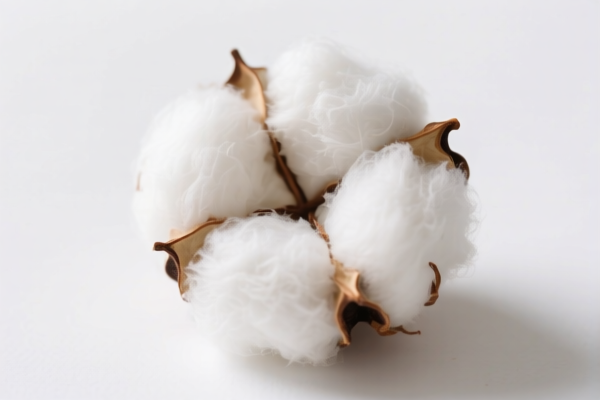
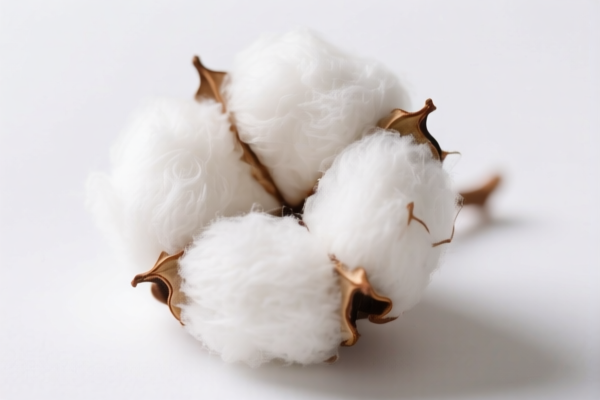
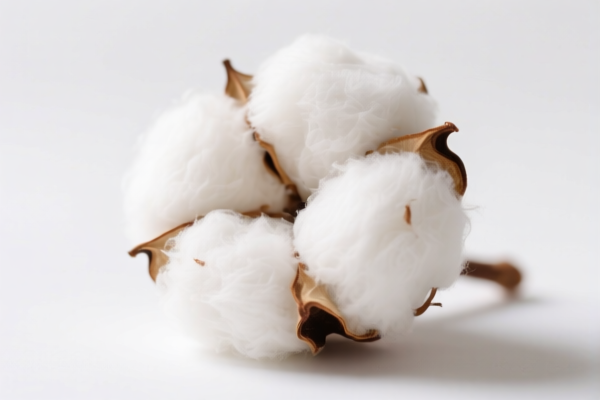
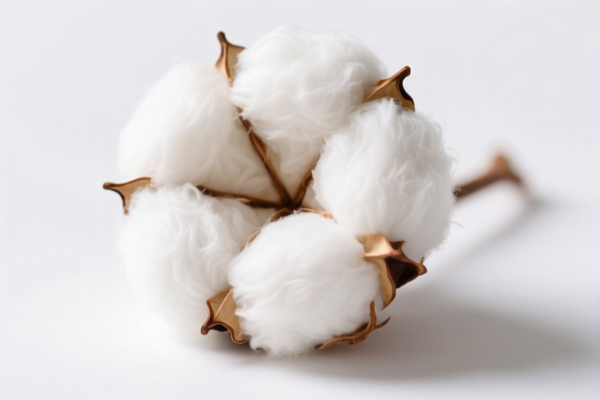
AI Analysis
🧵 Raw Silk (Not Thrown) | 5002.00.00.00
🌐 HS Code Reference & Customs Clearance Guide | 2026 Latest Tariff Analysis | Professional Clearance Strategy
📌 1. Product Definition & Classification: Do You Really Know "Raw Silk"?
Raw silk, in the context of international trade classification, refers to silk obtained from cocoons that has not been thrown (i.e., not twisted or spun into yarn/thread). It is the fundamental raw material for silk textiles, distinct from "thrown silk" (yarn) which falls under different headings (e.g., 5004–5006).
Key Distinction:
- Raw Silk (Not Thrown): Continuous filament, untwisted, usually in hanks or skeins, prepared for reeling or weaving directly.
- Thrown Silk (Yarn): Twisted or spun into thread, used for sewing, embroidery, or weaving.
⚠️ Critical Classification Point:
- If the silk is untwisted and in its raw state →归入 5002.00.00.00
- If the silk is twisted or spun into yarn → 归入 5004.00.00.00 / 5005.00.00.00 / 5006.00.00.00
- If it is woven fabric → 归入 Chapter 50 (but not 5002)
📦 2. HS Code Classification Details (2026 Latest Tariff Authority Comparison)
| HS Code | Product Description | Application Scenario | Twisted? |
|---|---|---|---|
5002.00.00.00 |
Raw silk (not thrown) | Raw material for silk weaving, luxury fabrics, high-end textiles | ❌ No |
5004.00.00.00 |
Silk yarn, not put up for retail sale | Sewing thread, embroidery thread | ✅ Yes |
5005.00.00.00 |
Yarn spun from silk waste | Lower-grade silk thread, blended fabrics | ✅ Yes |
5006.00.00.00 |
Silk yarn or yarn waste, put up for retail sale | Retail sewing kits, craft supplies | ✅ Yes |
5007.20.00.00 |
Silk woven fabrics | Finished silk textiles | ❌ N/A (Fabric) |
🔍 Key Reminder:
- Only untwisted, continuous filament silk is classified under 5002.00.00.00.
- If the silk is twisted, even slightly, it must be classified under 5004–5006, which may have different tariff implications.
- Misclassification as "thrown silk" when it is "raw" can lead to underpayment of tariffs or海关 delays.
💰 3. 2026 Latest Tariff Rate Details (Including Additional Taxes, Policy Surcharges)
✅ Applicable Country: United States (US)
✅ Country of Origin: China (CN)
✅ Effective Date: From November 10, 2025 (including subsequent imports)
🎯 1. 5002.00.00.00 —— Raw Silk (Not Thrown)
| Item | Content |
|---|---|
| Base Tariff Rate | 0% (ad valorem) |
| USITC Additional Tariff | +25% (from USITC Footnote 9903.88.01) |
| IEEPA Additional Tariff | +0% (Not applicable to raw silk under current IEEPA provisions) |
| Total Tariff Rate | 25% |
| Tax Calculation | CIF Value × 25% |
| De Minimis Exemption Applicable? | ❌ No (deny_de_minimis) |
| Legal Basis Path | USITC:5002.00.00.00 → FOOTNOTE:9903.88.01 |
📌 Explanation:
- The 25% additional tariff is imposed under Section 301 of the Trade Act of 1974 against Chinese goods.
- Raw silk is not exempt from this surcharge.
- Total cost impact: 25% of CIF value, which is significant for high-value silk imports.
- No IEEPA surcharge applies to raw silk at this time, but Section 301 remains in force.
🛠️ 4. Customs Clearance Practical Advice (Avoid Pitfalls in Real-World Scenarios)
✅ 1. Required Documentation Checklist (No Exceptions)
| Document | Required | Description |
|---|---|---|
| ✅ Product Specification Sheet | ✔️ | Must state: "Raw Silk, Not Thrown, Continuous Filament, Untwisted" |
| ✅ Sample or Photo | ✔️ | Visual proof of untwisted state |
| ✅ Commercial Invoice | ✔️ | Clearly describe as "Raw Silk (Not Thrown)" |
| ✅ Packing List | ✔️ | Detail weight, quantity, packaging type |
| ✅ Certificate of Origin (CO) | ✔️ | For proving Chinese origin |
| ✅ Phytosanitary Certificate (if applicable) | ✔️ | For natural fiber imports |
✅ 2. Declaration Tips (Key Mnemonic)
🔥 "Untwisted is Raw, Twisted is Yarn, Correct HS Saves Money!"
| Scenario | Correct Declaration | Wrong Practice |
|---|---|---|
| Raw, untwisted silk | 5002.00.00.00 |
Misclassified as 5004.00.00.00 → Higher tariff |
| Twisted silk yarn | 5004.00.00.00 |
Misclassified as 5002.00.00.00 → Penalty |
| Silk waste | 5005.00.00.00 |
Misclassified as 5002.00.00.00 → Compliance risk |
| Woven silk fabric | 5007.20.00.00 |
Misclassified as 5002.00.00.00 → Major error |
✅ 3. Special Cases Handling
| Scenario | Handling Advice |
|---|---|
| Blended Silk (with Cotton/Wool) | Must declare fiber content; may fall under Chapter 52/51 |
| Silk with Residue (Sericin) | Still considered "Raw Silk" if not degummed |
| OEM Raw Silk for Specific Weaving | Provide order + technical specs to avoid misclassification |
| Silk Imports for Research/Lab Use | May qualify for exemption; apply for Form A or Exemption Request |
🌍 5. Global Main Market Clearance Comparison (2026 Latest)
| Country/Region | Recommended HS Code | Tariff | Certification Requirement | Notes |
|---|---|---|---|---|
| 🇺🇸 United States | 5002.00.00.00 |
25% (China Origin) | None | High tariff due to Section 301 |
| 🇨🇳 China | 5002.00.00.00 |
0% | None | No additional tariffs |
| 🇪🇺 European Union | 5002.00.00.00 |
0% | REACH Compliance | No additional tariffs |
| 🇦🇺 Australia | 5002.00.00.00 |
5% | None | Moderate tariff |
| 🇯🇵 Japan | 5002.00.00.00 |
0% | None | No additional tariffs |
📌 Conclusion:
- The United States imposes a 25% additional tariff on Chinese raw silk under Section 301.
- EU, Japan, and Australia have lower or zero tariffs, making them more cost-effective markets.
- Consider supply chain diversification to mitigate US tariff risks.
📌 6. Common Mistakes & Pitfall Avoidance (Lessons Learned)
❌ Mistake 1: Declaring twisted silk as "Raw Silk"
👉 Consequence: Underpayment of tariff → Penalty + Back Taxes
❌ Mistake 2: Not specifying "Not Thrown" in description
👉 Consequence: Customs reclassification → Delay + Storage Fees
❌ Mistake 3: Using generic terms like "Silk Thread"
👉 Consequence: Misclassification → Compliance Risk
❌ Mistake 4: Ignoring Section 301 impact on US imports
👉 Consequence: Unexpected 25% cost → Profit Erosion
✅ Correct Practice:
"Raw Silk, Not Thrown, Continuous Filament, Untwisted, 12/16 Denier, Chinese Origin, HS Code: 5002.00.00.00"
🎯 7. Conclusion: Precise Classification, Smooth Clearance, Cost Efficiency!
🎯 Remember Mnemonic:
🔹 "Untwisted = Raw, Twisted = Yarn, US Tariff = 25%, EU/Japan = 0%!"
🔹 "HS Code Determines Cost, Misclassification Costs Thousands!"
📌 Pro Tip:
If your raw silk is originating from Vietnam, Thailand, or India, you may qualify for lower tariffs or GSP benefits.
Consider Advance Ruling (Pre-classification) to avoid clearance delays.
📣 Take Action Now:
📞 Contact a Professional Customs Broker + Provide Product Photos + Apply for HS Code Advance Ruling
🚀 Ensure Your Silk Imports Clear Smoothly, Efficiently, and Profitably!
✨ Professional Clearance Starts with Accurate Classification!
💼 Every Penny of Cost Deserves Precise Calculation!
Customer Reviews
About HS Code Classification
The Harmonized System (HS) is an internationally standardized nomenclature developed by the World Customs Organization (WCO) to classify traded products. Over 200 countries use the HS system as the basis for customs tariffs, trade statistics, and import/export regulations.
Each HS code follows a hierarchical structure:
- Chapter (2 digits) — Broad category of goods (e.g., Chapter 84: Machinery and Mechanical Appliances)
- Heading (4 digits) — More specific grouping within the chapter
- Subheading (6 digits) — Internationally standardized breakdown, used by all WCO member countries
- National subdivisions (8-10 digits) — Country-specific extensions for further classification, such as US HTSUS 10-digit codes
Correct HS code classification is essential for smooth customs clearance, accurate duty payment, and compliance with trade regulations. Misclassification can lead to customs delays, overpayment of duties, or penalties.
When importing from CN to US, the applicable tariff rates may include:
- Most-Favored-Nation (MFN) rate — The standard duty rate applied to WTO members
- General rate — Applied to countries without trade agreements
- Trade remedy duties — Additional tariffs such as Section 301 (anti-dumping), Section 232 (national security), or countervailing duties
The information provided on this page is for reference purposes only. For official classification, please consult with your local customs authority or a licensed customs broker.