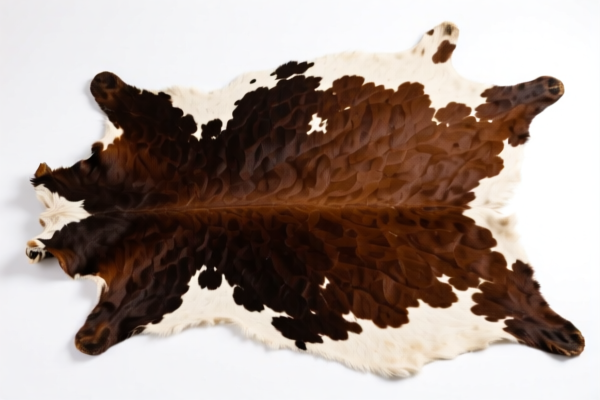
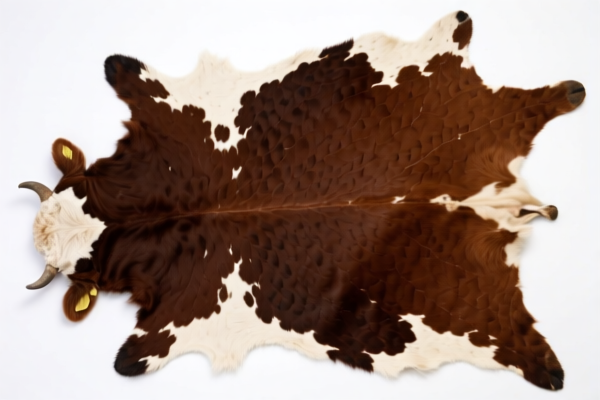
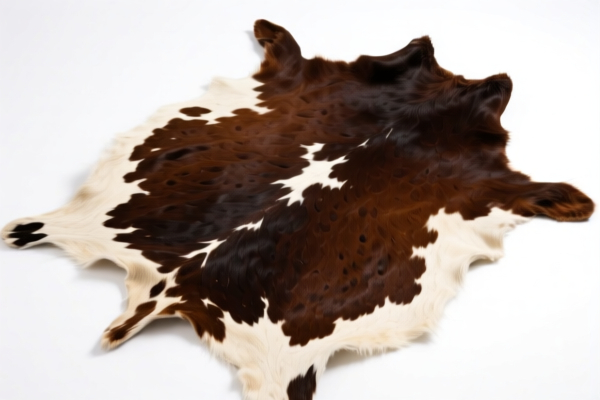
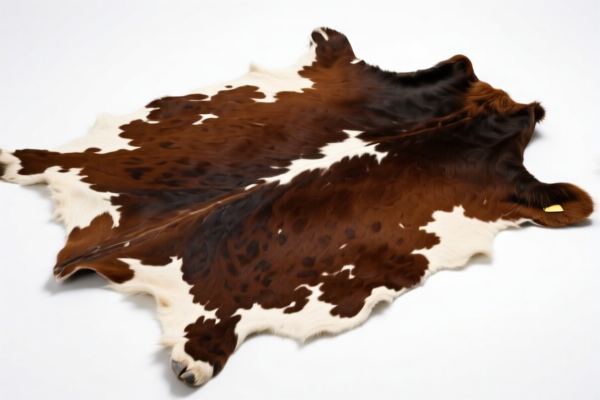
raw untanned full grain cowhide
CN → US| HS Code | Tariff Rate | Origin | Destination | Doc |
|---|---|---|---|---|
| 4107111020 | 35.0% | CN | US | Official Doc |
| 4107113000 | 13.6% | CN | US | Official Doc |
| 4107191040 | 35.0% | CN | US | Official Doc |
| 4107111040 | 35.0% | CN | US | Official Doc |
| 4113906000 | 36.6% | CN | US | Official Doc |
Product Images
AI Analysis
🐄 Raw Untanned Full Grain Cowhide (Unsplit Leather)
🌐 HS Code Reference & Customs Clearance Guide | 2026 Latest Tariff Analysis | Professional Compliance Strategy
📌 I. Product Definition & Classification: Do You Really Understand "Raw Untanned Full Grain Cowhide"?
Raw Untanned Full Grain Cowhide refers to animal hides that have undergone the initial preservation process (such as salting or chilling) but have not yet undergone chemical tanning or dressing. In international trade, these raw materials are critical inputs for the leather goods industry.
Crucially, classification depends on two key factors: 1. Physical Form: Is it a whole hide/skin (Unsplit), or is it split into layers? 2. Surface Treatment: Is it Full Grain (natural surface intact), or is it corrected/finished? 3. Intended Use/Composition: Is it for general leather goods, or specifically for linings?
⚠️ Key Distinction Point:
- If the leather is unsplit (not divided into layers) and maintains its natural grain surface → It falls under headings 4107.11 or 4107.19.
- If it is explicitly identified as lining material (inner layer for shoes/bags) → It may fall under 4107.11 or 4107.19 depending on specific customs interpretations of "lining" vs. "main leather," often triggering different tax treatments due to trade sanctions.
- "Full Grain" implies the natural grain surface is preserved without buffing or correcting, which is a premium quality marker.
📦 II. HS Code Classification Details (2026 Latest Tariff Authority Reference)
Based on the provided data, here are the specific HS Codes and their rationales:
| HS Code | Product Description & Rationale | Summary of Compliance |
|---|---|---|
| 4107.11.10.20 | Unsplit Full-Grain Bovine Leather Made of cowhide, unsplit, full grain. Material and form fully comply with classification requirements. |
✅ Core condition met: Unsplit + Full Grain |
| 4107.11.30.00 | Unsplit Full-Grain Bovine Leather Made of cowhide, unsplit, full grain. Material and form meet core limiting conditions. |
✅ Core condition met: Unsplit + Full Grain |
| 4107.19.10.40 | Bovine Leather Lining (Full Grain) Made of cowhide, intended for use as lining. Material is cowhide, purpose is lining leather. |
✅ Key Factor: Purpose (Lining) |
| 4107.11.10.40 | Bovine Leather Lining (Full Grain) Made of cowhide, intended for use as lining. Material and purpose meet key elements. |
✅ Key Factor: Purpose (Lining) |
| 4113.90.60.00 | Other Animal Leather & Patterned Leather Includes full grain bovine lining classified under "other animal leather." |
✅ Category: Other/Patterned Leather |
🔍 Important Reminder:
- 4107.11.10.20 and 4107.11.30.00 are the primary codes for unsplit, full-grain cowhide not specified as lining. - 4107.19.10.40 and 4107.11.10.40 specifically target lining leather, which triggers different tax liabilities due to trade restrictions. - 4113.90.60.00 is a catch-all for "other" leather products, including certain linings, but carries a slightly higher base rate.
💰 III. 2026 Latest Tariff Rate Breakdown (Including Additional Taxes, Policy Surcharges)
✅ Applicable Country: United States (US)
✅ Origin: China (CN)
✅ Effective Time: Current rates apply (Section 301 + IEEPA)
🎯 1. 4107.11.10.20 —— Unsplit Full-Grain Bovine Leather (General/Unspecified Lining)
| Item | Content |
|---|---|
| Base Tariff Rate | 0.0% (Ad Valorem) |
| USITC Section 301 Surcharge | +25.0% |
| Section 122 Tariff (IEEPA) | +10.0% (Against China) |
| Total Tax Rate | 35.0% |
| Tax Calculation | CIF Value × 35% |
| De Minimis Exemption | ❌ Not Eligible (Deny De Minimis) |
| Legal Basis Path | Section 301: 8419.89.99 → IEEPA: 9903.01.10 → USITC: 4107.11.10.20 → FOOTNOTE: 9903.88.01 |
📌 Explanation:
- "Base Tariff 0%" means no standard duty for this specific subheading under normal MFN treatment.
- "Section 301 Surcharge 25%" is imposed under U.S. Trade Law Section 301 on Chinese goods.
- "Section 122 Tariff 10%" refers to additional duties under the International Emergency Economic Powers Act (IEEPA) targeting specific Chinese imports.
- Total Rate: 35%. This is a high tariff category. Importers must factor this into landed cost calculations.
🎯 2. 4107.11.30.00 —— Unsplit Full-Grain Bovine Leather (Core Condition Compliant)
| Item | Content |
|---|---|
| Base Tariff Rate | 3.6% |
| USITC Section 301 Surcharge | +0.0% |
| Section 122 Tariff (IEEPA) | +10.0% |
| Total Tax Rate | 13.6% |
| Tax Calculation | CIF Value × 13.6% |
| De Minimis Exemption | ❌ Not Eligible (Deny De Minimis) |
| Legal Basis Path | USITC: 4107.11.30.00 → IEEPA: 9903.01.10 → FOOTNOTE: 9903.88.01 |
📌 Note:
- This code has a base rate of 3.6%, likely due to specific trade agreements or different classification nuances compared to .20.
- No Section 301 surcharge applies here, which is a significant advantage.
- Total Rate: 13.6%. This is a moderate tariff category, significantly lower than the 35% bracket.
- Importers should verify if their specific hide meets the "core limiting conditions" for this code to benefit from the lower rate.
🎯 3. 4107.19.10.40 & 4107.11.10.40 —— Bovine Leather Lining (Full Grain)
| Item | Content |
|---|---|
| Base Tariff Rate | 0.0% |
| USITC Section 301 Surcharge | +25.0% |
| Section 122 Tariff (IEEPA) | +10.0% |
| Total Tax Rate | 35.0% |
| Tax Calculation | CIF Value × 35% |
| De Minimis Exemption | ❌ Not Eligible |
📌 Warning:
- Even though these are "linings," they fall under the same high-tax bracket (35%) as4107.11.10.20.
- The key element is "purpose: lining," but the tax treatment is punitive due to trade policies.
🎯 4. 4113.90.60.00 —— Other Animal Leather (Full Grain Bovine Lining)
| Item | Content |
|---|---|
| Base Tariff Rate | 1.6% |
| USITC Section 301 Surcharge | +25.0% |
| Section 122 Tariff (IEEPA) | +10.0% |
| Total Tax Rate | 36.6% |
| Tax Calculation | CIF Value × 36.6% |
| De Minimis Exemption | ❌ Not Eligible |
📌 Note:
- This is the highest total tax rate (36.6%).
- Base rate is 1.6%, but the 35% in surcharges push it to the top.
- Use only if the product does not fit other specific subheadings.
🛠️ IV. Customs Clearance Practical Advice (Real-World Pitfall Avoidance Guide)
✅ 1. Document Preparation Checklist (Mandatory)
| Document | Must Provide | Description |
|---|---|---|
| ✅ Product Specification Sheet | ✔️ | Must detail: Species (Bovine), Treatment (Raw/Untanned), Surface (Full Grain), Form (Unsplit/Split), Weight, Dimensions. |
| ✅ Process Description | ✔️ | Explain the salting/chilling process to confirm "Untanned" status. |
| ✅ Product Photos | ✔️ | Clear images of the grain side, flesh side, and edge profile (to prove unsplit). |
| ✅ Commercial Invoice | ✔️ | Must clearly state: "Raw Untanned Full Grain Cowhide," "Unsplit," "For Leather Goods Manufacturing." |
| ✅ Packing List | ✔️ | Detail quantity, weight, and packing method (bales, hung, etc.). |
| ✅ Certificate of Origin (CO) | ✔️ | Essential for determining origin and potential exemptions. |
✅ 2. Declaration Tips (Key Mnemonics)
🔥 "Form matters, Grain matters, Lining matters, Tax halves or triples!"
| Scenario | Correct Declaration | Wrong Practice |
|---|---|---|
| Unsplit, Full Grain, No Lining | 4107.11.10.20 or 4107.11.30.00 |
Misdeclare as "Split Leather" → Higher Base Rate + 301 |
| Unsplit, Full Grain, For Lining | 4107.11.10.40 or 4107.19.10.40 |
Misdeclare as "General Leather" → May face penalties for misrepresentation |
| Split Leather (Inner Layer) | Different HS Code (Not in this list) | Claim as "Full Grain" → Severe Penalty |
| Tanned Leather | Different HS Code (4104/4105/4106) | Claim as "Raw" → Customs Seizure |
✅ 3. Special Case Handling
| Situation | Handling Advice |
|---|---|
| Mixed Shipments | If a shipment contains both "General" and "Lining" leather, declare separately. Do not mix HS Codes in one line item. |
| OEM Custom Hides | Provide customer specs and design drawings to prove intended use. |
| Origin Ambiguity | If hides are from multiple countries, ensure each lot is properly documented with individual COs. |
| Tanning Status Dispute | If customs suspects hides are "partially tanned," provide lab test reports (chromium content, pH level) to prove "Untanned" status. |
🌍 V. Global Market Comparison (2026 Latest)
| Country/Region | Recommended HS Code | Tariff Rate (China Origin) | Certification Requirements | Notes |
|---|---|---|---|---|
| 🇺🇸 United States | 4107.11.10.20 / 4107.11.30.00 |
35% / 13.6% | None specific for raw hides | High additional tariffs. Check eligibility for 13.6% rate. |
| 🇨🇳 China | 4107.11.10.20 |
0% - 3.6% | None | Import duty is low. |
| 🇪🇺 European Union | 4107.11.10 |
0% | REACH Compliance | No Section 301. Standard EU tariff. |
| 🇦🇺 Australia | 4107.11.10 |
5% | AQIS Inspection | Moderate tariff. |
| 🇯🇵 Japan | 4107.11.10 |
0% | None | Zero tariff for raw hides. |
📌 Conclusion:
- The US is the only market with punitive additional tariffs (25% + 10%).
- China, EU, Japan, and Australia offer much lower or zero tariffs.
- Importers to the US must urgently verify if their product qualifies for4107.11.30.00(13.6%) instead of4107.11.10.20(35%).
📌 VI. Common Errors & Pitfall Guide (Lessons Learned)
❌ Error 1: Declaring "Raw Leather" without specifying "Full Grain" or "Unsplit"
👉 Consequence: Customs may assign a default higher rate or request clarification, causing delays.
❌ Error 2: Mislabeling "Lining Leather" as "General Purpose Leather"
👉 Consequence: If discovered, it’s considered fraud. Penalties include back taxes + fines.
❌ Error 3: Assuming all "Cowhide" is the same
👉 Consequence: Differentiating between "Unsplit" and "Split" is critical. Split leather has different HS codes and tax rates.
❌ Error 4: Ignoring Section 301 and IEEPA surcharges
👉 Consequence: Underestimating landed cost by 35% can erase profit margins entirely.
✅ Correct Practice:
"Raw, Untanned, Unsplit, Full Grain Bovine Hide, Salted, For Export, Origin: China, Model: XYZ, Gross Weight: XXX kg"
🎯 VII. Conclusion: Precision in Classification Saves Money!
🎯 Remember the Mnemonic:
🔹 "Unsplit Full Grain, Check Code .20 or .30.
🔹 .30 is 13.6%, .20 is 35%!
🔹 "Lining codes hit 35%, Base is 0% but Add-ons Kill!"
🔹 "HS Code is King, 20% difference is huge, Declare Right, Profit Secure!"
📌 Pro Tip:
- If your product meets the "core limiting conditions" for
4107.11.30.00, prioritize this code to save 21.4% in taxes compared to4107.11.10.20.- Apply for an Advance Ruling from U.S. Customs if unsure about the distinction between .20 and .30.
- Verify Origin Carefully: If hides are sourced from non-China countries (e.g., Brazil, India), US tariffs may drop to 0%, avoiding all surcharges.
📣 Immediate Action:
📞 Consult a licensed customs broker + Provide detailed product specs + Verify HS Code eligibility
🚀 Ensure smooth customs clearance, avoid delays, and maximize profit margins!
✨ Professional Clearance Starts with Accurate Classification!
💼 Every cent of duty saved is pure profit!
Customer Reviews
About HS Code Classification
The Harmonized System (HS) is an internationally standardized nomenclature developed by the World Customs Organization (WCO) to classify traded products. Over 200 countries use the HS system as the basis for customs tariffs, trade statistics, and import/export regulations.
Each HS code follows a hierarchical structure:
- Chapter (2 digits) — Broad category of goods (e.g., Chapter 84: Machinery and Mechanical Appliances)
- Heading (4 digits) — More specific grouping within the chapter
- Subheading (6 digits) — Internationally standardized breakdown, used by all WCO member countries
- National subdivisions (8-10 digits) — Country-specific extensions for further classification, such as US HTSUS 10-digit codes
Correct HS code classification is essential for smooth customs clearance, accurate duty payment, and compliance with trade regulations. Misclassification can lead to customs delays, overpayment of duties, or penalties.
When importing from CN to US, the applicable tariff rates may include:
- Most-Favored-Nation (MFN) rate — The standard duty rate applied to WTO members
- General rate — Applied to countries without trade agreements
- Trade remedy duties — Additional tariffs such as Section 301 (anti-dumping), Section 232 (national security), or countervailing duties
The information provided on this page is for reference purposes only. For official classification, please consult with your local customs authority or a licensed customs broker.