raw wood
CN → US| HS Code | Tariff Rate | Origin | Destination | Doc |
|---|---|---|---|---|
| 4401110000 | 35.0% | CN | US | Official Doc |
| 4403990195 | 35.0% | CN | US | Official Doc |
| 4401120000 | 35.0% | CN | US | Official Doc |
| 4407110043 | 35.0% | CN | US | Official Doc |
| 4403210130 | 35.0% | CN | US | Official Doc |
Product Images
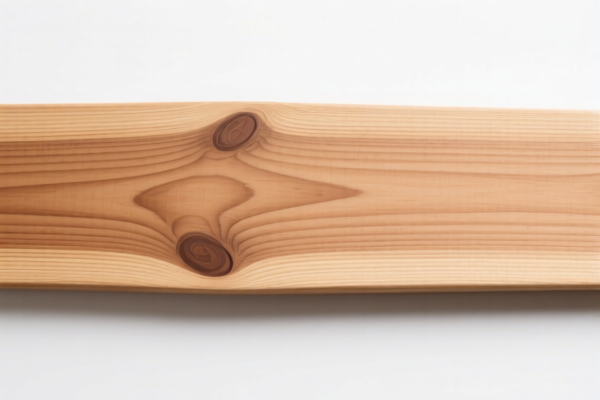
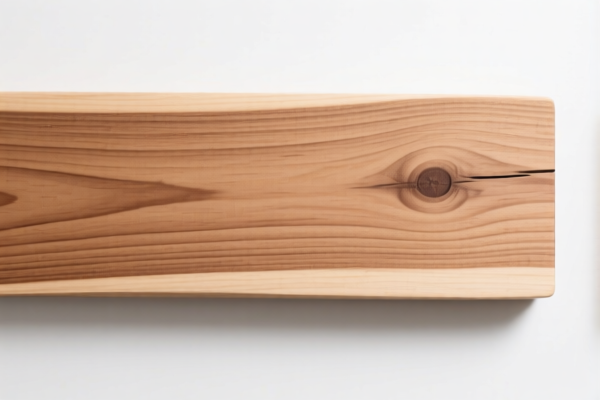
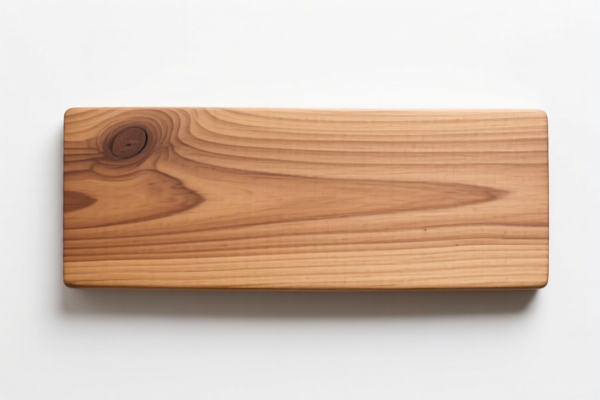
AI Analysis
🌲 Raw Wood: The Ultimate HS Code & Customs Clearance Guide (2026 Update)
🌐 HS Code Classification & Duty Breakdown | 35% Total Tax Rate | Expert Customs Strategy
📌 I. Product Definition: What is "Raw Wood"?
"Raw Wood" is a broad term covering unprocessed or minimally processed timber. In international trade, its classification depends heavily on its state (log vs. sawn) and species (coniferous vs. non-coniferous).
Two Main Categories: 1. Logs (Unworked): The primary form of wood harvested from trees. 2. Sawn/Lifted Wood: Wood cut into planks or beams.
⚠️ Key Classification Point:
- If it is a whole tree trunk or branch → Likely falls under Chapter 44.01 (Fuel Wood) or 44.03 (Wood in the Rough).
- If it is cut into basic shapes → Likely falls under 44.03 (Sawn Wood) or 44.07 (Shaved/Sawn).
- Crucial Note: For US imports from China, ALL these raw wood categories attract high additional tariffs.
📦 II. HS Code Reference Table (2026 Customs Data)
| HS Code | Product Description | Summary from Data | Total Tax Rate |
|---|---|---|---|
4401.11.00.00 |
Fuel Wood in Logs | "Raw wood belongs to the primary form of timber, fitting the fuel wood classification" | 35.0% |
4403.99.01.95 |
Other Wood, Not Sawn | "Raw wood fits the rough sawn/log attribute; bottom-line code for other types" | 35.0% |
4401.12.00.00 |
Non-Coniferous Fuel Wood | "Raw wood fits the fuel wood form; inferred as non-coniferous or coniferous fuel wood" | 35.0% |
4407.11.00.43 |
Wood Shaved/Sawn | "Raw wood belongs to timber raw materials, fits the timber material definition" | 35.0% |
4403.21.01.30 |
Other Wood, In the Rough | "Raw wood fits log/timber form; inferred as wood material with no conflict" | 35.0% |
🔍 Important Note:
- All listed codes result in a 35% Total Tax Rate.
- The specific HS code depends on whether the wood is classified as fuel wood (4401) or structural/sawn wood (4403/4407).
- No de minimis exemption applies due to the high tariff structure.
💰 III. 2026 Tariff Rate Breakdown (Detailed Explanation)
✅ Applicable Country: United States (US)
✅ Origin: China (CN)
✅ Total Effective Rate: 35.0%
🎯 Tax Structure Breakdown (Applies to ALL Listed HS Codes)
| Component | Rate | Legal Basis & Explanation |
|---|---|---|
| 1. Basic Tariff | 0.0% | Standard Most Favored Nation (MFN) rate for raw timber is often 0%. |
| 2. Section 301 Tariff | 25.0% | Imposed under US Trade Law Section 301. This is the primary "trade war" tariff on Chinese wood products. |
| 3. Section 122 Tariff | 10.0% | Imposed under the International Emergency Economic Powers Act (IEEPA), specifically targeting certain Chinese goods. |
| TOTAL | 35.0% | Sum of 0% + 25% + 10% |
📌 Explanation:
- Section 301 (25%): This is a punitive tariff on a wide range of Chinese imports, including raw timber and wood products.
- Section 122 (10%): A newer addition (as per the provided data) adding another 10% layer on top.
- Result: Even though the base duty is 0%, the effective cost increase is 35% of the CIF value.
- No Exemptions: Based on the data, no de minimis or duty-free exemptions are mentioned for these codes.
🛠️ IV. Customs Clearance Recommendations (Practical Tips)
✅ 1. Documentation Checklist (Must-Have)
| Document | Required? | Purpose |
|---|---|---|
| Commercial Invoice | ✅ Yes | Must clearly state "Raw Wood" or "Logs" and specify species if possible. |
| Packing List | ✅ Yes | Detail weight, volume, and number of logs/planks. |
| Phytosanitary Certificate | ✅ Yes | Critical! Required by US Customs and Border Protection (CBP) and USDA APHIS to prevent pests. |
| Timber Harvesting Permit | ✅ Yes | Proves legal origin of the wood (compliance with Lacey Act). |
| Bill of Lading | ✅ Yes | Standard shipping document. |
✅ 2. Classification Strategy
| Scenario | Recommended HS Code | Reasoning |
|---|---|---|
| Wood for Burning/Fuel | 4401.11.00.00 or 4401.12.00.00 |
Clearly defined as "Fuel Wood." |
| Structural Logs (Not Sawn) | 4403.99.01.95 or 4403.21.01.30 |
Classified as "Wood in the Rough." |
| Sawn Timber (Planks) | 4407.11.00.43 |
Classified as "Shaved or Sawn." |
💡 Tip: If you are unsure whether your wood is "fuel" or "structural," consult a customs broker. Misclassification can lead to delays or penalties.
✅ 3. Cost Calculation Example
| Item | Value |
|---|---|
| CIF Value | $10,000 |
| Base Duty (0%) | $0 |
| Section 301 Duty (25%) | $2,500 |
| Section 122 Duty (10%) | $1,000 |
| Total Duty Payable | $3,500 |
📌 Note: Always budget for the full 35% in your cost calculations. There are no hidden discounts for raw wood from China.
🌍 V. Global Market Comparison (2026)
| Country/Region | Recommended HS Code | Total Tax Rate | Key Requirements |
|---|---|---|---|
| 🇺🇸 USA | Any of the 5 codes above | 35% | Phytosanitary Cert, Lacey Act Compliance |
| 🇨🇳 China | Varies by species | 0-5% | Export License (if restricted) |
| 🇪🇺 EU | Varies | 0-10% | EUTS (EU Timber Regulation) Due Diligence |
| 🇯🇵 Japan | Varies | 0-5% | ISPM 15 Fumigation Certificate |
📌 Conclusion:
- The US market is the most expensive for Chinese raw wood due to the 35% combined tariff.
- Phytosanitary certificates are non-negotiable for all markets to avoid quarantine delays.
📌 VI. Common Mistakes & Pitfalls (Avoid These!)
❌ Mistake 1: Declaring "Raw Wood" without specifying species or form.
👉 Consequence: CBP may classify it under the highest applicable rate or demand additional documentation.
✅ Fix: Be specific: "Eucalyptus Logs for Fuel" or "Pine Sawn Timber."
❌ Mistake 2: Ignoring the Lacey Act.
👉 Consequence: Seizure of goods and fines.
✅ Fix: Provide proof of legal harvest and species origin.
❌ Mistake 3: Assuming "De Minimis" exemption applies.
👉 Consequence: Goods held at border.
✅ Fix: All shipments are subject to the 35% duty. No exemptions.
🎯 VII. Conclusion: Professional Clearance is Key
🎯 Key Takeaway:
🔹 "Raw Wood from China to the US = 35% Duty."
🔹 "Phytosanitary Certificate = Your Ticket to Entry."
🔹 "Accurate Description = Smooth Customs."
📌 Pro Tip:
If you are importing large volumes, consider applying for a Tariff Classification Ruling from CBP before shipment. This locks in the HS code and avoids disputes at the border.
📣 Immediate Action:
📞 Contact a Licensed Customs Broker
📋 Prepare Phytosanitary Certificate & Lacey Act Documents
📊 Calculate Landed Cost with 35% Duty
✨ Professional Customs Clearance Starts with Accurate Classification!
💼 Your Profit Margin Depends on Correct Tariff Codes!
Customer Reviews
About HS Code Classification
The Harmonized System (HS) is an internationally standardized nomenclature developed by the World Customs Organization (WCO) to classify traded products. Over 200 countries use the HS system as the basis for customs tariffs, trade statistics, and import/export regulations.
Each HS code follows a hierarchical structure:
- Chapter (2 digits) — Broad category of goods (e.g., Chapter 84: Machinery and Mechanical Appliances)
- Heading (4 digits) — More specific grouping within the chapter
- Subheading (6 digits) — Internationally standardized breakdown, used by all WCO member countries
- National subdivisions (8-10 digits) — Country-specific extensions for further classification, such as US HTSUS 10-digit codes
Correct HS code classification is essential for smooth customs clearance, accurate duty payment, and compliance with trade regulations. Misclassification can lead to customs delays, overpayment of duties, or penalties.
When importing from CN to US, the applicable tariff rates may include:
- Most-Favored-Nation (MFN) rate — The standard duty rate applied to WTO members
- General rate — Applied to countries without trade agreements
- Trade remedy duties — Additional tariffs such as Section 301 (anti-dumping), Section 232 (national security), or countervailing duties
The information provided on this page is for reference purposes only. For official classification, please consult with your local customs authority or a licensed customs broker.