raw wool greasy
CN → US| HS Code | Tariff Rate | Origin | Destination | Doc |
|---|---|---|---|---|
| 5101114000 | 35.0% | CN | US | Official Doc |
| 5101191000 | 35.0% | CN | US | Official Doc |
| 5101114000 | 35.0% | CN | US | Official Doc |
| 5101112000 | 35.0% | CN | US | Official Doc |
| 5101114000 | 35.0% | CN | US | Official Doc |
Product Images
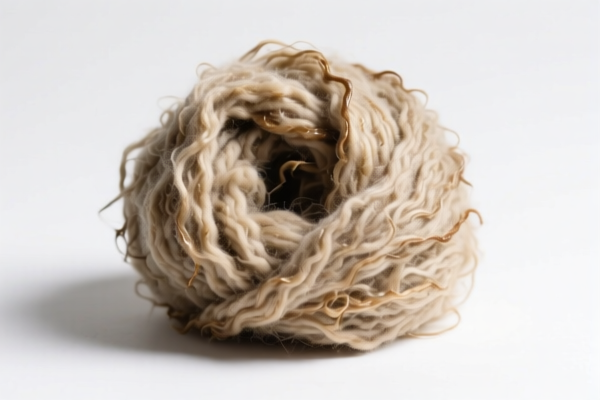
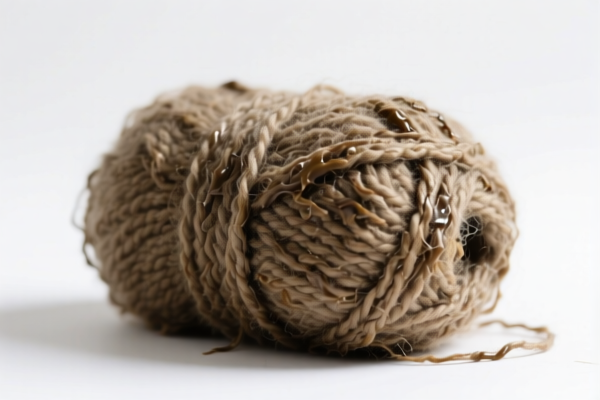
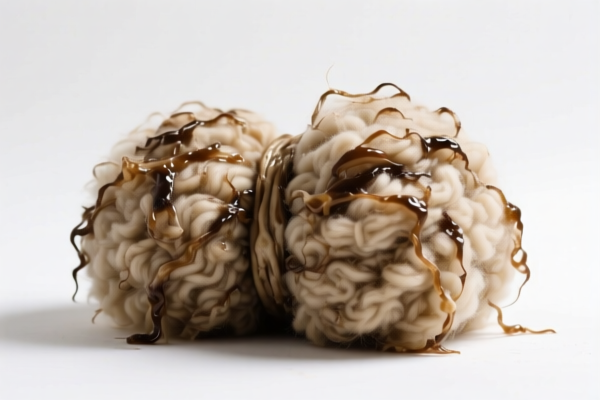
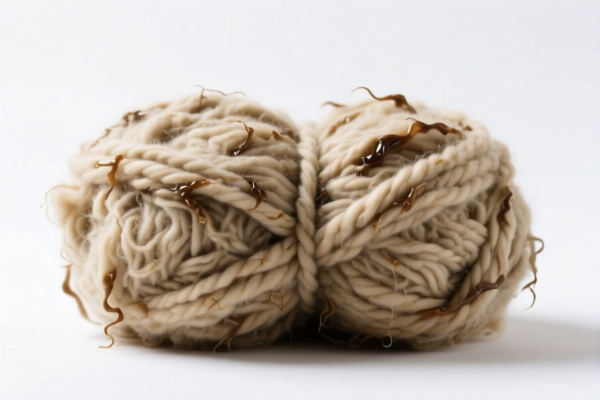
AI Analysis
🐑 Raw Wool Greasy (Unwashed Wool with Natural Fleece)
🌐 HS Code Reference & Customs Clearance Guide | 2026 Latest Tariff Analysis | Professional Entry Strategy
📌 I. Product Definition & Classification: What is "Raw Wool Greasy"?
Raw Wool Greasy refers to sheep's wool that has been shorn but has not been washed, scoured, or subjected to any significant mechanical processing (such as combing or carding). It retains its natural state, including:
- Natural Fats & Oils (Suint & Lanolin): The oily substance secreted by sheep sweat glands.
- Vegetable Matter: Straw, seeds, and dust naturally present in the fleece.
- Impurities: Dirt, dust, and skin flakes.
⚠️ Key Distinction:
- If the wool is washed, scoured, or cleaned → It no longer fits the "Greasy" description; it moves to classes like "Scoured Wool" (e.g., 5102).
- If the wool is carded or combed → It is processed fiber, not "Raw/Unsorted" wool (e.g., 5103).
- Raw Wool Greasy must be in its primary, unsorted, uncleaned state.
📦 II. HS Code Classification Details (2026 Latest Tariff Authority Match)
Based on the product description "Raw Wool Greasy," the following HS Codes from the provided data are matched. All fall under Chapter 51: Animal Hair and Wool; Yarn and Woven Fabric of Animal Hair.
| HS Code | Product Description | Key Matching Criteria |
|---|---|---|
5101.11.40.00 |
Raw Wool (Greasy), Sheep's or Lambs', Containing ≤ 18% by Weight of Extractable Grease | Matches "Raw Wool" and "Greasy" characteristics. Specifically targets fine wool (sheep/lamb) with low grease content. |
5101.19.10.00 |
Other Raw Wool (Greasy), Sheep's or Lambs' (Other than containing ≤ 18% grease) | Matches "Raw Wool" and "Greasy" for non-fine grades or higher grease content. Covers "Unsorted Wool" with油脂 (oil/grease). |
5101.11.20.00 |
Raw Wool (Greasy), Sheep's or Lambs', Containing ≤ 18% by Weight of Extractable Grease (Specific Sub-category) | Explicitly matches "Raw Wool (Greasy)," confirming the unimproved/unsorted state and grease presence. |
🔍 Important Note:
- All listed codes share the same tax structure in this dataset.
- The primary difference lies in the specific sub-category of grease content (≤18% vs. >18%) or fineness (Sheep/Lamb).
- "Greasy" implies no scouring/washing. If washing occurs, these codes are invalid.
💰 III. 2026 Latest Tariff Rate Breakdown (Including Additional Duties & Policy Surcharges)
✅ Applicable Country: United States (US)
✅ Origin: China (CN)
✅ Effective Date: 2025/2026 (Based on provided data context)
For ALL matched HS Codes (5101.11.40.00, 5101.19.10.00, 5101.11.20.00), the tax structure is identical:
| Item | Content |
|---|---|
| Base Tariff Rate | 0% (Standard MFN Rate) |
| Section 301 Surcharge (Additional Tariff) | +25% (USITC Section 301) |
| Section 122 Tariff (Trade Act of 1962) | +10% (Specific China-related provision) |
| Total Effective Tax Rate | 35.0% |
| Tax Calculation Basis | CIF Value (Cost, Insurance, Freight) × 35% |
| De Minimis Exemption | ❌ Not Applicable (Valued goods subject to duty) |
| Legal Authority Path | Base: 5101.xx → Sec301: 25% → Sec122: 10% → Total: 35% |
📌 Explanation:
- "Base Tariff 0%": Raw wool is generally a low-duty input material.
- "Section 301 Tariff 25%": The standard retaliatory tariff on Chinese goods under the Trump/ Biden trade policies.
- "Section 122 Tariff 10%": A specific additional duty applied to certain Chinese imports (often cited in trade war contexts).
- Total 35%: This is a high effective rate for an agricultural/raw material input. Importers must calculate landed costs carefully.
🛠️ IV. Customs Clearance Practical Advice (Pitfall Avoidance Guide)
✅ 1. Required Documentation Checklist
| Document | Required | Purpose |
|---|---|---|
| ✅ Commercial Invoice | ✔️ | Must clearly state "Raw Wool Greasy" and specify grease content (%) if known. |
| ✅ Packing List | ✔️ | Details net/gross weight, bale counts. |
| ✅ Bill of Lading/Air Waybill | ✔️ | Standard shipping docs. |
| ✅ Certificate of Origin | ✔️ | Crucial to prove Chinese origin (triggers the 35% tariff). |
| ✅ Phytosanitary Certificate | ✔️ | Critical for Wool: Proves freedom from pests, diseases, and vegetable matter restrictions. |
| ✅ Laboratory Test Report | ✔️ | Optional but Recommended: Confirms grease content (≤18% vs. >18%) to justify specific HS sub-code. |
✅ 2. Declaration Strategy (Key Mnemonics)
🔥 "Greasy Means Raw, Washed Means Scoured, Grease % Matters, Tariff Stays High!"
| Scenario | Correct Declaration | Risk if Incorrect |
|---|---|---|
| Wool with Lanolin/Dirt | 5101.11.40.00 or 5101.19.10.00 |
If declared as "Scoured Wool," customs may demand proof of washing; if unclean, penalty. |
| Wool >18% Grease | 5101.19.10.00 |
Using ≤18% code for high-grease wool → Classification error → Penalty. |
| Wool <18% Grease | 5101.11.40.00 or 5101.11.20.00 |
Using higher tariff sub-code unnecessarily (though tax is same here, accuracy is key). |
| Wool Already Washed | NOT 5101 (Use 5102) | Misdeclaring washed wool as "Raw/Greasy" → Fraud Risk + Back Duties. |
✅ 3. Special Considerations
| Issue | Handling Advice |
|---|---|
| Vegetable Matter | High vegetable matter may trigger Phytosanitary Inspections. Ensure clean baling. |
| Smell/Contamination | Raw wool often smells. Ensure no prohibited animal by-products or contaminants. |
| HS Code Precision | While tax is 35% for all, correct sub-code is vital for quota tracking (if any) and statistical reporting. |
| Origin Marking | Clearly mark "Made in China" on bales to facilitate Section 301/122 assessment. |
🌍 V. Global Market Comparison (2026 Context)
| Market | HS Code (Similar) | Base Duty | Additional Tariff | Total Effective Duty | Notes |
|---|---|---|---|---|---|
| 🇺🇸 USA | 5101.11/19 |
0% | 35% (25% Sec301 + 10% Sec122) | 35% | Highest cost. Plan margin accordingly. |
| 🇨🇳 China | 5101.11 |
~5-10% | 0% | ~5-10% | Importing raw wool for domestic processing is cheaper. |
| 🇪🇺 EU | 5101.11 |
~0-10% | 0% | ~0-10% | Generally lower duties. Check for agricultural levies. |
| 🇮🇳 India | 5101.11 |
~5% | 0% | ~5% | Competitive processing hub. |
📌 Conclusion:
- US Market: Faces a 35% total duty burden. This significantly impacts the landed cost of raw materials for US-based textile mills.
- Strategy: Consider sourcing from non-China origins (e.g., Australia, New Zealand, Uruguay) to avoid Section 301/122 tariffs, if available.
- Compliance: Ensure Phytosanitary certificates are impeccable to avoid port delays.
📌 VI. Common Errors & Pitfalls (Lessons Learned)
❌ Error 1: Declaring "Scoured Wool" as "Raw Wool Greasy"
👉 Consequence: False declaration. Customs may seize goods or issue penalties for undervaluation/misclassification.
❌ Error 2: Ignoring Phytosanitary Requirements
👉 Consequence: Goods held at port for fumigation or destroyed due to pest risk.
❌ Error 3: Incorrect Grease Percentage Declaration
👉 Consequence: If actual grease >18% but declared ≤18%, it’s a classification error. Though tax is same here, it affects trade data accuracy and potential future policy changes.
✅ Correct Practice:
"Raw Sheep's Wool, Greasy, Unwashed, Uncombed, Containing Natural Lanolin and Vegetable Matter, Origin: China"
🎯 VII. Conclusion: Professional Clearance, Cost Control, Efficiency!
🎯 Remember the Mantra:
🔹 "Raw = Greasy, Washed = Scoured, 35% is the US Price!"
🔹 "Doc Accuracy Saves Time, Phytosanitary Avoids Delay!"
📌 Pro Tip:
If your wool is washed before shipment, DO NOT use these HS Codes. Use Chapter 5102 (Scoured Wool) instead. The tax treatment may differ, but misclassification is a serious compliance risk.
For US Imports, calculate the 35% duty into your landed cost model immediately.
Consider Pre-Import Customs Ruling if unsure about grease content or processing status.
📣 Immediate Action:
📞 Contact a licensed customs broker.
📄 Prepare Phytosanitary Certificates + Commercial Invoice specifying "Greasy/Unwashed."
🚀 Ensure smooth clearance by accurate classification and complete documentation.
✨ Professional Clearance Starts with Precise Classification!
💼 Your Landed Cost Is What You Pay, Not What You Hope!
Customer Reviews
About HS Code Classification
The Harmonized System (HS) is an internationally standardized nomenclature developed by the World Customs Organization (WCO) to classify traded products. Over 200 countries use the HS system as the basis for customs tariffs, trade statistics, and import/export regulations.
Each HS code follows a hierarchical structure:
- Chapter (2 digits) — Broad category of goods (e.g., Chapter 84: Machinery and Mechanical Appliances)
- Heading (4 digits) — More specific grouping within the chapter
- Subheading (6 digits) — Internationally standardized breakdown, used by all WCO member countries
- National subdivisions (8-10 digits) — Country-specific extensions for further classification, such as US HTSUS 10-digit codes
Correct HS code classification is essential for smooth customs clearance, accurate duty payment, and compliance with trade regulations. Misclassification can lead to customs delays, overpayment of duties, or penalties.
When importing from CN to US, the applicable tariff rates may include:
- Most-Favored-Nation (MFN) rate — The standard duty rate applied to WTO members
- General rate — Applied to countries without trade agreements
- Trade remedy duties — Additional tariffs such as Section 301 (anti-dumping), Section 232 (national security), or countervailing duties
The information provided on this page is for reference purposes only. For official classification, please consult with your local customs authority or a licensed customs broker.