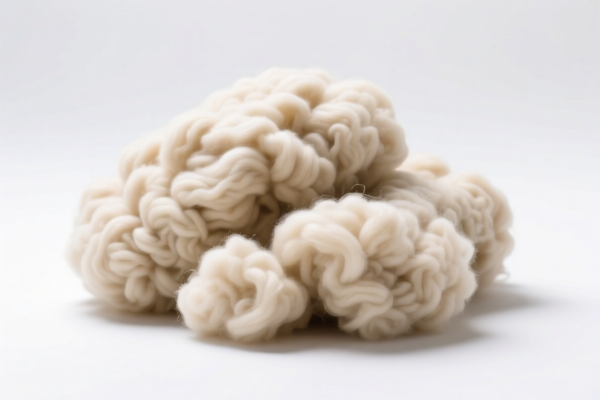
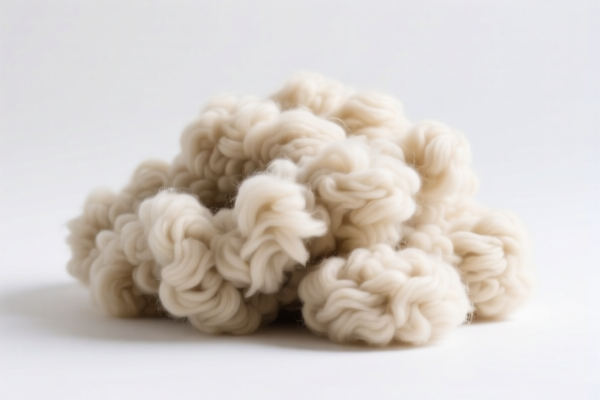
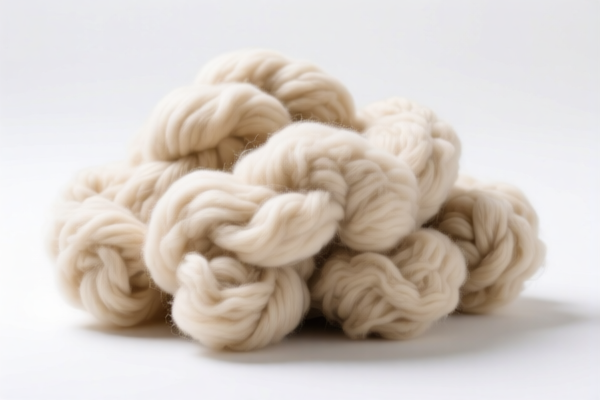
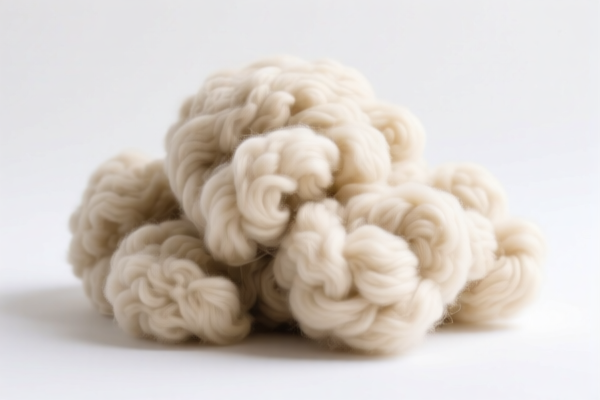
raw wool unwashed
CN → US| HS Code | Tariff Rate | Origin | Destination | Doc |
|---|---|---|---|---|
| 5105100000 | 0.0% | CN | US | Official Doc |
| 5103200000 | 0.0% | CN | US | Official Doc |
| 5101111000 | 35.0% | CN | US | Official Doc |
| 5101307000 | 0.0% | CN | US | Official Doc |
| 4103901190 | 17.5% | CN | US | Official Doc |
Product Images
AI Analysis
🐑 Raw Wool – Unwashed (Skirted/Scoured Ready or Unprocessed)
🌐 HS Code Reference & Customs Clearance Guide | 2026 Latest Tariff Analysis | Professional Clearance Strategy
📌 I. Product Definition & Classification: Do You Really Understand "Raw Wool"?
Raw wool, unwashed, refers to wool that has been shorn from sheep but has not undergone washing, scouring, or cleaning processes. It typically retains natural impurities such as lanolin (grease), sweat salts (suint), dirt, vegetable matter, and other contaminants.
In international trade, raw wool is classified based on its processing state and physical form. The key distinction lies between: * Wool Tops/Prepared Wool (processed for spinning): Not applicable here. * Raw Wool (Unwashed/Unscoured): This is the focus of this guide. It is further divided by quality and treatment status (e.g., skirted, unskirted, waste).
⚠️ Key Distinction Point:
- If the wool is cleaned, scoured, or processed into tops → It moves to different HS codes (e.g., 5105.10 or 5103).
- If it is still in its natural, greasy state with impurities → It falls under 5101 (Wool, greased or degreased, but not carded/combed) or 5103 (Wool waste).
- Note: "Unwashed" usually implies it still contains lanolin and dirt, distinguishing it from "Scoured Wool" (washed). However, in some contexts, "Raw Wool" might be loosely used for "Greasy Wool." We must look at the HS Code descriptions provided in the data to match the exact physical state.
📦 II. HS Code Classification Details (2026 Latest Tariff Authority Match)
Based on the provided <DATA>, here are the matched HS Codes for Raw Wool, Unwashed, along with their specific tax implications.
| HS Code | Product Description | Application Scenario | State/Processing Level |
|--------|--------------------------|--------------------------|
| 5101.11.10.00 | Wool, Greased or Degreased (Matched as "Unwashed Wool, Same Material") | Primary Match: Raw, unskirted or lightly skirted wool, still containing lanolin/dirt. | ✅ Unprocessed/Raw |
| 5105.10.00.00 | Wool Tops and Their Yarns (Matched as "Uncombed Wool, Same Material") | Less Likely for "Unwashed": This code often refers to Wool Tops (prepared for spinning). However, the data matches it to "Uncombed Wool." | ⚠️ Partially Processed (If it's actually tops) |
| 5101.30.70.00 | Wool, Greased or Degreased (Matched as "Unwashed Wool") | Similar to 5101.11.10.00, but possibly different fineness or origin classification. | ✅ Unprocessed/Raw |
| 5103.20.00.00 | Wool Waste (Matched as "Wool Waste or Primary Form") | If "Unwashed" means "Degraded/Short Fibers": This applies to Wool Waste (noils, garneted wool, etc.) that is unworked. | ❌ Waste/By-product |
🔍 Critical Reminder:
-5101.11.10.00is the most accurate for typical Raw, Unwashed, Greasy Wool intended for further processing.
-5103.20.00.00applies ONLY if the "wool" is actually waste (short fibers, noils) and not clean raw fleece.
-5105.10.00.00and5101.30.70.00are also matched to "Unwashed Wool" in the data, indicating they are valid alternatives depending on specific fineness or preparation nuances.
💰 III. 2026 Latest Tariff Rate Breakdown (Including Surcharges, Policy Surcharges)
✅ Applicable Country: United States (US)
✅ Origin: China (CN)
✅ Effective Date: 2025/2026 (Current Trade War Context)
🎯 1. 5101.11.10.00 —— Raw Wool, Greased/Unwashed (Best Match for Standard Raw Wool)
| Item | Detail |
|---|---|
| Base Tariff | 0.0% (Ad Valorem) |
| USITC Surcharge | +25.0% (Section 301 Tariff) |
| 122 Clause Tariff | +10.0% (IEEPA/Specific Section 122) |
| Total Tax Rate | 35.0% |
| Tax Calculation | CIF Value × 35% |
| De Minimis Exemption | ❌ NOT Eligible (Deny De Minimis for Section 301/122 goods) |
| Legal Basis Path | USITC:5101.11.10.00 → SECTION301:Footnote 9903.88.01 → IEEPA:9903.01.25 |
📌 Explanation:
- 0% Base: Raw wool has a low base duty.
- 35% Total: The 25% Section 301 tariff plus 10% Section 122 tariff results in a 35% total duty.
- High Cost: This is a significant cost driver. Importers must factor this into FOB pricing.
🎯 2. 5103.20.00.00 —— Wool Waste (Unworked)
| Item | Detail |
|---|---|
| Base Tariff | 2.6¢/kg (Specific Duty) |
| USITC Surcharge | +25.0% (Ad Valorem on Value? Or Specific? Data says "2.6¢/kg + 35%") |
| 122 Clause Tariff | +10.0% |
| Total Tax Rate | 2.6¢/kg + 35.0% |
| Tax Calculation | (Value × 35%) + (Weight in kg × $0.026) |
| De Minimis Exemption | ❌ NOT Eligible |
| Legal Basis Path | USITC:5103.20.00.00 → SECTION301 → IEEPA |
📌 Explanation:
- Specific + Ad Valorem: This is a hybrid duty.
- Base Specific: 2.6 cents per kg.
- Surcharge: 25% + 10% = 35% applied on the value.
- Use Case: Only for wool waste (e.g., noils, short fibers), not clean fleece.
🎯 3. 5105.10.00.00 & 5101.30.70.00 —— Alternative Raw Wool Classifications
| Item | Detail |
|---|---|
| Base Tariff | 6.5¢/kg + 5.3% (Specific + Ad Valorem Base) |
| USITC Surcharge | +25.0% |
| 122 Clause Tariff | +10.0% |
| Total Tax Rate | 6.5¢/kg + 5.3% + 35.0% |
| Tax Calculation | (Value × 40.3%) + (Weight in kg × $0.065) |
| De Minimis Exemption | ❌ NOT Eligible |
| Legal Basis Path | USITC:5105.10.00.00 / 5101.30.70.00 → SECTION301 → IEEPA |
📌 Explanation:
- Higher Base: These codes have a higher base duty (6.5¢/kg + 5.3%) compared to5101.11.10.00(0%).
- Total Effective Rate: ~40.3% + 6.5¢/kg.
- Recommendation: Avoid these codes unless the wool must be classified under them (e.g., specific fineness requirements).5101.11.10.00is cheaper (35% vs 40.3%).
🛠️ IV. Customs Clearance Practical Advice (Battle-Tested Pitfall Avoidance Guide)
✅ 1. Preparation Checklist (Non-Negotiable)
| Document | Required? | Explanation |
|---|---|---|
| ✅ Commercial Invoice | ✔️ | Must clearly state: "Raw Wool, Unwashed, Greasy" or "Unscoured Wool". Avoid vague terms like "Wool Material." |
| ✅ Packing List | ✔️ | Include Gross Weight and Net Weight. Duty for 5103.20.00.00 depends on weight. |
| ✅ Certificate of Origin (CO) | ✔️ | Critical for proving Chinese Origin to apply Section 301/122 tariffs. |
| ✅ Phytosanitary Certificate | ✔️ | MANDATORY. Wool is an agricultural product. Must show no pests/diseases. |
| ✅ Supplier Declaration | ✔️ | Confirm processing status: Greasy? Skirted? Cleaned? This determines HS Code. |
| ✅ Bill of Lading (B/L) | ✔️ | Ensure cargo description matches invoice. |
✅ 2. Declaration Strategy (Key Mnemonics)
🔥 "Raw Wool, Unwashed, Greasy, 35%!"
| Scenario | Correct HS Code | Tax Rate | Wrong Practice | Consequence |
|---|---|---|---|---|
| Standard Greasy Wool | 5101.11.10.00 |
35% | Misdeclare as "Waste" (5103) |
If not waste, penalty + back duties. |
| Wool Waste (Short Fibers) | 5103.20.00.00 |
2.6¢/kg + 35% | Declare as "Raw Wool" (5101) |
Overpay base duty (0% vs 6.5¢/kg). |
| Scoured/Cleaned Wool | 5105.10.00.00* |
~40.3% | Declare as "Raw" | Misclassification penalty. |
| Mixed Bales (Wool + Waste) | Separate Lines | Varies | Lump Sum Declaration | Customs will split and audit. |
📌 Key Tip:
- Never declare "Raw Wool" as "Textile Material" or "Natural Fiber" without the HS Code.
- Weight Accuracy: For5103.20.00.00, the specific duty (2.6¢/kg) is critical. Ensure weight is measured Net.
✅ 3. Special Case Handling
| Situation | Handling Advice |
|---|---|
| OEM Wool for Knitting | Ensure invoice says "For Knitting Use" to justify 5101.11.10.00. |
| Wool with High Dirt Content | Still 5101.11.10.00 if it's greasy/raw. If dirt > 30%, it might be 5103. |
| Wool Sent for Scouring (Bonded) | Use Bonded Warehouse or Foreign Trade Zone (FTZ) to defer duties until scouring is done. |
| Small Samples (Under $800) | ❌ NOT Eligible for De Minimis due to Section 301/122. Even samples are taxed. |
🌍 V. Global Market Comparison (2026 Latest)
| Country/Region | Recommended HS Code | Total Tariff (China Origin) | Key Certification | Notes |
|---|---|---|---|---|
| 🇺🇸 USA | 5101.11.10.00 |
35% (25% Sec 301 + 10% Sec 122) | Phytosanitary | Highest Duty. High compliance risk. |
| 🇨🇳 China | 5101.11.00.00 |
0% - 5% | None | Low duty for domestic processing. |
| 🇪🇺 EU | 5101.11.00 |
~4.4% | None | No Section 301 equivalent. |
| 🇬🇧 UK | 5101.11.00 |
~4.4% | None | Post-Brexit tariff alignment. |
| 🇻🇳 Vietnam | 5101.11.00 |
0% (if local wool) | None | Alternative Sourcing: Consider Vietnam/India for lower duty. |
📌 Conclusion:
- USA is the most expensive market for raw wool due to Section 301/122.
- EU/UK are significantly cheaper.
- Supply Chain Shift: Many importers are sourcing wool from India, Argentina, or New Zealand to avoid US tariffs on Chinese-origin goods.
📌 VI. Common Mistakes & Pitfalls (Blood & Tears Lessons)
❌ Mistake 1: Declaring Greasy Wool as "Waste" (5103) to save base duty.
👉 Consequence: If customs finds it's usable raw wool, they will reclassify and charge back duties + penalties.
👉 Fix: Provide Supplier Declaration confirming if it's Raw or Waste.
❌ Mistake 2: Ignoring Phytosanitary Certificate.
👉 Consequence: Cargo held at port, destroyed, or returned.
👉 Fix: Ensure APHIS/USDA approval before shipment.
❌ Mistake 3: Under-declaring Weight.
👉 Consequence: For 5103.20.00.00, specific duty is 2.6¢/kg. Under-declaration leads to underpayment and penalties.
👉 Fix: Use certified scales for Net Weight.
❌ Mistake 4: Assuming De Minimis ($800) applies.
👉 Consequence: Denied. Section 301/122 goods do not qualify.
👉 Fix: Pay duties on all shipments, regardless of value.
🎯 VII. Conclusion: Professional Declaration, Save Time, Reduce Costs
🎯 Remember the Mnemonic:
🔹 "Raw Wool, Unwashed, Greasy, 35%!"
🔹 "Waste is Specific: 2.6¢/kg + 35%"
🔹 "No De Minimis for Section 301/122!"
📌 Pro Tip:
If your wool is from India, New Zealand, or Argentina, it may avoid Section 301 tariffs (if not transshipped through China).
Recommendation:
1. Pre-classify with a customs broker.
2. Apply for Phytosanitary Certificate early.
3. Consider FTZ/Bonded Warehouse if re-exporting after processing.
📣 Immediate Action:
📞 Contact a Licensed Customs Broker
📄 Prepare Phytosanitary Certificate + Commercial Invoice
🚀 Clear Customs Smoothly, Avoid Delays, Protect Margins!
✨ Professional Clearance Starts with Accurate Classification!
💼 Your Cost, Precisely Calculated!
Customer Reviews
About HS Code Classification
The Harmonized System (HS) is an internationally standardized nomenclature developed by the World Customs Organization (WCO) to classify traded products. Over 200 countries use the HS system as the basis for customs tariffs, trade statistics, and import/export regulations.
Each HS code follows a hierarchical structure:
- Chapter (2 digits) — Broad category of goods (e.g., Chapter 84: Machinery and Mechanical Appliances)
- Heading (4 digits) — More specific grouping within the chapter
- Subheading (6 digits) — Internationally standardized breakdown, used by all WCO member countries
- National subdivisions (8-10 digits) — Country-specific extensions for further classification, such as US HTSUS 10-digit codes
Correct HS code classification is essential for smooth customs clearance, accurate duty payment, and compliance with trade regulations. Misclassification can lead to customs delays, overpayment of duties, or penalties.
When importing from CN to US, the applicable tariff rates may include:
- Most-Favored-Nation (MFN) rate — The standard duty rate applied to WTO members
- General rate — Applied to countries without trade agreements
- Trade remedy duties — Additional tariffs such as Section 301 (anti-dumping), Section 232 (national security), or countervailing duties
The information provided on this page is for reference purposes only. For official classification, please consult with your local customs authority or a licensed customs broker.