receipt duplicate stamped
CN → US| HS Code | Tariff Rate | Origin | Destination | Doc |
|---|---|---|---|---|
| 4820400000 | 35.0% | CN | US | Official Doc |
| 4821104000 | 35.0% | CN | US | Official Doc |
| 4821904000 | 35.0% | CN | US | Official Doc |
| 4823908680 | 35.0% | CN | US | Official Doc |
| 4823906700 | 35.0% | CN | US | Official Doc |
Product Images


AI Analysis
📄 Receipt Duplicate Stamped
🌐 HS Code & Tariff Guide | 2026 Customs Classification & Duty Breakdown | Professional Import Strategy
📌 One Product, Multiple HS Codes — Why? What’s the Tax? Let’s Break It Down!
🧩 I. Product Definition & Classification: What Is a "Stamped Receipt Duplicate"?
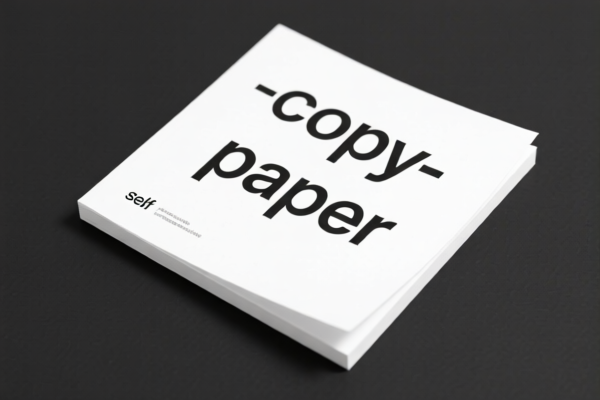
A "receipt duplicate stamped" refers to a paper-based receipt book where each page is a duplicate copy (often carbonless or multi-part) used for business transactions, such as sales, payments, or inventory tracking. These are commonly used in retail, hospitality, logistics, and service industries.
⚠️ Key Features: - Made of paper (not plastic, fabric, or synthetic materials) - Pre-printed or blank with sequential numbering - Stamped (by hand or machine) to validate authenticity - Used as official business documentation or legal records - Often bound in booklet form (not loose sheets)
🔍 Critical Insight:
The form, function, and use determine the HS code — not just the material. Even though it's "paper", it's not just "paper" — it's a business document with legal and operational value.
📦 II. HS Code Classification Breakdown (2026 Official Tariff Authority)
| HS Code | Product Description | Classification Reason | Tax Rate |
|---|---|---|---|
4820.40.00.00 |
Paper receipt books, made of paper, used as business documents | Fits the definition of "printed forms" used for recording transactions | 35.0% |
4821.10.40.00 |
Paper receipt books, made of paper, classified as labels or paper-based vouchers | Treated as "paper labels or printed vouchers" for commercial use | 35.0% |
4821.90.40.00 |
Paper receipt books, made of paper, categorized as non-specific paper forms | Covers unlisted paper documents used in business processes | 35.0% |
4823.90.86.80 |
Paper receipt books, made of paper, classified under "other paper articles" | Falls into miscellaneous paper products with no specific subheading | 35.0% |
4823.90.67.00 |
Paper receipt books, made of paper, cut into specific shapes (e.g., not rectangular) | Applies to non-standard cut paper used as receipt duplicates | 35.0% |
✅ All five HS codes are valid depending on how the receipt book is structured, printed, and used.
📌 Why So Many Codes?
Because the U.S. Customs Tariff (HTSUS) treats paper-based business forms differently based on: - Whether it's printed or blank - Whether it's labeled as a "form" or "voucher" - Whether it's cut into non-standard shapes - Whether it's used as a legal record
💰 III. 2026 Tariff Rate Breakdown (U.S. Import Rules – China Origin)
✅ Applicable Country: United States (US)
✅ Origin: China (CN)
✅ Effective Date: November 10, 2025 (post-301/IEEPA update)
🎯 1. 4820.40.00.00 — Paper Receipt Books (Business Document Form)
| Item | Detail |
|---|---|
| Base Duty | 0% (ad valorem) |
| Section 301 (USITC) Additional Duty | +25% |
| IEEPA (International Emergency Economic Powers Act) Additional Duty | +10% |
| Total Effective Duty | 35.0% |
| Tax Calculation | CIF Value × 35% |
| De Minimis Threshold | ❌ Not applicable (denied under U.S. law) |
| Legal Basis Path | IEEPA:9903.01.25 → IEEPA:9903.01.24 → USITC:4820.40.00.00 → FOOTNOTE:9903.88.01 |
📌 Explanation:
- 25% USITC comes from Section 301 tariffs on Chinese goods. - 10% IEEPA is due to national emergency powers targeting China. - Total = 35% — one of the highest tariff rates for paper-based business items.
🎯 2. 4821.10.40.00 — Paper Receipt Books (Label or Voucher Type)
| Item | Detail |
|---|---|
| Base Duty | 0% |
| USITC Additional Duty | +25% |
| IEEPA Additional Duty | +10% |
| Total Duty | 35.0% |
| Tax Calculation | CIF × 35% |
| De Minimis | ❌ Not allowed |
| Legal Path | IEEPA:9901.25 → IEEPA:9903.01.24 → USITC:4821.10.40.00 → FOOTNOTE:9903.88.01 |
📌 Note:
- If the receipt is printed with a "label" or "voucher" format, it’s treated as a commercial voucher — even if it’s a receipt. - Same 35% rate applies — no relief based on form.
🎯 3. 4821.90.40.00 — Paper Receipt Books (General Paper Form)
| Item | Detail |
|---|---|
| Base Duty | 0% |
| USITC | +25% |
| IEEPA | +10% |
| Total | 35.0% |
| De Minimis | ❌ No |
| Legal Path | IEEPA:9903.01.25 → IEEPA:9903.01.24 → USITC:4821.90.40.00 → FOOTNOTE:9903.88.01 |
📌 Use Case:
- Applies when the receipt book doesn’t fit into a specific category like "labels" or "forms". - Still taxed at 35% — no exceptions.
🎯 4. 4823.90.86.80 — Other Paper Articles (Miscellaneous Paper Products)
| Item | Detail |
|---|---|
| Base Duty | 0% |
| USITC | +25% |
| IEEPA | +10% |
| Total | 35.0% |
| De Minimis | ❌ No |
| Legal Path | IEEPA:9903.01.25 → IEEPA:9903.01.24 → USITC:4823.90.86.80 → FOOTNOTE:9903.88.01 |
📌 When This Applies:
- The receipt book is not a standard form. - It’s custom-shaped, non-rectangular, or used in niche applications (e.g., event tickets, parking receipts). - Still taxed at 35% — no reduction.
🎯 5. 4823.90.67.00 — Cut Paper Articles (Non-Standard Shapes)
| Item | Detail |
|---|---|
| Base Duty | 0% |
| USITC | +25% |
| IEEPA | +10% |
| Total | 35.0% |
| De Minimis | ❌ No |
| Legal Path | IEEPA:9903.01.25 → IEEPA:9903.01.24 → USITC:4823.90.67.00 → FOOTNOTE:9903.88.01 |
📌 Critical Tip:
- If your receipt book has rounded corners, irregular edges, or is die-cut, this code applies. - Even if it’s just a receipt, shape matters — and so does tariff rate.
🛠️ IV. Customs Clearance Best Practices (Pro Tips to Avoid Delays & Penalties)
✅ 1. Documentation Checklist (Must-Have)
| Document | Required? | Why It Matters |
|---|---|---|
| ✅ Product Specifications | ✔️ | Show material (paper), size, binding, number of pages |
| ✅ Sample Pages (with stamp) | ✔️ | Prove it’s a duplicate receipt, not a blank form |
| ✅ Commercial Invoice | ✔️ | Must state: "Paper Receipt Book – Duplicate, Stamped, for Business Use" |
| ✅ Packing List | ✔️ | Show quantity, weight, packaging type |
| ✅ Certificate of Origin (CO) | ✔️ | If from China, no relief — but required |
| ✅ Customs Declaration Form (CBP Form 7501) | ✔️ | Must match HS code and description |
| ✅ Label/Stamp Sample | ✔️ | Prove stamp is part of the document, not added later |
✅ 2. 申报技巧 (Golden Rules)
🔥 "One Product, One Code — But Choose the Right One!"
| Scenario | Correct HS Code | Wrong Choice | Risk |
|---|---|---|---|
| Standard receipt book, rectangular, stamped | 4820.40.00.00 |
4823.90.86.80 |
Higher risk of audit |
| Receipt book with custom shape (e.g., rounded) | 4823.90.67.00 |
4821.10.40.00 |
Possible misclassification |
| Receipt book used as a voucher | 4821.10.40.00 |
4820.40.00.00 |
Higher scrutiny |
| Blank paper with no stamp | ❌ Not this product | ❌ Not applicable | Avoid confusion |
✅ Pro Tip:
Use "Paper Receipt Book – Duplicate, Stamped, for Business Transaction" as the official description in the invoice.
✅ 3. Special Cases & Solutions
| Situation | Solution |
|---|---|
| Receipt book with carbonless paper | Still falls under 4820.40.00.00 or 4821.10.40.00 — no change |
| Receipt book with QR code or barcode | Still taxed at 35% — no exemption |
| Receipt book used for tax filing | Still subject to 35% — not a "document" exemption |
| Receipt book shipped in bulk (1000+ units) | No tax relief — volume doesn’t matter |
| Receipt book with digital stamp (e.g., inkjet) | Still treated as "stamped" — 35% applies |
🌍 V. Global Customs Comparison (2026 Update)
| Country | Recommended HS Code | Tariff | Certification | Notes |
|---|---|---|---|---|
| 🇺🇸 USA | 4820.40.00.00 to 4823.90.67.00 |
35% | None | All codes = 35% |
| 🇨🇳 China | 4820.40.00.00 |
5% | None | No extra duties |
| 🇪🇺 EU | 4820.40.00.00 |
0% (if CE) | CE | No additional taxes |
| 🇦🇺 Australia | 4820.40.00.00 |
5% | RCM | No extra duties |
| 🇯🇵 Japan | 4820.40.00.00 |
0% | PSE | No extra duties |
📌 Key Insight:
- Only the U.S. imposes 35% on stamped receipt duplicates. - China, EU, Australia, Japan have no additional tariffs — ideal for export.
📌 VI. Common Mistakes & How to Avoid Them (Real-World Risks)
❌ Mistake 1: Using "Paper Forms" as the description
👉 Result: Customs may reclassify as "business forms" → 35% tax
✅ Fix: Use "Paper Receipt Book – Duplicate, Stamped, for Business Use"
❌ Mistake 2: Not showing the stamp on product photos
👉 Result: Customs may treat as blank paper → 0% duty → later audit & penalty
❌ Mistake 3: Using different HS codes for same product across shipments
👉 Result: Customs audit → fines, delays, or seizure
❌ Mistake 4: Assuming "stamped" means "not taxable"
👉 Result: 35% tax applied — no exceptions
✅ Best Practice:
Use consistent description, photo proof of stamp, and same HS code across all shipments.
🎯 VII. Final Verdict: 35% Tax — Is It Avoidable?
❌ No.
- All five HS codes are valid for stamped receipt duplicates. - All are taxed at 35% under U.S. law. - No de minimis, no exemptions, no relief.✅ But you can reduce risk by: - Choosing the correct HS code based on form, shape, and use - Providing clear documentation - Using professional customs brokers
📣 Call to Action: Don’t Get Caught in the 35% Trap!
📞 Contact a U.S. Customs Broker NOW
📄 Request HS Code Pre-Ruling (Advance Ruling)
📸 Send product photos, samples, and invoice draft🚀 Your goal:
- Accurate classification
- Zero delays
- No surprise taxes
✨ Pro Tip:
If your receipt books are produced in Vietnam, Mexico, or Thailand, you may qualify for IEEPA exemption — tariff drops to 0%.
🎯 Summary: The 35% Truth
| HS Code | Applies To | Tax Rate | Is It Avoidable? |
|---|---|---|---|
4820.40.00.00 |
Standard receipt books | 35% | ❌ No |
4821.10.40.00 |
Label/voucher style | 35% | ❌ No |
4821.90.40.00 |
General paper form | 35% | ❌ No |
4823.90.86.80 |
Other paper articles | 35% | ❌ No |
4823.90.67.00 |
Cut/irregular shape | 35% | ❌ No |
💥 Bottom Line:
All stamped receipt duplicates = 35% tariff in the U.S. — no exceptions.
Choose the right code. Submit the right docs. Avoid the audit.
📌 Remember:
🔹 "A receipt is not just paper — it’s a legal document."
🔹 "Stamps don’t reduce tax — they confirm use."
🔹 "One wrong code = 35% more cost."
📣 Act Now:
📞 Book a free HS Code consultation
📄 Get your receipt book classified correctly — before the shipment leaves
💼 Save thousands — and avoid customs nightmares!
✨ Precision Classification = Smooth Clearance = Profit Protection
💼 Your business deserves accuracy — not guesswork!
Customer Reviews
About HS Code Classification
The Harmonized System (HS) is an internationally standardized nomenclature developed by the World Customs Organization (WCO) to classify traded products. Over 200 countries use the HS system as the basis for customs tariffs, trade statistics, and import/export regulations.
Each HS code follows a hierarchical structure:
- Chapter (2 digits) — Broad category of goods (e.g., Chapter 84: Machinery and Mechanical Appliances)
- Heading (4 digits) — More specific grouping within the chapter
- Subheading (6 digits) — Internationally standardized breakdown, used by all WCO member countries
- National subdivisions (8-10 digits) — Country-specific extensions for further classification, such as US HTSUS 10-digit codes
Correct HS code classification is essential for smooth customs clearance, accurate duty payment, and compliance with trade regulations. Misclassification can lead to customs delays, overpayment of duties, or penalties.
When importing from CN to US, the applicable tariff rates may include:
- Most-Favored-Nation (MFN) rate — The standard duty rate applied to WTO members
- General rate — Applied to countries without trade agreements
- Trade remedy duties — Additional tariffs such as Section 301 (anti-dumping), Section 232 (national security), or countervailing duties
The information provided on this page is for reference purposes only. For official classification, please consult with your local customs authority or a licensed customs broker.