rechargeable lithium battery kit 8+8aa833
CN → US| HS Code | Tariff Rate | Origin | Destination | Doc |
|---|---|---|---|---|
| 8504409580 | 35.0% | CN | US | Official Doc |
| 8507600010 | 20.9% | CN | US | Official Doc |
| 8506500090 | 37.7% | CN | US | Official Doc |
Product Images
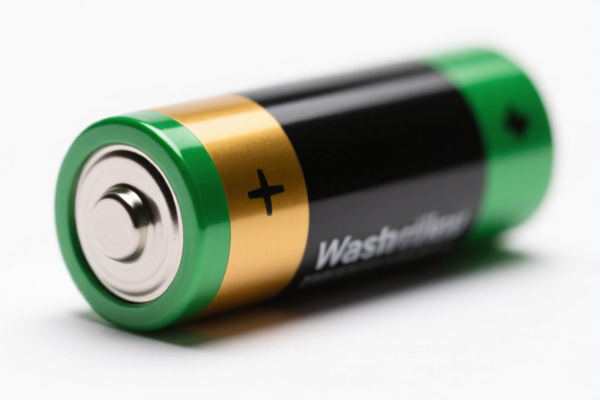
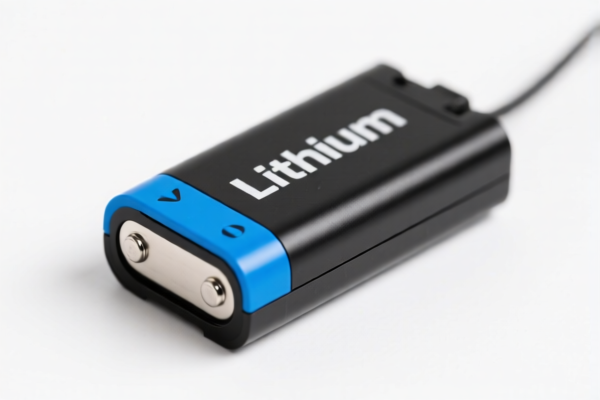
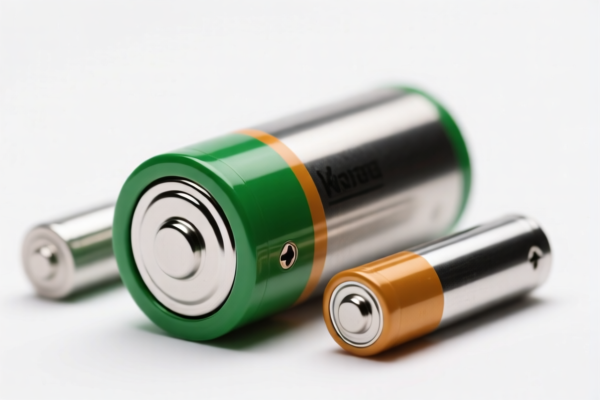
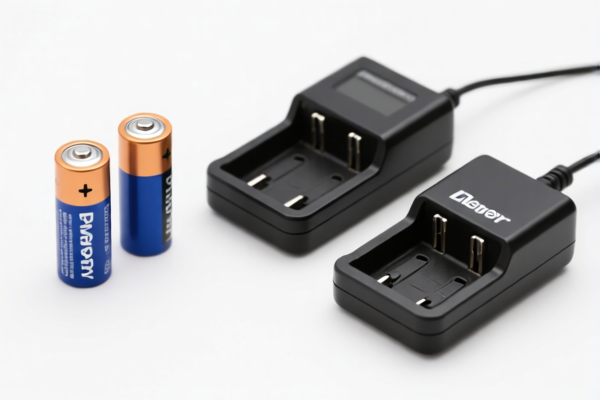
AI Analysis
🔋 Rechargeable Lithium Battery Kit (8+8 AA)
🌐 HS Code Reference & Customs Clearance Guide | 2026 Latest Tariff Analysis | Professional Clearance Strategy
📌 I. Product Definition & Classification: What exactly is a "Battery Kit"?
A Rechargeable Lithium Battery Kit (specifically configured as 8+8 AA cells) is a specialized energy storage solution. In international trade, the classification depends heavily on whether the batteries are treated as standalone energy storage devices or as components integrated into a power conversion system.
Key Distinction: * Lithium-Ion/Chemistry Specific: If the cells are strictly lithium-based and rechargeable, they fall under Chapter 85 (Motors, Generators, Transformers). * System vs. Component: If the "Kit" includes inverters/rectifiers for static power conversion, it might lean towards 8504. However, most "battery kits" are purely energy storage (batteries + casing/wiring), making 8507 or 8506 the primary candidates.
⚠️ Critical Classification Point:
- If the product is primarily a rechargeable lithium battery pack intended for storage/consumption → 8507.60.
- If the product is a static converter (battery + inverter/charger built-in) → 8504.40.
- If misclassified as generic primary lithium batteries (non-rechargeable) → 8506.50 (High Risk).
📦 II. HS Code Classification Details (2026 Latest Tariff Authority Comparison)
Based on the provided data, here are the three potential HS Codes and their logical justifications:
| HS Code | Product Description | Summary Logic | Total Tax Rate |
|---|---|---|---|
8504.40.95.80 |
Static Converters (Power Conversion/Storage) | Classified as a "Static Converter" for power conversion/storage. Since it's a "Kit," it falls under "Other" (兜底). Assumes it involves rectification/inversion functions beyond just storage. | 35.0% |
8507.60.00.10 |
Rechargeable Lithium-Ion Batteries | Matched Successfully. The name explicitly contains "Lithium Battery" (Material: Lithium) and "Rechargeable" (Form/Use: Rechargeable). This is the most direct fit for the core component. | 20.9% |
8506.50.00.90 |
Other Lithium Batteries | The term "Lithium Battery" fits the material requirement. The "Kit" is viewed as a battery group/assembly under "Other" lithium battery categories. This is often a trap for rechargeable batteries misclassified as primary ones. | 37.7% |
🔍 Key Insight:
-8507.60.00.10is likely the most accurate for pure rechargeable lithium cells/packs because it specifically targets "Rechargeable" lithium batteries.
-8504.40.95.80applies if the kit includes active power conversion electronics (inverters/chargers) as an integral part.
-8506.50.00.90is risky for rechargeable items, as Chapter 8506 generally refers to primary (non-rechargeable) batteries or generic lithium cells where the rechargeable nature is not specified.
💰 III. 2026 Latest Tariff Rate Breakdown (Including Surtaxes, Policy Surcharges)
✅ Applicable Country: United States (US)
✅ Origin: China (CN)
✅ Effective Date: November 10, 2025 (and subsequent imports)
🎯 1. 8507.60.00.10 —— Rechargeable Lithium-Ion Batteries (Recommended)
| Item | Content |
|---|---|
| Base Tariff | 3.4% (ad valorem) |
| Section 301 Surtax (USITC) | +7.5% |
| IEEPA Surcharge (China) | +10% (Section 122 Tariff) |
| Total Effective Rate | 20.9% |
| Tax Calculation | CIF Value × 20.9% |
| De Minimis Exemption | ❌ Not Eligible (deny_de_minimis) |
| Legal Basis Path | USITC:8507.60.00.10 → 301:Footnote 9903.88.01 → IEEPA:9903.01.24 |
📌 Explanation:
- This is the lowest tax bracket among the three options.
- The 7.5% is the standard Section 301 rate for certain batteries.
- The 10% is the additional IEEPA tariff specifically targeting Chinese-origin lithium batteries and related tech components.
- Total: 20.9%. This is the most cost-effective and technically accurate classification for rechargeable lithium kits.
🎯 2. 8504.40.95.80 —— Static Converters (Power Conversion/Storage)
| Item | Content |
|---|---|
| Base Tariff | 0.0% |
| Section 301 Surtax (USITC) | +25.0% |
| IEEPA Surcharge (China) | +10% (Section 122 Tariff) |
| Total Effective Rate | 35.0% |
| Tax Calculation | CIF Value × 35.0% |
| De Minimis Exemption | ❌ Not Eligible (deny_de_minimis) |
| Legal Basis Path | USITC:8504.40.95.80 → 301:Footnote 9903.88.01 → IEEPA:9903.01.24 |
📌 Explanation:
- Although the base rate is 0%, the Section 301 surtax is 25%, which is significantly higher than the 7.5% for batteries.
- This classification assumes the "Kit" functions as a converter (e.g., includes an inverter). If it’s just batteries, this classification may be challenged as incorrect, leading to penalties.
- Total: 35.0%. Higher tax burden than 8507.
🎯 3. 8506.50.00.90 —— Other Lithium Batteries
| Item | Content |
|---|---|
| Base Tariff | 2.7% |
| Section 301 Surtax (USITC) | +25.0% |
| IEEPA Surcharge (China) | +10% (Section 122 Tariff) |
| Total Effective Rate | 37.7% |
| Tax Calculation | CIF Value × 37.7% |
| De Minimis Exemption | ❌ Not Eligible (deny_de_minimis) |
| Legal Basis Path | USITC:8506.50.00.90 → 301:Footnote 9903.88.01 → IEEPA:9903.01.24 |
📌 Explanation:
- This is the highest tax rate at 37.7%.
- Critical Risk: HS 8506 is generally for primary (non-rechargeable) lithium batteries. Classifying rechargeable batteries here is a misclassification error.
- Customs may reject this at clearance, demanding reclassification to 8507 or imposing fines for false declaration.
- Total: 37.7%. Avoid this unless the batteries are explicitly non-rechargeable (which contradicts the product name "Rechargeable").
🛠️ IV. Customs Clearance Practical Advice (Battle-Proven Pitfall Guide)
✅ 1. Required Documentation Checklist (Non-negotiable)
| Document | Must Provide | Explanation |
|---|---|---|
| ✅ Product Specification Sheet | ✔️ | Must explicitly state: "Rechargeable," "Lithium-Ion/Lithium-Polymer," Voltage (V), Capacity (mAh), and Number of Cells (8+8 AA). |
| ✅ Safety Data Sheet (MSDS/SDS) | ✔️ | Mandatory for lithium batteries. Must comply with UN 38.3 testing standards. |
| ✅ UN 38.3 Test Report | ✔️ | Proof that batteries passed safety tests for transport (drop, vibration, thermal). |
| ✅ FCC Certification | ✔️ | Required if the kit contains any electronic control circuitry or radio frequency components. |
| ✅ Commercial Invoice | ✔️ | Must clearly describe the item as "Rechargeable Lithium Battery Kit, 8+8 AA Cells, Not for use in [restricted device]" to avoid security reviews. |
| ✅ Packing List | ✔️ | Detail battery count and packaging type (e.g., "Li-ion cells packed in retail box"). |
| ✅ Certificate of Origin | ✔️ | To confirm CN origin and apply correct surtaxes. |
✅ 2. Declaration Tips (Key Mantra)
🔥 "Specify 'Rechargeable', Highlight 'Lithium', Avoid 'Converter' unless True!"
| Scenario | Correct Declaration | Wrong Practice |
|---|---|---|
| Pure Battery Pack | HS 8507.60.00.10 Desc: "Rechargeable Lithium-Ion Battery Pack, 8+8 AA, 1.2V, 2000mAh" |
Calling it "Power Bank" or "Inverter" → Risk of 35% tax or seizure. |
| Battery + Charger/Inverter | HS 8504.40.95.80 Desc: "Static Power Converter with Integrated Lithium Battery Pack" |
Calling it just "Batteries" → Under-declaration of tax function. |
| Misclassified as Primary | HS 8506.50.00.90 (Do NOT Use) | Using this for rechargeable items → 37.7% tax + Penalty for false declaration. |
✅ 3. Special Handling for Lithium Batteries
| Issue | Handling Advice |
|---|---|
| Dangerous Goods (DG) | Lithium batteries are Class 9 DG. Ensure air/sea freight is booked with DG declaration. Do not ship as general cargo. |
| UN3480 vs UN3090 | - UN3480: Lithium ion batteries packed with equipment. - UN3090: Lithium ion batteries alone. Ensure the HS Code and UN Number match the physical packing. |
| Section 122 (IEEPA) Impact | All lithium battery imports from China are subject to the 10% IEEPA surcharge. This is non-negotiable and applies regardless of HS subheading. |
| De Minimis (Section 321) | ❌ Strictly Prohibited. Lithium batteries (HS 8507, 8504, 8506) are denied de minimis entry. All shipments, regardless of value, require full customs entry (CBP Form 7501). |
🌍 V. Global Market Comparison (2026 Latest)
| Country/Region | Recommended HS Code | Tariff (China Origin) | Certification | Notes |
|---|---|---|---|---|
| 🇺🇸 USA | 8507.60.00.10 |
20.9% | FCC, UN38.3, CPC (if for kids) | Highest barrier; 10% IEEPA + 7.5% 301. |
| 🇨🇳 China | 8507.60.00.10 |
0% (Import Duty) + 13% VAT | CCC (if applicable) | Domestic market friendly. |
| 🇪🇺 EU | 8507.60.00.10 |
0% (WTO MFN) | CE, RoHS, UN38.3, IEC62133 | No US-style surtaxes, but strict safety compliance. |
| 🇬🇧 UK | 8507.60.00.10 |
0% (WTO MFN) | UKCA, UN38.3 | Post-Brexit rules apply; CE no longer sufficient alone. |
| 🇯🇵 Japan | 8507.60.00.10 |
0% - 2% | PSE, UN38.3 | Low tariffs, high safety scrutiny. |
📌 Conclusion:
- The USA is the most expensive market due to Section 301 and IEEPA surtaxes.
- EU/UK/Japan offer lower tariffs but require strict safety certifications (CE/UKCA/PSE).
- Always declare "Rechargeable" to ensure correct HS Code assignment and avoid penalties.
📌 VI. Common Errors & Pitfall Guide (Blood & Tears Lessons)
❌ Error 1: Declaring "Rechargeable" batteries as "Primary" (HS 8506)
👉 Consequence: 37.7% tax + Penalty for misclassification.
👉 Fix: Always use 8507 for rechargeable lithium batteries.
❌ Error 2: Ignoring the "Kit" aspect and declaring only the battery cells
👉 Consequence: If the kit includes a charger/inverter, it may be reclassified to 8504 (35% tax).
👉 Fix: Accurately describe all components. If it’s just batteries, state "Battery Cells Only."
❌ Error 3: Attempting De Minimis Entry (Section 321)
👉 Consequence: Package seized or returned. Lithium batteries are excluded from de minimis.
👉 Fix: File full formal entry for all shipments.
❌ Error 4: Missing UN38.3 Report
👉 Consequence: Carrier refusal to transport; Customs detention.
👉 Fix: Ensure UN38.3 report is valid and attached to shipping documents.
✅ Correct Declaration Example:
"Rechargeable Lithium-Ion Battery Pack, Model 8+8AA, 1.2V, 2000mAh, for use in electronic devices. Not for standalone transport. Certified UN38.3, FCC ID: XYZ. HS Code: 8507.60.00.10."
🎯 VII. Conclusion: Professional Declaration, Save Costs, Ensure Smooth Clearance!
🎯 Remember the Mantra:
🔹 "Rechargeable = 8507, Converter = 8504, Primary = 8506. Never Mix Up!"
🔹 "Lithium + China = 10% IEEPA + 7.5% (or 25%) Surtax. Total Cost Matters!"
🔹 "No De Minimis for Lithium. Formal Entry Required!"
📌 Pro Tip:
If your batteries are shipped with a device (e.g., a flashlight or toy), they may still be classified under 8507 if the battery is the main character, but ensure the device is declared correctly. If the battery is inside the equipment, the entire unit might fall under the device’s HS code (e.g., 8543 for other electrical machines), which could have different tax implications. However, for a standalone "Kit," 8507.60.00.10 is your safest bet.
📣 Immediate Action:
📞 Contact a licensed customs broker + Provide UN38.3 + Apply for Pre-Ruling if unsure.
🚀 Ensure your batteries clear customs smoothly, efficiently, and profitably!
✨ Professional clearance starts with accurate classification!
💼 Your every cent of cost is worth calculating precisely!
Customer Reviews
About HS Code Classification
The Harmonized System (HS) is an internationally standardized nomenclature developed by the World Customs Organization (WCO) to classify traded products. Over 200 countries use the HS system as the basis for customs tariffs, trade statistics, and import/export regulations.
Each HS code follows a hierarchical structure:
- Chapter (2 digits) — Broad category of goods (e.g., Chapter 84: Machinery and Mechanical Appliances)
- Heading (4 digits) — More specific grouping within the chapter
- Subheading (6 digits) — Internationally standardized breakdown, used by all WCO member countries
- National subdivisions (8-10 digits) — Country-specific extensions for further classification, such as US HTSUS 10-digit codes
Correct HS code classification is essential for smooth customs clearance, accurate duty payment, and compliance with trade regulations. Misclassification can lead to customs delays, overpayment of duties, or penalties.
When importing from CN to US, the applicable tariff rates may include:
- Most-Favored-Nation (MFN) rate — The standard duty rate applied to WTO members
- General rate — Applied to countries without trade agreements
- Trade remedy duties — Additional tariffs such as Section 301 (anti-dumping), Section 232 (national security), or countervailing duties
The information provided on this page is for reference purposes only. For official classification, please consult with your local customs authority or a licensed customs broker.