reciprocating saw
CN → US| HS Code | Tariff Rate | Origin | Destination | Doc |
|---|---|---|---|---|
| 8467220070 | 10.0% | CN | US | Official Doc |
| 8467220090 | 10.0% | CN | US | Official Doc |
Product Images
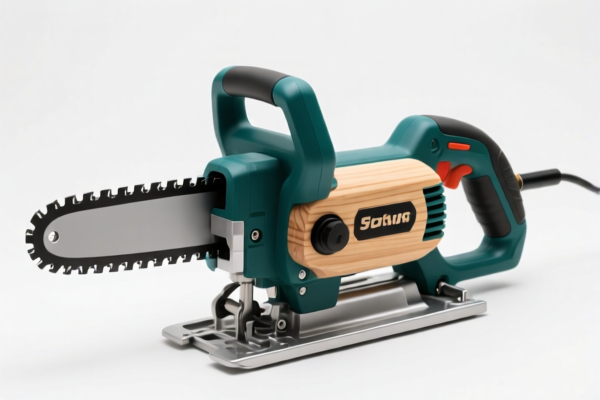
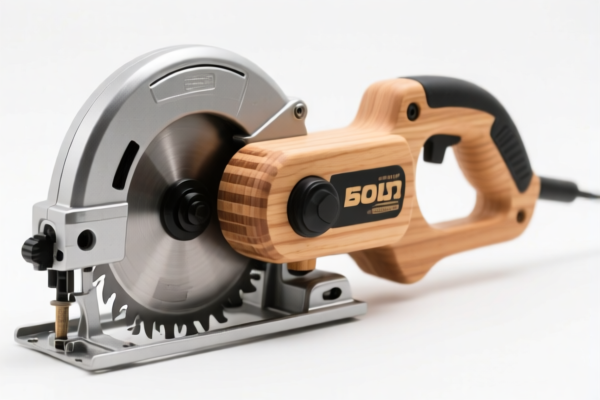
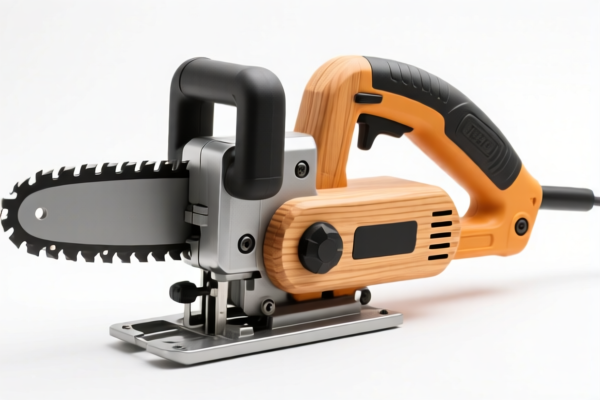
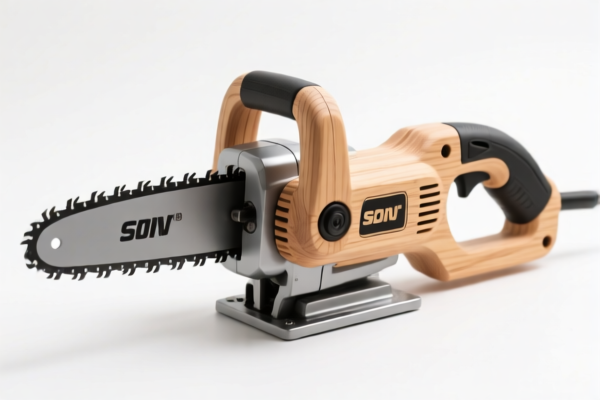
AI Analysis
🪚 Reciprocating Saw (Handheld Power Tools)
🌐 HS Code Reference & Customs Clearance Guide | 2024/2026 Customs Tariff Full Analysis | Professional-Level Clearance Strategy
📌 I. Product Definition & Classification: Do You Really Understand "Reciprocating Saw"?
A Reciprocating Saw is a handheld power tool characterized by a back-and-forth (reciprocating) motion of the blade. It is widely used for demolition, pruning, cutting pipes, and various construction tasks. In international trade, it falls under the category of "Tools for working in the hand, pneumatic, hydraulic or with self-contained electric or nonelectric motor, and parts thereof."
Crucially, because it contains a self-contained electric motor (for battery-operated or corded electric models), it is classified under Heading 8467.
⚠️ Key Distinction Point:
- If the tool is pneumatic (air-powered) or hydraulic, it falls under different sub-headings within 8467.
- If the tool is non-electric (manual or gas-powered without an electric motor component), it may fall under 8207 or other headings.
- This guide strictly covers Electric Reciprocating Saws as per the provided DATA.
📦 II. HS Code Classification Details (Authoritative对照)
| HS Code | Product Description | Application Scenario | Motor Type |
|---|---|---|---|
8467.22.00.70 |
Tools for working in the hand... With self-contained electric motor: Saws Reciprocating and jig | Demolition saws, pruning saws (electric/battery) | ✅ Self-contained Electric |
8467.22.00.90 |
Tools for working in the hand... With self-contained electric motor: Saws Other | Other electric saws not specifically listed (e.g., certain specialized orbital or circular saws not classified elsewhere) | ✅ Self-contained Electric |
🔍 Key Insight:
-8467.22.00.70is the primary and most accurate code for standard Reciprocating Saws (and Jig Saws).
-8467.22.00.90acts as a residual category for "Other" electric hand tools with self-contained motors, generally not for standard reciprocating saws unless they have unique characteristics that exclude them from the "Reciprocating and jig" clause.
💰 III. 2026 Latest Tariff Rate Detail (Including Additional Taxes & Policies)
✅ Applicable Country: United States (US)
✅ Origin: China (CN)
✅ Effective Date: Based on provided DATA (No additional IEEPA/USITC surcharges listed in the source text)
🎯 1. 8467.22.00.70 —— Reciprocating and Jig Saws (Electric)
| Item | Content |
|---|---|
| Base Tariff Rate | 0.0% (ad valorem) |
| Additional Tariff | 0.0% (as per provided DATA) |
| Total Tax Rate | 0.0% |
| Tax Calculation | CIF Value × 0.0% = $0 |
| De Minimis Eligibility | ✅ Yes (Generally eligible for Section 321 de minimis if value < $800) |
| Legal Basis Path | HTSUS:8467.22.00.70 |
📌 Interpretation:
- The provided DATA explicitly states:"基础关税: 0.0%, 加征关税: 0.0%"and"total_tax: 0.0%".
- Unlike monitors or steel products, electric reciprocating saws currently face zero additional tariffs in this specific dataset.
- Warning: This rate is based strictly on the provided XML data. Verify with current USITC/UEEA bulletins as trade policies change frequently.
🎯 2. 8467.22.00.90 —— Other Saws (Electric)
| Item | Content |
|---|---|
| Base Tariff Rate | 0.0% (ad valorem) |
| Additional Tariff | 0.0% (as per provided DATA) |
| Total Tax Rate | 0.0% |
| Tax Calculation | CIF Value × 0.0% = $0 |
| De Minimis Eligibility | ✅ Yes |
| Legal Basis Path | HTSUS:8467.22.00.90 |
📌 Note:
- This code carries the same favorable rate as the specific reciprocating saw code in this dataset.
- However, misclassifying a Reciprocating Saw as "Other Saw" (...90) when it fits...70may still lead to scrutiny, even if the tax rate is the same. Accuracy matters for compliance.
🛠️ IV. Customs Clearance Practical Advice (Pitfall Avoidance Guide)
✅ 1. Required Documentation Checklist (Do Not Miss)
| Document | Mandatory | Notes |
|---|---|---|
| ✅ Product Specifications | ✔️ | Must clearly state "Reciprocating Saw", voltage, battery type (if cordless), amperage. |
| ✅ Product Photos | ✔️ | Clear images of the tool, blade, motor housing, and any brand/model labels. |
| ✅ Commercial Invoice | ✔️ | Description must match HS code: "Electric Reciprocating Saw". Avoid vague terms like "Power Tool". |
| ✅ Packing List | ✔️ | Include blades if sold separately or as kits. Note if batteries are included (may affect shipping regulations). |
| ✅ Battery MSDS (if applicable) | ✔️ | If lithium-ion battery included, provide MSDS and UN38.3 test reports for air freight. |
✅ 2. Declaration Tips (Key Mnemonic)
🔥 “Electric Motor, Reciprocating Motion, Code .70 is Key!”
| Scenario | Correct Declaration | Wrong Practice |
|---|---|---|
| Standard Electric Reciprocating Saw | 8467.22.00.70 | Misdeclaring as "Part of a Saw" → Higher risk of audit |
| Pneumatic Reciprocating Saw | Different Code (Not in this DATA) | Misdeclaring as Electric → Compliance violation |
| Cordless Saw (Battery Included) | 8467.22.00.70 | Declaring battery and saw separately incorrectly |
| Manual (Non-Electric) Reciprocating Saw | 8207.xx (Not in this DATA) | Declaring as 8467 → Wrong classification |
✅ 3. Special Cases Handling
| Situation | Handling Advice |
|---|---|
| Kit with Blades | Declare as "Reciprocating Saw Kit". The main article (saw) determines the HS code. |
| OEM/White Label | Provide authorization letters. Brand name does not change HS code, but accurate model numbers help. |
| Lithium Battery | Ensure proper UN packaging. While duty is 0%, shipping safety (DGM/IMO) is critical. |
| Parts Only | If importing blades only, they are not "tools with self-contained motors" → Likely 8207.xx or 8208.xx. Do not use 8467.22.00.70 for blades alone. |
🌍 V. Global Market Comparison (2026 Latest)
| Country/Region | Recommended HS Code | Tariff (CN Origin) | Certification | Notes |
|---|---|---|---|---|
| 🇺🇸 USA | 8467.22.00.70 |
0.0% | FCC (if applicable), UL/ETL | 0% tax in provided data; check for Section 301 updates. |
| 🇨🇳 China | 8467.22.00.70 |
Varies (Check Latest) | CCC (if applicable) | Domestic market rules apply. |
| 🇪🇺 EU | 8467.22.00 |
0% - 4.5% | CE + RoHS | VAT applies. No specific US-style surcharges. |
| 🇬🇧 UK | 8467.22.00 |
0% - 4.5% | UKCA + CE | Post-Brexit regulations. |
| 🇦🇺 Australia | 8467.22.00 |
5.0% | RCM | Standard GSTR 10005 may apply. |
📌 Conclusion:
- The USA currently shows 0.0% total tax for this item in the provided DATA, making it a competitive market for cost calculation.
- However, always verify if new Section 301 or IEEPA tariffs have been added post-2024, as the data provided is static.
📌 VI. Common Mistakes & Pitfall Guide (Lessons Learned)
❌ Mistake 1: Declaring "Power Tool" generically
👉 Consequence: Customs may assign a default code with higher duties or delay clearance.
👉 Fix: Always specify "Reciprocating Saw".
❌ Mistake 2: Including blades in the "Saw" HS Code incorrectly
👉 Consequence: Blades are accessories/parts. If declared separately, use 8207 or 8208.
👉 Fix: If sold as a kit, declare the saw as the primary item.
❌ Mistake 3: Ignoring Battery Regulations
👉 Consequence: Air freight rejection, fines, or seizure.
👉 Fix: Ensure lithium batteries comply with IATA DGR and provide MSDS.
❌ Mistake 4: Assuming 0% means "No Documentation"
👉 Consequence: Lack of proper paperwork leads to inspection delays.
👉 Fix: Even with 0% tax, full commercial invoice and packing list are mandatory.
✅ Correct Declaration Example:
"Electric Reciprocating Saw, Model XYZ, 20V Lithium Ion, Self-Contained Motor, for Demolition and Pruning"
🎯 VII. Conclusion: Professional Declaration, Save Time and Money!
🎯 Remember the Mnemonic:
🔹 "Electric Reciprocating, Code 70 is Key!"
🔹 "0% Tax in Data, But Verify Before You Ship!"
🔹 "Blades are Parts, Saws are Tools, Don't Mix Them Up!"
📌 Pro Tip:
Although the provided data shows 0.0% tax, always perform a Pre-Ruling or consult with a licensed customs broker to confirm if any new trade sanctions or tariff increases have occurred since the data was last updated. Trade policies are dynamic!
📣 Immediate Action:
📞 Contact a professional customs broker + Provide Product Specs + Verify Battery Compliance
🚀 Let your Reciprocating Saws clear customs smoothly, efficiently, and profitably!
✨ Professional Clearance Starts with Accurate Classification!
💼 Every cent of cost deserves precise calculation!
Customer Reviews
About HS Code Classification
The Harmonized System (HS) is an internationally standardized nomenclature developed by the World Customs Organization (WCO) to classify traded products. Over 200 countries use the HS system as the basis for customs tariffs, trade statistics, and import/export regulations.
Each HS code follows a hierarchical structure:
- Chapter (2 digits) — Broad category of goods (e.g., Chapter 84: Machinery and Mechanical Appliances)
- Heading (4 digits) — More specific grouping within the chapter
- Subheading (6 digits) — Internationally standardized breakdown, used by all WCO member countries
- National subdivisions (8-10 digits) — Country-specific extensions for further classification, such as US HTSUS 10-digit codes
Correct HS code classification is essential for smooth customs clearance, accurate duty payment, and compliance with trade regulations. Misclassification can lead to customs delays, overpayment of duties, or penalties.
When importing from CN to US, the applicable tariff rates may include:
- Most-Favored-Nation (MFN) rate — The standard duty rate applied to WTO members
- General rate — Applied to countries without trade agreements
- Trade remedy duties — Additional tariffs such as Section 301 (anti-dumping), Section 232 (national security), or countervailing duties
The information provided on this page is for reference purposes only. For official classification, please consult with your local customs authority or a licensed customs broker.