recorder
CN → US| HS Code | Tariff Rate | Origin | Destination | Doc |
|---|---|---|---|---|
| 8519893000 | 17.5% | CN | US | Official Doc |
| 8519814110 | 10.0% | CN | US | Official Doc |
| 8543709860 | 37.6% | CN | US | Official Doc |
| 8543708900 | 17.5% | CN | US | Official Doc |
| 8543709860 | 37.6% | CN | US | Official Doc |
Product Images
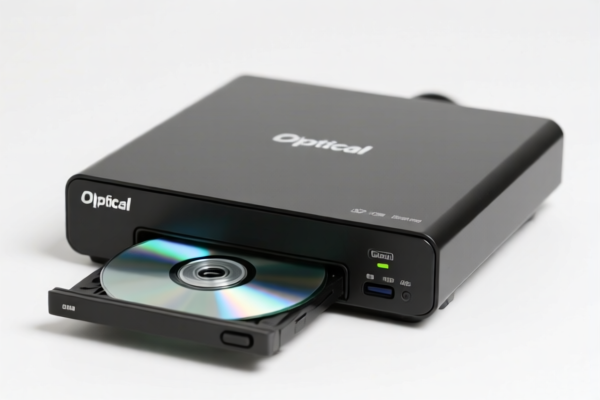
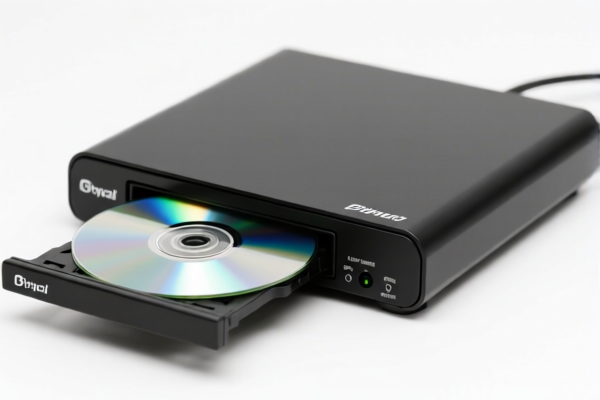
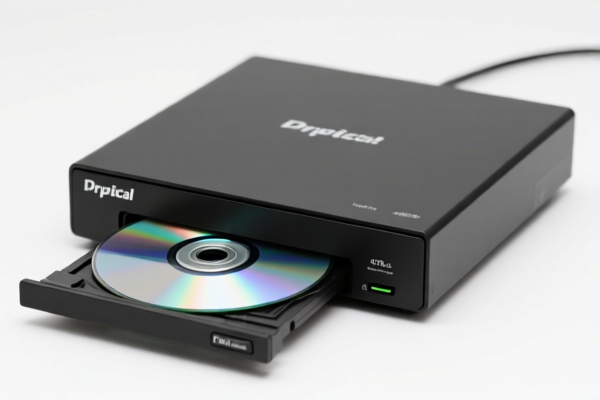
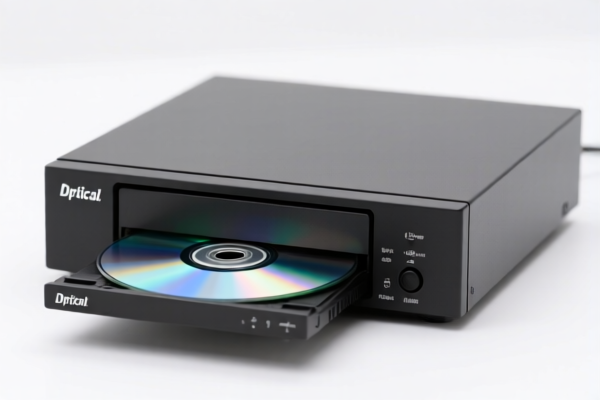
AI Analysis
🎙️ Voice Recorder / Digital Recorder (Digital Audio Recording Devices)
🌐 HS Code Reference & Customs Clearance Guide | 2026 Latest Tariff Analysis | Professional Compliance Strategy
📌 I. Product Definition & Classification: Do You Really Understand the "Recorder"?
A Voice Recorder (often referred to as a Digital Voice Recorder) is a portable electronic device designed primarily to capture, store, and playback audio. In international trade, classification depends heavily on its primary function and technical architecture. It is generally categorized under Chapter 85 (Electrical Machinery and Equipment).
There is a critical distinction in customs classification: * Specialized Recording Devices: Devices specifically designed for audio recording with dedicated storage and playback circuits. * General Purpose Electronic Devices: Devices that have recording capabilities but are defined by broader "machinery" or "apparatus" functions, often used as catch-all categories for specific tech configurations.
⚠️ Key Distinction Point:
- If the device is specifically recognized as a sound recording apparatus with standard audio interfaces → It often falls under 8519 or 8543 depending on specific technical descriptions. - The Total Tax Rate varies significantly based on the chosen HS Code, ranging from 10.0% to 37.6%, primarily due to Section 301 (Trade War) tariffs and Section 122 tariffs.
📦 II. HS Code Classification Details (2026 Latest Tariff Authority Comparison)
Based on the provided data, here are the four potential HS Codes for a "Recorder," along with their logic and tax implications.
| HS Code | Product Description & Logic | Total Tax Rate (US Origin) | Tax Breakdown (Base + Section 301 + Section 122) |
|---|---|---|---|
8519.81.41.10 |
Sound Recording Equipment Logic: Fits "Tape Recorders Incorporating Sound-Reproducing Apparatus." Despite being digital, it fits the broad logic of sound recorders without material conflict. |
10.0% | Base: 0.0% Sec 301: 0.0% Sec 122: 10.0% (Lowest Tax Option) |
8519.89.30.00 |
Recording/Reproducing Apparatus Logic: Goods for recording or reproducing sound. Fits the category of "Sound Recording Equipment" without material/form constraints. |
17.5% | Base: 0.0% Sec 301: 7.5% Sec 122: 10.0% |
8543.70.89.00 |
Portable Electronic Device Logic: Portable electronic device capable of recording and reproducing audio files. Fits the description of use and equipment nature. |
17.5% | Base: 0.0% Sec 301: 7.5% Sec 122: 10.0% |
8543.70.98.60 |
Other Machines & Apparatus (Catch-all) Logic: Standalone electronic device with independent functions. Falls under the "other machines and apparatus" catch-all definition. |
37.6% | Base: 2.6% Sec 301: 25.0% Sec 122: 10.0% (Highest Tax Option) |
🔍 Critical Analysis:
-8519.81.41.10offers the lowest tax burden (10%) but requires strict justification that the device fits the logic of "sound recording equipment" broadly, even if digital. -8543.70.98.60applies the highest tax burden (37.6%) because it incurs the full 25% Section 301 tariff plus base duties. This is often the default "risky" classification if the specific function isn't clearly defined as standard audio equipment. -8519.89.30.00and8543.70.89.00represent the middle ground (17.5%), balancing specificity and general applicability.
💰 III. 2026 Latest Tariff Rate Detailed Explanation
✅ Applicable Country: United States (US)
✅ Origin: China (CN) (Assumed based on tariff structure: Sec 301 & 122)
✅ Effective Date: Current rates apply as of 2026
🎯 1. 8519.81.41.10 —— Best Case Scenario (Lowest Tax)
| Item | Details |
|---|---|
| Base Duty | 0.0% |
| Section 301 Tariff | 0.0% (Exempt or not applicable to this specific subheading) |
| Section 122 Tariff | +10.0% |
| Total Effective Rate | 10.0% |
| Tax Calculation | CIF Value × 10% |
| De Minimis Exemption | ❌ Not Applicable (Section 301/122 goods generally denied de minimis if over threshold, but primarily this is a direct duty calculation) |
| Legal Basis | Harmonized Tariff Schedule of the United States (HTSUS) Chapter 85, Heading 8519. |
📌 Interpretation:
- This classification assumes the recorder is viewed purely as sound recording apparatus. - Zero Section 301 Tax is a massive advantage. This suggests that certain specific audio recording devices are exempt from the aggressive 25% trade war tariffs, or this specific subheading was carved out. - Only 10% total tariff makes this the most cost-effective classification if defensible.
🎯 2. 8519.89.30.00 & 8543.70.89.00 —— Moderate Scenario
| Item | Details |
|---|---|
| Base Duty | 0.0% |
| Section 301 Tariff | +7.5% |
| Section 122 Tariff | +10.0% |
| Total Effective Rate | 17.5% |
| Tax Calculation | CIF Value × 17.5% |
📌 Interpretation:
- These codes attract a reduced Section 301 rate of 7.5% (instead of 25%). - This often applies to goods that are not primary IT equipment but have electronic components, or are considered "other" recording devices. - Cost Difference: Compared to the 10% rate, this adds 7.5% to the landed cost.
🎯 3. 8543.70.98.60 —— Worst Case Scenario (Highest Tax)
| Item | Details |
|---|---|
| Base Duty | 2.6% |
| Section 301 Tariff | +25.0% (Full Penalty Rate) |
| Section 122 Tariff | +10.0% |
| Total Effective Rate | 37.6% |
| Tax Calculation | CIF Value × 37.6% |
| De Minimis Exemption | ❌ Denied |
📌 Interpretation:
- This code falls under "Other machines and apparatus" (8543) which is a catch-all for electronic equipment not specified elsewhere. - It incurs the maximum Section 301 tariff (25%) and a base duty (2.6%). - Risk: This classification is often assigned if customs officers believe the device is a "general purpose electronic gadget" rather than a dedicated "sound recorder." Avoid this if possible.
🛠️ IV. Customs Clearance Practical Advice (Real-World Pitfall Guide)
✅ 1. Documentation Checklist (Non-Negotiable)
| Document | Required? | Purpose |
|---|---|---|
| ✅ Product Specification Sheet | ✔️ | Must clearly state: "Digital Voice Recorder," "Audio Recording Function," "No Video/No Data Processing Capabilities." |
| ✅ Circuit Board Photos / Block Diagram | ✔️ | To prove the device is dedicated audio recording (supports 8519) and NOT a general-purpose computer/tablet (which might push it toward 8543 or 8471). |
| ✅ Commercial Invoice | ✔️ | Description must match the HS Code logic. E.g., for 8519.81.41.10, use "Sound Recording Apparatus." |
| ✅ User Manual / Software Interface | ✔️ | Proves the primary user interaction is audio-centric, not data-processing centric. |
| ✅ FCC ID | ✔️ | Required for all electronic devices in the US. Ensure FCC classification aligns with audio equipment. |
✅ 2. Declaration Strategy (Key Mnemonics)
🔥 "Function is King: Audio-Only, Avoid 8543.37.6%; Dedicated Recorder, Seek 10.0%."
| Scenario | Recommended HS Code | Reasoning | Risk Level |
|---|---|---|---|
| Basic Digital Voice Recorder (No Wi-Fi, No Android, No Video) | 8519.81.41.10 |
Best fits "Sound Recording Equipment." Lowest tax (10%). | ✅ Low (If specs are clean) |
| Recorder with Basic Bluetooth/Wi-Fi (But core function is audio) | 8519.89.30.00 or 8543.70.89.00 |
Connectivity might move it out of 8519.81. Safe middle ground (17.5%). | ⚠️ Medium |
| "Smart Recorder" / Tablet-like Recorder (Runs Android, Apps, Video) | 8543.70.98.60 |
Likely classified as "Other Apparatus" or PDA. Highest tax (37.6%). | ❌ High (High Cost) |
| Professional Audio Interface/Recorder | 8519.81.41.10 |
Professional gear often fits specific subheadings better. | ✅ Low |
✅ 3. Special Situation Handling
| Situation | Advice |
|---|---|
| Device records video AND audio | Do NOT use 8519. It will likely be classified as a video camera (8525) or general apparatus (8543). Expect higher taxes or different regulations. |
| OEM/White Label Products | Ensure the Specification Sheet from the manufacturer explicitly defines the device as a "Voice Recorder." Vague terms like "Digital Audio Device" are risky. |
| Customs Audit Defense | If audited on 8519.81.41.10, provide the block diagram showing dedicated audio DSP (Digital Signal Processor) and no general-purpose CPU. |
| Section 122 Tariff Impact | Note that all these codes incur a 10% Section 122 tariff. This is a recent/additional levy on many Chinese electronics. Do not confuse this with Section 301. |
🌍 V. Global Market Comparison (2026 Overview)
| Region | Typical HS Code for Recorder | Estimated Duty (China Origin) | Key Requirements |
|---|---|---|---|
| 🇺🇸 USA | 8519.81.41.10 (Best) |
10.0% - 37.6% | FCC ID, Detailed Specs. Critical: Avoid 8543 if possible. |
| 🇨🇳 China (Import) | 8525.80.00.00 (Video/Audio) |
0% - 5% | CCC Certification. |
| 🇪🇺 EU | 8525.80.00 or 8543.70 |
0% - 4% | CE Marking, RoHS, WEEE. No Section 301/122. |
| 🇬🇧 UK | 8525.80.00 |
0% - 5% | UKCA Marking. |
| 🇯🇵 Japan | 8525.80.00 |
0% - 3% | PSE Marking (if applicable). |
📌 Conclusion:
- The US market is the most complex due to Section 301 and Section 122 tariffs. - Proper classification is the single biggest lever for cost savings. Moving from8543(37.6%) to8519(10.0%) saves 27.6% on every dollar of duty.
📌 VI. Common Errors & Pitfalls (Lessons Learned)
❌ Error 1: Using generic terms like "Digital Device" or "Electronic Gadget" on the Commercial Invoice.
👉 Result: Customs defaults to the catch-all 8543.70.98.60 → 37.6% Tax!
❌ Error 2: Ignoring the "Section 122 Tariff."
👉 Result: Even if you get 0% Section 301, you still pay 10% additional duty. Factor this into your pricing model.
❌ Error 3: Classifying a "Smart Recorder" (Android-based) as 8519.
👉 Result: Customs will reclassify it as a PDA or general apparatus (8543 or 8471) → Back taxes + Penalties.
❌ Error 4: Failing to provide Circuit Diagrams.
👉 Result: Customs cannot verify "Dedicated Audio Function" → Delays & Audit.
✅ Correct Declaration Example:
"Digital Voice Recorder, Portable, Battery Operated, Records Audio Only via Microphone, Stores on Internal Flash Memory, No Video Recording, No Operating System, Model XYZ, FCC Certified."
🎯 VII. Conclusion: Precision Classifies, Savings Flow!
🎯 Remember the Golden Rule:
🔹 "Dedicated Audio = 8519 (10%)! 🚀"
🔹 "General Gadget = 8543 (37.6%)! 📉"
🔹 "Check Specs, Save 27.6%, Happy Customs!"
📌 Pro Tip:
Before shipping, request a Binding Tariff Information (BTI) or US CBP Advance Ruling if the product has hybrid features (e.g., Wi-Fi, Bluetooth). The cost of an Advance Ruling is minimal compared to the risk of paying 37.6% instead of 10%.
📣 Immediate Action Required:
📞 Consult a Customs Broker: Submit product specs and circuit diagrams for pre-classification.
📄 Update Product Packaging: Ensure the label clearly states "Voice Recorder" and "Audio Only."
💰 Re-evaluate Pricing: Ensure your landed cost calculation includes the 10% Section 122 tax, even for the best-case scenario.
✨ Professional Customs Clearance Starts with Accurate Classification!
💼 Every Percentage Point Saved is Pure Profit!
Customer Reviews
About HS Code Classification
The Harmonized System (HS) is an internationally standardized nomenclature developed by the World Customs Organization (WCO) to classify traded products. Over 200 countries use the HS system as the basis for customs tariffs, trade statistics, and import/export regulations.
Each HS code follows a hierarchical structure:
- Chapter (2 digits) — Broad category of goods (e.g., Chapter 84: Machinery and Mechanical Appliances)
- Heading (4 digits) — More specific grouping within the chapter
- Subheading (6 digits) — Internationally standardized breakdown, used by all WCO member countries
- National subdivisions (8-10 digits) — Country-specific extensions for further classification, such as US HTSUS 10-digit codes
Correct HS code classification is essential for smooth customs clearance, accurate duty payment, and compliance with trade regulations. Misclassification can lead to customs delays, overpayment of duties, or penalties.
When importing from CN to US, the applicable tariff rates may include:
- Most-Favored-Nation (MFN) rate — The standard duty rate applied to WTO members
- General rate — Applied to countries without trade agreements
- Trade remedy duties — Additional tariffs such as Section 301 (anti-dumping), Section 232 (national security), or countervailing duties
The information provided on this page is for reference purposes only. For official classification, please consult with your local customs authority or a licensed customs broker.