rectifier bridge
CN → US| HS Code | Tariff Rate | Origin | Destination | Doc |
|---|---|---|---|---|
| 8542390090 | 60.0% | CN | US | Official Doc |
| 8542390070 | 60.0% | CN | US | Official Doc |
| 8541300080 | 60.0% | CN | US | Official Doc |
| 8541100080 | 60.0% | CN | US | Official Doc |
| 8504409550 | 35.0% | CN | US | Official Doc |
| 8504409510 | 35.0% | CN | US | Official Doc |
Product Images
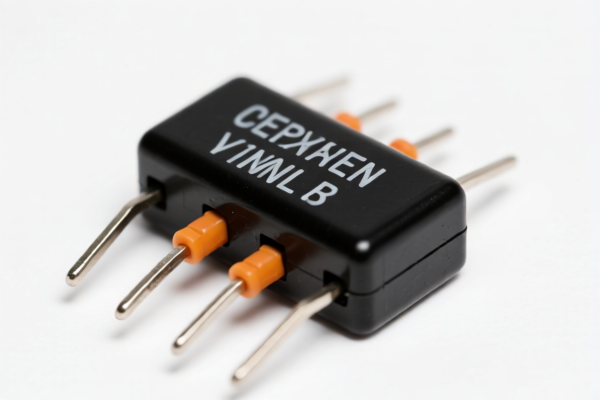
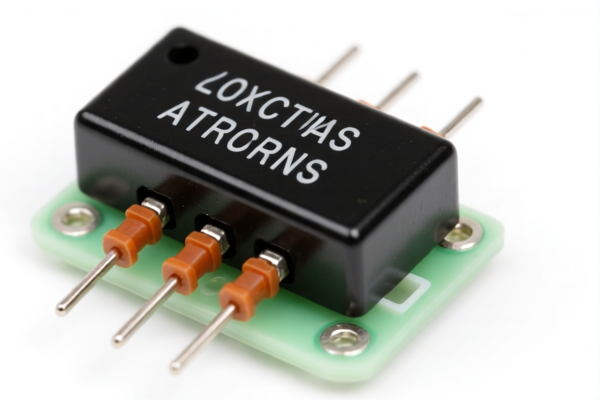
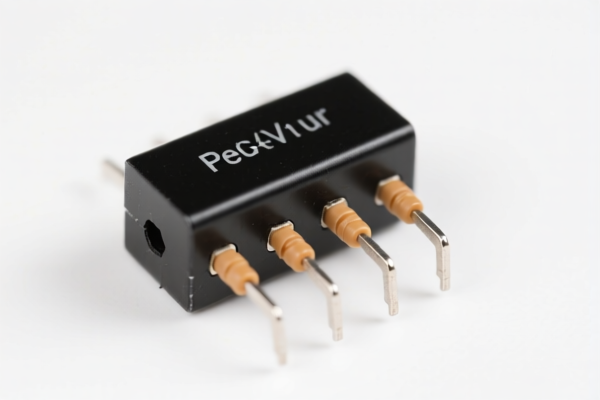
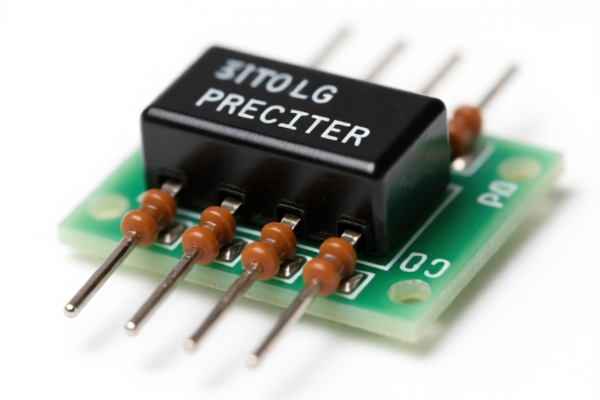
AI Analysis
🔌 Rectifier Bridge (Rectifying Apparatus & Static Converters)
🌐 HS Code Reference & Clearance Guide | 2026 Latest Tariff Analysis | Professional Customs Strategy
📌 I. Product Definition & Classification: Do You Truly Understand "Rectifiers"?
A Rectifier Bridge is an electronic component or assembly used to convert Alternating Current (AC) to Direct Current (DC). In international trade, it falls under the broader category of Static Converters. The critical distinction for customs clearance is whether it is a standalone rectifying unit or part of a larger power supply system.
Key Distinctions: * Standalone Rectifying Apparatus: Discrete components (like bridge rectifiers) or standalone units without specific power output limits or integrated power supply functions → Typically classified under 8504.40.95.50 or general rectifier codes. * Power Supply Units: Rectifiers designed specifically as complete power supplies with defined output power (e.g., ≤ 50W) → Classified under 8504.40.95.10.
⚠️ Critical Differentiation Point:
- If the item is a discrete bridge rectifier (small component) or a general-purpose rectifier without a specified low-power limit, it is classified as "Other Rectifiers".
- If the item is a complete power supply unit (often called a "wall wart" or desktop adapter) with a power output not exceeding 50 W, it is classified as "Power Supplies: With a power output not exceeding 50 W".
📦 II. HS Code Classification Details (2026 Latest Tariff Authority Comparison)
| HS Code | Product Description | Applicable Scenario | Power Output Limit |
|---|---|---|---|
8504.40.95.50 |
Static Converters: Other Rectifiers and rectifying apparatus: Other | General-purpose bridge rectifiers, industrial rectifiers, discrete components, high-power units | No specific ≤50W limit (General "Other") |
8504.40.95.10 |
Static Converters: Other Rectifiers and rectifying apparatus: Power supplies: With a power output not exceeding 50 W | Desktop adapters, small electronic device chargers, low-power AC/DC converters | ≤ 50 W |
🔍 Key Reminder:
- "Rectifier Bridge" alone often points to8504.40.95.50unless it is explicitly marketed and packaged as a low-power power supply (≤50W).
- If the product is a discrete semiconductor bridge (e.g., KBPC5010), it is not a "power supply unit" in the strict customs sense but a "rectifying apparatus," thus falling under8504.40.95.50.
- Do not misclassify a standalone bridge rectifier as a power supply if it lacks the complete casing, output terminals, and certification typical of a power supply unit.
💰 III. 2026 Latest Tariff Rate Details (Including Additional Duties)
✅ Applicable Country: United States (US)
✅ Country of Origin: China (CN)
✅ Effective Date: From November 10, 2025 (including subsequent imports)
🎯 1. 8504.40.95.50 —— Other Rectifiers and Rectifying Apparatus (General)
| Item | Content |
|---|---|
| Base Tariff | 0.0% (ad valorem) |
| Section 301 Additional Duty | +25.0% (USITC Footnote related to Section 301) |
| Total Tariff Rate | 25.0% |
| Tax Calculation | CIF Value × 25% |
| De Minimis Exemption | ❌ Not Applicable (deny_de_minimis for China-origin goods under specific trade actions) |
| Legal Basis Path | USITC:8504.40.95.50 → Section 301: 25% |
📌 Explanation:
- This is the standard classification for general rectifying apparatuses not falling under specific low-power power supply definitions.
- The 25% additional tariff is applied due to Section 301 actions against Chinese imports.
- Base duty is 0%, so the total effective duty is 25%.
🎯 2. 8504.40.95.10 —— Power Supplies (≤ 50 W)
| Item | Content |
|---|---|
| Base Tariff | 0.0% (ad valorem) |
| Section 301 Additional Duty | +25.0% (USITC Footnote related to Section 301) |
| Total Tariff Rate | 25.0% |
| Tax Calculation | CIF Value × 25% |
| De Minimis Exemption | ❌ Not Applicable (deny_de_minimis for China-origin goods) |
| Legal Basis Path | USITC:8504.40.95.10 → Section 301: 25% |
📌 Note:
- If your rectifier bridge is packaged and sold as a low-power power supply (≤50W), it falls under this code.
- The tariff rate is identical (25%) to the general rectifier code in this specific dataset.
- Crucial: Ensure the ≤50W specification is clearly documented in commercial invoices and product datasheets to justify this classification if chosen.
🛠️ IV. Customs Clearance Practical Advice (Real-World Pitfall Avoidance)
✅ 1. Preparation Checklist (Non-Negotiable)
| Document | Mandatory | Description |
|---|---|---|
| ✅ Product Datasheet | ✔️ | Must specify input voltage, output voltage/current, power rating (W), and form factor. |
| ✅ Circuit Diagram | ✔️ | To prove whether it is a discrete component (bridge) or a complete unit (power supply). |
| ✅ Product Photos | ✔️ | Clear shots of the device, including labels showing model number, electrical specs, and certifications (UL, CE, FCC). |
| ✅ Commercial Invoice | ✔️ | Must clearly state "Rectifier Bridge" or "AC/DC Power Supply" and specify power output. |
| ✅ Packing List | ✔️ | Detail quantity, weight, and whether items are components or complete units. |
| ✅ Certificate of Origin | ✔️ | Required for determining origin-based duties. |
✅ 2. Declaration Tips (Key Mnemonics)
🔥 "Bridge = Other Rectifier; Low Power = Supply; Both Pay 25%!"
| Scenario | Correct Declaration | Incorrect Practice |
|---|---|---|
| Discrete Bridge Rectifier Component | 8504.40.95.50 |
Misclassify as "Power Supply" → No change in rate, but risks audit for misdescription. |
| Complete AC/DC Adapter (≤50W) | 8504.40.95.10 |
Misclassify as "Other Rectifier" → No rate change, but may trigger questions on product nature. |
| High-Power Rectifier (>50W) | 8504.40.95.50 |
N/A |
| Mixed Shipment (Components + Adapters) | Separate Lines | Combine on one line → High risk of rejection or penalty. |
✅ 3. Special Cases Handling
| Scenario | Handling Advice |
|---|---|
| OEM Rectifiers | Provide customer order and design specs. Ensure the description matches the technical capability. |
| Rectifiers in LED Drivers | If the rectifier is internal and not sold separately, classify the entire unit based on its primary function (often LED Driver, which may have different tariffs). If sold separately as a bridge, use 8504.40.95.50. |
| High-Frequency Switching Rectifiers | Still classified under 8504.40.95.50 unless they meet the ≤50W power supply definition. |
| Semiconductor Diodes vs. Rectifiers | Simple diodes (8541.10.00.80) are different from Rectifier Bridges (which are assemblies or specific rectifying apparatus). Ensure you are not misclassifying a bridge as a simple diode. |
🌍 V. Global Market Comparison (2026 Latest)
| Country/Region | Recommended HS Code | Tariff (China Origin) | Certification Requirements | Notes |
|---|---|---|---|---|
| 🇺🇸 USA | 8504.40.95.50 or 95.10 |
25% (Additional) | FCC, UL (if applicable) | 25% additional duty applies to both. |
| 🇨🇳 China | 8504.40.95.50 |
5-10% (Import Duty) | CCC (if applicable) | Lower entry barrier for domestic sales. |
| 🇪🇺 EU | 8504.40.95.50 |
0% (Most likely) | CE, RoHS | Generally favorable trade terms for electronics components. |
| 🇬🇧 UK | 8504.40.95.50 |
0% | UKCA | Post-Brexit rules align closely with CE. |
| 🇦🇺 Australia | 8504.40.95.50 |
5% | RCM | Standard duty for electronic components. |
📌 Conclusion:
- USA is the only major market with significant 25% additional tariffs on these goods from China.
- EU and UK generally have 0% or low tariffs, making them more cost-effective for rectifier exports.
- Documentation is Key: Always provide power output specifications to justify the correct HS Code subheading.
📌 VI. Common Errors & Pitfalls (Lessons Learned)
❌ Error 1: Misclassifying a high-power industrial rectifier as a low-power power supply.
👉 Consequence: Customs may reject the declaration or impose penalties for misdeclaration. Even if rates are similar in this dataset, accuracy is vital for compliance.
❌ Error 2: Declaring a discrete bridge rectifier as a "Power Supply".
👉 Consequence: While the tariff may be the same (25%), it misrepresents the product. Customs may request detailed circuit diagrams, causing delays.
❌ Error 3: Ignoring Section 301 Tariffs.
👉 Consequence: Forgetting the 25% additional duty leads to underpayment, resulting in back taxes, fines, and potential cargo detention.
❌ Error 4: Confusing Rectifier Bridges with Diodes.
👉 Consequence: Diodes (8541.10.00.80) also carry a 50% total tariff (0% base + 50% additional). Rectifiers are 25%. Misclassifying a bridge as a diode could lead to overpayment (50% vs 25%), or if the other way around, underpayment risk if rules differ. Verify the 50% vs 25% distinction!
(Note: The provided data shows Diodes at 50% and Rectifiers at 25%. This is a critical cost difference.)
✅ Correct Practice:
"Silicon Bridge Rectifier, KBPC5010, 50A 1000V, Discrete Component, No Integrated Power Supply Function, Model XYZ"
🎯 VII. Conclusion: Professional Declaration Saves Money!
🎯 Remember the Mnemonic:
🔹 "Bridge = 25%, Diode = 50%, Check Power Limit!"
🔹 "HS Code Determines Cost, 25% vs 50% is a Huge Difference!"
📌 Pro Tip:
- If your rectifier is not a simple diode but a rectifying apparatus, ensure it is not misclassified under the higher 50% duty category for semiconductors/diodes.
- For China-origin goods, the 25% additional duty is unavoidable for rectifiers. Consider supply chain diversification if possible to mitigate this cost.
- Always obtain an Advance Ruling from US Customs if the product nature is ambiguous (e.g., is it a component or a power supply?).
📣 Immediate Action:
📞 Contact a licensed customs broker + Provide Product Datasheet + Verify Power Output
🚀 Ensure accurate classification to avoid the 50% trap and manage the 25% additional duty effectively!
✨ Professional Customs Clearance Starts with Accurate Classification!
💼 Your Cost Per Unit Deserves Precision!
Customer Reviews
About HS Code Classification
The Harmonized System (HS) is an internationally standardized nomenclature developed by the World Customs Organization (WCO) to classify traded products. Over 200 countries use the HS system as the basis for customs tariffs, trade statistics, and import/export regulations.
Each HS code follows a hierarchical structure:
- Chapter (2 digits) — Broad category of goods (e.g., Chapter 84: Machinery and Mechanical Appliances)
- Heading (4 digits) — More specific grouping within the chapter
- Subheading (6 digits) — Internationally standardized breakdown, used by all WCO member countries
- National subdivisions (8-10 digits) — Country-specific extensions for further classification, such as US HTSUS 10-digit codes
Correct HS code classification is essential for smooth customs clearance, accurate duty payment, and compliance with trade regulations. Misclassification can lead to customs delays, overpayment of duties, or penalties.
When importing from CN to US, the applicable tariff rates may include:
- Most-Favored-Nation (MFN) rate — The standard duty rate applied to WTO members
- General rate — Applied to countries without trade agreements
- Trade remedy duties — Additional tariffs such as Section 301 (anti-dumping), Section 232 (national security), or countervailing duties
The information provided on this page is for reference purposes only. For official classification, please consult with your local customs authority or a licensed customs broker.