rectifier diode
CN → US| HS Code | Tariff Rate | Origin | Destination | Doc |
|---|---|---|---|---|
| 8542390090 | 60.0% | CN | US | Official Doc |
| 8542390070 | 60.0% | CN | US | Official Doc |
| 8541100080 | 60.0% | CN | US | Official Doc |
| 8541100070 | 60.0% | CN | US | Official Doc |
| 8504409550 | 35.0% | CN | US | Official Doc |
| 8504409510 | 35.0% | CN | US | Official Doc |
Product Images

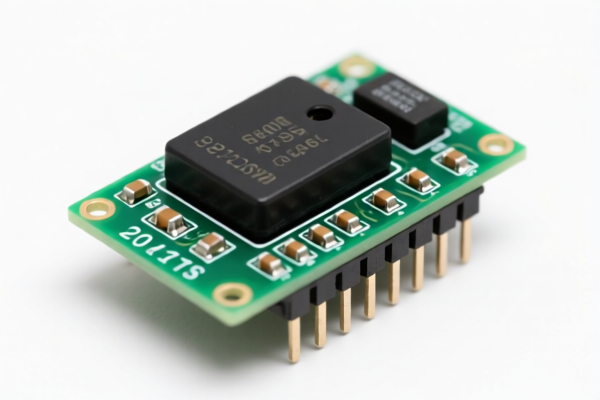


AI Analysis
⚡ Rectifier Diode (Semiconductor Diodes for Power Conversion)
🌐 HS Code Reference & Clearance Guide | 2026 Latest Tariff Analysis | Professional Clearance Strategy
📌 I. Product Definition & Classification: What is a "Rectifier Diode"?
A Rectifier Diode is a semiconductor device (specifically a PN-junction diode) designed primarily to convert alternating current (AC) to direct current (DC). Unlike signal diodes used for small currents, rectifier diodes are engineered to handle higher current loads and reverse voltages.
In international trade, the critical distinction for classification lies in Current Rating:
1. High-Current/General Rectifiers:
Standard diodes with a maximum current exceeding 0.5 A, often used in power supplies, industrial drives, and charging units.
→ 归类 (Classify): 8541.10.00.80 (Other, other: Other)
2. Low-Current Precision Rectifiers:
Specialized diodes with a maximum current of 0.5 A or less, often used in low-power signal rectification, battery charging circuits, or sensitive electronics.
→ 归类 (Classify): 8541.10.00.70 (Other: With a maximum current of 0.5 A or less)
⚠️ Key Classification Distinction:
- Current Rating is King: The 0.5 Ampere threshold is the legal dividing line between these two codes. - Misclassification Risk: Declaring a 0.6A diode under "≤0.5A" to avoid scrutiny, or vice versa, leads to severe penalties. - Application: Whether for a 500W power supply or a 5W sensor circuit, the internal current capacity dictates the HS Code, not the final device it is part of.
📦 II. HS Code Classification Details (2026 Latest Tariff Authority)
Based on the provided data, here are the two specific subheadings for Rectifier Diodes:
| HS Code | Product Description | Current Limit | Application Scenarios |
|---|---|---|---|
8541.10.00.80 |
Diodes, other than photosensitive/LEDs: Other: Other (General Purpose) |
> 0.5 A | High-power power supplies, industrial rectifiers, EV chargers, welding machines |
8541.10.00.70 |
Diodes, other than photosensitive/LEDs: Other: With max current ≤ 0.5 A |
≤ 0.5 A | Low-power electronics, battery management, signal rectification, consumer gadgets |
🔍 Critical Reminder:
- Do NOT confuse with Integrated Circuits (8542): If the diode is part of a packaged IC (e.g., a bridge rectifier chip inside a plastic package with pins), it might fall under8542.39.00.90or8542.39.00.70. - Do NOT confuse with Static Converters (8504): If the diode is inside a completed "Static Converter" (e.g., a full rectifier module with housing), it might be classified under8504.40.95.xxas a part of the converter. - Standalone Component: If you are shipping loose diodes (individual components), use the 8541 codes above.
💰 III. 2026 Latest Tariff Rate Breakdown (Detailed Tax Clauses)
✅ Applicable Market: United States (US)
✅ Origin: China (CN)
✅ Effective Date: Based on 2026 Tariff Schedule (Data:25.0%and50.0%total)
✅ Tax Structure: Base Tariff (0%) + Section 301 / "Add-on" Tariff (Section 232/IEEPA style)
🎯 1. 8541.10.00.70 – Low Current Rectifier Diodes (≤ 0.5 A)
| Item | Content |
|---|---|
| Base Tariff | 0.0% (Standard MFN) |
| "Add-on" Tariff (Section 301/China Specific) | +50.0% |
| Total Effective Tax Rate | 50.0% |
| Tax Calculation | CIF Value × 50% |
| De Minimis Exemption | ❌ NOT APPLICABLE (Strictly controlled semiconductor component) |
| Legal Reference | Derived from: 8541.10.00.70 → Total: 50.0% (Base 0% + Add-on 50%) |
📌 Analysis:
- Despite being "small" electronic components, diodes are treated as high-priority strategic goods. - The 50% tariff is extremely punitive. A $1,000 shipment of low-current diodes incurs $500 in duties alone. - This tax applies regardless of the final device (e.g., a cheap phone charger containing a 0.4A diode).
🎯 2. 8541.10.00.80 – General Purpose Rectifier Diodes (> 0.5 A)
| Item | Content |
|---|---|
| Base Tariff | 0.0% (Standard MFN) |
| "Add-on" Tariff (Section 301/China Specific) | +50.0% |
| Total Effective Tax Rate | 50.0% |
| Tax Calculation | CIF Value × 50% |
| De Minimis Exemption | ❌ NOT APPLICABLE |
| Legal Reference | Derived from: 8541.10.00.80 → Total: 50.0% (Base 0% + Add-on 50%) |
📌 Analysis:
- Even for high-power industrial diodes, the tariff hits the same 50% ceiling. - There is NO differentiation in the tax rate between low-current and high-current diodes in this dataset (both are 50%). - Strategy: You must ensure the 0.5A threshold is documented correctly to avoid misclassification, as the penalty for wrong classification could lead to audits, though the rate itself is the same.
🛠️ IV. Clearance Practical Advice (Pitfall Avoidance)
✅ 1. Preparation Checklist (Non-negotiable)
| Document | Mandatory? | Why? |
|---|---|---|
| ✅ Datasheet / Technical Spec | ✔️ Critical | Must explicitly state "Max Average Forward Rectified Current (Io)" to prove ≤0.5A or >0.5A. |
| ✅ Circuit Diagram | ✔️ | Shows if the diode is a standalone component or part of a larger assembly (IC/Converter). |
| ✅ Product Photos | ✔️ | Must show markings (e.g., "1N4007" = 1A → 80; "1N4148" = 0.15A → 70). |
| ✅ Bill of Materials (BOM) | ✔️ | If shipping a kit, prove the diodes are loose components, not pre-assembled into a module. |
| ✅ Commercial Invoice | ✔️ | Must use precise description: "Silicon Rectifier Diode, Type [X], Current [Y]A". Avoid vague terms like "Electronics". |
✅ 2. Declaration Strategy (The "Golden Rules")
🔥 "Current is King, Markings Matter, Loose vs. Assembled is Key!"
| Scenario | Correct Declaration | Risk if Wrong |
|---|---|---|
| 1N4007 Diode (1 Ampere) | HS: 8541.10.00.80Tax: 50% |
If declared as 70 (≤0.5A), it's Fraud → Seizure + Penalty. |
| 1N4148 Diode (0.15 Ampere) | HS: 8541.10.00.70Tax: 50% |
If declared as 80, you overpay, but Customs may still fine for inaccuracy. |
| Bridge Rectifier Module (4 diodes in a chip) | HS: 8542.39.00.xx (IC) or 8504.40.95.xx (Part of converter) |
Declaring loose diodes as a module might trigger an IC tariff check. |
| Diode inside a Power Supply | HS: 8504.40.95.xx (Part of Converter) |
Declaring as standalone diode while inside a box → Misclassification of "Parts". |
✅ 3. Special Handling for "Packaged" Components
- SMD Packages (Surface Mount): If shipped as "SMD Diodes", ensure the tape/reel specs clearly state the current rating.
- Through-Hole: Ensure the datasheet is attached.
- Integrated Bridge Rectifiers: If the diodes are already packaged as a single unit (e.g., a 4-pin black box), they are likely Integrated Circuits (
8542) or Parts of Converters (8504), NOT8541.10.- Tip: Check if it's a "Bridge Rectifier IC" (
8542) vs. "4 Discrete Diodes" (8541).
- Tip: Check if it's a "Bridge Rectifier IC" (
🌍 V. Global Market Comparison (2026 Context)
| Region | Recommended HS Code | Est. Tariff (China Origin) | Key Challenge |
|---|---|---|---|
| 🇺🇸 USA | 8541.10.00.70 / 80 |
50.0% | High Barrier. 50% makes low-cost diodes unprofitable unless value-added in US. |
| 🇨🇳 China | 8541.10.00.70 / 80 |
0% - 4.5% | Domestic trade or re-export. |
| 🇪🇺 EU | 8541.10.00.70 / 80 |
0% - 2.5% | No Section 301 equivalent. Much cheaper than US. |
| 🇦🇺 Australia | 8541.10.00.70 / 80 |
0% - 5% | Generally low tariffs, focus on safety standards (RCM). |
📌 Strategic Insight:
The US market is effectively closed to direct export of these specific diodes from China due to the 50% tariff.
Solution: Export via Vietnam, Mexico, or Thailand (subject to strict Rules of Origin audits) or value-add the diodes into a final product (e.g., a complete power supply8504) where the tariff might be applied differently (still high at 25%, but the volume/value ratio changes).
📌 VI. Common Errors & "Blood and Tears" Lessons
❌ Error 1: Vague Description
Bad: "Electronics Diodes"
Consequence: Customs cannot verify the current rating. They will assume the worst-case or demand a lab test, causing 2-week delays.
Fix:* "Silicon Rectifier Diode, 1N4004, 1A Max Current".
❌ Error 2: Confusing "Part of a Converter" with "Diode"
Bad: Shipping loose diodes inside a "Power Supply" box, declaring as 8541.
Consequence: If the diodes are pre-installed, they are Parts of Static Converters (8504.40.95.xx). Tax is 25% (vs 50%). But if declared wrong, it's fraud.
Fix:* If the diodes are loose components in a box with no other parts, use 8541. If they are soldered onto a PCB, use 8504 (Parts) or 8504 (Converter).
❌ Error 3: Ignoring the 0.5A Threshold
Bad: Declaring a 0.6A diode as 70 (≤0.5A) to "fit a category".
Consequence: Customs Audit + Seizure. The 50% tariff applies to both categories, so there is no tax benefit, only legal risk.
✅ Correct Workflow:
1. Check Datasheet → Find Io (Max Rectified Current).
2. If Io ≤ 0.5A → 8541.10.00.70 (50% Tax).
3. If Io > 0.5A → 8541.10.00.80 (50% Tax).
4. Ensure Commercial Invoice matches exactly: "Rectifier Diode, 1A, Sillicon".
🎯 VII. Conclusion: The 50% Wall
🎯 Remember the Motto:
🔹 "Diodes are Diodes: 0.5A is the Line, 50% is the Price."
🔹 "Markings Define the Code, Specs Define the Fate."📌 Final Advice:
With a 50% tariff on both sub-categories, exporting rectifier diodes from China to the US is economically unviable unless: 1. The product is Value-Added (e.g., soldered onto a custom PCB with high value). 2. The supply chain is shifted to a non-China country (Vietnam/Mexico) with valid proof of origin. 3. The volume is very high and you are applying for a Section 301 Exclusion (though often difficult for standard components).
📣 Immediate Action Plan:
📞 Verify the exact
Iorating of every SKU.
📝 Label the invoice with "Max Current: X.A".
🚀 Calculate the landed cost:Product Cost + Shipping + Insurance + 50% Duty.
💡 Consider re-routing via a non-China hub to bypass the 50% tariff (if Rules of Origin are met).
✨ Precision Classification = Profitability!
💼 Don't let a 0.5 Amp difference bankrupt your shipment!
Customer Reviews
About HS Code Classification
The Harmonized System (HS) is an internationally standardized nomenclature developed by the World Customs Organization (WCO) to classify traded products. Over 200 countries use the HS system as the basis for customs tariffs, trade statistics, and import/export regulations.
Each HS code follows a hierarchical structure:
- Chapter (2 digits) — Broad category of goods (e.g., Chapter 84: Machinery and Mechanical Appliances)
- Heading (4 digits) — More specific grouping within the chapter
- Subheading (6 digits) — Internationally standardized breakdown, used by all WCO member countries
- National subdivisions (8-10 digits) — Country-specific extensions for further classification, such as US HTSUS 10-digit codes
Correct HS code classification is essential for smooth customs clearance, accurate duty payment, and compliance with trade regulations. Misclassification can lead to customs delays, overpayment of duties, or penalties.
When importing from CN to US, the applicable tariff rates may include:
- Most-Favored-Nation (MFN) rate — The standard duty rate applied to WTO members
- General rate — Applied to countries without trade agreements
- Trade remedy duties — Additional tariffs such as Section 301 (anti-dumping), Section 232 (national security), or countervailing duties
The information provided on this page is for reference purposes only. For official classification, please consult with your local customs authority or a licensed customs broker.