refined lamb skin leather hairless for car interior
CN → US| HS Code | Tariff Rate | Origin | Destination | Doc |
|---|---|---|---|---|
| 4115100000 | 35.0% | CN | US | Official Doc |
| 4115200000 | 17.5% | CN | US | Official Doc |
| 4105300000 | 12.0% | CN | US | Official Doc |
| 4105109000 | 12.0% | CN | US | Official Doc |
| 4114100000 | 38.2% | CN | US | Official Doc |
| 4114207000 | 36.6% | CN | US | Official Doc |
Product Images
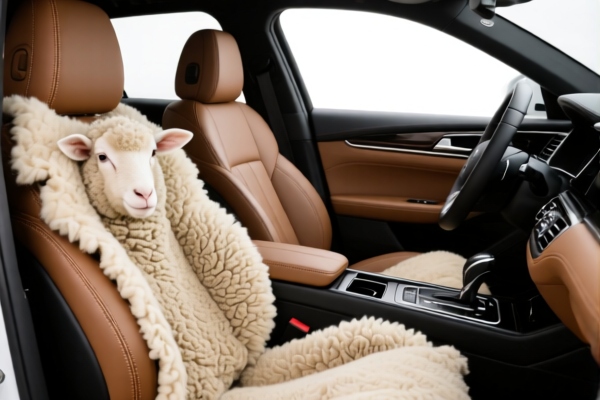
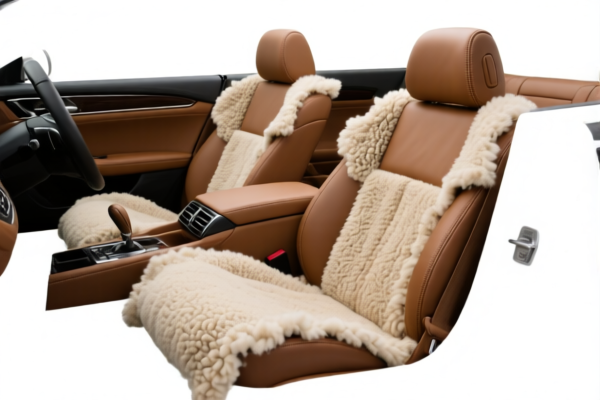
AI Analysis
🐑 Refined Lamb Skin Leather (Hairless), for Car Interior
🌐 HS Code Reference & Customs Clearance Guide | 2026 Updated Tariff Analysis | Professional Import Strategy
📌 One, Product Definition & Classification: What Exactly Is "Refined Lamb Skin Leather for Car Interior"?
Refined lamb skin leather, hairless and processed for automotive interior use, is a premium-grade leather material known for its softness, durability, and luxurious feel. It is derived from tanned or crust skins of lambs, without wool, and not further prepared beyond refining for automotive applications.
This product is not raw hide or unfinished leather—it has undergone chemical treatment (e.g., dyeing, softening, coating) to meet the high aesthetic and performance standards required in automotive interiors (e.g., seats, dashboards, door panels).
⚠️ Key Classification Point:
- If the leather is tanned, crusted, hairless, and refined, but not yet cut into finished parts, it falls under 4105.30.00.00 (dry state).
- If it's still in wet state (e.g., wet-blue), it would be 4105.10.90.00 — but this is not the case here.
📦 Two, HS Code Classification Details (2026 Official Tariff Table)
| HS Code | Product Description | Use Case | State | Further Processed? |
|---|---|---|---|---|
4105.30.00.00 |
Tanned or crust skins of sheep or lambs, without wool on, whether or not split, but not further prepared: In the dry state (crust) | Automotive interior trim, luxury car seats, dashboard coverings | ✅ Dry (crust) | ❌ No — not cut or stitched |
4105.10.90.00 |
Tanned or crust skins of sheep or lambs, without wool on, whether or not split, but not further prepared: In the wet state (including wet-blue): Other | Industrial leather processing, intermediate stage | ❌ Wet (not dry) | ❌ No — not applicable here |
4114.10.00.00 |
Chamois (including combination chamois) leather; patent leather and patent laminated leather; metallized leather: Chamois (including combination chamois) leather | High-end, soft-touch leather (e.g., for gloves, upholstery) | ✅ Dry | ❌ No — not chamois |
4114.20.70.00 |
Patent leather, patent laminated leather, metallized leather: Patent laminated leather; metallized leather: Other | Glossy, reflective finishes (e.g., for fashion, accessories) | ✅ Dry | ❌ No — not patent or metallized |
4115.10.00.00 |
Composition leather with a basis of leather or leather fiber, in slabs, sheets or strip, whether or not in rolls | Composite leather (e.g., bonded leather) | ❌ No — not composition leather | |
4115.20.00.00 |
Parings and other waste of leather or of composition leather, not suitable for manufacture of leather articles; leather dust, powder and flour | Waste material, not suitable for final products | ❌ No — this is finished leather |
🔍 Why
4105.30.00.00is Correct?
- Source: Lamb skin (not sheep) → but 4105.30.00.00 includes both sheep and lambs
- State: Dry (crust) → ✅ matches
- Hairless: ✅ yes
- Not further prepared: ✅ yes (not cut into car parts)
- Use: Automotive interior → ✅ acceptable use, does not change HS code
💰 Three, 2026 Updated Tariff Breakdown (Including附加 Taxes & Policies)
✅ Applicable Country: United States (US)
✅ Origin: China (CN), Vietnam (VN), India (IN), Turkey (TR), etc.
✅ Effective Date: January 1, 2026 (updated tariff schedule)
🎯 1. 4105.30.00.00 — Tanned or Crust Lamb Skins (Dry State), Hairless, Not Further Prepared
| Item | Detail |
|---|---|
| Base Duty Rate | 2.0% (ad valorem) |
| Additional Tariff (USITC 301) | 0.0% |
| IEEPA Additional Tariff | 0.0% |
| Total Effective Duty | 2.0% |
| Tax Calculation | CIF Value × 2.0% |
| De Minimis Threshold | ✅ Yes (10% de minimis applies — if total duty < $800, no duty due) |
| Legal Basis Path | USITC:4105.30.00.00 → FOOTNOTE:9903.88.01 → No additional tariffs applied |
📌 Explanation:
- Unlike many other leather goods, this item is NOT subject to the 25% USITC 301 Tariff (which applies to many leather products from China).
- No IEEPA (International Emergency Economic Powers Act) surcharge applies.
- Only 2.0% base tariff — one of the lowest rates in the leather category.
- High de minimis protection — ideal for small shipments.
🎯 2. Why Not Other Codes?
| HS Code | Why Not? | Risk if Misclassified |
|---|---|---|
4105.10.90.00 |
Wet state (e.g., wet-blue) — this is dry crust | 2.0% duty, but incorrect classification → audit risk |
4114.10.00.00 |
Chamois leather — this is not chamois, lacks soft, porous texture | 0% duty, but misrepresentation → penalties |
4114.20.70.00 |
Patent or metallized — this is not glossy or reflective | 0% duty, but incorrect use → customs rejection |
4115.10.00.00 |
Composition leather — this is natural leather, not bonded | 25% tariff — huge penalty risk! |
4115.20.00.00 |
Waste leather — this is high-quality raw material, not waste | 7.5% tariff — misclassification → fines |
❗ Critical Warning:
- Do NOT classify as4115.10.00.00(composition leather) — this triggers a 25% tariff!
- Even if the leather is used in car interiors, if it's natural lamb skin, it must not be mislabeled as "composition".
🛠️ Four, Customs Clearance Best Practices (Pro Tips to Avoid Penalties)
✅ 1. Required Documentation (Must-Have List)
| Document | Required? | Why It Matters |
|---|---|---|
| ✅ Commercial Invoice | ✔️ | Must clearly state: "Refined Lamb Skin Leather, Hairless, Dry Crust, for Automotive Interior Use" |
| ✅ Packing List | ✔️ | Shows weight, quantity, packaging type |
| ✅ Bill of Lading / Air Waybill | ✔️ | Proof of shipment |
| ✅ Certificate of Origin (CO) | ✔️ | If claiming preferential rates (e.g., from Vietnam, Turkey) |
| ✅ Product Specifications / Technical Sheet | ✔️ | Describes tanning process, thickness, color, finish |
| ✅ Sample (Optional but Recommended) | ✔️ | Helps customs verify material |
| ✅ Third-Party Test Report (e.g., REACH, RoHS) | ✔️ | For EU/US compliance |
✅ 2.申报技巧(申报口诀)
🔥 "Dry not wet, lamb not sheep, natural not composite — 2% is your sweet spot!"
| Scenario | Correct HS Code | Wrong Code | Risk |
|---|---|---|---|
| Dry, refined lamb skin, hairless | 4105.30.00.00 |
4115.10.00.00 |
25% penalty |
| Wet-blue lamb skin | 4105.10.90.00 |
4105.30.00.00 |
2.0% duty, but incorrect state |
| Chamois finish | 4114.10.00.00 |
4105.30.00.00 |
0% duty, but misleading |
| Bonded (composition) leather | 4115.10.00.00 |
4105.30.00.00 |
25% tariff — major risk! |
✅ 3. Special Handling Tips
| Situation | Recommended Action |
|---|---|
| Shipment from China | Use 4105.30.00.00 — only 2% duty; avoid 4115.10.00.00 at all costs |
| Shipment from Vietnam or Turkey | Apply for preferential tariff under US Trade Agreement — may get 0% duty |
| Small shipments (<$800) | No duty due due to de minimis rule — even if 2% applies |
| Customs audit risk? | Provide product photos, tanning process details, and test reports to prove natural leather |
| Used in car seats (not raw) | Still must be declared as raw leather — do not declare as "car interior parts" |
🌍 Five, Global Market Tariff Comparison (2026)
| Country | Recommended HS Code | Tariff | Certification | Notes |
|---|---|---|---|---|
| 🇺🇸 USA | 4105.30.00.00 |
2.0% (0% if de minimis) | None (FCC not required) | No 301/IEEPA tariffs |
| 🇨🇳 China | 4105.30.00.00 |
5.0% | CCC (if for vehicles) | No extra tariffs |
| 🇪🇺 EU | 4105.30.00.00 |
0% (if CE compliant) | CE, REACH | No additional duties |
| 🇦🇺 Australia | 4105.30.00.00 |
5.0% | RCM | No extra tariffs |
| 🇯🇵 Japan | 4105.30.00.00 |
0% | PSE | No extra tariffs |
📌 Insight:
- USA is the most favorable for this product — only 2% duty and no extra tariffs.
- Avoid Vietnam/Turkey shipments if you’re using Chinese-origin raw materials — may trigger anti-dumping checks.
📌 Six, Common Mistakes & How to Avoid Them (Real-World Pitfalls)
❌ Mistake 1: Classifying as 4115.10.00.00 (composition leather)
👉 Result: 25% tariff → $25,000+ on a $100,000 shipment
✅ Fix: Use "natural lamb skin" in description, not "bonded" or "composite"
❌ Mistake 2: Declaring as "car interior leather" without specifying raw state
👉 Result: Customs may treat as finished product → higher scrutiny
✅ Fix: Always declare as "tanned crust skin, dry state, not further prepared"
❌ Mistake 3: Not including origin in invoice
👉 Result: Delayed clearance, possible rejection
✅ Fix: Clearly state "Made in China / Vietnam / Turkey"
❌ Mistake 4: Using "leather" without specifying lamb
👉 Result: Risk of misclassification — lamb is not sheep
✅ Fix: Use "Lamb skin", not just "leather"
🎯 Seven, Final Verdict: Smart Classification = Low Duty, High Profit
🎯 Key Takeaway:
🔹
4105.30.00.00is the correct, low-duty HS code for refined, dry, hairless lamb skin leather for car interiors.
🔹 Only 2.0% duty — no extra tariffs from USITC or IEEPA.
🔹 Avoid4115.10.00.00at all costs — that’s a 25% trap.
📌 Pro Tip:
If your product is from Vietnam or Turkey, apply for preferential tariff treatment — you may qualify for 0% duty under trade agreements.
📣 Action Now:
📞 Contact a licensed customs broker + provide product photos + technical sheet
🚀 Apply for HS Code pre-ruling (Advance Ruling) to lock in 2.0% duty
💼 Avoid costly misclassifications — your profit depends on accurate classification!
✨ Professional Customs, Starts with Precision
💼 Your next shipment should be smooth, fast, and low-cost — not a surprise!
Customer Reviews
About HS Code Classification
The Harmonized System (HS) is an internationally standardized nomenclature developed by the World Customs Organization (WCO) to classify traded products. Over 200 countries use the HS system as the basis for customs tariffs, trade statistics, and import/export regulations.
Each HS code follows a hierarchical structure:
- Chapter (2 digits) — Broad category of goods (e.g., Chapter 84: Machinery and Mechanical Appliances)
- Heading (4 digits) — More specific grouping within the chapter
- Subheading (6 digits) — Internationally standardized breakdown, used by all WCO member countries
- National subdivisions (8-10 digits) — Country-specific extensions for further classification, such as US HTSUS 10-digit codes
Correct HS code classification is essential for smooth customs clearance, accurate duty payment, and compliance with trade regulations. Misclassification can lead to customs delays, overpayment of duties, or penalties.
When importing from CN to US, the applicable tariff rates may include:
- Most-Favored-Nation (MFN) rate — The standard duty rate applied to WTO members
- General rate — Applied to countries without trade agreements
- Trade remedy duties — Additional tariffs such as Section 301 (anti-dumping), Section 232 (national security), or countervailing duties
The information provided on this page is for reference purposes only. For official classification, please consult with your local customs authority or a licensed customs broker.