refined leather packaging
CN → US| HS Code | Tariff Rate | Origin | Destination | Doc |
|---|---|---|---|---|
| 9703100000 | 17.5% | CN | US | Official Doc |
| 4205006000 | 39.9% | CN | US | Official Doc |
| 4114207000 | 36.6% | CN | US | Official Doc |
| 9703900000 | 17.5% | CN | US | Official Doc |
| 4205008000 | 35.0% | CN | US | Official Doc |
Product Images
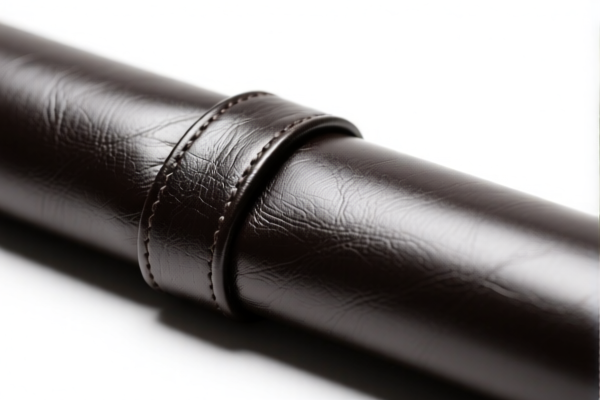
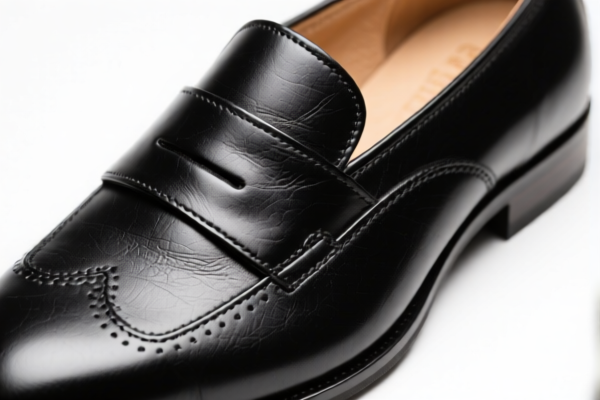
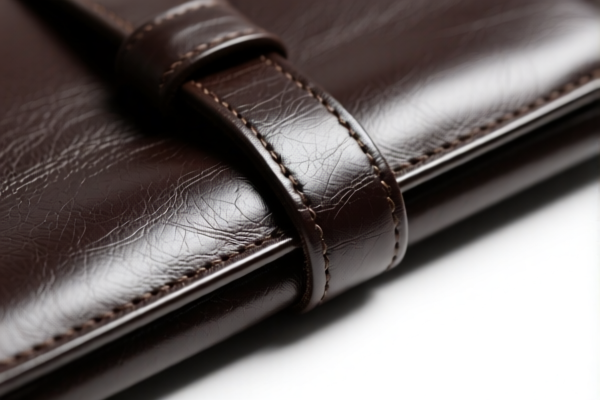

AI Analysis
🎁 Refined Leather Packaging (Artistic Leather Goods)
🌐 HS Code Reference & Customs Clearance Guide | 2026 Latest Tariff Analysis | Professional Strategy for High-Value Artistic Goods
📌 I. Product Definition & Classification: Is it "Art" or "Leather"?
"Refined Leather Packaging" is a ambiguous term that sits at the intersection of functional packaging and artistic expression. In international trade, the classification hinges on two critical factors:
1. Material Composition: Is it primarily leather (Chapter 41/42)?
2. Purpose & Form: Is it a functional container (Chapter 42) or an artistic creation/sculpture (Chapter 97)?
⚠️ Key Distinction Point:
- If the item is a functional box/case for holding items (e.g., jewelry box, book cover) → Classify under Chapter 42 (Leather Articles).
- If the item is a sculpture/statue made of leather where the "packaging" function is secondary to artistic display → Classify under Chapter 97 (Art Works).
- Note: The provided data suggests a strong argument for both, depending on interpretation.
📦 II. HS Code Classification Details (2026 Latest Tariff Alignment)
| HS Code | Product Description | Application Scenario | Tax Rate (Total) |
|---|---|---|---|
9703.10.00.00 |
Sculptures and Statuettes (Any Material) | Artistic leather sculptures where "packaging" is decorative/artistic only | 17.5% |
4205.00.60.00 |
Other Leather Articles (Reptile Skin) | High-end packaging made from reptile/exotic leather; treated as standard leather good | 39.9% |
4114.20.70.00 |
Lacquered or Layered Leather (Other) | Leather treated with lacquer/coating for durability; generic leather classification | 36.6% |
9703.90.00.00 |
Other Works of Art (Any Material) | Artistic leather pieces falling outside "sculpture" but still clearly "art" | 17.5% |
4205.00.80.00 |
Other Leather Articles (Non-Specific) | Generic refined leather packaging not specified elsewhere; final good classification | 35.0% |
🔍 Critical Insight:
- Chapter 97 (Art) offers significantly lower tariffs (17.5%) compared to Chapter 42 (Leather Goods) (35.0%-39.9%).
- However, proving an item is "Art" rather than a "Useful Article" is challenging and requires strong documentation.
💰 III. 2026 Latest Tariff Rate Breakdown (Including Surcharges & Policy Add-ons)
✅ Applicable Country: United States (US)
✅ Origin: China (CN)
✅ Effective Date: Post-November 10, 2025 (Importations subject to current rules)
🎯 1. 9703.10.00.00 & 9703.90.00.00 —— Art Works (Sculptures/Statues)
| Item | Detail |
|---|---|
| Base Tariff | 0% (ad valorem) |
| USITC Surcharge (Section 301) | +7.5% |
| IEEPA Surcharge | +10% |
| Total Effective Rate | 17.5% |
| Calculation | CIF Value × 17.5% |
| De Minimis Eligibility | ❌ No (Deny de minimis for goods subject to Section 301/IEEPA) |
| Legal Basis Path | IEEPA:9903.01.25 → USITC:9703.10.00.00 → FOOTNOTE:9903.88.01 |
📌 Explanation:
- Art works generally have 0% base duty.
- 7.5% is the Section 301 surcharge applicable to this category.
- 10% is the IEEPA surcharge on Chinese goods.
- Total: 17.5%. This is the most cost-effective option if you can legally classify the product as art.
🎯 2. 4205.00.80.00 —— Other Leather Articles (General Packaging)
| Item | Detail |
|---|---|
| Base Tariff | 0% |
| USITC Surcharge (Section 301) | +25% |
| IEEPA Surcharge | +10% |
| Total Effective Rate | 35.0% |
| Calculation | CIF Value × 35.0% |
| De Minimis Eligibility | ❌ No |
| Legal Basis Path | IEEPA:9901.25 → USITC:4205.00.80.00 → FOOTNOTE:9903.88.01 |
📌 Explanation:
- Standard leather articles often have 0-4.9% base duty depending on specific leather type.
- 25% is the standard Section 301 surcharge for Chapter 42.
- 10% is the IEEPA surcharge.
- Total: 35.0%. This is the safe, conservative classification for functional packaging.
🎯 3. 4205.00.60.00 —— Reptile Skin Leather Articles
| Item | Detail |
|---|---|
| Base Tariff | 4.9% |
| USITC Surcharge (Section 301) | +25% |
| IEEPA Surcharge | +10% |
| Total Effective Rate | 39.9% |
| Calculation | CIF Value × 39.9% |
| De Minimis Eligibility | ❌ No |
📌 Note:
- If the "Refined Leather" is explicitly reptile skin (e.g., alligator, python), the base duty is higher (4.9%), leading to the highest total tax (39.9%).
- Exotic leather commands higher duties due to regulatory and conservation concerns.
🛠️ IV. Customs Clearance Practical Advice (Avoiding Pitfalls)
✅ 1. Documentation Checklist (Mandatory)
| Document | Requirement | Reason |
|---|---|---|
| ✅ Detailed Product Description | ✔️ | Must clarify if it is "Art" or "Functional Pack" |
| ✅ High-Resolution Photos | ✔️ | Show artistic details, signatures, or lack of functional use |
| ✅ Artist Statement/Portfolio | ✔️ | Crucial for claiming 9703 (Art) classification |
| ✅ Material Certification | ✔️ | Prove leather type (e.g., "Vegan Leather," "Cowhide," "Exotic") |
| ✅ Commercial Invoice | ✔️ | Value must match CIF; description must align with HS Code |
| ✅ Packing List | ✔️ | Ensure no mixed shipments that confuse customs |
✅ 2. Classification Strategy (Critical Decision Tree)
| Scenario | Recommended HS Code | Why? |
|---|---|---|
| Artistic Sculpture/Packaging | 9703.10.00.00 or 9703.90.00.00 |
Lower tax (17.5%); requires proof of artistic intent |
| High-End Functional Box | 4205.00.80.00 |
Safe classification; higher tax (35.0%); no artistic proof needed |
| Exotic/Reptile Leather Case | 4205.00.60.00 |
Mandatory if material is reptile skin; highest tax (39.9%) |
| Lacquered/Coated Leather | 4114.20.70.00 |
If process involves heavy lacquer/layering |
🔥 "Art vs. Article" Tip:
- If the item can hold items (e.g., a box for jewelry), customs may reclassify it as 4205 (Leather Article).
- To claim 9703 (Art), the item must be primarily display-only or have minimal functional use.
- Example: A leather-wrapped sculpture of a horse → 9703. A leather box for cigars → 4205.
✅ 3. Special Handling & Risks
| Risk | Mitigation Strategy |
|---|---|
| Misclassification Audit | If declared as Art (9703) but found functional (4205), pay back taxes + penalties. Solution: Provide artist statements, exhibition photos, and high price points to justify "Art" status. |
| Leather Origin Fraud | Ensure leather is not from banned sources (e.g., endangered species). Solution: CITES permits if applicable. |
| IEEPA/301 Surcharge | These are non-negotiable for Chinese-origin goods. Factor 35-40% into cost. |
| De Minimis Waiver | Do not use Section 321 (de minimis) for shipments >$800 if classified under these codes. It is explicitly denied. |
🌍 V. Global Market Comparison (2026 Update)
| Country/Region | Recommended HS Code | Total Tax (China Origin) | Notes |
|---|---|---|---|
| 🇺🇸 USA | 9703.10.00.00 (Art) |
17.5% | Lowest tax if classified as art. High scrutiny. |
| 🇺🇸 USA | 4205.00.80.00 (Leather) |
35.0% | Standard rate for functional leather goods. |
| 🇪🇺 EU | 9703.00.00 |
0% + VAT | No Section 301/IEEPA. Lower barrier. |
| 🇨🇳 China | 9703.10.00 |
0% | No import tax on art works. |
| 🇬🇧 UK | 9703.00.00 |
0% | Post-Brexit, art imports often zero-rated. |
📌 Conclusion:
- US Market: Hardest due to 35-40% total tax for leather, 17.5% for art.
- EU/UK: Preferable for leather goods due to 0% base duty.
- Strategy: If selling to US, consider classifying as Art if possible, or raise prices to absorb 35% duty.
📌 VI. Common Mistakes & Pitfalls (Blood & Tears)
❌ Mistake 1: Calling a functional jewelry box "Art" without proof.
👉 Result: Customs reclassifies to 4205.00.80.00 → Pay difference (17.5% → 35.0%) + penalties.
❌ Mistake 2: Ignoring "Reptile Skin" label.
👉 Result: If material is exotic, 4205.00.60.00 applies (39.9%). Mislabeling as "Cowhide" leads to fraud charges.
❌ Mistake 3: Assuming "Leather" means low tax.
👉 Result: Due to Section 301 + IEEPA, leather goods face 35-40% tax in the US. Not "duty-free."
❌ Mistake 4: Using de minimis (Section 321) for shipments.
👉 Result: Goods subject to IEEPA/301 are excluded from de minimis. Shipment will be seized or taxed.
✅ Best Practice:
"Artistic Leather Sculpture, Non-Functional, Handcrafted, Signed by Artist, Model XYZ"
vs.
"Leather Jewelry Box, Lined, Functional, Model ABC"
🎯 VII. Conclusion: Professional Classification, Maximize Profit
🎯 Remember:
🔹 "Art is 17.5%, Leather is 35%+. Choose wisely."
🔹 "Prove the Art, Save the Tax. Functionality Kills the Art Claim."
🔹 "No De Minimis for Leather/Art from China. Plan accordingly."
📌 Pro Tip:
If your "Refined Leather Packaging" is truly functional, expect 35% tax.
If it is purely artistic, aim for 17.5% but have strong artistic documentation.
For US Market, consider sourcing leather from non-China origins to avoid IEEPA surcharges, though Section 301 may still apply.
📣 Immediate Action:
📞 Consult a Customs Broker for Advance Ruling if value is high.
📸 Keep Artist Statements and High-Res Photos ready for customs inspections.
🚀 Accurate Classification = Cost Savings + Smooth Clearance.
✨ Professional Customs Clearance Starts with Precision!
💼 Every Dollar in Duty Saved is Pure Profit.
Customer Reviews
About HS Code Classification
The Harmonized System (HS) is an internationally standardized nomenclature developed by the World Customs Organization (WCO) to classify traded products. Over 200 countries use the HS system as the basis for customs tariffs, trade statistics, and import/export regulations.
Each HS code follows a hierarchical structure:
- Chapter (2 digits) — Broad category of goods (e.g., Chapter 84: Machinery and Mechanical Appliances)
- Heading (4 digits) — More specific grouping within the chapter
- Subheading (6 digits) — Internationally standardized breakdown, used by all WCO member countries
- National subdivisions (8-10 digits) — Country-specific extensions for further classification, such as US HTSUS 10-digit codes
Correct HS code classification is essential for smooth customs clearance, accurate duty payment, and compliance with trade regulations. Misclassification can lead to customs delays, overpayment of duties, or penalties.
When importing from CN to US, the applicable tariff rates may include:
- Most-Favored-Nation (MFN) rate — The standard duty rate applied to WTO members
- General rate — Applied to countries without trade agreements
- Trade remedy duties — Additional tariffs such as Section 301 (anti-dumping), Section 232 (national security), or countervailing duties
The information provided on this page is for reference purposes only. For official classification, please consult with your local customs authority or a licensed customs broker.