refractory cement phosphate
CN → US| HS Code | Tariff Rate | Origin | Destination | Doc |
|---|---|---|---|---|
| 2835295100 | 39.1% | CN | US | Official Doc |
| 3824500050 | 35.0% | CN | US | Official Doc |
| 3824405000 | 40.0% | CN | US | Official Doc |
| 6815994110 | 35.0% | CN | US | Official Doc |
Product Images
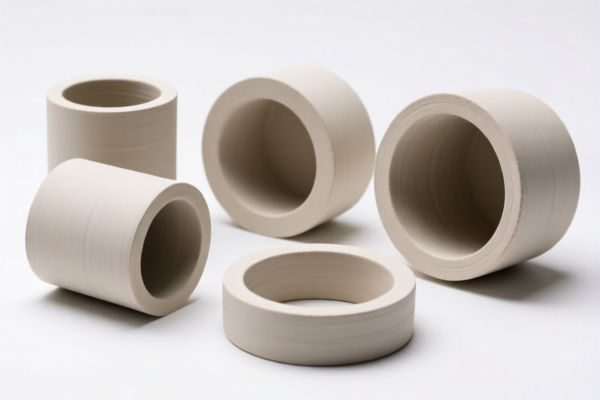
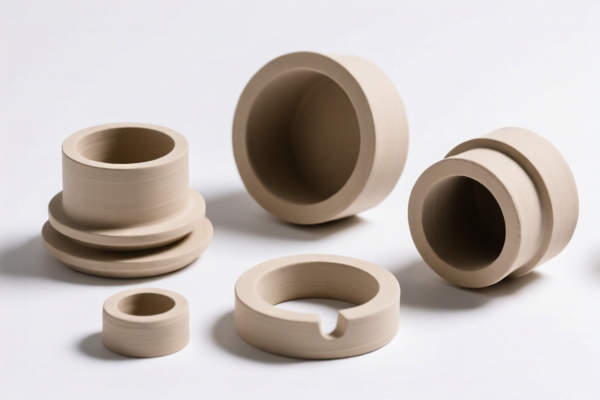
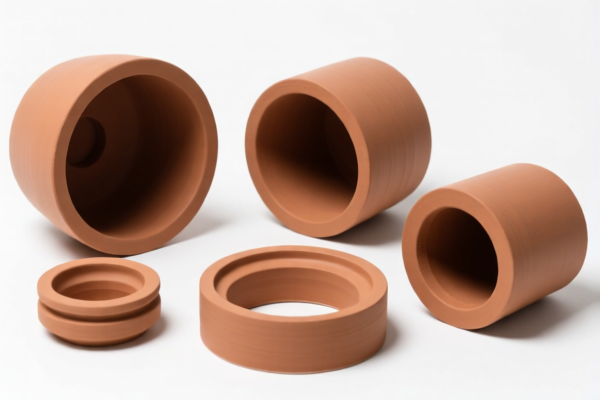

AI Analysis
🔥 Refractory Cement Phosphate: The Heat-Resistant Hero of Industrial Maintenance
🌐 HS Code Reference & Customs Clearance Guide | 2026 Latest Tariff Analysis | Professional Clearance Strategy 📌 I. Product Definition & Classification: What is "Refractory Cement Phosphate"?
Refractory Cement Phosphate is a specialized chemical binding agent and repair material used in high-temperature industrial environments (such as kilns, furnaces, and boilers). It is primarily composed of phosphate salts (such as aluminum phosphate or magnesium phosphate) mixed with refractory aggregates. Its key characteristics include: * High Temperature Resistance: Stable under extreme heat where ordinary Portland cement fails. * Chemical Resistance: Resistant to acidic and alkaline corrosion. * Form: Typically supplied as a powder (for mixing with water) or a ready-to-use repair mortars/plasters.
⚠️ Key Distinction: * If the product is explicitly a chemical salt in raw form → It falls under Chapter 28 (Inorganic Chemicals). * If the product is a prepared mixture or repair mortar → It falls under Chapter 38 (Miscellaneous Chemical Products) or Chapter 68 (Mineral Products).
📦 II. HS Code Classification Details (Based on Provided Data)
The following classification options are derived strictly from the provided set. Each code represents a different interpretation of the product's primary function (chemical vs. repair material vs. mineral product).
| HS Code | Product Description & Logic | Tax Rate (Total) |
|---|---|---|
2835.29.51.00 |
Phosphates (Other): Explicitly identified as containing "phosphate" material. Classified under "Other" products within the phosphate category. | 39.1% |
3824.50.00.50 |
Prepared Chemical Preparations: Fits the definition of chemical industry preparations. The "repair mortar" form is treated as a non-specific chemical product. | 35.0% |
3824.40.50.00 |
Ready-Mixed Mortars/Concrete Additives: Interpreted as a prepared additive for cement/concrete or refractory materials. Aligns with chemical industrial preparations logic. | 40.0% |
6815.99.41.10 |
Mineral Product Articles (Refractory): Classified as a mineral substance article. The phosphate material is considered consistent with mineral product attributes (refractory nature). | 35.0% |
💰 III. 2026 Latest Tariff Rate Breakdown
✅ Applicable Country: United States (US) ✅ Origin: China (CN) ✅ Effective Time: Current regulations apply (referencing 25% Section 301 and 10% Section 122 duties).
🎯 1. 2835.29.51.00 —— Phosphates (Other)
| Item | Details |
|---|---|
| Base Tariff | 4.1% |
| Section 301 (Added Duty) | +25.0% |
| Section 122 Duty | +10.0% |
| Total Tariff Rate | 39.1% |
| Calculation Basis | CIF Value × 39.1% |
| De Minimis Exemption | ❌ Not Eligible (High tariff rates exclude this from standard de minimis thresholds). |
📌 Explanation: * This classification treats the product as a raw or semi-processed inorganic chemical. * The 4.1% base rate is standard for phosphates. * The 25% and 10% additional duties significantly increase the landed cost.
🎯 2. 3824.50.00.50 —— Prepared Chemical Preparations
| Item | Details |
|---|---|
| Base Tariff | 0.0% |
| Section 301 (Added Duty) | +25.0% |
| Section 122 Duty | +10.0% |
| Total Tariff Rate | 35.0% |
| Calculation Basis | CIF Value × 35.0% |
| De Minimis Exemption | ❌ Not Eligible |
📌 Explanation: * This is often a more favorable classification if the product is deemed a "prepared chemical preparation" rather than a pure chemical. * The 0% base rate helps offset the high additional duties, resulting in the lowest total tax among the options.
🎯 3. 3824.40.50.00 —— Ready-Mixed Mortars/Concrete Additives
| Item | Details |
|---|---|
| Base Tariff | 5.0% |
| Section 301 (Added Duty) | +25.0% |
| Section 122 Duty | +10.0% |
| Total Tariff Rate | 40.0% |
| Calculation Basis | CIF Value × 40.0% |
| De Minimis Exemption | ❌ Not Eligible |
📌 Explanation: * This classification assumes the product is a construction additive or mortar. * It has the highest total tax (40%) due to the higher base rate (5%). * Risk: Customs may scrutinize this if the product is marketed primarily as a "refractory" item rather than a "concrete additive."
🎯 4. 6815.99.41.10 —— Mineral Product Articles (Refractory)
| Item | Details |
|---|---|
| Base Tariff | 0.0% |
| Section 301 (Added Duty) | +25.0% |
| Section 122 Duty | +10.0% |
| Total Tariff Rate | 35.0% |
| Calculation Basis | CIF Value × 35.0% |
| De Minimis Exemption | ❌ Not Eligible |
📌 Explanation: * This classification views the product as a mineral article (refractory material). * Like
3824.50.00.50, it benefits from a 0% base rate. * However, it requires proof that the product is a finished "article" or "product" of mineral substances, not just a chemical mixture.
🛠️ IV. Customs Clearance Practical Advice (Battle-Tested Guide)
✅ 1. Documentation Checklist (Must-Haves)
| Document | Required? | Explanation |
|---|---|---|
| ✅ Product Specification Sheet | ✔️ | Must detail chemical composition (e.g., % of phosphate, binder type), temperature resistance range, and physical form (powder/paste). |
| ✅ Certificate of Analysis (COA) | ✔️ | Proves the chemical content matches the declared HS Code (e.g., proves it's a "preparation" if claiming 3824). |
| ✅ Product Photos (Label/Packaging) | ✔️ | Show clear branding, usage instructions (e.g., "For Kiln Repair"), and hazard symbols if any. |
| ✅ Safety Data Sheet (SDS) | ✔️ | Required for chemical imports. Check Section 15 for transport classification. |
| ✅ Commercial Invoice | ✔️ | Must clearly state: "Refractory Cement, Phosphate-Based, For Industrial Kiln Repair." Avoid vague terms like "Cement." |
| ✅ Packing List | ✔️ | Detail net/gross weight. Ensure weight matches declaration. |
✅ 2. Declaration Tips (Key Strategies)
🔥 "Function Dictates Code: Repair vs. Raw Chemical"
| Scenario | Recommended HS Code | Why? |
|---|---|---|
| Product is a ready-to-use repair mortar/paste | 3824.50.00.50 |
Best for "preparation" logic. Lowest base tax (0%). |
| Product is a raw phosphate salt for mixing | 2835.29.51.00 |
Strictly chemical. Higher base tax (4.1%). |
| Product is marketed as a construction additive | 3824.40.50.00 |
Only if explicitly used with concrete/cement. Highest tax (40%). |
| Product is a finished refractory article/block | 6815.99.41.10 |
Only if it's a shaped mineral product, not just a powder/mix. |
⚠️ Critical Warning: * Do not misdeclare "Refractory Cement" as standard "Portland Cement" (3816.00 or 2523.30). This is a high-audit risk. * Ensure the name on the invoice matches the SDS and product label.
✅ 3. Special Circumstances & Handling
| Situation | Handling Advice |
|---|---|
| OEM/Custom Formula | Provide the chemical formula and ingredient list to CBP to justify "prepared preparation" (3824) over "raw chemical" (2835). |
| Combined Shipment | If mixed with non-refractory tools, declare them separately to avoid contamination of the chemical classification. |
| Hazardous Material? | If the phosphate salt is classified as hazardous (e.g., corrosive), ensure proper DOT/UN packaging and labeling. |
| Anti-Dumping/Countervailing | Check if specific phosphate products from China face AD/CVD. (Currently, no specific AD/CVD for phosphates listed in data, but always verify). |
🌍 V. Global Market Comparison (2026 Perspective)
| Country/Region | Recommended HS Code | Est. Tariff (China Origin) | Key Requirement | Note |
|---|---|---|---|---|
| 🇺🇸 USA | 3824.50.00.50 |
35.0% | SDS, COA, Detailed Specs | Lowest tax among options; requires "prepared" proof. |
| 🇨🇳 China | 3824.50.00.50 |
6.5% | HS Code Match | No Section 301/122 duties. |
| 🇪🇺 EU | 3824.50.00.50 |
6.4% | REACH Registration | Phosphates may require REACH registration for chemicals. |
| 🇬🇧 UK | 3824.50.00.50 |
6.4% | UK REACH | Post-Brexit regulations apply. |
| 🇦🇺 Australia | 3824.50.00.50 |
5.0% | NICER | No additional tariffs for China. |
📌 Conclusion: * The USA is the most complex market due to Section 301 (25%) and Section 122 (10%) duties. *
3824.50.00.50is the strategic choice for the US due to the 0% base rate, minimizing total tax to 35%. *2835.29.51.00is safer if the product is purely chemical but costs 4% more in total tax.
📌 VI. Common Errors & Pitfalls (Learn from Mistakes)
❌ Error 1: Declaring as "Cement" (2523.30) 👉 Consequence: Misclassification. Refractory phosphate cement is not Portland cement. High risk of audit and penalties.
❌ Error 2: Ignoring Section 122 Duty 👉 Consequence: Underpayment. If the product is deemed a "chemical product" or "refractory," the 10% Section 122 duty applies. Always include it in cost calculations.
❌ Error 3: Vague Description ("Chemical Mix") 👉 Consequence: Customs may select for exam. Require SDS, COA, and detailed specs to prove classification.
❌ Error 4: Assuming De Minimis Applies 👉 Consequence: Packages under $800 may still be denied entry if they contain restricted chemicals or if the duty rate is too high. Check current de minimis thresholds.
✅ Correct Practice:
"Refractory Repair Mortar, Phosphate-Based, for Kiln Maintenance, High-Temperature Resistant, Powder Form"
🎯 VII. Conclusion: Smart Classification Saves Money
🎯 Remember:
🔹 "0% Base Rate Wins: Aim for 3824 over 2835 if it's a prepared mix." 🔹 "Section 301 + 122 = 35% Minimum. Don't get stuck at 40%." 🔹 "Documentation is Key: SDS, COA, and Specs prevent delays."
📌 Pro Tip:
If you are importing large volumes, consider applying for a Binding Ruling from US Customs and Border Protection (CBP) to lock in the 35.0% rate under
3824.50.00.50and avoid future disputes.
📣 Immediate Action:
📞 Consult a Customs Broker to review your product specifications. 📄 Prepare SDS and COA before shipping. 🚀 Optimize your HS Code to minimize total landed cost.
✨ Professional Clearance Starts with Accurate Classification! 💼 Every dollar saved on duty is pure profit!
Customer Reviews
About HS Code Classification
The Harmonized System (HS) is an internationally standardized nomenclature developed by the World Customs Organization (WCO) to classify traded products. Over 200 countries use the HS system as the basis for customs tariffs, trade statistics, and import/export regulations.
Each HS code follows a hierarchical structure:
- Chapter (2 digits) — Broad category of goods (e.g., Chapter 84: Machinery and Mechanical Appliances)
- Heading (4 digits) — More specific grouping within the chapter
- Subheading (6 digits) — Internationally standardized breakdown, used by all WCO member countries
- National subdivisions (8-10 digits) — Country-specific extensions for further classification, such as US HTSUS 10-digit codes
Correct HS code classification is essential for smooth customs clearance, accurate duty payment, and compliance with trade regulations. Misclassification can lead to customs delays, overpayment of duties, or penalties.
When importing from CN to US, the applicable tariff rates may include:
- Most-Favored-Nation (MFN) rate — The standard duty rate applied to WTO members
- General rate — Applied to countries without trade agreements
- Trade remedy duties — Additional tariffs such as Section 301 (anti-dumping), Section 232 (national security), or countervailing duties
The information provided on this page is for reference purposes only. For official classification, please consult with your local customs authority or a licensed customs broker.