refractory ramming material corrosion resistant
CN → US| HS Code | Tariff Rate | Origin | Destination | Doc |
|---|---|---|---|---|
| 6815994110 | 35.0% | CN | US | Official Doc |
| 6815910011 | 35.0% | CN | US | Official Doc |
Product Images
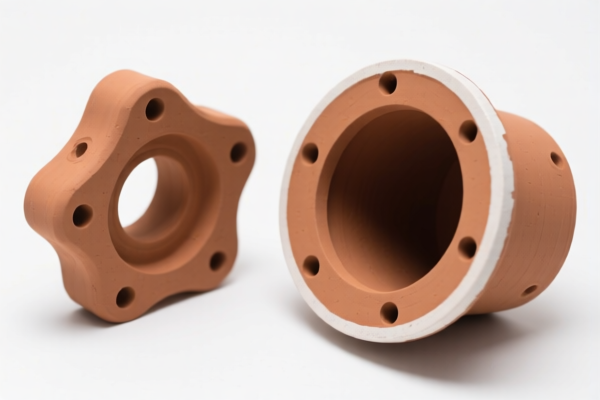
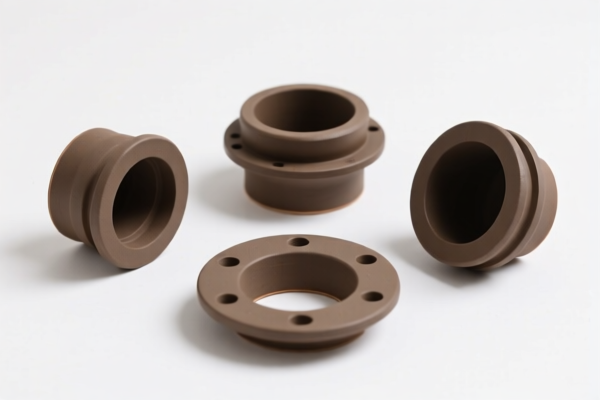
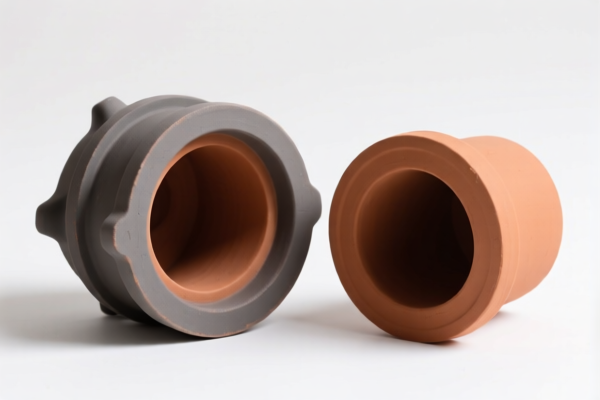
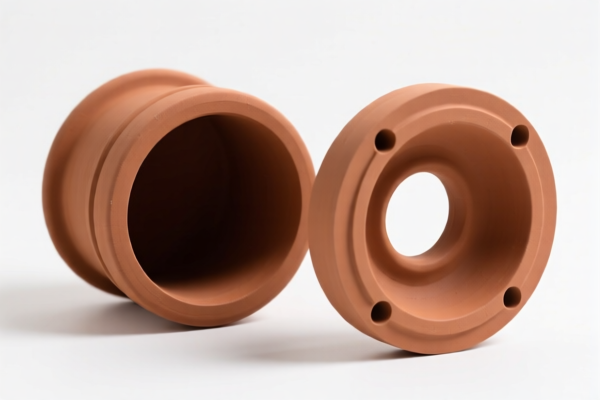
AI Analysis
🧱 Refractory Ramming Material Corrosion Resistant (MgO-Based)
🌐 HS Code Reference & Customs Clearance Guide | 2026 Latest Tariff Analysis | Professional Clearance Strategy
📌 1. Product Definition & Classification: What is "Corrosion-Resistant Ramming Material"?
Refractory Ramming Material is a dry, granular mixture of refractory aggregates, powders, and binders, designed to be rammed (compacted) into place to form a monolithic lining in industrial furnaces, kilns, or reactors. It does not use pre-formed bricks.
"Corrosion Resistant" in this context usually refers to materials with high chemical stability against slag and molten metal penetration. However, the critical customs classification factor is not just "corrosion resistance," but the chemical composition (Magnesia content) and the binding agent.
According to the provided data, these products fall under Chapter 68 (Articles of stone or of other mineral substances). The specific classification depends heavily on: 1. Magnesia (MgO) Content: Must be >70% by weight. 2. Carbon Content: Ranges from trace amounts to <30%. 3. Binding Agent: Chemically bonded by resin or pitch.
⚠️ Key Distinction:
- If the product contains >70% MgO, <30% Carbon, and is bonded with resin/pitch → It is classified under HS 6815.91.00.11 or 6815.99.41.10.
- If it is bonded with cement, clay, or other non-resin/pitch binders, it may fall under different subheadings (not covered in the provided DATA).
- If MgO content is ≤70%, it does not qualify for the specific subheadings listed below.
📦 2. HS Code Classification Details (2026 Latest Tariff Authority对照)
Based on the provided data, here are the applicable HS Codes for Refractory Ramming Materials meeting the specific chemical criteria:
| HS Code | Product Description | Key Criteria | Binding Agent |
|---|---|---|---|
6815.99.41.10 |
Other articles of stone/mineral substances: Containing >70% MgO, <30% Carbon, bonded by resin/pitch | MgO >70%, Carbon <30% | Resin or Pitch |
6815.91.00.11 |
Articles containing magnesite, magnesia (periclase), dolomite, or chromite: Containing >70% MgO, <30% Carbon, bonded by resin/pitch | MgO >70%, Carbon <30% | Resin or Pitch |
🔍 Critical Notes:
- Both codes describe products with >70% Magnesia (MgO) and <30% Carbon, chemically bonded by resin or pitch.
-6815.91.00.11is more specific, mentioning magnesite/periclase/dolomite/chromite.
-6815.99.41.10is a broader "Other articles" category but applies to the same chemical profile.
- Do not confuse with "Bricks": Ramming materials are monolithic, not pre-formed bricks. If pre-formed, they might fall under HS 6804 or 6803.
💰 3. 2026 Latest Tariff Rate Detailed Explanation (Including Additional Duties)
✅ Applicable Country: United States (US)
✅ Origin: China (CN)
✅ Effective Date: Current tariffs apply (25% Additional Duty)
🎯 1. 6815.99.41.10 — Refractory Ramming Material (>70% MgO, Resin/Pitch Bonded)
| Item | Content |
|---|---|
| Base Tariff Rate | 0.0% (ad valorem) |
| Section 301 Additional Duty | +25.0% |
| Total Tariff Rate | 25.0% |
| Tax Calculation | CIF Value × 25% |
| De Minimis Exemption | ❌ Not Applicable (Ref 301 duties generally do not apply to de minimis, but commercial shipments are fully taxable) |
| Legal Basis | USITC Tariff Schedule → Section 301 List |
📌 Explanation:
- The base duty is 0%, meaning the product is considered essential or non-sensitive in base trade terms.
- However, due to Section 301 retaliatory tariffs on Chinese goods, an additional 25% is applied.
- Total cost impact: 25% of the CIF value.
- No IEEPA 10% surcharge is listed in the provided data for this specific HS code (unlike electronics). The total is strictly 25%.
🎯 2. 6815.91.00.11 — Magnesite/Periclase Articles (>70% MgO, Resin/Pitch Bonded)
| Item | Content |
|---|---|
| Base Tariff Rate | 0.0% (ad valorem) |
| Section 301 Additional Duty | +25.0% |
| Total Tariff Rate | 25.0% |
| Tax Calculation | CIF Value × 25% |
| De Minimis Exemption | ❌ Not Applicable |
| Legal Basis | USITC Tariff Schedule → Section 301 List |
📌 Note:
- Identical tariff treatment to6815.99.41.10.
- Both codes attract a 25% total duty.
- Ensure the product description explicitly states "Chemically Bonded by Resin or Pitch" to justify this classification.
🛠️ 4. Customs Clearance Practical Advice (Avoiding Pitfalls)
✅ 1. Preparation Checklist (Mandatory)
| Document | Required | Description |
|---|---|---|
| ✅ Technical Data Sheet (TDS) | ✔️ | Must clearly state: - MgO Content (%) (must be >70%) - Carbon Content (%) (must be <30%) - Binding Agent (Resin or Pitch) |
| ✅ Material Safety Data Sheet (MSDSD) | ✔️ | To confirm chemical composition and safety handling. |
| ✅ Certificate of Origin (CO) | ✔️ | To prove origin (China) and apply correct tariff. |
| ✅ Commercial Invoice | ✔️ | Must describe product as "Refractory Ramming Material, Monolithic, MgO-Based, Resin-Bonded". Avoid vague terms like "Industrial Powder." |
| ✅ Packing List | ✔️ | Detail net/gross weight, number of bags, and dimensions. |
✅ 2. Declaration Tips (Key Mantra)
🔥 “MgO >70%, Carbon <30%, Resin/Pitch Bonded, HS 6815, 25% Duty!”
| Scenario | Correct Declaration | Incorrect Practice |
|---|---|---|
| Resin-Bonded Ramming Material | 6815.91.00.11 or 6815.99.41.10 |
Declaring as "Ceramic Powder" (Wrong Chapter) |
| Cement-Bonded Ramming Material | ❌ Not in DATA | Must check other HS codes (e.g., 6815.99.90) |
| High-Carbon Refractory (>30% C) | ❌ Not in DATA | May fall under carbon articles (HS 6815.99.40) |
| Pre-formed Bricks | ❌ Not in DATA | Should be HS 6804 or 6803, not 6815 |
✅ 3. Special Considerations
| Issue | Handling Advice |
|---|---|
| Carbon Content Verification | Provide lab test reports proving Carbon <30%. If >30%, the classification changes. |
| Binding Agent Proof | If the product contains both resin and cement, the primary binder determines classification. Declare the primary binder clearly. |
| Packaging | Ramming materials are hygroscopic. Ensure moisture-proof packaging. Customs may inspect for proper labeling to prevent misdeclaration. |
| Use Case | Declare intended use (e.g., "Lining for Electric Arc Furnaces") to support the "Refractory" classification. |
🌍 5. Global Market Comparison (2026)
| Country/Region | Recommended HS Code | Tariff (China Origin) | Remarks |
|---|---|---|---|
| 🇺🇸 USA | 6815.91.00.11 / 6815.99.41.10 |
25% | Base 0% + 25% Section 301. |
| 🇨🇳 China | 6815.91.00.11 |
Check Local Tariff | Import duty may be low, VAT applies. |
| 🇪🇺 EU | 6815.99.90 (Typical) |
Varies | EU does not have the same 25% blanket tariff as US Section 301. |
| 🇯🇵 Japan | 6815.99.00 |
Varies | May have lower tariffs depending on FTAs. |
📌 Conclusion:
- USA is the key market with 25% additional duty.
- EU and other markets may have lower tariffs, so consider supply chain diversification if exporting to multiple regions.
📌 6. Common Mistakes & Pitfalls (Lessons Learned)
❌ Mistake 1: Declaring as "Ceramic Tiles" or "Bricks"
👉 Consequence: Wrong HS Code, potential penalty, or rejection. Ramming materials are monolithic, not shaped.
❌ Mistake 2: Ignoring Carbon Content
👉 Consequence: If Carbon >30%, the product does not qualify for 6815.91.00.11 or 6815.99.41.10. It may fall under a different code with different duties.
❌ Mistake 3: Vague Description "Industrial Refractory Powder"
👉 Consequence: Customs may hold shipment for classification review, causing delays.
❌ Mistake 4: Not Providing Lab Test Reports
👉 Consequence: Customs may dispute the >70% MgO claim, leading to reclassification and higher duties.
✅ Correct Declaration Example:
"Refractory Ramming Material, Monolithic, Composition: >70% MgO, <30% Carbon, Binders: Resin/Pitch, Packaged in 25kg Bags, for Electric Arc Furnace Lining, Origin: China"
🎯 7. Conclusion: Accurate Classification Saves Money!
🎯 Remember the Mantra:
🔹 "MgO >70%, Carbon <30%, Resin Bonded, HS 6815, 25% Duty!"
🔹 "If Carbon >30% or MgO <70%, Check Other HS Codes!"
🔹 "Declarate 'Ramming Material', Not 'Bricks' or 'Powder'!"
📌 Pro Tip:
- For large shipments, consider applying for an Advance Ruling from US Customs to confirm the HS Code and duty rate.
- Ensure lab test reports are up-to-date and available for inspection.
- If exporting to non-US markets, verify local tariffs, as they may be lower.
📣 Immediate Action:
📞 Contact your customs broker + Provide TDS/MSDS + Confirm HS Code Pre-ruling
🚀 Ensure smooth clearance, avoid delays, and optimize costs!
✨ Professional clearance starts with accurate classification!
💼 Every percent of duty counts!
Customer Reviews
About HS Code Classification
The Harmonized System (HS) is an internationally standardized nomenclature developed by the World Customs Organization (WCO) to classify traded products. Over 200 countries use the HS system as the basis for customs tariffs, trade statistics, and import/export regulations.
Each HS code follows a hierarchical structure:
- Chapter (2 digits) — Broad category of goods (e.g., Chapter 84: Machinery and Mechanical Appliances)
- Heading (4 digits) — More specific grouping within the chapter
- Subheading (6 digits) — Internationally standardized breakdown, used by all WCO member countries
- National subdivisions (8-10 digits) — Country-specific extensions for further classification, such as US HTSUS 10-digit codes
Correct HS code classification is essential for smooth customs clearance, accurate duty payment, and compliance with trade regulations. Misclassification can lead to customs delays, overpayment of duties, or penalties.
When importing from CN to US, the applicable tariff rates may include:
- Most-Favored-Nation (MFN) rate — The standard duty rate applied to WTO members
- General rate — Applied to countries without trade agreements
- Trade remedy duties — Additional tariffs such as Section 301 (anti-dumping), Section 232 (national security), or countervailing duties
The information provided on this page is for reference purposes only. For official classification, please consult with your local customs authority or a licensed customs broker.