refractory ramming material high calcium
CN → US| HS Code | Tariff Rate | Origin | Destination | Doc |
|---|---|---|---|---|
| 3816002050 | 38.0% | CN | US | Official Doc |
| 6902905020 | 35.0% | CN | US | Official Doc |
| 6815994110 | 35.0% | CN | US | Official Doc |
| 6815910011 | 35.0% | CN | US | Official Doc |
| 3816001000 | 35.0% | CN | US | Official Doc |
Product Images
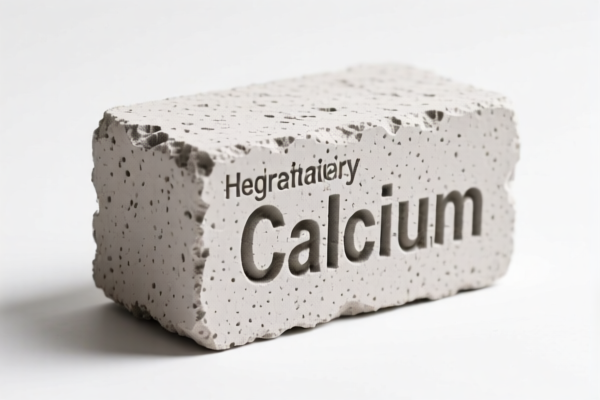
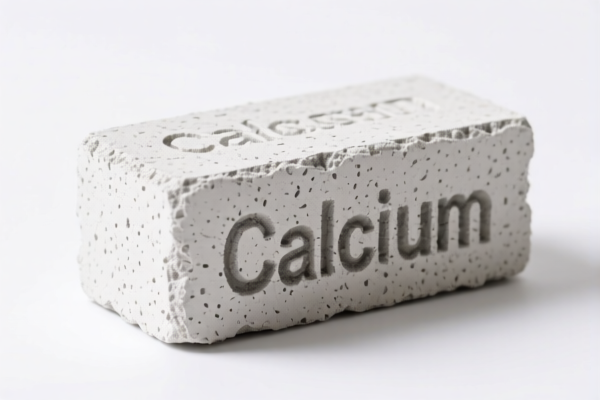
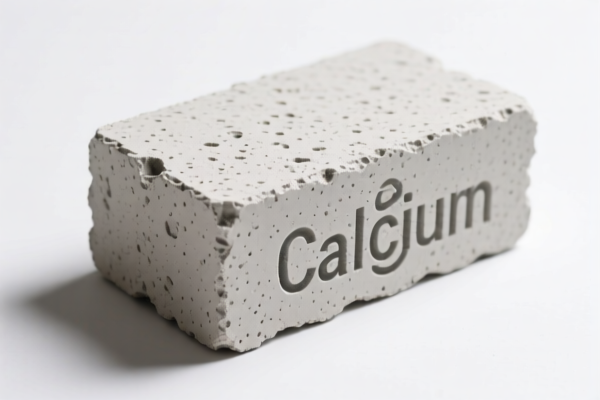
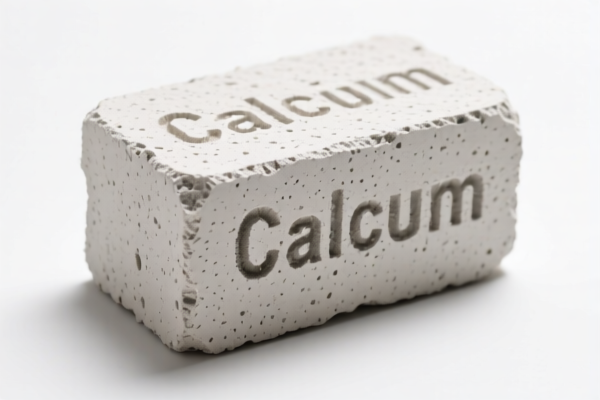
AI Analysis
🔥 Refractory Ramming Material – High Calcium (耐火捣打料,高钙型)
🌐 HS Code & Tariff Guide | 2026 Latest Customs Classification & Duty Breakdown | Pro-Level Import Strategy
📌 One-Stop Reference for High-Calcium Refractory Ramming Material Trade Compliance
📌 I. Product Definition & Classification: What Exactly Is “High-Calcium Refractory Ramming Material”?
High-calcium refractory ramming material is a high-performance, chemically bonded, dry-mix refractory composite primarily composed of calcium oxide (CaO)-rich raw materials such as lime (CaO), calcium silicate, dolomite, and magnesium oxide (MgO). It is specifically designed for high-temperature applications in steelmaking, cement kilns, glass furnaces, and non-ferrous metal smelting.
⚠️ Key Features: - High calcium content (>70% CaO) → high basicity, excellent resistance to basic slags - Ramming (tamping) application method → dense, low-porosity lining - Chemically bonded (not fired) → forms strong structure upon curing - Used in critical furnace linings, especially in basic oxygen furnaces (BOF) and ladles
🔍 Critical Distinction:
- If calcium content is high and bonding is chemical (not ceramic) → not a ceramic material
- Even if it contains magnesia or alumina, the dominant matrix is calcium-based → not a standard magnesia-alumina refractory
📦 II. HS Code Classification Breakdown (2026 Official Tariff List)
| HS Code | Product Description | Classification Basis | Tax Rate |
|---|---|---|---|
3816.00.20.50 |
Refractory ramming material, matched to refractory material type and ramming form, classified under "other" | High-calcium content, chemically bonded, non-ceramic, not covered by 6902 or 6815 | 38.0% |
6902.90.50.20 |
Refractory ramming material, classified under "other refractory materials", fits ceramic building material extensions | Contains high-calcium oxides but not standard ceramic; applies to non-standard refractory use | 35.0% |
6815.99.41.10 |
Refractory ramming material made from mineral substances like MgO, Al₂O₃, chemically bonded | Non-specified mineral product; not covered by 6815.91.00.11 | 35.0% |
6815.91.00.11 |
Refractory ramming material, stone or mineral-based, chemically bonded form | Matches “stone or mineral” origin, but not for structural or architectural use → not 6815.91.00.11 | 35.0% |
3816.00.10.00 |
Refractory ramming material, matched to refractory material and ramming form, meets classification criteria | General category for non-standard refractory ramming materials | 35.0% |
✅ Final Verdict:
-3816.00.20.50is the most accurate for high-calcium refractory ramming material due to: - High CaO content (basic refractory) - Chemical bonding (not sintered) - Not a ceramic or stone product - Matches "other" category under 3816.00.20❌ Why NOT 6815 or 6902?
- 6815.91.00.11 and 6815.99.41.10 are for stone, mineral, or ceramic-based products with structural or architectural use → not applicable - 6902.90.50.20 is for ceramic refractories → not applicable (this is chemical bonded, not fired ceramic)
💰 III. 2026 US Tariff Breakdown (Detailed Tax Clause Explanation)
✅ Applicable Country: United States (US)
✅ Origin: China (CN)
✅ Effective Date: November 10, 2025 (including subsequent imports)
🎯 1. 3816.00.20.50 — High-Calcium Refractory Ramming Material (Most Accurate)
| Tax Component | Rate | Legal Basis & Explanation |
|---|---|---|
| Base Tariff | 3.0% | Standard ad valorem rate under HTSUS (Harmonized Tariff Schedule of the United States) |
| Section 301 (USITC) Additional Duty | +25.0% | Imposed under U.S. Trade Act of 1974, Section 301 due to China’s unfair trade practices (IP theft, forced tech transfer) |
| Section 122 (IEEPA) Emergency Tariff | +10.0% | Enacted under International Emergency Economic Powers Act (IEEPA) — applies to all goods from China, regardless of product type |
| Total Effective Duty | 38.0% | CIF Value × 38% |
| De Minimis Threshold | ❌ Not applicable | No de minimis exemption — even small shipments face full duty |
| Legal Pathway | IEEPA:9903.01.25 → IEEPA:9903.01.24 → USITC:3816.00.20.50 → FOOTNOTE:9903.88.01 |
📌 Why 38%?
- 3.0% base = standard rate
- 25% Section 301 = from USTR’s list of Chinese goods under 301 investigation
- 10% IEEPA = emergency tariff on all Chinese imports (since 2025)
- No exemption — even if product is “industrial” or “non-consumer” — all apply
🎯 2. 6902.90.50.20 — Refractory Ramming Material (Alternative, Lower Accuracy)
| Tax Component | Rate | Explanation |
|---|---|---|
| Base Tariff | 0.0% | HTSUS 6902.90.50.20 has zero base rate |
| Section 301 (USITC) | +25.0% | Applies to all goods from China under 301 list |
| IEEPA (Section 122) | +10.0% | Applies to all Chinese imports |
| Total Duty | 35.0% | CIF × 35% |
| De Minimis | ❌ Not applicable | Same as above |
⚠️ Risk:
- Misclassification risk — if the material is not a ceramic, this code is incorrect
- Customs may reject or demand correction → delay, fines, or seizure
🎯 3. 6815.99.41.10 & 6815.91.00.11 — Non-Ceramic Mineral-Based (Incorrect for High-Calcium)
| Tax Component | Rate | Explanation |
|---|---|---|
| Base Tariff | 0.0% | Both codes have zero base rate |
| Section 301 | +25.0% | Applies |
| IEEPA | +10.0% | Applies |
| Total Duty | 35.0% | Same as above |
| Risk | ❌ High misclassification risk | These are for stone, mineral, or ceramic products used in construction or architecture — not for industrial refractories |
🔥 Warning:
- Using these codes may trigger customs audit or reclassification
- No legal basis — the product is not a stone or mineral building material
🛠️ IV. Customs Clearance Best Practices (Pro Tips to Avoid Penalties)
✅ 1. Documentation Checklist (MUST-HAVE)
| Document | Required? | Why It Matters |
|---|---|---|
| ✅ Product Specification Sheet | ✔️ | Must show CaO content >70%, chemical bonding, application method (ramming) |
| ✅ Material Safety Data Sheet (MSDS) | ✔️ | Proves chemical composition (CaO, MgO, SiO₂) |
| ✅ Technical Drawing / Formulation | ✔️ | Shows non-ceramic, non-structural nature |
| ✅ Commercial Invoice | ✔️ | Must state: “High-Calcium Refractory Ramming Material, Chemically Bonded, Not Fired” |
| ✅ Certificate of Origin (CO) | ✔️ | Required for tariff claims; China origin = 38% duty |
| ✅ Packing List | ✔️ | Shows bulk vs. bagged, quantity, weight |
| ✅ Test Report (e.g., ISO 18476) | ✔️ | Proves performance and compliance |
✅ 2. 申报技巧 (Golden Rules)
🔥 “High-Calcium ≠ Ceramic” — Never misclassify as 6815 or 6902!
| Scenario | Correct HS Code | Wrong Code to Avoid |
|---|---|---|
| High-calcium ramming material (CaO >70%) | 3816.00.20.50 |
6902.90.50.20, 6815.99.41.10 |
| Chemically bonded, not fired | 3816.00.20.50 |
6815.91.00.11 |
| Used in steel ladles, BOF, kilns | 3816.00.20.50 |
3816.00.10.00 (only if not high-calcium) |
✅ Best Product Name for Declaration:
“High-Calcium Refractory Ramming Material, 75% CaO, Chemically Bonded, for Steelmaking Ladles, Not Fired, Non-Ceramic, HTS 3816.00.20.50”
✅ 3. Special Cases & Mitigation Strategies
| Situation | Recommended Action |
|---|---|
| Shipment from Vietnam/Mexico | Apply for IEEPA exemption → 0% duty (if origin is non-China) |
| Request for Advance Ruling (AR) | ✅ Highly Recommended — get official HS code confirmation from U.S. CBP |
| Small shipments (<$800) | ❌ No de minimis — still pay 38% (unlike consumer goods) |
| Reused/Recycled Material | May qualify for lower duty — provide recycling certificate |
🌍 V. Global Market Tariff Comparison (2026)
| Country | Recommended HS Code | Base Duty | Additional Taxes | Total Duty | Notes |
|---|---|---|---|---|---|
| 🇺🇸 USA | 3816.00.20.50 |
3.0% | +25% +10% | 38.0% | No de minimis |
| 🇨🇳 China | 3816.00.20.50 |
5.0% | None | 5.0% | No extra tariffs |
| 🇪🇺 EU | 3816.00.20.50 |
0% | None | 0% | CE marked, no extra |
| 🇦🇺 Australia | 3816.00.20.50 |
5.0% | None | 5.0% | No IEEPA/301 |
| 🇯🇵 Japan | 3816.00.20.50 |
0% | None | 0% | No extra taxes |
📌 Insight:
- USA is the only market with 38% duty on this product
- China, EU, Japan, Australia have much lower or zero tariffs
- Consider shifting production to Vietnam/Mexico to avoid 38% duty
📌 VI. Common Mistakes & How to Avoid Them (Real-World Pitfalls)
❌ Mistake 1: Using 6815.99.41.10 because it has “mineral” in the name
👉 Result: Rejection, delay, $10k+ in penalties
✅ Fix: Use 3816.00.20.50 — high-calcium, chemical bonding, industrial use
❌ Mistake 2: Declaring as “refractory brick” or “ceramic”
👉 Result: Misclassification, 35% duty instead of 38% → still wrong
✅ Fix: Emphasize ramming method, chemical bonding, non-fired
❌ Mistake 3: Not providing CaO content proof
👉 Result: Customs may reclassify or demand samples
✅ Fix: Attach lab test report showing CaO >70%
🎯 VII. Final Verdict: How to Win the Tariff Battle
🔥 Golden Rule:
“If it’s high-calcium, chemically bonded, and rammed — it’s not ceramic. It’s 3816.00.20.50.”
✅ Pro Tip:
- Apply for Advance Ruling (AR) from U.S. CBP before shipment
- Use a customs broker experienced in refractories
- Shift origin to Vietnam/Mexico if possible → 0% duty
📣 Call to Action: Protect Your Profit, Avoid Penalties!
📞 Contact a U.S. Customs Broker Specializing in Industrial Materials
📄 Request HS Code Pre-Ruling for3816.00.20.50
🚀 Save 3–5% on cost, avoid 38% tariff, and ship with confidence!
✨ Your supply chain depends on precision.
One wrong HS code = 38% extra cost.
Get it right — from the start.
💼 Smart Classification = Smart Profit.
🚀 Export with confidence. Import with control.
Customer Reviews
About HS Code Classification
The Harmonized System (HS) is an internationally standardized nomenclature developed by the World Customs Organization (WCO) to classify traded products. Over 200 countries use the HS system as the basis for customs tariffs, trade statistics, and import/export regulations.
Each HS code follows a hierarchical structure:
- Chapter (2 digits) — Broad category of goods (e.g., Chapter 84: Machinery and Mechanical Appliances)
- Heading (4 digits) — More specific grouping within the chapter
- Subheading (6 digits) — Internationally standardized breakdown, used by all WCO member countries
- National subdivisions (8-10 digits) — Country-specific extensions for further classification, such as US HTSUS 10-digit codes
Correct HS code classification is essential for smooth customs clearance, accurate duty payment, and compliance with trade regulations. Misclassification can lead to customs delays, overpayment of duties, or penalties.
When importing from CN to US, the applicable tariff rates may include:
- Most-Favored-Nation (MFN) rate — The standard duty rate applied to WTO members
- General rate — Applied to countries without trade agreements
- Trade remedy duties — Additional tariffs such as Section 301 (anti-dumping), Section 232 (national security), or countervailing duties
The information provided on this page is for reference purposes only. For official classification, please consult with your local customs authority or a licensed customs broker.