refrigerant mixture high reliability
CN → US| HS Code | Tariff Rate | Origin | Destination | Doc |
|---|---|---|---|---|
| 3824995500 | 38.7% | CN | US | Official Doc |
| 3824995000 | 41.5% | CN | US | Official Doc |
| 2903799070 | 38.7% | CN | US | Official Doc |
| 2903490000 | 13.7% | CN | US | Official Doc |
| 2853909090 | 37.8% | CN | US | Official Doc |
Product Images
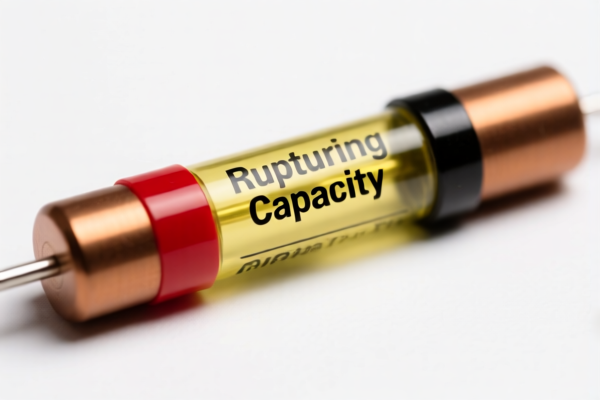
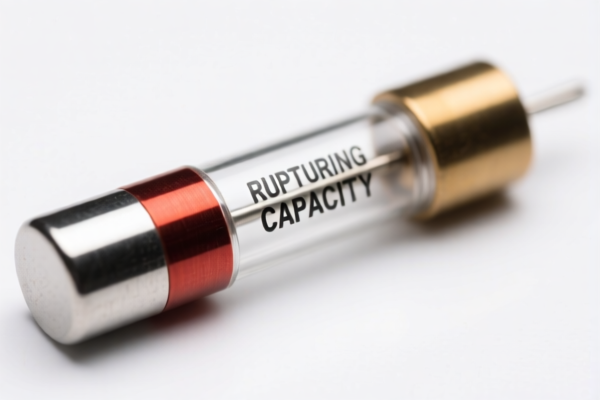
AI Analysis
🌡️ Refrigerant Mixtures with High Reliability
🌐 HS Code Reference & Customs Clearance Guide | 2026 Latest Tariff Analysis | Professional Clearance Strategy
📌 I. Product Definition & Classification: Do You Really Understand "Refrigerant Mixtures"?
Refrigerant mixtures, especially those marketed with "High Reliability," are complex chemical blends used in air conditioning, refrigeration, and industrial cooling systems. In international trade, they are not classified by their function (cooling) but by their chemical composition and atomic structure.
The term "High Reliability" is a marketing descriptor and does not affect HS Code classification. Customs authorities classify these goods based on: 1. Halogen Content: Are they hydrocarbons (HFCs/HFOs) or inorganic? 2. Complexity: Are they single compounds or mixtures? 3. Chemical Nature: Are they organic (carbon-based) or inorganic?
⚠️ Critical Distinction:
- If the mixture is primarily organic halogenated hydrocarbons (e.g., R-404A, R-410A, R-407C) → It falls under Chapter 29 (Organic Chemicals).
- If the mixture is primarily inorganic compounds or complex chemical preparations not specified elsewhere → It may fall under Chapter 38 (Miscellaneous Chemical Products) or Chapter 28 (Inorganic Chemicals).
- "High Reliability" does not grant exemption from duties; it may actually trigger stricter scrutiny if safety data sheets (SDS) are not provided.
📦 II. HS Code Classification Details (2026 Latest Tariff Authority对照)
Based on the provided , here are the five potential HS Codes for "Refrigerant Mixtures" and their corresponding tax structures for US Imports from China:
| HS Code | Product Description & Rationale | Total Tax Rate | Tax Breakdown |
|---|---|---|---|
| 2903.49.00.00 | Lowest Duty Option: Fluorinated/Chlorinated Hydrocarbons Derivatives. Fits "Other Halogenated Derivatives of Hydrocarbons." | 13.7% | Base: 3.7% Add-on (301): 0% 122 Clause: 10% |
| 2903.79.90.70 | High Duty Option: Other Halogenated Derivatives of Acyclic Hydrocarbons (Non-cyclic). Complex mixtures often fall here if not specifically listed. | 38.7% | Base: 3.7% Add-on (301): 25% 122 Clause: 10% |
| 3824.99.55.00 | Medium Duty Option: Chemical Preparations (Halogenated Hydrocarbon Mixtures). Classified as "Other Chemical Preparations" when not specified as pure compounds. | 38.7% | Base: 3.7% Add-on (301): 25% 122 Clause: 10% |
| 2853.90.90.90 | Inorganic Option: Inorganic Compounds (Other). Rare for standard HFC/HFO mixtures, but possible if the mixture is dominated by inorganic salts or non-carbon refrigerants. | 37.8% | Base: 2.8% Add-on (301): 25% 122 Clause: 10% |
| 3824.99.50.00 | Highest Duty Option: Chemical Preparations (General). Used if the mixture does not fit specific hydrocarbon categories and is deemed a "general chemical preparation." | 41.5% | Base: 6.5% Add-on (301): 25% 122 Clause: 10% |
🔍 Key Insight:
- HS 2903.49.00.00 offers the lowest tax burden (13.7%) because it benefits from a 0% Section 301 tariff.
- HS 3824.99.50.00 is the most expensive (41.5%) due to a higher base rate (6.5%) plus full add-ons.
- "High Reliability" implies stability, which often points to precise chemical formulations. If the formulation is a standard HFC blend (like R-410A), 2903.49.00.00 or 2903.79.90.70 are most likely. If it’s a proprietary blend with unknown inorganic stabilizers, 3824 or 2853 might be incorrectly assigned, leading to higher taxes.
💰 III. 2026 Latest Tariff Rate Details (Including Surtaxes & Policy Add-ons)
✅ Applicable Country: United States (US)
✅ Origin: China (CN)
✅ Effective Date: November 10, 2025 (and subsequent imports)
🎯 1. 2903.49.00.00 —— Fluorinated/Chlorinated Hydrocarbon Derivatives (Lowest Risk/Cost)
| Item | Content |
|---|---|
| Base Rate | 3.7% (ad valorem) |
| USITC Surtax (301) | +0.0% (Exempt from 25% Section 301 tariff) |
| Section 122 Surtax | +10% |
| Total Effective Rate | 13.7% |
| Tax Calculation | CIF Value × 13.7% |
| De Minimis Exemption | ❌ Not Applicable (Deny De Minimis for China origin in this category) |
| Legal Basis | USITC:2903.49.00.00 → Section 122:10% |
📌 Explanation:
- This is the preferred classification for most standard refrigerant blends (e.g., R-404A, R-410A) if they are clearly defined as halogenated hydrocarbon derivatives.
- The 0% add-on is crucial, saving 25% compared to other classifications.
- Ensure the product description explicitly states "Halogenated Derivatives of Hydrocarbons" and provide chemical composition analysis.
🎯 2. 2903.79.90.70 —— Other Halogenated Acyclic Hydrocarbon Derivatives
| Item | Content |
|---|---|
| Base Rate | 3.7% |
| USITC Surtax (301) | +25% |
| Section 122 Surtax | +10% |
| Total Effective Rate | 38.7% |
| Tax Calculation | CIF Value × 38.7% |
| De Minimis Exemption | ❌ Not Applicable |
| Legal Basis | USITC:2903.79.90.70 → Section 301:25% → Section 122:10% |
📌 Explanation:
- Applies to complex mixtures that are not specifically listed under 2903.49.
- High tax burden due to full Section 301 penalty.
- Often used for newer, less common refrigerant blends that don't fit the specific subheadings of 2903.49.
🎯 3. 3824.99.55.00 —— Chemical Preparations (Halogenated Hydrocarbon Mixtures)
| Item | Content |
|---|---|
| Base Rate | 3.7% |
| USITC Surtax (301) | +25% |
| Section 122 Surtax | +10% |
| Total Effective Rate | 38.7% |
| Tax Calculation | CIF Value × 38.7% |
| De Minimis Exemption | ❌ Not Applicable |
| Legal Basis | USITC:3824.99.55.00 → Section 301:25% → Section 122:10% |
📌 Explanation:
- Used when the refrigerant is considered a "preparation" (mixture) rather than a pure chemical compound.
- High tax rate. Avoid this if2903classification is possible.
🎯 4. 2853.90.90.90 —— Inorganic Compounds (Other)
| Item | Content |
|---|---|
| Base Rate | 2.8% |
| USITC Surtax (301) | +25% |
| Section 122 Surtax | +10% |
| Total Effective Rate | 37.8% |
| Tax Calculation | CIF Value × 37.8% |
| De Minimis Exemption | ❌ Not Applicable |
| Legal Basis | USITC:2853.90.90.90 → Section 301:25% → Section 122:10% |
📌 Explanation:
- Rare for organic refrigerants. Only applicable if the mixture contains significant inorganic components (e.g., ammonia-water mixtures, though ammonia itself is 2814).
- Be cautious: Misclassifying an organic refrigerant here is a compliance risk.
🎯 5. 3824.99.50.00 —— Chemical Preparations (General)
| Item | Content |
|---|---|
| Base Rate | 6.5% |
| USITC Surtax (301) | +25% |
| Section 122 Surtax | +10% |
| Total Effective Rate | 41.5% |
| Tax Calculation | CIF Value × 41.5% |
| De Minimis Exemption | ❌ Not Applicable |
| Legal Basis | USITC:3824.99.50.00 → Section 301:25% → Section 122:10% |
📌 Explanation:
- Highest Tax Rate.
- Applies to chemical preparations not elsewhere specified.
- Only use if no other chemical classification fits. This is a "catch-all" with the worst cost outcome.
🛠️ IV. Customs Clearance Practical Advice (Battle-Tested Pitfall Avoidance Guide)
✅ 1. Document Checklist (缺一不可)
| Document | Required | Explanation |
|---|---|---|
| ✅ Chemical Composition Analysis | ✔️ | Must list percentages of each component (e.g., R-32: 50%, R-125: 50%). Crucial for determining if it fits 2903.49 or 2903.79. |
| ✅ Safety Data Sheet (SDS) | ✔️ | Proves the nature of the substance (halogenated hydrocarbon vs. inorganic). Required for safety compliance. |
| ✅ Product Specification Sheet | ✔️ | Includes boiling point, pressure, and "High Reliability" test results (thermal stability, etc.). |
| ✅ Commercial Invoice | ✔️ | Must clearly state "Refrigerant Mixture" and HS Code. Avoid vague terms like "Cooling Agent." |
| ✅ Certificate of Origin (CO) | ✔️ | Essential for verifying China origin and applying correct surtaxes. |
| ✅ Third-Party Test Report | ✔️ | ISO/IEC lab reports on chemical purity and composition. |
✅ 2. Declaration Tips (Key Mantra)
🔥 "Composition is King, Halogenated = 2903, Mixtures = 3824, Avoid 41.5%!"
| Scenario | Correct Declaration | Wrong Approach |
|---|---|---|
| Standard HFC Blend (e.g., R-410A) | 2903.49.00.00 (13.7%) |
Misclassifying as 3824 → 38.7%+ |
| New/Complex Blend (Unlisted) | 2903.79.90.70 (38.7%) |
Guessing 2853 → 37.8% (risk of audit) |
| Proprietary "High Reliability" Blend | Provide SDS + Composition to justify 2903 |
Using 3824.99.50.00 → 41.5% (avoid!) |
| Inorganic Mixture (e.g., Ammonia-Water) | 2853.90.90.90 (37.8%) |
Misclassifying as organic → Compliance violation |
📌 Note:
- "High Reliability" must be supported by technical data. If customs suspects the mixture is unstable or hazardous, they may hold the shipment for further testing.
- Always provide molecular formulas for each component in the mixture.
✅ 3. Special Case Handling
| Scenario | Handling Advice |
|---|---|
| OEM Custom Blends | Provide formulation patents or client-specific specs to justify unique classification. |
| Packaged in Cylinders vs. Bulk | Classification remains the same, but hazardous materials declaration (Hazmat) is required for all shipments. |
| Refrigerant with Ozone Depletion Potential (ODP) | Extra documentation may be required under Montreal Protocol compliance. Ensure EPA certification if applicable. |
| New HFO Blends | Often fall under 2903.79.90.70. Check for EPA SNAP approval in the US market. |
🌍 V. Global Market Customs Comparison (2026 Latest)
| Country/Region | Recommended HS Code | Tariff | Certification | Notes |
|---|---|---|---|---|
| 🇺🇸 USA | 2903.49.00.00 |
13.7% (Best Case) | EPA SNAP + SDS | High scrutiny on chemical composition. |
| 🇨🇳 China | 2903.49.00.00 |
~10-15% | CCC (if applicable) | Lower base tariffs, but environmental fees may apply. |
| 🇪🇺 EU | 2903.49.00.00 |
0-6.5% | F-Gas Regulation | Strict F-Gas tracking required. |
| 🇦🇺 Australia | 2903.49.00.00 |
~5-10% | Ozone Protection Act | Similar to EU, requires F-Gas licensing. |
| 🇯🇵 Japan | 2903.49.00.00 |
0-5% | PRTR Law | Reporting on chemical usage may be required. |
📌 Conclusion:
- USA has the highest complexity due to Section 301 and Section 122 tariffs.
- Correct Classification is Critical: A difference of 25% (38.7% vs 13.7%) is significant.
- EU/Australia focus on environmental compliance (F-Gas regulations) rather than just tariff rates.
📌 VI. Common Errors & Pitfall Guide (Lessons Learned)
❌ Error 1: Declaring "Refrigerant" without chemical composition.
👉 Consequence: Customs assigns to 3824.99.50.00 (41.5%) → Overpayment of 27.8%!
❌ Error 2: Using 2853 for organic refrigerants.
👉 Consequence: Audit risk, potential penalties for misclassification, and 37.8% tax instead of 13.7%.
❌ Error 3: Ignoring "High Reliability" technical data.
👉 Consequence: Customs may doubt the chemical stability, leading to shipment detention for lab testing.
❌ Error 4: Failing to provide SDS.
👉 Consequence: Hazmat rejection or delayed clearance due to safety concerns.
✅ Correct Practice:
"Refrigerant Mixture (R-410A), Halogenated Hydrocarbon Derivatives, 50% Difluoromethane, 50% Pentafluoroethane, SDS Attached, EPA SNAP Approved"
🎯 VII. Conclusion: Professional Declaration, Cost Savings, Efficiency!
🎯 Remember the Mantra:
🔹 "Organic Halogen = 2903.49 (13.7%), Mixture = 3824 (38.7%+), Composition is Key!"
🔹 "HS Code Dictates Cost, 25% Surtax Difference, Wrong Code = Bankruptcy!"
📌 Pro Tip:
If your refrigerant mixture is manufactured in Vietnam, Mexico, or Thailand, you may qualify for IEEPA exemptions or lower Section 301 tariffs.
Consider applying for an Advance Ruling (Pre-classification) from US Customs and Border Protection (CBP) to lock in the 13.7% rate for 2903.49.00.00.
📣 Immediate Action:
📞 Contact a licensed customs broker + Provide SDS + Chemical Composition + Apply for HS Code Advance Ruling
🚀 Let your high-reliability refrigerant clear customs smoothly, reduce costs, and maximize profit!
✨ Professional Customs Clearance Starts with Accurate Classification!
💼 Every Cent of Cost Deserves Precision Calculation!
Customer Reviews
About HS Code Classification
The Harmonized System (HS) is an internationally standardized nomenclature developed by the World Customs Organization (WCO) to classify traded products. Over 200 countries use the HS system as the basis for customs tariffs, trade statistics, and import/export regulations.
Each HS code follows a hierarchical structure:
- Chapter (2 digits) — Broad category of goods (e.g., Chapter 84: Machinery and Mechanical Appliances)
- Heading (4 digits) — More specific grouping within the chapter
- Subheading (6 digits) — Internationally standardized breakdown, used by all WCO member countries
- National subdivisions (8-10 digits) — Country-specific extensions for further classification, such as US HTSUS 10-digit codes
Correct HS code classification is essential for smooth customs clearance, accurate duty payment, and compliance with trade regulations. Misclassification can lead to customs delays, overpayment of duties, or penalties.
When importing from CN to US, the applicable tariff rates may include:
- Most-Favored-Nation (MFN) rate — The standard duty rate applied to WTO members
- General rate — Applied to countries without trade agreements
- Trade remedy duties — Additional tariffs such as Section 301 (anti-dumping), Section 232 (national security), or countervailing duties
The information provided on this page is for reference purposes only. For official classification, please consult with your local customs authority or a licensed customs broker.