refurbished rubber spare tire
CN → US| HS Code | Tariff Rate | Origin | Destination | Doc |
|---|---|---|---|---|
| 4005910000 | 35.0% | CN | US | Official Doc |
| 4006901000 | 35.0% | CN | US | Official Doc |
| 4012904500 | 39.2% | CN | US | Official Doc |
| 4012909000 | 37.7% | CN | US | Official Doc |
| 4005200000 | 35.0% | CN | US | Official Doc |
Product Images
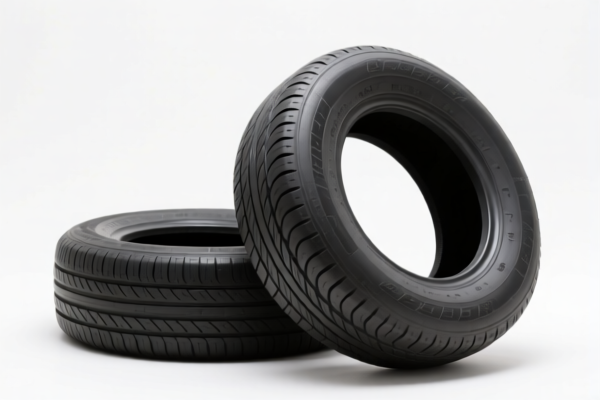
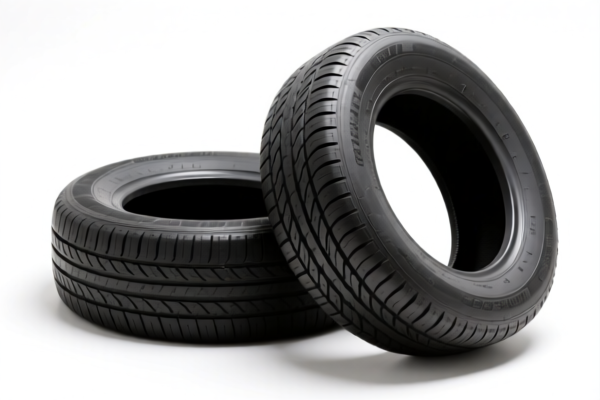

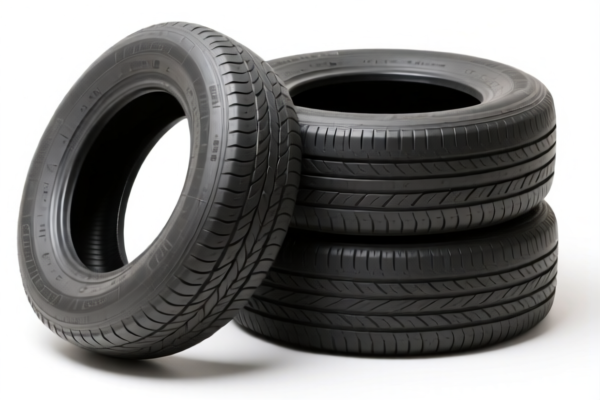
AI Analysis
🚗 Refurbished Rubber Spare Tire (Tire Treads/Re-treading Casings)
🌐 HS Code Reference & Customs Clearance Guide | 2026 Latest Tariff Analysis | Professional Clearance Strategy 📌 I. Product Definition & Classification: Do You Really Understand "Refurbished Tires"?
Refurbished Rubber Spare Tires, specifically referring to tire treads or recasing materials, are critical intermediate goods in the automotive maintenance industry. In international trade, they are distinct from "new tires" or "whole used tires." They fall under the broader category of Rubber Articles and Tyres, depending on their state of vulcanization and specific application.
Key Distinction: * Unvulcanized/Intermediate Rubber Treads: Often classified under Chapter 40 (Rubber and Articles Thereof) as unfinished rubber products. * Vulcanized/Finished Tyre Treads for Retreading: Classified under Chapter 40 or Chapter 4012 (Retreaded Tyres & Used Tyres) depending on the specific subheading and vulcanization status.
⚠️ Critical Classification Point:
- If the item is an unvulcanized rubber tread (a raw intermediate form, slab-like or strip-like) → Likely 4005.91 or 4005.20.
- If the item is a vulcanized tread specifically designed for retreading (often called "tyre treads for retreading") → Likely 4012.90.
- If it is a shape of unvulcanized rubber that doesn't fit specific tread definitions but is an intermediate product → 4006.90.
📦 II. HS Code Classification Details (2026 Latest Tariff Authoritative Comparison)
Based on the provided data, here are the potential HS Codes and their matching logic:
| HS Code | Product Description | Matching Logic | Total Tax Rate (China-Origin to US) |
|---|---|---|---|
4005.91.00.00 |
Unvulcanized mixed rubber, in primary forms or in plates, sheets, or strip | Match: Material is rubber; Form is tread (primary/intermediate form). Matches characteristics of unvulcanized mixed rubber. | 35.0% |
4006.90.10.00 |
Other articles of unvulcanized rubber | Match: Material is rubber; Form is tread (intermediate product/semi-finished). Fits "other shapes" of unvulcanized rubber. | 35.0% |
4012.90.45.00 |
Other tyre treads and tyre flaps, of rubber, new (including "green" tyres) | Match: Form (tread) & Use (retreading) match. Material inferred as rubber. Specific subheading for new/retread-ready treads. | 39.2% |
4012.90.90.00 |
Other tyre treads and tyre flaps, of rubber, new (including "green" tyres) | Match: Material (rubber) & Use (tread/retreading related) match. Fits specific sub-features under this category. | 37.7% |
4005.20.00.00 |
Other unvulcanized rubber in primary forms or in plates, sheets, or strip | Match: Material (rubber) & Form (tread as primary/plate-like). Infers refurbished tread as unvulcanized/semi-finished. | 35.0% |
🔍 Key Insight:
- The difference between 35.0% and 39.2% lies in the specific subheading of Chapter 40.
- 4005 codes generally carry 0% base duty but are subject to heavy附加 taxes.
- 4012 codes often carry a base duty (4.2% or 2.7%) before附加 taxes are applied, leading to a higher total effective rate.
💰 III. 2026 Latest Tariff Rate Breakdown (Including Surtaxes & Policy Add-ons)
✅ Applicable Country: USA (US)
✅ Origin: China (CN)
✅ Effective Date: From Nov 10, 2025 (and subsequent imports)
🎯 1. HS Codes 4005.91.00.00, 4006.90.10.00, 4005.20.00.00
| Item | Details |
|---|---|
| Base Tariff | 0.0% (Ad Valorem) |
| Section 301 Tariff (USITC) | +25.0% |
| IEEPA Section 122 Tariff | +10.0% |
| Total Effective Rate | 35.0% |
| Tax Calculation | CIF Value × 35% |
| De Minimis Eligibility | ❌ No (Deny de minimis) |
| Legal Basis Path | USITC:301 → IEEPA:122 → HS:4005/4006 |
📌 Explanation:
- Section 301 (25%): Standard additional tariff on Chinese rubber articles.
- IEEPA 122 (10%): Additional tariff targeting specific Chinese imports under the International Emergency Economic Powers Act.
- Total 35%: This is a high-cost classification. Accurate documentation of the "unvulcanized" or "intermediate" state is crucial to avoid misclassification into higher-tariff finished goods.
🎯 2. HS Code 4012.90.45.00 (New/Tread for Retreading)
| Item | Details |
|---|---|
| Base Tariff | 4.2% |
| Section 301 Tariff (USITC) | +25.0% |
| IEEPA Section 122 Tariff | +10.0% |
| Total Effective Rate | 39.2% |
| Tax Calculation | CIF Value × 39.2% |
| De Minimis Eligibility | ❌ No (Deny de minimis) |
| Legal Basis Path | USITC:301 → IEEPA:122 → HS:4012.90.45 |
📌 Note:
- The 4.2% base duty increases the taxable base before the 35% surtax is applied, resulting in a higher total rate.
- This code is typically for vulcanized or semi-vulcanized treads ready for the retreading process.
🎯 3. HS Code 4012.90.90.00 (Other Treads)
| Item | Details |
|---|---|
| Base Tariff | 2.7% |
| Section 301 Tariff (USITC) | +25.0% |
| IEEPA Section 122 Tariff | +10.0% |
| Total Effective Rate | 37.7% |
| Tax Calculation | CIF Value × 37.7% |
| De Minimis Eligibility | ❌ No (Deny de minimis) |
| Legal Basis Path | USITC:301 → IEEPA:122 → HS:4012.90.90 |
📌 Note:
- This is a "catch-all" for tyre treads that don't fit into the more specific4012.90.45.
- Still significantly more expensive than the 35% rate of the unvulcanized codes.
🛠️ IV. Customs Clearance Practical Advice (Pitfall Avoidance Guide)
✅ 1. Required Documentation Checklist (Non-negotiable)
| Document | Must Provide | Explanation |
|---|---|---|
| ✅ Product Specification Sheet | ✔️ | Must explicitly state: "Unvulcanized" OR "Vulcanized Tread for Retreading." Include dimensions, weight, and material composition. |
| ✅ Photos of Goods | ✔️ | Clear images showing the raw rubber state (if unvulcanized) or the tread pattern (if vulcanized). Must show labels/packaging. |
| ✅ Commercial Invoice | ✔️ | Clearly describe as: "Rubber Treads for Tire Retreading" or "Unvulcanized Rubber in Strip Form." Avoid vague terms like "Spare Tire Parts." |
| ✅ Packing List | ✔️ | Detail items to prove they are not complete used tires. |
| ✅ Certificate of Origin (CO) | ✔️ | Required for tariff calculation. |
| ✅ Manufacturing Process Description | ✔️ | Briefly explain how the tread is made (e.g., extruded, molded) to support the HS Code choice (4005 vs 4012). |
✅ 2. Declaration Tips (Key Mantra)
🔥 "Unvulcanized is 4005, Vulcanized is 4012. Describe Shape, Not Just Use!"
| Scenario | Correct Declaration | Wrong Practice |
|---|---|---|
| Raw Rubber Tread Strips | 4005.91.00.00 - "Unvulcanized rubber tread strips" |
Reporting as "Tire Treads" → Risk of higher duty. |
| Vulcanized Tread for Retreading | 4012.90.45.00 - "Tyre treads for retreading" |
Reporting as "Used Tires" → Different classification. |
| General Rubber Parts | 4006.90.10.00 - "Other unvulcanized rubber articles" |
Misclassifying as finished goods → Penalty. |
✅ 3. Special Considerations
| Situation | Handling Advice |
|---|---|
| "Refurbished" Terminology | Avoid using "Refurbished Used Tire" if the item is actually a new tread for retreading. Use "Tyre Tread for Retreading" to align with 4012. If it's raw material, use "Unvulcanized Rubber." |
| Mix of Goods | Do not mix unvulcanized rubber with completed tires in one shipment without clear separation. |
| Pre-Ruling Application | Given the complex tariff structure (35% vs 39.2%), apply for a Binding Tariff Information (BTI) or Pre-Ruling from US Customs (CBP) to confirm the correct subheading. |
| De Minimis Exemption | Be aware: De Minimis (Section 321) does NOT apply to these goods due to the IEEPA and 301 tariffs. Even small shipments are fully taxable. |
🌍 V. Global Market Customs Comparison (2026 Update)
| Country/Region | Recommended HS Code | Estimated Duty (China Origin) | Certification Requirements | Notes |
|---|---|---|---|---|
| 🇺🇸 USA | 4005.91.00.00 / 4012.90.45.00 |
35.0% - 39.2% | DOT, EPA (if for new tyres), IEEPA Compliance | High tariffs due to Section 301 & IEEPA 122. |
| 🇨🇳 China | 4005.91.00.00 / 4012.90.45.00 |
0% - 5% (Import) | CCC (if applicable) | Low import duty, but check export controls. |
| 🇪🇺 EU | 4012.10.00.00 / 4012.20.00.00 |
0% - 4.5% | ECE Regulation, RoHS | No additional retaliatory tariffs like US. |
| 🇦🇺 Australia | 4012.10.00.00 |
5.0% | ADR, RCM | Moderate duty, no major surtaxes. |
📌 Conclusion:
- The US market is the most challenging due to the 35%+ combined tariff.
- Accurate classification between 4005 (unvulcanized) and 4012 (vulcanized/tread) is critical to minimize costs.
📌 VI. Common Mistakes & Pitfalls (Lessons Learned)
❌ Mistake 1: Calling the product "Used Tire" when it is a new tread for retreading.
👉 Consequence: Misclassification, potential seizure, or higher duties if classified as "Used Tyres" (which may have different restrictions).
❌ Mistake 2: Ignoring the IEEPA 122 Tariff.
👉 Consequence: Unexpected 10% surtax if not included in the landed cost calculation. Total tax becomes 35% or 39.2%, not just 25%.
❌ Mistake 3: Declaring "Spare Tire" without specifying Rubber Material or State (Vulcanized/Unvulcanized).
👉 Consequence: Customs may hold the shipment for classification review, causing delays and storage fees.
❌ Mistake 4: Assuming De Minimis applies to small shipments of rubber treads.
👉 Consequence: The shipment will be taxed at 35%+ regardless of value. No exemption.
✅ Correct Approach:
"Rubber Treads, Unvulcanized, for Retreading, Model XYZ, HS Code 4005.91.00.00"
OR
"Tyre Treads, Vulcanized, for Retreading, Model XYZ, HS Code 4012.90.45.00"
🎯 VII. Conclusion: Professional Declaration, Cost Control, Efficiency!
🎯 Remember the Mantra:
🔹 "Unvulcanized = 4005 (35%), Vulcanized Tread = 4012 (37-39%). State clearly, declare accurately!"
🔹 "HS Code determines destiny. A 2% difference in base rate + 35% surtax = Significant cost impact!"
📌 Pro Tip:
If your rubber treads are originating from Vietnam, Mexico, or Thailand, you may be eligible for IEEPA exemptions or lower Section 301 rates.
Recommendation: Always apply for a Customs Pre-Ruling before shipping high-value rubber articles to the US.
📣 Immediate Action:
📞 Contact a professional customs broker + Provide product photos + Request HS Code Pre-Ruling
🚀 Let your rubber treads clear customs smoothly, efficiently, and cost-effectively!
✨ Professional clearance starts with precise classification!
💼 Every cent of cost deserves precise calculation!
Customer Reviews
About HS Code Classification
The Harmonized System (HS) is an internationally standardized nomenclature developed by the World Customs Organization (WCO) to classify traded products. Over 200 countries use the HS system as the basis for customs tariffs, trade statistics, and import/export regulations.
Each HS code follows a hierarchical structure:
- Chapter (2 digits) — Broad category of goods (e.g., Chapter 84: Machinery and Mechanical Appliances)
- Heading (4 digits) — More specific grouping within the chapter
- Subheading (6 digits) — Internationally standardized breakdown, used by all WCO member countries
- National subdivisions (8-10 digits) — Country-specific extensions for further classification, such as US HTSUS 10-digit codes
Correct HS code classification is essential for smooth customs clearance, accurate duty payment, and compliance with trade regulations. Misclassification can lead to customs delays, overpayment of duties, or penalties.
When importing from CN to US, the applicable tariff rates may include:
- Most-Favored-Nation (MFN) rate — The standard duty rate applied to WTO members
- General rate — Applied to countries without trade agreements
- Trade remedy duties — Additional tariffs such as Section 301 (anti-dumping), Section 232 (national security), or countervailing duties
The information provided on this page is for reference purposes only. For official classification, please consult with your local customs authority or a licensed customs broker.