regulating valve
CN → US| HS Code | Tariff Rate | Origin | Destination | Doc |
|---|---|---|---|---|
| 8481809015 | 37.0% | CN | US | Official Doc |
| 8481809035 | 37.0% | CN | US | Official Doc |
Product Images
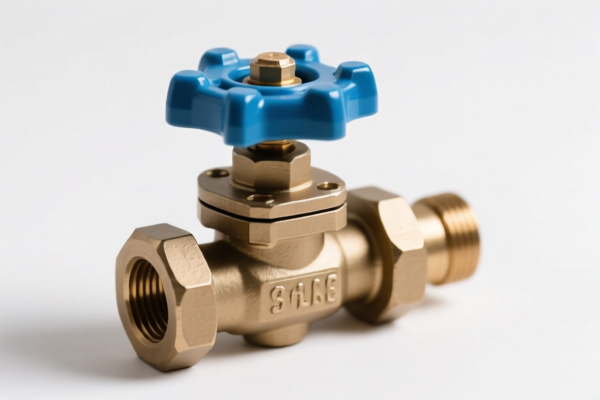
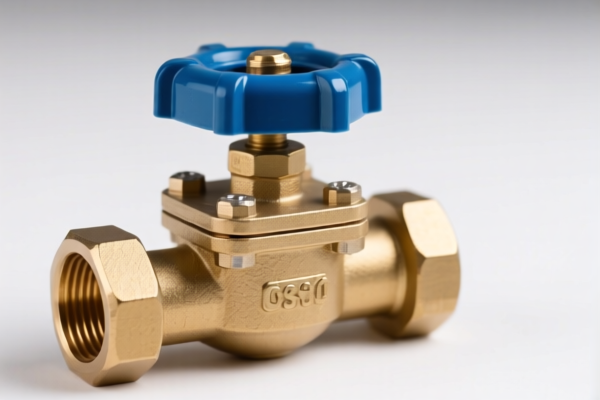
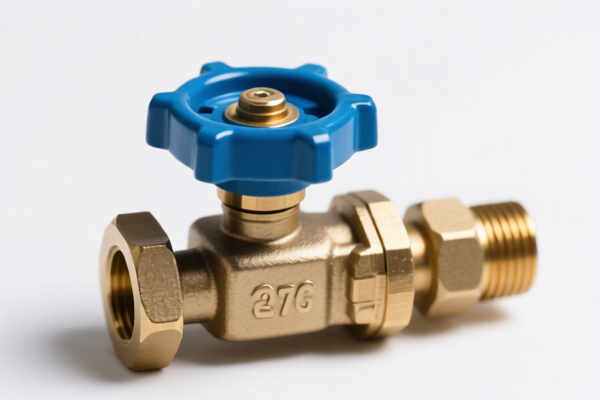
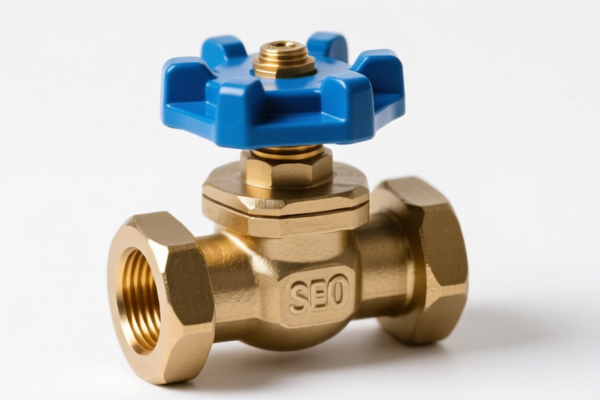
AI Analysis
🚰 Regulating Valves (Self-Operated Control Valves)
🌐 HS Code Reference & Customs Clearance Guide | 2026 Latest Tariff Analysis | Professional Compliance Strategy
📌 I. Product Definition & Classification: Do You Really Understand "Regulating Valves"?
Regulating valves, specifically self-operated valves, are critical mechanical devices used in industrial piping, boiler shells, tanks, and vats to automatically control process variables such as temperature, pressure, flow, and liquid level without external power sources (pneumatic, hydraulic, or electric).
In international trade, these are not a single homogeneous product but are strictly categorized based on their actuation method and control logic:
- Self-Operated Regulators (Thermostatic/Mechanical): Valves that use the energy of the process medium itself (e.g., a bellows filled with gas/liquid expands/contracts with temperature changes) to drive the valve stem. No external signal is needed.
- Control Valves with Pneumatic Actuators: Valves that receive a proportional signal from a control device and use a pneumatic actuator to adjust the valve position precisely.
⚠️ Critical Distinction Point:
- If the valve operates independently based on local conditions (temp/pressure) without external signals → It is a "Self-Operated Regulator" → HS Code: 8481.80.90.15
- If the valve uses a pneumatic actuator driven by a control device signal for proportional operation → It is a "Control Valve with Pneumatic Actuator" → HS Code: 8481.80.90.35
📦 II. HS Code Classification Details (2026 Latest Tariff Authority Reference)
Based on the provided , only two specific subheadings apply to "Regulating Valves." Both carry identical tax structures but differ in technical definition.
| HS Code | Product Description | Key Technical Feature | Control Mechanism |
|---|---|---|---|
8481.80.90.15 |
Other Regulator Valves, Self-Operated | For controlling variables like temperature, pressure, flow, and liquid level. | Passive/Mechanical: Uses process medium energy (e.g., thermostatic bulbs, bellows). No external signal input. |
8481.80.90.35 |
Other Control Valves (Pneumatic) | Designed for proportional operation by a signal from a control device. | Active/Automated: Requires a pneumatic actuator and an external control signal (e.g., 4-20mA converted to air pressure). |
🔍 Key Reminder:
- The term "Regulating Valve" is broad. You must determine if the device is self-operated (uses its own power) or pneumatically actuated (uses external air power + signal). - Misclassification Risk: Declaring a pneumatically actuated valve as "self-operated" is a common error that leads to customs audits, as the technical specifications (presence of a diaphragm actuator, signal cables, etc.) will contradict the HS code description.
💰 III. 2026 Latest Tariff Rate Details (Detailed Breakdown)
✅ Applicable Market: United States (US)
✅ Origin: China (CN) (Note: Based on the provided tax data implying 25% additional tariff)
✅ Effective Time: Current 2026 Tariff Schedule
🎯 1. 8481.80.90.15 —— Self-Operated Regulating Valves
| Item | Content |
|---|---|
| Base Tariff Rate | 2.0% (Ad Valorem) |
| Additional Tariff (Section 301) | +25.0% (USITC List 3/4 Exclusions typically do not apply to general industrial valves) |
| Total Tax Rate | 27.0% |
| Tax Calculation | CIF Value × 27.0% |
| De Minimis Exemption | ❌ Not Eligible (Value usually exceeds $800 threshold for Landed Cost, and industrial parts are often scrutinized) |
| Legal Basis | HTSUS 8481.80.90.15 + Trade Remedy Footnotes |
📌 Explanation:
- Base Tariff (2%): Standard MFN (Most Favored Nation) rate for general valve parts/appliances. - Additional Tariff (25%): Applies to goods of Chinese origin under Section 301 of the Trade Act. Industrial automation components are heavily targeted. - Total Effective Rate: 27%. This is a significant cost factor. Landed cost calculations must include this 27% on top of freight and insurance.
🎯 2. 8481.80.90.35 —— Control Valves with Pneumatic Actuators
| Item | Content |
|---|---|
| Base Tariff Rate | 2.0% (Ad Valorem) |
| Additional Tariff (Section 301) | +25.0% |
| Total Tax Rate | 27.0% |
| Tax Calculation | CIF Value × 27.0% |
| De Minimis Exemption | ❌ Not Eligible |
| Legal Basis | HTSUS 8481.80.90.35 + Trade Remedy Footnotes |
📌 Note:
- Although this is a more sophisticated, automated component than the self-operated valve, the tariff rate is identical (27%). - Both codes fall under Chapter 84 (Nuclear reactors, boilers, machinery, mechanical appliances). - Crucial: Do not assume "automation" lowers the tariff. In the US-China trade context, industrial control valves are subject to the same punitive rates.
🛠️ IV. Customs Clearance Practical Advice (Battle-Tested Pitfall Guide)
✅ 1. Required Documentation Checklist (Non-Negotiable)
| Document | Mandatory? | Description |
|---|---|---|
| ✅ Product Technical Data Sheet | ✔️ | Must clearly state: Actuation Type (Self-operated vs. Pneumatic), Control Variable (Temp/Pressure/Flow), and Signal Input (None vs. 4-20mA/Pneumatic). |
| ✅ Engineering Drawings | ✔️ | Schematic showing the operating principle. If a pneumatic diaphragm is present, it cannot be declared as self-operated (8481.80.90.15). |
| ✅ Product Photographs | ✔️ | Clear images of the valve body, actuator, and nameplate. Show if there are air supply lines or electrical signal wires. |
| ✅ Commercial Invoice | ✔️ | Must specify: "Valve, Regulating, [Self-Operated OR Pneumatic], Model [XXX], HS [8481.80.90.15/35]". |
| ✅ Packing List | ✔️ | Detail all parts. If the actuator is shipped separately, it must be declared together with the valve body. |
| ✅ Origin Certificate | ✔️ | If produced in China, CCOC or similar required. |
✅ 2. Declaration Tips (Key Mantras)
🔥 "Actuator Defines the Code, Signal Defines the Logic!"
| Scenario | Correct Declaration | Error to Avoid |
|---|---|---|
| Valve with a Temperature Bulb/Bellow | 8481.80.90.15 |
Misdeclaring as Pneumatic → Delay for inspection |
| Valve with a Pneumatic Diaphragm + Air Supply | 8481.80.90.35 |
Misdeclaring as Self-Operated → 25% Penalty Risk + Rejection |
| Valve with Electric Actuator | ❌ Neither Code | Electric actuators usually fall under 8481.80.90.90 or 8543. Using 8481.80.90.35 for electric valves is incorrect. |
| Spare Parts Only (e.g., Diaphragm) | 8481.90.00 (Parts) |
Do not declare parts as "Valves". |
💡 Pro Tip:
- If your valve has a pneumatic actuator, ensure the invoice explicitly states "With Pneumatic Actuator" and "Proportional Control". - If your valve is thermostatic or pressure-balanced, explicitly state "Self-Operated" and "No External Power/Signal Required".
✅ 3. Special Circumstances Handling
| Situation | Handling Advice |
|---|---|
| Valve Kit (Valve + Actuator + Controller) | Declare as One Unit. The complete assembly determines the HS Code. If the actuator is pneumatic, the whole kit goes to 8481.80.90.35. |
| OEM Custom Valves | Provide customer PO + Technical Specs. If the spec says "Pneumatic," you cannot use the Self-Operated code. |
| Used/Refurbished Valves | Restricted. Import of used pressure vessels/valves often requires EPA/CPSC approvals or is prohibited. Ensure they are New. |
| High-Pressure/High-Temp Applications | May require additional safety certifications (ASME, API). While not affecting HS Code, missing certs cause customs holds. |
🌍 V. Global Market Comparison (2026 Context)
| Country/Region | Recommended HS Code | Tariff (China Origin) | Key Certification | Note |
|---|---|---|---|---|
| 🇺🇸 USA | 8481.80.90.15 or .35 |
27.0% (2% Base + 25% Section 301) | None (Generic) | Highest Tariff. Cost must be built into pricing. |
| 🇨🇳 China | 8481.80.90.15 or .35 |
2.0% (Import Duty) | CCC (if applicable) | Low duty, no 301 tariffs. |
| 🇪🇺 EU | 8481.80.90 |
0% - 2% (Varies by subhead) | CE + ATEX (if explosive) | No punitive tariffs. ATEX required for hazardous areas. |
| 🇬🇧 UK | 8481.80.90 |
2.0% | UKCA | Post-Brexit rules apply. |
| 🇻🇳 Vietnam | 8481.80.90 |
0% (Under EAF) | None | Supply chain diversification target. |
📌 Conclusion:
- USA is the most expensive market due to the 25% Section 301 tariff.
- The difference between...90.15(Self-Operated) and...90.35(Pneumatic) is technical compliance, not tax savings. Both are taxed at 27%.
- Accuracy is paramount. A wrong declaration leads to fines, not just correct taxes.
📌 VI. Common Errors & Pitfalls (Blood & Tears Lessons)
❌ Error 1: Calling a Pneumatic Valve "Self-Operated"
👉 Consequence: Customs detects the pneumatic actuator during inspection. Penalty for misdeclaration, potential seizure, and back-tariffs.
✅ Fix: Check for air lines/diaphragms. If present, use .35.
❌ Error 2: Ignoring the "Proportional" Requirement for .35
👉 Consequence: The code 8481.80.90.35 specifies "Control valves designed for proportional operation." If it's an On/Off valve (Two-way), it might fall under a different subheading or general "Other valves."
✅ Fix: Ensure the valve provides modulating control (0-100%), not just open/close.
❌ Error 3: Declaring "Parts" as "Valves"
👉 Consequence: If you ship just a valve stem or a diaphragm, declaring it as a full valve (8481.80.90.xx) is false declaration.
✅ Fix: Use Parts classification (8481.90) for loose components.
🎯 VII. Conclusion: Precision Classification, Secure Clearance
🎯 Remember the Mantra:
🔹 "Self-Operated = Bulb/Bellow = .15"
🔹 "Pneumatic/Proportional = Actuator/Signal = .35"
🔹 "Both = 27% Total Tax for China Origin"
🔹 "Misclassification = Fines + Delays!"
📌 Tips:
- If you are importing into the US, pre-classify with a licensed customs broker.
- Provide the pictorial diagram of the valve operation to your broker before shipping.
- Ensure your Commercial Invoice description matches the HS Code definition exactly.
📣 Immediate Action:
📞 Verify Actuation Type: Self-Operated or Pneumatic?
📝 Select Correct HS Code:8481.80.90.15or8481.80.90.35
🚀 Ensure 27% Tax Budget is Accounted For in your landed cost model.
✨ Professional clearance starts with precise classification!
💼 Every valve tells a story of its mechanism—let it speak clearly to customs!
Customer Reviews
About HS Code Classification
The Harmonized System (HS) is an internationally standardized nomenclature developed by the World Customs Organization (WCO) to classify traded products. Over 200 countries use the HS system as the basis for customs tariffs, trade statistics, and import/export regulations.
Each HS code follows a hierarchical structure:
- Chapter (2 digits) — Broad category of goods (e.g., Chapter 84: Machinery and Mechanical Appliances)
- Heading (4 digits) — More specific grouping within the chapter
- Subheading (6 digits) — Internationally standardized breakdown, used by all WCO member countries
- National subdivisions (8-10 digits) — Country-specific extensions for further classification, such as US HTSUS 10-digit codes
Correct HS code classification is essential for smooth customs clearance, accurate duty payment, and compliance with trade regulations. Misclassification can lead to customs delays, overpayment of duties, or penalties.
When importing from CN to US, the applicable tariff rates may include:
- Most-Favored-Nation (MFN) rate — The standard duty rate applied to WTO members
- General rate — Applied to countries without trade agreements
- Trade remedy duties — Additional tariffs such as Section 301 (anti-dumping), Section 232 (national security), or countervailing duties
The information provided on this page is for reference purposes only. For official classification, please consult with your local customs authority or a licensed customs broker.