relay module
CN → US| HS Code | Tariff Rate | Origin | Destination | Doc |
|---|---|---|---|---|
| 8543906800 | 35.0% | CN | US | Official Doc |
| 8537108000 | 35.0% | CN | US | Official Doc |
| 8536410020 | 37.7% | CN | US | Official Doc |
| 8536490050 | 37.7% | CN | US | Official Doc |
| 8543908885 | 85.0% | CN | US | Official Doc |
| 8537109170 | 37.7% | CN | US | Official Doc |
Product Images
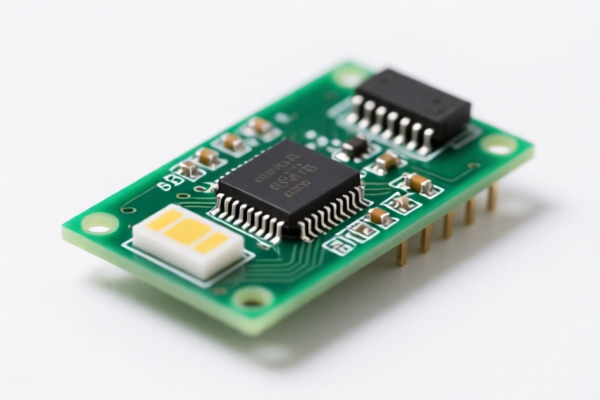
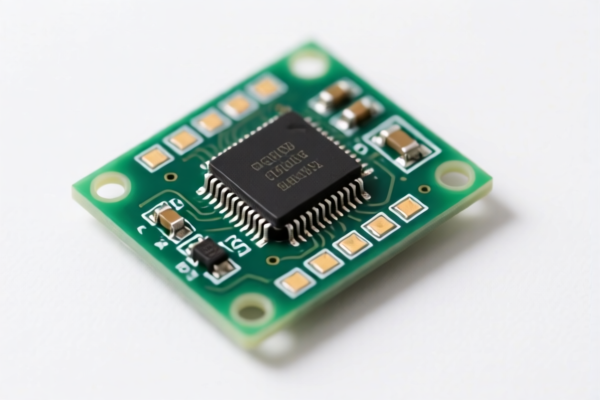
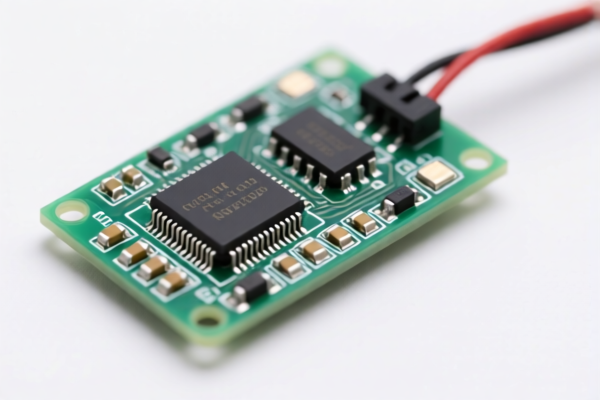
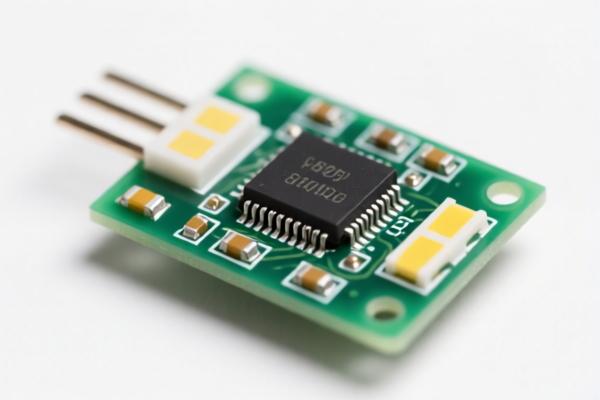
AI Analysis
⚡ Relay Modules (Electrical Control Components)
🌐 HS Code Reference & Customs Clearance Guide | 2026 Latest Tariff Analysis | Professional Clearance Strategy
📌 I. Product Definition & Classification: What Exactly is a "Relay Module"?
A Relay Module is an electromechanical or solid-state device used to control an electrical circuit by an independent signal. In international trade, its classification depends heavily on its internal structure, function, and voltage range. It is not a single fixed category but falls into different sections of the Harmonized System (HS) based on specific technical characteristics.
⚠️ Key Distinction Points:
- Is it a printed circuit board assembly with independent function? → Chapter 8543
- Is it a control panel/device for voltage ≤ 1000V? → Chapter 8537
- Is it a standalone electromechanical switch? → Chapter 8536
- Is it merely a part/component of a larger electrical machine? → Chapter 8543 (Parts)
📦 II. HS Code Classification Details (2026 Latest Tariff Authority Comparison)
Based on the provided data, here are the 6 possible HS Codes for Relay Modules, ranging from 35.0% to 85.0% total tax rates.
| HS Code | Product Description & Logic | Applicable Scenario | Total Tax Rate (China Origin → US) |
|---|---|---|---|
| 8543.90.68.00 | Independent Electrical Apparatus/PCB Assembly | Relay modules that function as independent electrical apparatus or printed circuit components, not primarily for control distribution. | 35.0% |
| 8537.10.80.00 | Control/Distribution Equipment (≤1000V) | Relay modules acting as part of an electric control or distribution board, specifically for voltage control within 1000V limits, without display. | 35.0% |
| 8536.41.00.20 | Electromechanical Relays (Circuit Protection) | Standard electromechanical relays with circuit protection functions, fitting the traditional definition of "relays" under Chapter 8536. | 37.7% |
| 8536.49.00.50 | Other Electromechanical Electrical Apparatus | Relay modules in "module" form factor containing electromechanical contact assemblies, falling under "other" electrical apparatus. | 37.7% |
| 8543.90.88.85 | Parts of Electrical Machines/Apparatus | Classified as a "part" of other electrical machines rather than a standalone device. High tariff due to "part" classification. | 85.0% |
| 8537.10.91.70 | Other Control Equipment (≤1000V) | Power control equipment with voltage ≤ 1000V, but does not fit the specific "display" or standard input/output categories, falling under "other". | 37.7% |
🔍 Critical Analysis:
- Lowest Risk (35.0%): If the module can be argued as an independent apparatus (8543.90.68.00) or a standard control device (8537.10.80.00).
- Medium Risk (37.7%): If classified as a standard relay (8536) or other control equipment (8537.10.91.70).
- Highest Risk (85.0%): 8543.90.88.85 carries a punitive rate due to the "part" classification and potential aluminum/copper duties. Avoid this classification if possible.
💰 III. 2026 Latest Tariff Rate Breakdown (Including Surtaxes & Policy Add-ons)
✅ Applicable Country: United States (US)
✅ Origin: China (CN)
✅ Effective Date: 2025/2026 (Including subsequent imports)
🎯 1. The "Low-Tax" Cluster: 35.0% Total Rate
HS Codes: 8543.90.68.00 | 8537.10.80.00
| Item | Detail |
|---|---|
| Base Tariff | 0.0% |
| Section 301 Surcharge | +25.0% |
| IEEPA (122 Clause) Surcharge | +10.0% |
| Total Effective Rate | 35.0% |
| Calculation Basis | CIF Value × 35% |
| De Minimis Exemption | ❌ NOT Eligible (Denied) |
| Legal Path | USITC Footnotes → IEEPA 122 Clause → Section 301 |
📌 Explanation:
- These codes benefit from a 0% Base Tariff.
- The 35% total comes entirely from US trade policy surcharges.
- This is the most favorable classification for commercial relay modules, assuming the product description supports "independent apparatus" or "standard control equipment."
🎯 2. The "Standard Relay/Control" Cluster: 37.7% Total Rate
HS Codes: 8536.41.00.20 | 8536.49.00.50 | 8537.10.91.70
| Item | Detail |
|---|---|
| Base Tariff | 2.7% |
| Section 301 Surcharge | +25.0% |
| IEEPA (122 Clause) Surcharge | +10.0% |
| Total Effective Rate | 37.7% |
| Calculation Basis | CIF Value × 37.7% |
| De Minimis Exemption | ❌ NOT Eligible (Denied) |
📌 Explanation:
- The 2.7% Base Tariff is the main difference from the 35% group.
-8536codes are for "Relays" and "Other Switches." If your product is a simple plug-in relay, this is the natural fit.
-8537.10.91.70is for "Other" control equipment. Use this if the module has unique control logic not covered by 8537.10.80.00.
🎯 3. The "High-Risk Part" Cluster: 85.0% Total Rate
HS Code: 8543.90.88.85
| Item | Detail |
|---|---|
| Base Tariff | 0.0% |
| Section 301 Surcharge | +25.0% |
| IEEPA (122 Clause) Surcharge | +10.0% |
| Section 301 (Steel/Aluminum/Copper) | +50.0% |
| Total Effective Rate | 85.0% |
| Calculation Basis | CIF Value × 85.0% |
| De Minimis Exemption | ❌ NOT Eligible (Denied) |
📌 ⚠️ CRITICAL WARNING:
- This classification triggers the 50% additional duty on steel, aluminum, or copper products under specific trade provisions.
- Even if the relay module doesn't look like a steel product, if it contains significant metal components or is classified broadly as a "part," this surcharge may apply.
- Strategy: Aggressively contest this classification. Provide evidence that it is a functional device or control unit, not merely a "part" of another machine.
🛠️ IV. Customs Clearance Operational Advice (Practical Pitfall Avoidance)
✅ 1. Documentation Checklist (Non-Negotiable)
| Document | Required? | Description |
|---|---|---|
| ✅ Product Spec Sheet | ✔️ | Must clearly state: Function (Control/Protection), Voltage (≤1000V?), Components (PCB, Contacts, Housing). |
| ✅ Circuit Diagram/Block Diagram | ✔️ | Crucial for distinguishing between 8537 (Control Panel) and 8543 (Independent Apparatus). |
| ✅ Product Photos (Label & Interior) | ✔️ | Show model number, brand, and input/output terminals. |
| ✅ Third-Party Test Reports | ✔️ | UL, CE, FCC (if applicable) to prove safety and function. |
| ✅ Commercial Invoice | ✔️ | Description must match HS Code logic (e.g., "Relay Control Module for Industrial Automation"). |
| ✅ Packing List | ✔️ | Ensure no accidental inclusion of unrelated metal parts that might trigger the 50% surcharge. |
✅ 2. Declaration Strategy (Key Mantras)
🔥 "Function Defines Code, Voltage Defines Section, Parts are Trap!"
| Scenario | Recommended Declaration Strategy | Incorrect Action |
|---|---|---|
| Module with PLC-like Logic | Declare as 8537.10.80.00 (Control Equipment) |
Declare as 8543.90.88.85 (Part) → 85% Tax! |
| Simple Plug-in Relay | Declare as 8536.41.00.20 (Standard Relay) |
Declare as 8543 → Risk of misclassification penalty. |
| PCB Assembly with Relay | Declare as 8543.90.68.00 (Independent Apparatus) |
Declare as 8537 → Potential dispute over "Control Board" definition. |
| Relay + Housing + Connectors | Declare as Whole Unit | Split into "Relay" + "Housing" → Higher cumulative tax. |
✅ 3. Special Case Handling
| Situation | Handling Suggestion |
|---|---|
| OEM/ODM Custom Modules | Provide design docs showing the module performs a distinct control function independent of the final machine. |
| High Voltage (>1000V) | Data provided assumes ≤1000V. If >1000V, codes change drastically (Chapter 8537 still, but different subheadings). Verify Voltage First! |
| Heavy Metal Content | If the module is heavy on steel/aluminum, avoid 8543.90.88.85 at all costs. Aim for 8537 or 8536 where the 50% surcharge does not apply. |
| Pre-Ruling Application | Highly Recommended. Apply for a US CBP Advance Ruling before shipment to lock in the 35% or 37.7% rate. |
🌍 V. Global Market Comparison (2026)
| Country/Region | Recommended HS Code | Tariff (China Origin) | Key Certification | Note |
|---|---|---|---|---|
| 🇺🇸 USA | 8537.10.80.00 or 8536.41.00.20 |
35.0% - 37.7% | FCC, UL | Avoid 8543.90.88.85 (85%) |
| 🇨🇳 China | 8536.41.00.20 |
~6.5% (Est.) | CCC | No Section 301/IEEPA surcharges |
| 🇪🇺 EU | 8536.41.00 |
~2.7% (MFN) | CE, RoHS | Generally low duty if not prohibited |
| 🇬🇧 UK | 8536.41.00 |
~2.7% (MFN) | UKCA | Post-Brexit rules apply |
📌 Conclusion:
- The US market is the most challenging due to the layered surcharges (301 + IEEPA).
- The choice between 35%, 37.7%, and 85% hinges on precise technical description.
-8543.90.88.85is a financial trap and must be avoided through proper product characterization.
📌 VI. Common Errors & Pitfall Guide (Lessons from the Field)
❌ Error 1: Classifying a functional control module as a "Part" (8543.90.88.85)
👉 Consequence: 85% Tax! This destroys profit margins.
✅ Fix: Emphasize the module's independent control logic or distribution function.
❌ Error 2: Ignoring the Voltage Rating
👉 Consequence: If >1000V, 8537 codes may still apply but with different subheadings. If misdeclared, customs may reclassify and penalize.
✅ Fix: Clearly state Max Operating Voltage on the invoice.
❌ Error 3: Generic Description "Relay"
👉 Consequence: Customs may choose the highest tariff code (8543.90.88.85) due to ambiguity.
✅ Fix: Use specific descriptions: "Solid-State Relay Module for HVAC Control, 24V DC, UL Listed."
❌ Error 4: Assuming De Minimis (Section 321) Applies
👉 Consequence: No de minimis for China-origin electronic components under current IEEPA/301 rules.
✅ Fix: Plan for full duty payment regardless of package value.
🎯 VII. Conclusion: Precision Classification Saves Thousands!
🎯 Remember the Mantra:
🔹 "35% is the Goal, 37.7% is the Backup, 85% is the Nightmare!"
🔹 "Define Function, Not Just Form. Is it Control? Is it Protection? Is it a Part?"
📌 Pro Tip:
If your relay module contains smart features (MCU, communication interfaces like RS485/Ethernet), strongly argue for 8537.10.80.00 (Control Equipment) to secure the 35.0% rate. Avoid 8536 if it complicates the "pure relay" argument, and never use 8543.90.88.85.
📣 Immediate Action:
📞 Consult a Customs Broker with your Circuit Diagram and Spec Sheet.
📝 File for an Advance Ruling with US CBP.
🚀 Optimize your supply chain to handle the ~35-38% landed cost for the US market.
✨ Professional Clearance Starts with Accurate Classification!
💼 Your profit margin depends on the first digit of your HS Code!
Customer Reviews
About HS Code Classification
The Harmonized System (HS) is an internationally standardized nomenclature developed by the World Customs Organization (WCO) to classify traded products. Over 200 countries use the HS system as the basis for customs tariffs, trade statistics, and import/export regulations.
Each HS code follows a hierarchical structure:
- Chapter (2 digits) — Broad category of goods (e.g., Chapter 84: Machinery and Mechanical Appliances)
- Heading (4 digits) — More specific grouping within the chapter
- Subheading (6 digits) — Internationally standardized breakdown, used by all WCO member countries
- National subdivisions (8-10 digits) — Country-specific extensions for further classification, such as US HTSUS 10-digit codes
Correct HS code classification is essential for smooth customs clearance, accurate duty payment, and compliance with trade regulations. Misclassification can lead to customs delays, overpayment of duties, or penalties.
When importing from CN to US, the applicable tariff rates may include:
- Most-Favored-Nation (MFN) rate — The standard duty rate applied to WTO members
- General rate — Applied to countries without trade agreements
- Trade remedy duties — Additional tariffs such as Section 301 (anti-dumping), Section 232 (national security), or countervailing duties
The information provided on this page is for reference purposes only. For official classification, please consult with your local customs authority or a licensed customs broker.