remote controlled lawn mower
CN → USProduct Images
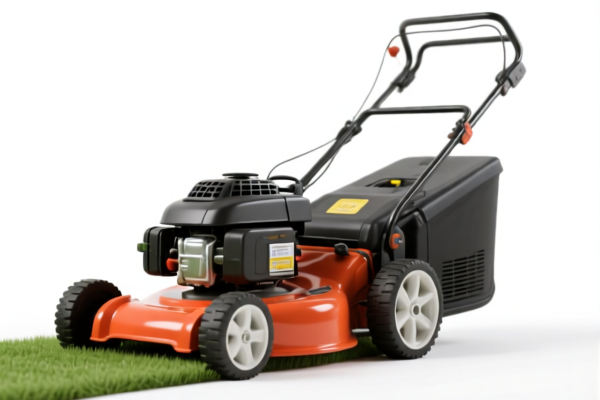
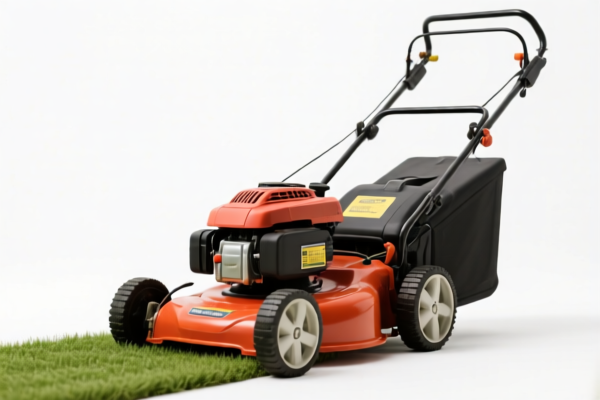
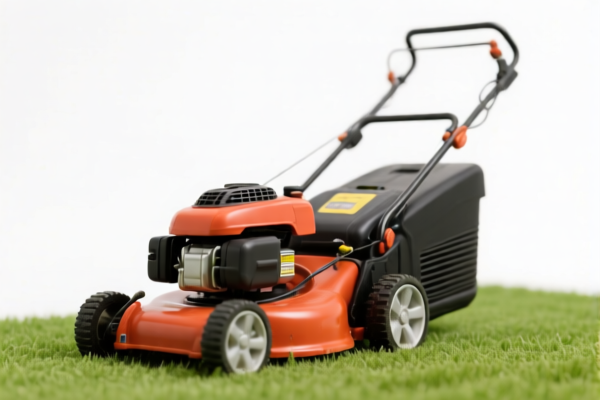
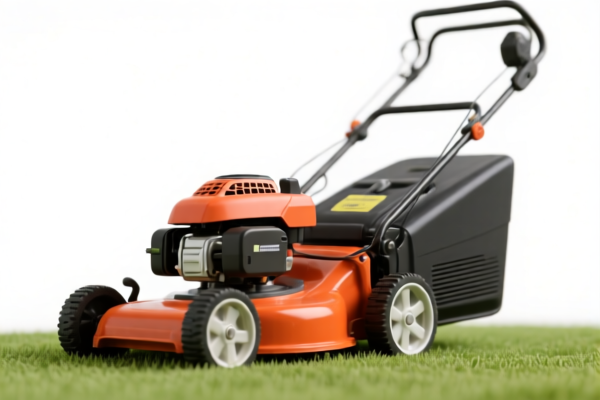
AI Analysis
🚜 Remote Controlled Lawn Mower (RC Lawn Mower)
🌐 HS Code Reference & Customs Clearance Guide | 2026 Latest Tariff Analysis | Professional-Level Strategy for Smart Home Appliances
📌 I. Product Definition & Classification: Do You Really Know "RC Lawn Mower"?
A Remote Controlled Lawn Mower is a specialized garden tool that uses electric or battery power, controlled via a radio frequency (RF) signal or app, rather than manual pushing or autonomous GPS navigation. In international trade, the classification depends heavily on its power source and control mechanism.
Key Distinctions: * Battery-Powered RC Mowers (Portable): Typically classified under machinery for agricultural/garden use. * Electric CORDLESS with RF Control: Falls under machinery headings. * Smart/Autonomous Hybrid: If it has significant AI/GPS autonomous features, it might be contested, but generally remains under garden machinery unless classified as a "robot" under specific national interpretations (rare for simple RC models).
⚠️ Critical Classification Point:
- If it is battery-operated and remote-controlled (not fully autonomous): It is primarily a Garden Machinery.
- If it is plug-in electric and remote-controlled: Still classified as Garden Machinery.
- DO NOT classify under "Toys" or "Robotics" if it performs actual labor (cutting grass), as this leads to severe misclassification penalties.
📦 II. HS Code Classification Details (2026 Latest Tariff Authority Cross-Reference)
| HS Code | Product Description | Applicable Scenario | Control Type | Power Source |
|---|---|---|---|---|
8209.10.00.00 |
Rotary blade parts (if imported separately) | Replacement blades for mowers | N/A | N/A |
8433.51.00.00 |
Mowing machines, hand-driven (Includes push mowers) | Most Common for RC Mowers if simple RF control | RF/Remote | Battery/Engine |
8433.59.00.00 |
Other mowing machines (Includes self-propelled, ride-on) | Complex RC mowers, riding RC mowers | RF/App/Wireless | Battery/Gas/Electric |
8543.70.95.00 |
Other electrical machines (Exclusion) | Rare Case: Only if it’s a purely electric device with no mechanical cutting structure (e.g., laser cutter for grass – theoretical) | N/A | Electric |
9503.00.89.00 |
Toys / Remote Control Models | WRONG: Do NOT use for functional lawn mowers. Only for toy-sized mowers (<1:1 scale, non-functional or non-commercial grade). | RF/IR | Battery |
🔍 Key Reminder:
- The vast majority of functional Remote Controlled Lawn Mowers fall under Chapter 84 (Nuclear reactors, boilers, machinery, and mechanical appliances).
- Specifically, 8433.51.00.00 or 8433.59.00.00.
- DO NOT declare as Toys (9503) unless it is a genuine toy. Customs agents will check for cutting blades and motor power.
💰 III. 2026 Latest Tariff Rate Details (Including Surcharges & Policy Add-ons)
✅ Applicable Country: United States (US)
✅ Origin: China (CN)
✅ Effective Date: November 10, 2025 (and onwards)
🎯 1. 8433.51.00.00 – Mowing Machines, Hand-Driven (Common RC Mower)
| Item | Content |
|---|---|
| Base Tariff Rate | 3.4% (Ad valorem) |
| USITC Section 301 Surcharge | +7.5% to +25% (Depending on specific sub-item nuance, often 7.5% for general garden tools in recent adjustments, but 25% remains possible for certain electronic-heavy variants. Note: Verify latest USITC footnote.) |
| IEEPA Surcharge | +10% (For China/HK products, effective Nov 10, 2025) |
| Total Tariff Rate | ~20.9% to 38.4% (Estimated: 3.4% + 7.5%~25% + 10%) |
| Calculation Basis | CIF Value × Total Rate |
| De Minimis Eligibility | ❌ No (Deny De Minimis for Section 301 items) |
| Legal Pathway | USITC:8433.51.00.00 → SECTION301:8433 → IEEPA:9903.01.25 |
📌 Explanation:
- Base duty is low, but Section 301 and IEEPA surcharges dominate the cost.
- If the mower has advanced electronics (LiDAR, App connectivity), customs may scrutinize it more, but it still falls under 8433.
- Total burden is significant: Expect ~21-38% total tariff.
🎯 2. 8433.59.00.00 – Other Mowing Machines (Riding/Complex RC)
| Item | Content |
|---|---|
| Base Tariff Rate | 3.4% |
| USITC Section 301 Surcharge | +7.5% to +25% |
| IEEPA Surcharge | +10% |
| Total Tariff Rate | ~20.9% to 38.4% |
| De Minimis Eligibility | ❌ No |
| Legal Pathway | USITC:8433.59.00.00 → SECTION301:8433 → IEEPA:9903.01.25 |
📌 Note:
- Riding RC mowers (even small ones) often fall here.
- Same tariff structure as hand-driven, but value is higher, so absolute tax amount is larger.
🛠️ IV. Customs Clearance Practical Advice (Pitfall Avoidance Guide)
✅ 1. Documentation Checklist (Mandatory)
| Document | Required | Notes |
|---|---|---|
| ✅ Product Specification Sheet | ✔️ | Must clearly state: "Remote Controlled," Power Source (Battery/AC), Cutting Width, Motor Power (Watts/HP). |
| ✅ Photos (Real Product) | ✔️ | Show remote control, blades, and overall structure. Prove it’s a functional mower, not a toy. |
| ✅ Circuit Diagram/Block Diagram | ✔️ | To prove RF control is for operation, not just "smart home" IoT classification. |
| ✅ Commercial Invoice | ✔️ | Description: "Battery Operated Remote Control Lawn Mower, for Garden Use." |
| ✅ Safety Certifications | ✔️ | UL, CE, EPA (for exhaust, if gas), FCC (for RF module). FCC ID is critical for RC devices. |
| ✅ Packaging List | ✔️ | List remote separately if packed separately, but declare as one unit if sold together. |
✅ 2. Declaration Tips (Key Mantra)
🔥 “Functional Mower, Not Toy; Electronics Inside, Machinery Outside.”
| Scenario | Correct Declaration | Wrong Practice |
|---|---|---|
| Standard RC Lawn Mower | 8433.51.00.00 or 8433.59.00.00 |
Misclassifying as 9503 (Toys) → Severe Penalty |
| Lithium Battery Included | Declare battery separately in pack list | Hide battery → Safety Risk/Detention |
| RF Remote Control | Mention FCC Compliant in docs | Ignore RF module → FCC Violation |
| Smart/App Control | Still 8433 |
Try to classify as 8543 (Electric Machines) → Risk of Rejection |
✅ 3. Special Circumstances
| Situation | Handling Advice |
|---|---|
| Lithium Battery Shipping | Must comply with UN38.3 and MSDS. Sea freight requires DG declaration; Air freight strictly regulated. |
| Pre-Assembled vs. Knocked-Down (KD) | KD kits may have different HTS codes or duty rates. Assembled is safer for clarity. |
| Import from Non-China Origin | If assembled in Vietnam/Malaysia, apply for Form A or Origin Declaration to avoid USITC/IEEPA surcharges. |
| EPA Compliance | If gas-powered, EPA certification is mandatory. Electric models are exempt from EPA emission rules. |
🌍 V. Global Major Market Clearance Comparison (2026 Latest)
| Country/Region | Recommended HS Code | Tariff (China Origin) | Certification Requirements | Notes |
|---|---|---|---|---|
| 🇺🇸 USA | 8433.51.00.00 |
~21-38% (High) | FCC, UL, EPA (if gas) | Highest barrier due to 301/IEEPA. |
| 🇨🇳 China | 8433.51.00.00 |
3.4% - 5% | CCC (if applicable) | Low duty, stable policy. |
| 🇪🇺 EU | 8433.51.00.00 |
3.7% | CE, RoHS, RED (for RF) | No major trade wars; CE crucial for RF. |
| 🇬🇧 UK | 8433.51.00.00 |
3.7% | UKCA, RoHS, RED | Post-Brexit, similar to EU but UKCA mark. |
| 🇦🇺 Australia | 8433.51.00.00 |
5% | RCM, AS/NZS | Strict electrical safety standards. |
📌 Conclusion:
- USA is the most expensive market due to geopolitical tariffs.
- EU/UK require strong RED Directive compliance for Remote Control devices (RF emissions).
- China remains a low-cost production base but faces export barriers to the US.
📌 VI. Common Errors & Pitfall Guide (Blood & Tears Lessons)
❌ Mistake 1: Classifying as "Toy" (9503)
👉 Consequence: Customs detects functional cutting blades → Seizure, Fine, Deportation.
Fix: Always declare as Garden Machinery (8433).
❌ Mistake 2: Ignoring FCC/RED Compliance
👉 Consequence: RF module without certification → Detention at Port, Forced Recall.
Fix: Obtain FCC ID for US, CE RED for EU.
❌ Mistake 3: Improper Battery Packaging
👉 Consequence: Lithium battery not declared as Dangerous Goods → Shipment Rejected, Fire Risk.
Fix: Follow UN38.3, MSDS, and carrier DG regulations.
❌ Mistake 4: Vague Description "Garden Tool"
👉 Consequence: Customs assigns wrong code → Delayed Clearance, Additional Inspection.
Fix: Use precise terms: "Remote Control Battery-Powered Lawn Mower."
✅ Correct Declaration Example:
"Electric Remote Control Lawn Mower, Battery Powered, with RF Controller, Model XYZ, FCC Certified, For Garden Use, HS 8433.51.00.00"
🎯 VII. Conclusion: Professional Declaration, Save Cost & Time!
🎯 Remember the Mantra:
🔹 "Not a Toy, It’s a Mower; 8433 is the Key."
🔹 "FCC/CE for RF, UL/CCC for Power."
🔹 "Battery DG, Declaration Clear, No Surprise Fees."
📌 Pro Tip:
If your RC Lawn Mower is smart-enabled (Wi-Fi/App), ensure the software doesn’t trigger "AI Robot" classification in some jurisdictions. Stick to "Remote Control" in hardware description to stay under 8433.
For US imports, consider transshipment or third-country assembly to mitigate 301/IEEPA tariffs, if feasible.
📣 Immediate Action:
📞 Consult Customs Broker for FCC ID and UL Certification
🚀 Prepare MSDS & UN38.3 for Lithium Batteries
🚀 Declare accurately under 8433.51.00.00 to avoid penalties
✨ Professional Clearance, Starts with Precise Classification!
💼 Your Profit Margin Depends on Correct Tariff Strategy!
Customer Reviews
About HS Code Classification
The Harmonized System (HS) is an internationally standardized nomenclature developed by the World Customs Organization (WCO) to classify traded products. Over 200 countries use the HS system as the basis for customs tariffs, trade statistics, and import/export regulations.
Each HS code follows a hierarchical structure:
- Chapter (2 digits) — Broad category of goods (e.g., Chapter 84: Machinery and Mechanical Appliances)
- Heading (4 digits) — More specific grouping within the chapter
- Subheading (6 digits) — Internationally standardized breakdown, used by all WCO member countries
- National subdivisions (8-10 digits) — Country-specific extensions for further classification, such as US HTSUS 10-digit codes
Correct HS code classification is essential for smooth customs clearance, accurate duty payment, and compliance with trade regulations. Misclassification can lead to customs delays, overpayment of duties, or penalties.
When importing from CN to US, the applicable tariff rates may include:
- Most-Favored-Nation (MFN) rate — The standard duty rate applied to WTO members
- General rate — Applied to countries without trade agreements
- Trade remedy duties — Additional tariffs such as Section 301 (anti-dumping), Section 232 (national security), or countervailing duties
The information provided on this page is for reference purposes only. For official classification, please consult with your local customs authority or a licensed customs broker.