resin pendants
CN → US| HS Code | Tariff Rate | Origin | Destination | Doc |
|---|---|---|---|---|
| 7113195095 | 23.0% | CN | US | Official Doc |
| 7113195091 | 15.5% | CN | US | Official Doc |
| 7116200500 | 13.3% | CN | US | Official Doc |
| 7117909000 | 28.5% | CN | US | Official Doc |
| 7116201500 | 24.0% | CN | US | Official Doc |
Product Images

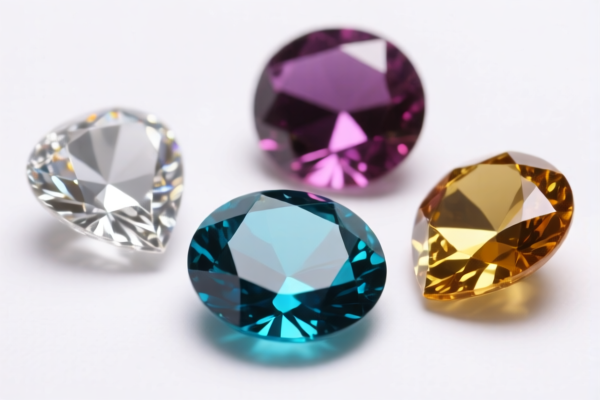
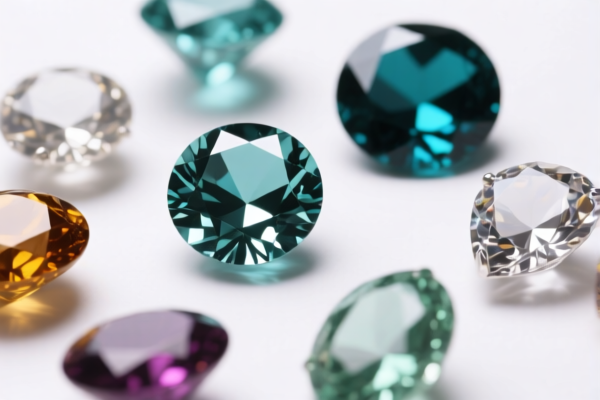
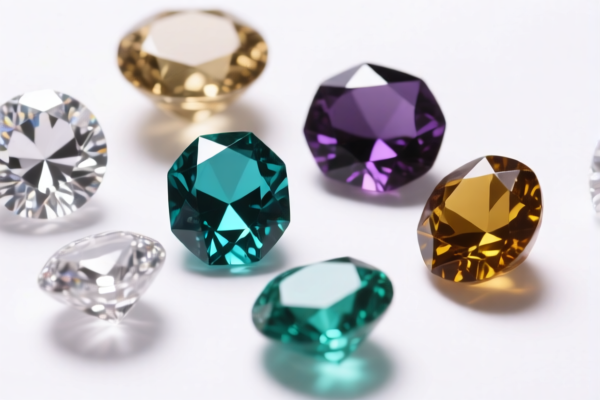
AI Analysis
📿 Resin Pendants: The Ultimate Guide to HS Classification & US Customs Clearance (2026)
🌐 HS Code Reference & Clearance Strategy | 2026 Tax Regime Analysis | Professional Importing Tactics
📌 Part 1: What Are Resin Pendants? (Defining the Product)
Resin Pendants are decorative jewelry items suspended from a chain or necklace, typically crafted from synthetic resin (polymer) embedded with pigments, flowers, glitter, or other artistic inclusions. Unlike metal pendants, they are lightweight, vibrant, and highly customizable.
In international trade, the classification of resin pendants hinges entirely on material composition and craftsmanship: * Synthetic Resin Base: If the pendant is primarily plastic/resin (even with embedded items), it often falls under "Other Articles" or "Imitation Jewelry." * Inorganic Materials: If the resin is merely a coating for a stone/metal core, it may fall under "Gemstone" or "Base Metal" categories. * Imitation vs. Genuine: Most resin pendants are classified as Imitation Jewelry (Chapter 7117) unless they contain significant precious metal or stone value.
⚠️ Critical Distinction for US Customs:
- If the item is pure resin or plastic with decorative inclusions → 7117.90.90.00 (Imitation Jewelry).
- If the item contains precious metals (gold/silver plating) or natural stones set in resin → 7113.19.50.91/95 or 7116.20.
- Risk: Misclassifying resin as "real" jewelry can lead to massive duty shocks and audits.
📦 Part 2: HS Code Classification Breakdown (2026 Data Analysis)
Based on the provided data, here is the authoritative classification for Resin Pendants under the US tariff schedule, including the specific tax implications for imports from China.
| HS Code | Product Description & Logic | Material Basis | Total Duty Rate |
|---|---|---|---|
| 7117.90.90.00 | Imitation Jewelry: Other Pendants (Most Common for Resin) Sum: "Pendant belongs to imitation jewelry form; material inferred to match 'Other' category with no conflict." |
Synthetic Resin, Plastic, Glass, non-precious alloys. | 28.5% |
| 7113.19.50.95 | Jewelry: Pendants (Other) Sum: "Pendant belongs to jewelry form; material may be precious metal or base metal plated." |
Precious Metal OR Base Metal Plated with Resin. | 23.0% |
| 7113.19.50.91 | Jewelry: Pendants (Other) Sum: "Pendant belongs to jewelry; inferred metal material; not chain/necklace exclusion." |
Precious Metal / Base Metal (Pure or Plated). | 15.5% |
| 7116.20.15.00 | Jewelry: Other Sum: "Pendant form; material may be precious or semi-precious stone." |
Semi-Precious Stones embedded in resin or set in metal. | 24.0% |
| 7116.20.05.00 | Jewelry: Other (Stones/Gems) Sum: "Pendant form; material may be gemstone or semi-gemstone." |
Gemstones or Semi-Gems (Natural/Synthetic). | 13.3% |
🔍 Key Insight:
- 7117.90.90.00 is the default for standard plastic/resin pendants. It carries the highest tax burden (28.5%) due to the "China-specific" 122-clause tariffs and Section 301 duties. - 7113.xxxxxx codes apply only if the resin is used as a decorative element on real metal jewelry. - 7116.xxxxxx codes apply if the resin is merely a setting for stones.
💰 Part 3: 2026 Tax Rate Breakdown & Policy Analysis
✅ Applicable Market: United States (US)
✅ Country of Origin: China (CN)
✅ Effective Date: Based on 2026 tariff projections (Section 301 & 122 Clauses)
🎯 1. 7117.90.90.00 — Imitation Jewelry (Pure Resin/Plastic)
The Most Likely Scenario for Standard Resin Pendants
| Item | Detail |
|---|---|
| Base Tariff (MFN) | 11.0% |
| Section 301 / "Add-on" | +7.5% (Standard "China Add-on" tax) |
| Clause 122 Tariff | +10.0% (Specific China-specific duty) |
| Total Duty Rate | 28.5% |
| Tax Calculation | CIF Value × 28.5% |
| De Minimis Exemption | ❌ NO (Denied for "Section 301" items) |
| Legal Path | HTSUS: 7117.90.90.00 → 301 Action → Clause 122 |
📌 Explanation:
- Even though the base tariff is 11%, the Section 301 list adds 7.5%. - Clause 122 adds an additional 10% for specific Chinese goods. - Result: A 28.5% total tax hits your import immediately. This makes low-cost resin pendants significantly less profitable unless priced high.
🎯 2. 7113.19.50.95 — Jewelry (Precious/Plated Metal with Resin)
For "High-End" or Metal-Base Resin Pendants
| Item | Detail |
|---|---|
| Base Tariff | 5.5% |
| Add-on Tariff | +7.5% |
| Clause 122 | +10.0% |
| Total Duty Rate | 23.0% |
| Strategic Note | Slightly cheaper than pure resin, but requires proof of metal content (plating thickness, metal core). |
🎯 3. 7113.19.50.91 — Jewelry (Metal Pendants)
For Solid Metal or Heavy Plating without heavy "China Add-on"
| Item | Detail |
|---|---|
| Base Tariff | 5.5% |
| Add-on Tariff | 0.0% (No Section 301 Add-on in this specific sub-header) |
| Clause 122 | +10.0% |
| Total Duty Rate | 15.5% |
| Strategic Note | Best Case Scenario for metal-based items. If you can prove the item is primarily metal (not just resin), you save 13% compared to pure resin. |
🎯 4. 7116.20.05.00 — Stone/Resin Jewelry
For Pendants with Embedded Gemstones
| Item | Detail |
|---|---|
| Base Tariff | 3.3% |
| Add-on Tariff | 0.0% |
| Clause 122 | +10.0% |
| Total Duty Rate | 13.3% |
| Strategic Note | Lowest Tax Rate! If your resin pendants contain semi-precious stones (e.g., quartz, glass mimicking stone) set in a way that qualifies as "gemstone jewelry," you can reduce the tax to 13.3%. |
🛠️ Part 4: Customs Clearance Practical Advice (Avoiding Pitfalls)
✅ 1. Preparation Checklist (Must-Have Documents)
| Document | Requirement | Why It Matters |
|---|---|---|
| Detailed Product Specification | ✅ Mandatory | Must explicitly state: "Synthetic Resin," "Embedded Elements," "Base Metal Plating" (if any). |
| Material Composition Sheet | ✅ Mandatory | Proves the % of Resin vs. Metal vs. Stone. Critical for deciding between 7117 (Imitation) vs. 7113 (Metal). |
| High-Res Photos | ✅ Mandatory | Must show the texture, inclusions, and any metal findings (clasps, chains). |
| Declaration of Origin | ✅ Mandatory | Must explicitly state "Made in China." |
| Chain/Necklace Status | ⚠️ Crucial | If sold as a chain + pendant set, the whole set may be classified differently (often 7117 or 7113). Do not separate unless shipped separately. |
✅ 2. Declaration Strategy (The "Golden Rule")
🔥 Rule: "Material Truth, Structure Clarity, No Ambiguity!"
| Scenario | Correct Declaration | WRONG (Risk of Audit/Seizure) |
|---|---|---|
| Pure Resin Pendant | 7117.90.90.00 - "Resin Pendant, Imitation Jewelry" |
Calling it "Gold Plated" or "Silver" falsely to get 5.5% tax. |
| Resin + Semi-Precious Stone | 7116.20.05.00 - "Resin Pendant with Stone Inclusions" |
Calling it "Plastic" to avoid higher stone taxes (or vice versa). |
| Resin on Metal Base | 7113.19.50.91 - "Metal Pendant with Resin Inlay" |
Calling it "Imitation Jewelry" when it is >51% precious metal. |
| Pendant + Chain Sold Separately | Declare Pendant and Chain separately | Merging them to hide the higher tax rate of one component. |
✅ 3. Special Considerations for Resin Pendants
-
The "Stone" Loophole:
If your resin pendants contain glass beads, quartz chunks, or semi-precious stones, try to classify under 7116.20.05.00 (13.3% tax) rather than 7117.90.90.00 (28.5% tax).
Strategy: Ensure the stones are significant enough to be the "principal value" or at least a substantial part of the classification logic. -
The "Metal Plating" Trap:
If you claim 7113 (15.5%), you must prove the metal is real (e.g., gold plating thickness > 2.5 microns or silver content). If it's just "resin painted to look like gold," you MUST use 7117 (28.5%). -
Section 301 & Clause 122:
Remember that Clause 122 is a punitive tariff specifically targeting Chinese goods. It adds 10% on top of everything. You cannot avoid this unless you change the country of origin to Vietnam, Mexico, or Thailand (but check if they are transshipment).
🌍 Part 5: Global Market Comparison (Resin Pendants)
| Region | Recommended HS Code | Estimated Duty | Key Requirement |
|---|---|---|---|
| 🇺🇸 USA | 7117.90.90.00 |
28.5% | Strict material proof; Clause 122 applies. |
| 🇪🇺 EU | 7117.19.10 |
~4-6% | No Section 301; CE marking required. |
| 🇨🇦 Canada | 7117.19.00 |
~5-8% | No Clause 122; CITES check for natural stones. |
| 🇦🇺 Australia | 7117.19.00 |
~10% | GST 10% on top. |
📌 Conclusion: The US market is the most expensive for resin pendants due to the 28.5% combined duty.
📌 Part 6: Common Mistakes & Lessons Learned
❌ Mistake 1: "It looks like gold, so it's gold."
👉 Consequence: US Customs seizes the shipment for false declaration. You must pay 28.5% anyway + fines.
❌ Mistake 2: "It has stones, so it's a gemstone."
👉 Consequence: If the stones are just glue-on plastic, it's still 7117 (28.5%). If they are real, you get 13.3%. Don't guess; get a lab report.
❌ Mistake 3: "I'll split the invoice."
👉 Consequence: Separating the chain and pendant to lower taxes is risky. If they are sold as a set, they must be declared as one unit.
✅ Correct Action:
"Resin Pendant with Synthetic Inclusions, Imitation Jewelry, Made in China, No Precious Metal Content."
🎯 Part 7: Final Verdict & Action Plan
🎯 For Resin Pendants:
🔹 Pure Resin: Expect 28.5% duty (
7117.90.90.00).
🔹 Resin + Metal: Target 15.5% (7113.19.50.91) if metal content is proven.
🔹 Resin + Stones: Target 13.3% (7116.20.05.00) if stones are significant.
📌 Strategic Recommendation:
If your resin pendants are low-cost plastic, the 28.5% tax is unavoidable. To improve margins:
1. Rebrand: Consider sourcing from Vietnam or India to bypass Section 301/Clause 122 (verify supply chain legality).
2. Value Add: Increase the selling price to absorb the tax cost.
3. Design Pivot: Incorporate Semi-Precious Stones (even small ones) to shift to the 13.3% tax bracket.
🚀 Next Step:
Contact a Customs Broker immediately. Request a Pre-Ruling (Advance Classification) with photos and material specs to lock in the 15.5% or 13.3% rate if applicable. Do not risk the 28.5% trap!
✨ Clearance is King. Classification is Queen. Get them both right, or lose your profit!
💼 Your Resin Pendants Deserve the Best Duty Rate.
Customer Reviews
About HS Code Classification
The Harmonized System (HS) is an internationally standardized nomenclature developed by the World Customs Organization (WCO) to classify traded products. Over 200 countries use the HS system as the basis for customs tariffs, trade statistics, and import/export regulations.
Each HS code follows a hierarchical structure:
- Chapter (2 digits) — Broad category of goods (e.g., Chapter 84: Machinery and Mechanical Appliances)
- Heading (4 digits) — More specific grouping within the chapter
- Subheading (6 digits) — Internationally standardized breakdown, used by all WCO member countries
- National subdivisions (8-10 digits) — Country-specific extensions for further classification, such as US HTSUS 10-digit codes
Correct HS code classification is essential for smooth customs clearance, accurate duty payment, and compliance with trade regulations. Misclassification can lead to customs delays, overpayment of duties, or penalties.
When importing from CN to US, the applicable tariff rates may include:
- Most-Favored-Nation (MFN) rate — The standard duty rate applied to WTO members
- General rate — Applied to countries without trade agreements
- Trade remedy duties — Additional tariffs such as Section 301 (anti-dumping), Section 232 (national security), or countervailing duties
The information provided on this page is for reference purposes only. For official classification, please consult with your local customs authority or a licensed customs broker.