resistor
CN → US| HS Code | Tariff Rate | Origin | Destination | Doc |
|---|---|---|---|---|
| 8533210090 | 35.0% | CN | US | Official Doc |
| 8534000095 | 35.0% | CN | US | Official Doc |
| 8533290000 | 35.0% | CN | US | Official Doc |
Product Images
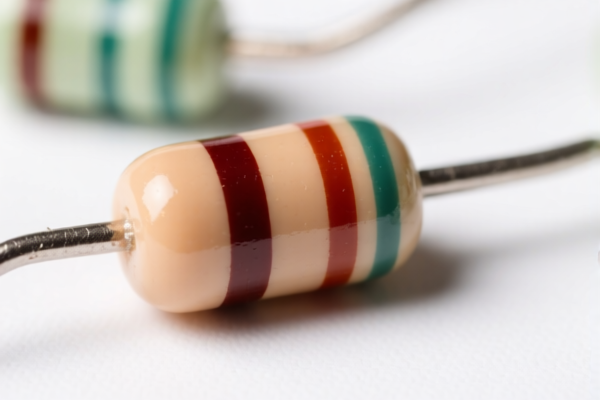
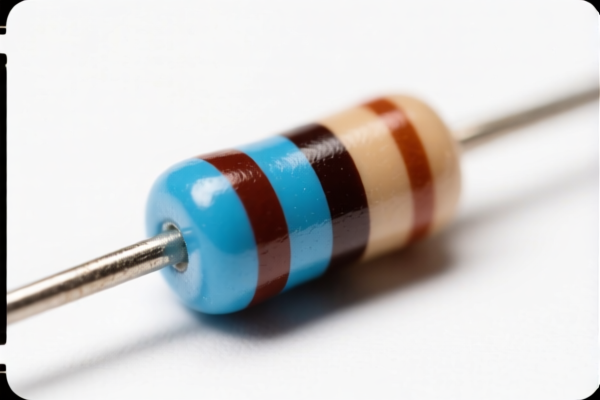
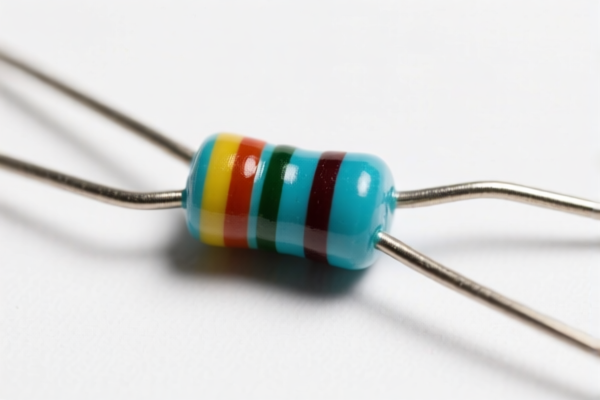
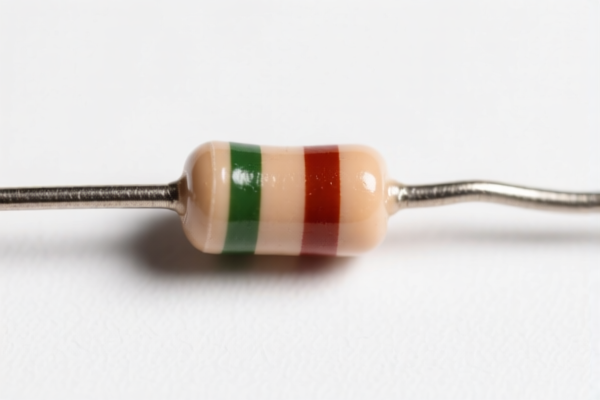
AI Analysis
⚡ Resistors (Electronic Components)
🌐 HS Code Reference & Customs Clearance Guide | 2026 Latest Tariff Analysis | Professional Compliance Strategy
📌 I. Product Definition & Classification: Do You Really Understand "Resistors"?
Resistors are fundamental passive electronic components used to regulate current flow and voltage distribution in circuits. In international trade, they are primarily classified under Chapter 85 (Electrical Machinery and Equipment). However, the specific HS Code depends heavily on their form, function, and integration level:
Fixed Resistors (8533): The most common category, including carbon film, metal film, wire-wound, and thick/thin film resistors. These are standalone components. Printed Circuits with Resistors (8534): If resistors are permanently attached to a printed circuit board (PCB) or other substrate forming a complete circuit module, they may fall under this category instead of standalone resistors. Other Electrical Resistance Units: Specialized high-power or industrial resistance units that do not fit standard resistor definitions.
⚠️ Key Distinction Point:
- If the resistor is a discrete, standalone component → It belongs to HS 8533 (e.g.,8533.21.00.90,8533.29.00.00).
- If the resistors are integrated onto a PCB or substrate as part of a larger circuit assembly → It may belong to HS 8534 (8534.00.00.95).
- Misclassification between "standalone component" (8533) and "circuit assembly" (8534) can lead to customs delays or incorrect duty assessments.
📦 II. HS Code Classification Details (2026 Latest Tariff Authority Comparison)
| HS Code | Product Description | Applicable Scenario | Integration Level |
|---|---|---|---|
8533.21.00.90 |
Fixed Resistors, Power Rating ≤ 20W, Unspecified Material/Type | Standard chip resistors, axial lead resistors, generic fixed resistors without specific material breakdown | ❌ Standalone Component |
8534.00.00.95 |
Printed Circuits, Other (Including those with integrated resistors) | Resistors permanently mounted on PCBs, rigid or flexible circuits, modular circuit assemblies | ✅ Integrated into Circuit |
8533.29.00.00 |
Other Fixed Resistors (Not elsewhere specified) | Resistors with specific power ratings >20W, special forms, or non-standard electrical resistance units | ❌ Standalone Component |
🔍 Critical Reminder:
- Standalone Resistors: Must be declared under HS 8533. Common examples include SMD resistors (0402, 0603, etc.) and through-hole resistors.
- Circuit Modules: If the product is a PCB with resistors soldered on it, it is classified under HS 8534.
- Do Not Split: If resistors are shipped as discrete components, do not declare them as "circuit parts" (HS 8534) unless they are already assembled on a board.
💰 III. 2026 Latest Tariff Rate Breakdown (Including Surcharges & Policy Add-ons)
✅ Applicable Country: United States (US)
✅ Country of Origin: China (CN)
✅ Effective Date: Ongoing (Current Trade War Tariffs)
🎯 1. 8533.21.00.90 —— Fixed Resistors (Power ≤ 20W, Generic)
| Item | Detail |
|---|---|
| Base Duty Rate | 0% (ad valorem) |
| USITC Surcharge (Section 301) | +25% |
| IEEPA Surcharge (Section 122/EO 13936) | +10% (For China-origin products) |
| Total Duty Rate | 35.0% |
| Tax Calculation | CIF Value × 35% |
| De Minimis Exemption Eligible? | ❌ No (deny_de_minimis applies to Section 301/IEEPA goods) |
| Legal Basis Path | USITC:8533.21.00.90 → Footnote:9903.01.25 (301 Tariff) → IEEPA:9903.01.24 (10% Surcharge) |
📌 Explanation:
- The 25% USITC surcharge is based on Section 301 of the Trade Act, targeting key Chinese industrial components.
- The 10% IEEPA surcharge is an additional layer on top of Section 301 tariffs for many electronics imports from China.
- Total 35% is a high burden. Pre-clearance and accurate classification are crucial to avoid penalties.
🎯 2. 8534.00.00.95 —— Printed Circuits with Integrated Resistors
| Item | Detail |
|---|---|
| Base Duty Rate | 0% |
| USITC Surcharge (Section 301) | +25% |
| IEEPA Surcharge | +10% |
| Total Duty Rate | 35.0% |
| Tax Calculation | CIF Value × 35% |
| De Minimis Exemption Eligible? | ❌ No |
| Legal Basis Path | USITC:8534.00.00.95 → Footnote:9903.88.01 (301 Tariff for PCBs) → IEEPA:9903.01.24 |
📌 Note:
- Although classified under "Printed Circuits," the tariff structure for Chinese-origin PCBs mirrors that of discrete resistors due to broad Section 301 coverage.
- This applies to rigid PCBs, flexible circuits, and hybrid circuits containing resistors.
🎯 3. 8533.29.00.00 —— Other Fixed Resistors
| Item | Detail |
|---|---|
| Base Duty Rate | 0% |
| USITC Surcharge (Section 301) | +25% |
| IEEPA Surcharge | +10% |
| Total Duty Rate | 35.0% |
| Tax Calculation | CIF Value × 35% |
| De Minimis Exemption Eligible? | ❌ No |
| Legal Basis Path | USITC:8533.29.00.00 → Footnote:9903.01.25 → IEEPA:9903.01.24 |
📌 Note:
- This code captures resistors that do not fit into the "≤20W" or specific material categories.
- The tariff burden is identical to8533.21.00.90due to the overarching Section 301 policy on Chinese electronics.
🛠️ IV. Customs Clearance Practical Advice (Battle-Tested Pitfall Avoidance)
✅ 1. Required Documentation Checklist (Missing Items = Delays)
| Document | Required? | Description |
|---|---|---|
| ✅ Product Specification Sheet | ✔️ | Must include resistance value, tolerance, power rating, package type (e.g., 0402, axial). |
| ✅ Circuit Diagram (if applicable) | ✔️ | Critical for 8534 classification to prove resistors are integrated into a circuit. |
| ✅ Product Photos (with Label) | ✔️ | Clear view of markings, part numbers, and physical form (standalone vs. on PCB). |
| ✅ Commercial Invoice | ✔️ | Must specify "Resistor" or "Printed Circuit Board" accurately. Avoid vague terms like "Electronics Parts." |
| ✅ Packing List | ✔️ | Detail the quantity and weight of discrete resistors vs. PCB assemblies. |
| ✅ Country of Origin Certificate | ✔️ | Required for tariff verification. |
✅ 2. Declaration Tips (Key Mnemonics)
🔥 "Discrete = 8533, PCB = 8534, Name Matters, Tax Stays 35%!"
| Scenario | Correct Declaration | Incorrect Practice |
|---|---|---|
| Loose/Bagged Resistors | 8533.21.00.90 or 8533.29.00.00 |
Declaring as "PCB Parts" → Potential Misclassification |
| Resistors on PCB | 8534.00.00.95 |
Declaring as "Resistors" → Under-reporting complexity |
| Mixed Shipment | Separate Lines: List 8533 items and 8534 items separately | Mixing discrete resistors with PCBs in one line item |
| Sample Shipments | Still declare accurate HS Code | Claiming "No Value" or "Sample" to avoid duties → High Risk |
✅ 3. Special Circumstances Handling
| Scenario | Handling Advice |
|---|---|
| OEM Custom Resistors | Provide customer PO and technical drawings to justify specific HS Code under 8533. |
| Resistors in Kits | If resistors are sold as part of an electronics learning kit, the kit may be classified differently (e.g., as an "educational kit"), but individual components should be listed if valued separately. |
| High-Power Industrial Resistors | Ensure 8533.29.00.00 is used if power rating >20W or form is non-standard. |
| Relabeled Components | Do not re-label Chinese components as "Other Origin" unless re-manufactured. This is fraud. |
🌍 V. Global Market Clearance Comparison (2026 Latest)
| Country/Region | Recommended HS Code | Duty Rate (China Origin) | Certification Requirements | Notes |
|---|---|---|---|---|
| 🇺🇸 USA | 8533.21.00.90 / 8534.00.00.95 |
35% (25% Sec 301 + 10% IEEPA) | None specific, but RoHS recommended | Highest global burden due to trade war. |
| 🇨🇳 China | 8533.21.00.90 |
0% (Most Favored Nation) | RoHS (China Compulsory) | No surcharges. |
| 🇪🇺 EU | 8533.21.00.00 |
0% (Standard MFN) | CE, RoHS, REACH | No Section 301 equivalent. |
| 🇬🇧 UK | 8533.21.00.00 |
0% (Standard MFN) | UKCA, RoHS | Post-Brexit alignment with EU tariffs. |
| 🇯🇵 Japan | 8533.21.00.00 |
0% (MFN) | PSE (if applicable) | Low duty environment. |
📌 Conclusion:
- The US market imposes a 35% effective duty rate on Chinese electronic components, making it the most expensive destination.
- EU, UK, Japan, and China offer 0% or very low base tariffs, with no similar "trade war" surcharges.
- For US exports, cost optimization strategies (e.g., tariff engineering, third-country assembly) are critical.
📌 VI. Common Errors & Pitfall Avoidance (Lessons Learned)
❌ Error 1: Declaring PCBs with resistors as standalone resistors (8533)
👉 Consequence: Customs may reclassify, leading to delays, additional scrutiny, or penalties for undervaluation of complexity.
❌ Error 2: Declaring standalone resistors as "Electronic Components" (generic code)
👉 Consequence: Vague descriptions trigger manual examination, causing clearance delays and potential misclassification fines.
❌ Error 3: Ignoring IEEPA 10% Surcharge
👉 Consequence: Underpayment of 35% total duty (only paying 25%) results in back taxes, interest, and penalties.
❌ Error 4: Failing to distinguish between ≤20W and >20W resistors
👉 Consequence: Misuse of 8533.21 vs. 8533.29 may not change the duty rate significantly but demonstrates lack of diligence during audits.
✅ Best Practice:
"Resistor, Fixed, 1/4W, 10kΩ, ±5%, 0603 Package, SMD, Model XYZ, China Origin"
OR
"Printed Circuit Board, Rigid, Surface Mounted Components (including Resistors), Model ABC, China Origin"
🎯 VII. Conclusion: Precision Classification, Cost Control, Smooth Clearance!
🎯 Remember the Mantra:
🔹 "Standalone = 8533, PCB = 8534, US Tax = 35%, De Minimis = No!"
🔹 "HS Code Dictates Duty, Accuracy Saves Money, Vague Descriptions Cause Delays!"
📌 Pro Tip:
If your resistors are assembled into circuits in Vietnam, Mexico, or Malaysia, you may qualify for IEEPA exemptions or lower Section 301 rates depending on the substantial transformation rules.
Recommendation: Apply for a Customs Ruling (Pre-Import Determination) before shipping high-volume consignment to ensure compliance.
📣 Immediate Action:
📞 Engage a Licensed Customs Broker + Provide Technical Specs + File for HS Code Ruling
🚀 Ensure your resistors pass customs smoothly, reduce costs, and maximize profit!
✨ Professional Clearance Starts with Accurate Classification!
💼 Every Cent in Duty is Worth Calculating Precisely!
Customer Reviews
About HS Code Classification
The Harmonized System (HS) is an internationally standardized nomenclature developed by the World Customs Organization (WCO) to classify traded products. Over 200 countries use the HS system as the basis for customs tariffs, trade statistics, and import/export regulations.
Each HS code follows a hierarchical structure:
- Chapter (2 digits) — Broad category of goods (e.g., Chapter 84: Machinery and Mechanical Appliances)
- Heading (4 digits) — More specific grouping within the chapter
- Subheading (6 digits) — Internationally standardized breakdown, used by all WCO member countries
- National subdivisions (8-10 digits) — Country-specific extensions for further classification, such as US HTSUS 10-digit codes
Correct HS code classification is essential for smooth customs clearance, accurate duty payment, and compliance with trade regulations. Misclassification can lead to customs delays, overpayment of duties, or penalties.
When importing from CN to US, the applicable tariff rates may include:
- Most-Favored-Nation (MFN) rate — The standard duty rate applied to WTO members
- General rate — Applied to countries without trade agreements
- Trade remedy duties — Additional tariffs such as Section 301 (anti-dumping), Section 232 (national security), or countervailing duties
The information provided on this page is for reference purposes only. For official classification, please consult with your local customs authority or a licensed customs broker.