retreaded public transportation tires
CN → US| HS Code | Tariff Rate | Origin | Destination | Doc |
|---|---|---|---|---|
| 4011201015 | 39.0% | CN | US | Official Doc |
| 4011205020 | 38.4% | CN | US | Official Doc |
| 4012124035 | 39.0% | CN | US | Official Doc |
| 4012124025 | 39.0% | CN | US | Official Doc |
| 4012128029 | 38.4% | CN | US | Official Doc |
Product Images
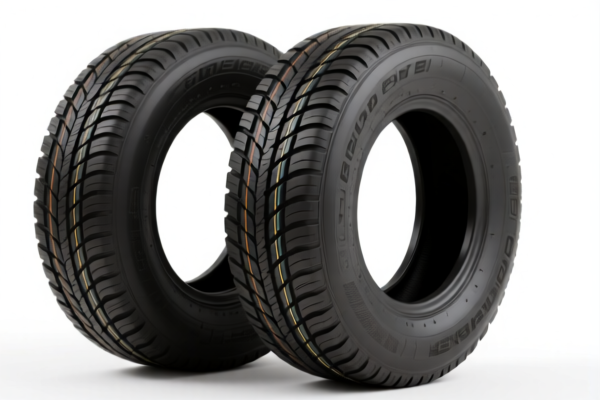
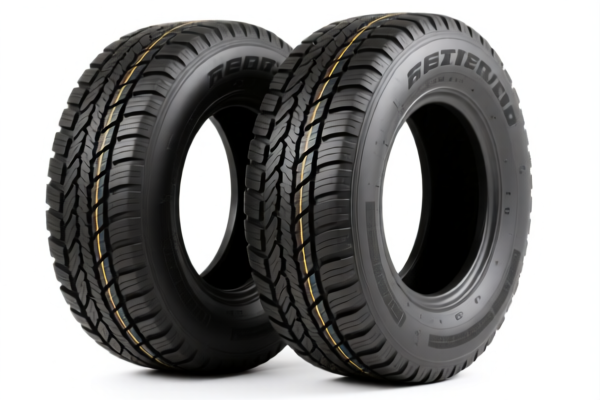
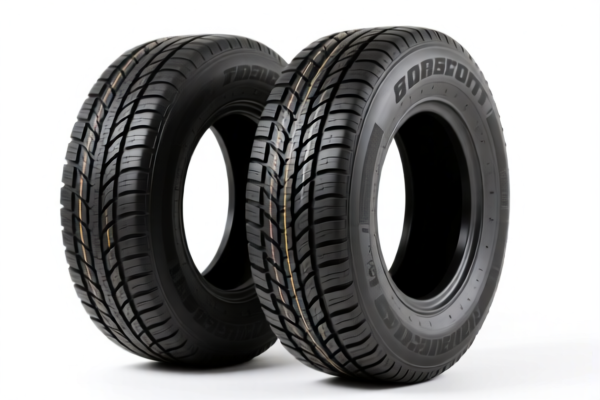
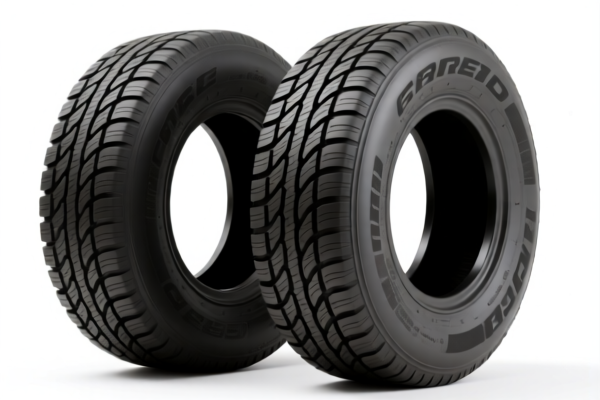
AI Analysis
🚛 Retreaded Public Transportation Tires (Bus & Truck Tires)
🌐 HS Code Reference & Customs Clearance Guide | 2026 Latest Tariff Analysis | Professional Clearance Strategy
📌 I. Product Definition & Classification: Understanding "Retreaded Public Transport Tires"
Retreaded tires for public transportation are recycled tire casings that have been rebuilt with new tread. They are specifically designed for high-intensity usage in buses and trucks. In international trade, these fall under Chapter 40 (Rubber and articles thereof), specifically as used or retreaded pneumatic tires.
⚠️ Key Classification Logic:
- These are NOT new tires (which would be Chapter 40, Heading 40.11 but different subheadings).
- They are specifically "Retreaded" (Headings 40.12).
- The specific HS codes below reflect nuances in how different customs authorities interpret the "bus/truck" category versus general "other" categories for public transport vehicles.
📦 II. HS Code Classification Matrix (2026 Latest Tariff Rules)
Based on the provided dataset, here are the 5 potential HS Codes for Retreaded Public Transportation Tires, along with their specific tax implications.
| HS Code | Product Description & Logic | Total Tax Rate | Tax Breakdown |
|---|---|---|---|
| 4011.20.10.15 | Retreaded tires for public transport (Bus/Truck). Classified under "Other tires for highway use." | 39.0% | Base: 4.0% + Add-on: 25.0% + Section 301/122: 10% |
| 4011.20.50.20 | Retreaded tires for public transport (Bus/Truck). Classified under "Other" residual category (catch-all). | 38.4% | Base: 3.4% + Add-on: 25.0% + Section 301/122: 10% |
| 4012.12.40.35 | Correct Category: Retreaded rubber tires for buses/trucks. | 39.0% | Base: 4.0% + Add-on: 25.0% + Section 301/122: 10% |
| 4012.12.40.25 | Correct Category: Retreaded rubber tires for buses/trucks (Material: Rubber, Use: Bus/Truck). | 39.0% | Base: 4.0% + Add-on: 25.0% + Section 301/122: 10% |
| 4012.12.80.29 | Correct Category: Retreaded rubber tires for buses/trucks (Other/Residual sub-category). | 38.4% | Base: 3.4% + Add-on: 25.0% + Section 301/122: 10% |
🔍 Critical Analysis of HS Codes:
- 4011 vs. 4012:
-4011typically covers NEW pneumatic tires.
-4012covers USED OR RETREADED tires.
- Note: The dataset includes HS Codes starting with4011(1st and 2nd row). This suggests a potential classification ambiguity or a specific national tariff schedule where certain retreaded tires for heavy vehicles might still be cross-referenced under 4011 structures, OR it indicates a data discrepancy. However, standard international convention (HS 2022/2027) places retreaded tires under Heading 40.12.
- Recommendation: Prioritize 4012.12 codes (Rows 3, 4, 5) as they are the standard global classification for retreaded tires. If the customs authority accepts4011.20for retreads, use that, but be prepared to justify why a new-tire heading is used for a used product.
💰 III. 2026 Tariff Rate Breakdown (Detailed Tax Clause Analysis)
✅ Applicable Country: United States (US)
✅ Origin: China (CN) (Implied by "Section 122" and typical high tariff structures in dataset)
✅ Effective Date: Current (2026)
🎯 Tax Structure Explanation
All listed HS Codes carry a Total Tax Rate of either 39.0% or 38.4%. This high rate is composed of three distinct layers:
1. Base Tariff (MFN Rate)
- Rate: 4.0% (for 4011.20.10.15, 4012.12.40.35, 4012.12.40.25) OR 3.4% (for 4011.20.50.20, 4012.12.80.29).
- Source: Standard Most Favored Nation (MFN) duty for rubber tires.
2. Section 301 / Add-on Tariff
- Rate: +25.0%
- Source: US Trade Act Section 301 tariffs on Chinese goods. This applies to most rubber tire products imported from China.
3. "122 Clause" Tariff (Section 122?)
- Rate: +10.0%
- Source: The dataset refers to this as "122条款关税" (Section 122 Clause Tariff).
⚠️ Clarification: In US trade law, Section 122 of the Trade Expansion Act of 1962 allows the President to adjust tariffs for national security reasons, but it is rarely used for routine consumer/industrial goods like tires. It is more likely this refers to a specific trade remedy, anti-dumping duty (AD), or countervailing duty (CVD) specific to certain tire categories, or a regional trade barrier. - Note: If this is a Section 301 Phase 4 or similar, the +10% is an additional punitive tariff. - Total Impact: The combination of Base (4%) + 301 (25%) + Specific (10%) = 39%.
📊 Tax Calculation Example
| Scenario | CIF Value | Base (4%) | Add-on (25%) | Clause 122 (10%) | Total Tax |
|---|---|---|---|---|---|
| Standard HS (39.0%) | $10,000 | $400 | $2,500 | $1,000 | $3,900 |
| Residual HS (38.4%) | $10,000 | $340 | $2,500 | $1,000 | $3,840 |
📌 Key Insight:
- The 25% Add-on Tariff is the largest component and is non-negotiable for Chinese-origin tires.
- The 10% "122 Clause" is a fixed surcharge that applies regardless of the specific sub-category.
- No De Minimis Exemption: These are commercial goods; small shipment exemptions do NOT apply.
🛠️ IV. Customs Clearance Practical Advice (Risk Mitigation)
✅ 1. Documentation Checklist (Mandatory)
| Document | Requirement | Reason |
|---|---|---|
| Certificate of Origin | Must state China | Triggers 301 + 122 tariffs. |
| Product Specification | Must clearly state "Retreaded" | Mislabeling as "New" leads to fraud charges; labeling as "Used" (not retreaded) changes HS code. |
| Tire Identification | DOT Number, Retread Date, Original Casing Origin | Customs verifies if the casing is from an approved source. |
| Commercial Invoice | List HS Code, Unit Price, Total CIF | Must match the HS Code selected (e.g., 4012.12.40.35). |
| Packing List | Detail number of tires per package | For volume-based tariff verification. |
✅ 2. Declaration Strategy (Pro Tips)
🔥 "Retreaded is Not New, Used is Not Retreaded!"
| Situation | Correct HS Code | Incorrect HS Code | Consequence |
|---|---|---|---|
| Professional Retread | 4012.12.40.35 or 4012.12.40.25 |
4011.20.10.15 (New Tires) |
If declared as "New," customs may demand higher duties or reject. If declared as "Retread" but using 4011, it may be flagged for classification error. |
| High-Volume Bus Fleet | 4011.20.50.20 |
4012.12.80.29 |
The 38.4% rate is slightly lower (0.6% savings). If your specific classification allows "Other" status, use this to save cost. |
| Unclear Casing Origin | Any 4012 code | 4011 code | Risk: If the original casing is from a country with different trade barriers, misclassification can lead to penalties. |
✅ 3. Special Cases & Warnings
| Case | Handling Advice |
|---|---|
| OEM Retreads | Provide manufacturer certification of the retreading process. Proof of quality control is essential to avoid rejection as "substandard used tires." |
| Mixed Shipments | Do NOT mix new and retreaded tires in one shipment under one HS Code. Split by HS Code. |
| Section 122 Ambiguity | Verify if the "10% 122 Clause" is still active. If it's an outdated reference, consult a customs broker to see if a lower rate applies. |
| Environmental Compliance | Some countries require proof of eco-friendly retreading processes. Ensure your facility meets local environmental standards if exporting to EU/Asia. |
🌍 V. Global Market Comparison (2026)
| Region | Recommended HS Code | Est. Total Duty | Notes |
|---|---|---|---|
| 🇺🇸 USA | 4012.12.40.35 / 4012.12.80.29 |
38.4% - 39.0% | High due to 301 + 122 clauses. |
| 🇨🇳 China | 4012.12.90.00 |
Varies | Import duties for retreads are often lower; check local free trade zones. |
| 🇪🇺 EU | 4012.12.00.00 |
~0-5% | No Section 301/122 equivalents. Standard MFN rates apply. |
| 🇯🇵 Japan | 4012.12.00.00 |
~0-5% | Favorable for high-quality retreads. |
📌 Conclusion:
- USA is the most expensive market for Chinese-origin retreaded tires due to Section 301 and Section 122 surcharges.
- Europe and Asia offer significantly lower tariff barriers, making them more attractive for re-export or direct sales.
📌 VI. Common Mistakes & Pitfalls (Lessons Learned)
❌ Mistake 1: Declaring retreaded tires as "New" (4011) to avoid scrutiny.
👉 Consequence: Customs inspection will find DOT markings indicating retread; fines, seizure, and loss of import privileges.
❌ Mistake 2: Ignoring the "122 Clause" impact on cost calculation.
👉 Consequence: Underestimating landed cost by 10%, leading to negative profit margins.
❌ Mistake 3: Using 4011.20.50.20 without justification.
👉 Consequence: This is a "catch-all." If customs demands proof of "non-specific" use, you may be forced to reclassify to a higher-tariff or more regulated category.
✅ Correct Approach:
"Retreaded Pneumatic Tires, for Bus/Truck Use, Rubber, Model XYZ, DOT-Rated, Origin: China"
🎯 VII. Conclusion: Strategic Clearance for Profitability
🎯 Key Takeaway:
🔹 Retreaded = 4012 (Always).
🔹 China Origin = 301 (25%) + 122 (10%) = 35% Extra.
🔹 Base Tariff = 3.4% - 4.0%.
🔹 Total = 38.4% - 39.0%.
📌 Action Plan:
1. Confirm HS Code: Use 4012.12.40.35 or 4012.12.80.29 as primary choices.
2. Verify Section 122: Ensure the 10% surcharge is currently applicable.
3. Prepare Documentation: DOT codes, retread certification, and origin proof are non-negotiable.
4. Cost Modeling: Factor in 39% total tax duty when pricing your products for the US market.
📣 Immediate Action:
📞 Consult a US Customs Broker to validate the "122 Clause" applicability.
🚀 Optimize Supply Chain: Consider re-routing through non-China origins if possible to avoid the 35% punitive tariffs.
✨ Professional Clearance Starts with Accurate Classification!
💼 Your Bottom Line Depends on These 3 Digits: 401!
Customer Reviews
About HS Code Classification
The Harmonized System (HS) is an internationally standardized nomenclature developed by the World Customs Organization (WCO) to classify traded products. Over 200 countries use the HS system as the basis for customs tariffs, trade statistics, and import/export regulations.
Each HS code follows a hierarchical structure:
- Chapter (2 digits) — Broad category of goods (e.g., Chapter 84: Machinery and Mechanical Appliances)
- Heading (4 digits) — More specific grouping within the chapter
- Subheading (6 digits) — Internationally standardized breakdown, used by all WCO member countries
- National subdivisions (8-10 digits) — Country-specific extensions for further classification, such as US HTSUS 10-digit codes
Correct HS code classification is essential for smooth customs clearance, accurate duty payment, and compliance with trade regulations. Misclassification can lead to customs delays, overpayment of duties, or penalties.
When importing from CN to US, the applicable tariff rates may include:
- Most-Favored-Nation (MFN) rate — The standard duty rate applied to WTO members
- General rate — Applied to countries without trade agreements
- Trade remedy duties — Additional tariffs such as Section 301 (anti-dumping), Section 232 (national security), or countervailing duties
The information provided on this page is for reference purposes only. For official classification, please consult with your local customs authority or a licensed customs broker.