rigid plastic shell document case
CN → US| HS Code | Tariff Rate | Origin | Destination | Doc |
|---|---|---|---|---|
| 3926909989 | 22.8% | CN | US | Official Doc |
| 4202122910 | 55.0% | CN | US | Official Doc |
| 4202122120 | 55.0% | CN | US | Official Doc |
Product Images
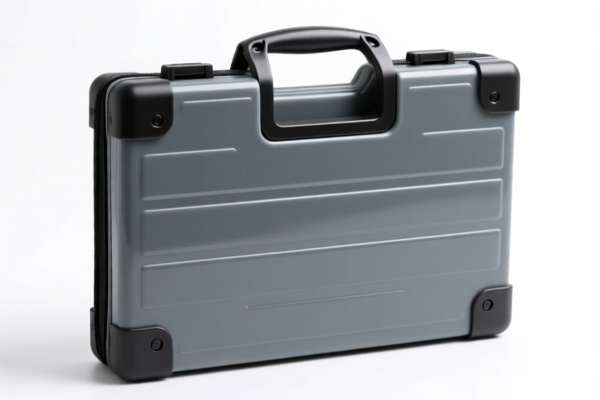
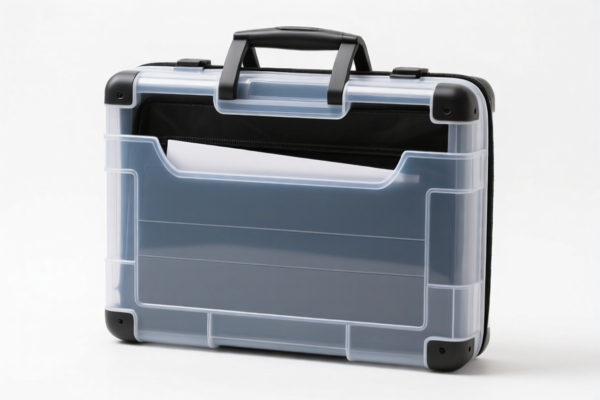
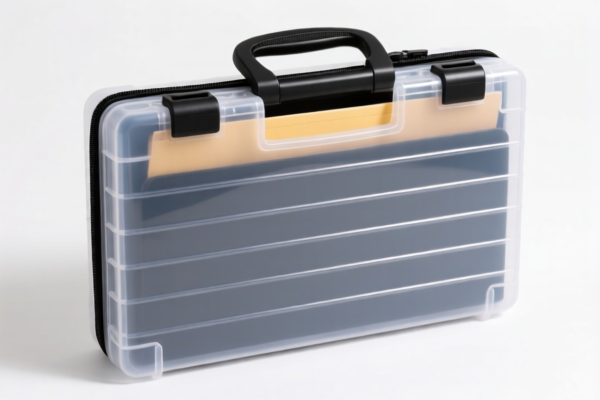
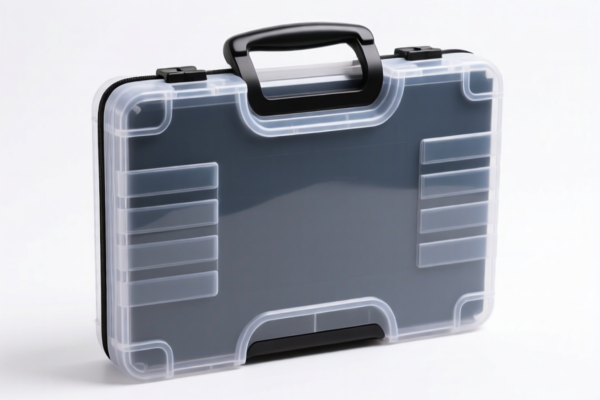
AI Analysis
💼 Rigid Plastic Document Case (Business Briefcase)
🌐 HS Code Reference & Customs Clearance Guide | 2026 Latest Tariff Analysis | Professional Clearance Strategy
📌 1. Product Definition and Classification: Understanding "Rigid Plastic Document Cases"
A Rigid Plastic Document Case is a container designed for carrying documents, files, or briefcases. It is characterized by its rigid structure, meaning the sides are hard, formed, and do not collapse easily. The material is explicitly plastic.
In international trade, classification depends heavily on: 1. Material Composition: Is it primarily plastic? 2. Structure/Shape: Is it rigid (hard shell) or flexible (soft-sided)? 3. Intended Use: Is it specifically for "briefcases," "satchels," or "suitcases"?
⚠️ Key Distinction Point: - If the case is soft-sided or made primarily of textile/materials other than plastic (even if it has a plastic lining), it may fall under Chapter 42 (Articles of Leather). - If the case is rigid and made of plastic, it is generally classified under Chapter 39 (Plastics) or Chapter 42 (Articles of Leather/Travel Goods) depending on specific structural definitions and trade policy interpretations.
📦 2. HS Code Classification Details (Based on Provided Data)
| HS Code | Product Description | Key Characteristics | Total Tax Rate |
|---|---|---|---|
| 3926.90.99.89 | Other articles of plastics, nesoi. Rigid plastic document case, plastic material. | Considered as "Other plastic articles." Generic classification for plastic goods not specified elsewhere. | 22.8% |
| 4202.12.29.10 | Trunk, suitcase, briefcase, satchel... containing external surface of plastics. Rigid plastic document case, hard form, used as a briefcase. | Classified under "Articles of Travel, Satchels, Briefcases." Focuses on function (briefcase) and surface material (plastics). | 55.0% |
| 4202.12.21.20 | Trunk, suitcase, briefcase... Rigid plastic document case, structure conforms to the definition of being hard and formed on all sides. | Specific sub-category for rigid briefcases with a fully hardened, formed structure. Highest specificity in Chapter 42. | 55.0% |
🔍 Critical Note: - HS Code 3926.90.99.89 offers the lowest tax burden (22.8%) because it is categorized broadly as a "plastic article" rather than a "travel good/briefcase." - HS Codes 4202.12.29.10 and 4202.12.21.20 are classified as "Briefcases/Travel Goods" under Chapter 42. These incur a much higher tax rate (55.0%) due to specific trade restrictions (Section 301/122 tariffs) on Chinese-origin travel goods. - Do not mix descriptions: Calling a "Rigid Plastic Case" a "Plastic Article" (Ch 39) vs. a "Briefcase" (Ch 42) leads to vastly different tax outcomes.
💰 3. 2026 Tariff Rate Breakdown (Including Surcharges)
✅ Applicable Country: United States (US)
✅ Origin: China (CN)
✅ Effective Date: Current trade policies (Section 301 & 122 Tariffs)
🎯 1. HS Code 3926.90.99.89 — Other Plastic Articles (Lower Tax Strategy)
| Item | Detail |
|---|---|
| Base Tariff | 5.3% |
| Section 301 Additional Tariff | 7.5% |
| Section 122 Tariff | 10% |
| Total Effective Rate | 22.8% |
| Calculation | CIF Value × 22.8% |
| De Minimis Eligibility | ❌ No (Section 301/122 tariffs apply to all imports) |
| Legal Basis Path | 3926.90.99.89 → Base: 5.3% + Sec301: 7.5% + Sec122: 10% |
📌 Explanation: - This code is classified under Chapter 39 (Plastics), specifically "Other articles of plastics." - The tax rate is significantly lower because it avoids the higher punitive tariffs applied specifically to "Leather/Travel Goods" (Chapter 42) from China. - Strategy: If the product can be legitimately described as a "rigid plastic storage case" rather than a "briefcase," this classification may be argued to reduce costs.
🎯 2. HS Code 4202.12.29.10 — Briefcase (Hard Plastic, General)
| Item | Detail |
|---|---|
| Base Tariff | 20.0% |
| Section 301 Additional Tariff | 25.0% |
| Section 122 Tariff | 10% |
| Total Effective Rate | 55.0% |
| Calculation | CIF Value × 55.0% |
| De Minimis Eligibility | ❌ No |
| Legal Basis Path | 4202.12.29.10 → Base: 20.0% + Sec301: 25.0% + Sec122: 10% |
📌 Explanation: - This code falls under Chapter 42 (Articles of Leather/Travel Goods). - The "25% Section 301 tariff" is a major cost driver for Chinese-origin goods. - This classification applies if the item is clearly intended and marketed as a briefcase or satchel.
🎯 3. HS Code 4202.12.21.20 — Briefcase (Hard/Formatted Structure)
| Item | Detail |
|---|---|
| Base Tariff | 20.0% |
| Section 301 Additional Tariff | 25.0% |
| Section 122 Tariff | 10% |
| Total Effective Rate | 55.0% |
| Calculation | CIF Value × 55.0% |
| De Minimis Eligibility | ❌ No |
| Legal Basis Path | 4202.12.21.20 → Base: 20.0% + Sec301: 25.0% + Sec122: 10% |
📌 Explanation: - Similar to the above, but specifies the structural rigidity ("hard and formed on all sides"). - U.S. Customs and Border Protection (CBP) may scrutinize this code if the item is purely plastic, as Chapter 42 traditionally covers leather/textiles. However, if the external surface is plastic, it is included. - Risk: High scrutiny due to the specific structural definition. Misclassification can lead to penalties.
🛠️ 4. Practical Clearance Advice (Avoid Pitfalls)
✅ 1. Documentation Checklist (Non-negotiable)
| Document | Required? | Description |
|---|---|---|
| ✅ Product Specifications | ✔️ | Material: 100% Plastic. Structure: Rigid/Hard Shell. |
| ✅ Product Photos | ✔️ | Clear images showing the rigid form, handles, and closure. |
| ✅ Commercial Invoice | ✔️ | Must describe the item accurately. Crucial: Name should align with HS Code. |
| ✅ Packing List | ✔️ | Item count, weight, dimensions. |
| ✅ Country of Origin Certificate | ✔️ | Must state China. |
| ✅ Declaration of Function | ✔️ | If using HS 3926, emphasize "storage/shield" function. If using 4202, emphasize "briefcase/carrying" function. |
✅ 2. Declaration Strategy (Key Tips)
🔥 "Name Matters, Structure Defines, Tax Follows!"
| Scenario | Recommended HS Code | Reasoning |
|---|---|---|
| Generic Rigid Plastic Box/Case for documents | 3926.90.99.89 | Lower tax (22.8%). Focus on "Plastic Article" aspect. Avoid words like "Briefcase" if possible. |
| High-End Plastic Briefcase with brand, handles, strap | 4202.12.29.10 or 4202.12.21.20 | Higher tax (55.0%). Intended for professional document carrying. Structure is rigid. |
| Soft-sided Plastic Case (Collapsible) | Not in Data | Likely falls under different Chapter 42 codes with different rates. Not covered in this specific dataset. |
📌 Warning: - Do not misdeclare a "Briefcase" (Ch 42) as a "Plastic Article" (Ch 39) to save taxes. CBP routinely audits these. If the item has handles, a shoulder strap, and is marketed as a briefcase, they will likely reclassify it to Chapter 42, resulting in back taxes + penalties. - HS Code 4202.12.21.20 requires proof of "hard and formed" structure. Provide engineering diagrams if requested.
✅ 3. Special Situations
| Situation | Advice |
|---|---|
| OEM Custom Design | Ensure the description matches the actual structure. If it's a "hard shell," use 4202.12.21.20. |
| Plastic + Leather Trim | If >50% value/surface is leather, it might still be Ch 42. If primarily plastic, Ch 39 may be argued, but risky. |
| Import from Non-China Origins | Tariffs may vary (e.g., Vietnam, Mexico). Check if any Section 301 exemptions apply. |
🌍 5. Global Market Comparison (2026)
| Market | Recommended HS Code | Est. Total Tax (China Origin) | Notes |
|---|---|---|---|
| 🇺🇸 USA | 3926.90.99.89 | 22.8% | Best option if product can be legally classified as a general plastic article. |
| 🇺🇸 USA | 4202.12.21.20 | 55.0% | Mandatory if marketed strictly as a "Briefcase." |
| 🇨🇳 China (Import) | 4202.12.29.10 | ~20% | China imports are not subject to Section 301. Check local VAT. |
| 🇪🇺 EU | 4202.12.00 | ~4-6% | EU tariffs are generally lower. No "Section 301" equivalent for China. |
📌 Conclusion for USA: - The 22.8% vs 55.0% difference is critical. - Strategy: If the product is a generic rigid plastic case (e.g., for engineers, field workers, or simple document storage), try to classify under 3926.90.99.89. - Risk: If it is clearly a luxury or standard business briefcase, CBP will force it into 4202.12.xxxx.
📌 6. Common Mistakes & Pitfalls (Lessons Learned)
❌ Mistake 1: Calling a "Briefcase" a "Plastic Container" to avoid the 55% tax.
👉 Consequence: CBP inspection reveals it's a briefcase. Back taxes + 25% penalty.
❌ Mistake 2: Ignoring the "Section 122" 10% tariff.
👉 Consequence: Underestimating landed cost. Always include the 10% in your cost model.
❌ Mistake 3: Assuming all plastic goods are 3926.
👉 Consequence: If it meets the definition of a "briefcase" (Ch 42), 3926 is incorrect. Chapter 42 prevails for specific travel goods.
✅ Correct Approach:
"Rigid Plastic Document Case, Hard Shell, Plastic Material. For general document storage."
If Marketing as Briefcase:
"Professional Hard-Shell Briefcase, Plastic Exterior, Rigid Form."
🎯 7. Conclusion: Professional Classification Saves Money!
🎯 Key Takeaway:
🔹 HS Code 3926.90.99.89 = 22.8% (Plastic Article)
🔹 HS Code 4202.12.21.20 = 55.0% (Rigid Briefcase)
🔹 Difference: 32.2% tax savings!🔹 "Structure Defines, Function Classifies, Tariff Follows."
🔹 "22.8% vs 55%: Don't let misclassification eat your margin."
📌 Pro Tip:
If your product is borderline, consider: 1. Advance Ruling: Request a binding opinion from US CBP. 2. Product Design: Can you market it as a "Storage Case" rather than a "Briefcase"? This supports HS 3926. 3. Supply Chain: If from non-China origins, check for lower tariffs.
📣 Immediate Action:
📞 Consult a Licensed Customs Broker
📂 Provide Product Photos & Description
🚀 Secure the Lowest Legal Tax Rate!
✨ Professional Clearance, Starting with Precise Classification!
💼 Every Percent of Tax Saved is Profit Earned!
Customer Reviews
About HS Code Classification
The Harmonized System (HS) is an internationally standardized nomenclature developed by the World Customs Organization (WCO) to classify traded products. Over 200 countries use the HS system as the basis for customs tariffs, trade statistics, and import/export regulations.
Each HS code follows a hierarchical structure:
- Chapter (2 digits) — Broad category of goods (e.g., Chapter 84: Machinery and Mechanical Appliances)
- Heading (4 digits) — More specific grouping within the chapter
- Subheading (6 digits) — Internationally standardized breakdown, used by all WCO member countries
- National subdivisions (8-10 digits) — Country-specific extensions for further classification, such as US HTSUS 10-digit codes
Correct HS code classification is essential for smooth customs clearance, accurate duty payment, and compliance with trade regulations. Misclassification can lead to customs delays, overpayment of duties, or penalties.
When importing from CN to US, the applicable tariff rates may include:
- Most-Favored-Nation (MFN) rate — The standard duty rate applied to WTO members
- General rate — Applied to countries without trade agreements
- Trade remedy duties — Additional tariffs such as Section 301 (anti-dumping), Section 232 (national security), or countervailing duties
The information provided on this page is for reference purposes only. For official classification, please consult with your local customs authority or a licensed customs broker.