rigid plastic shell vanity case
CN → US| HS Code | Tariff Rate | Origin | Destination | Doc |
|---|---|---|---|---|
| 3926100000 | 15.3% | CN | US | Official Doc |
| 3926909989 | 22.8% | CN | US | Official Doc |
| 3924905650 | 20.9% | CN | US | Official Doc |
| 3924104000 | 13.4% | CN | US | Official Doc |
Product Images
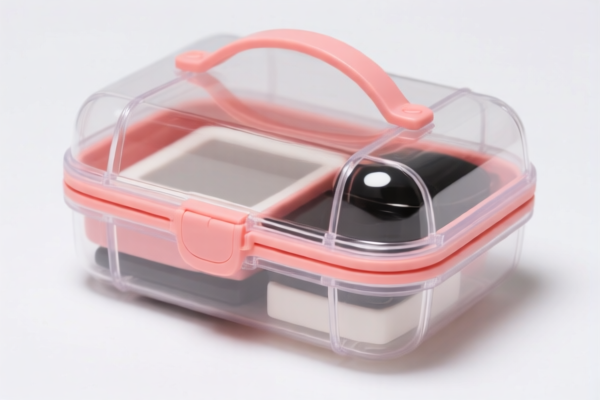
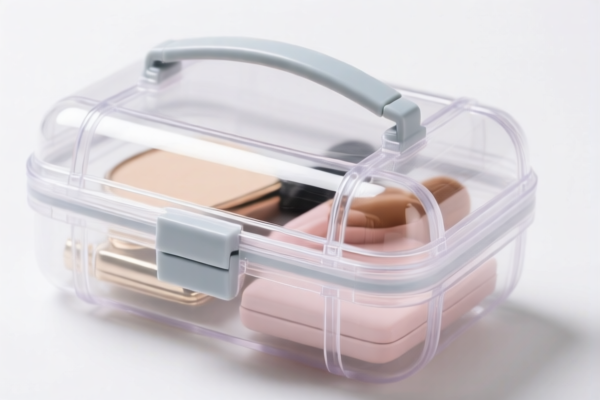
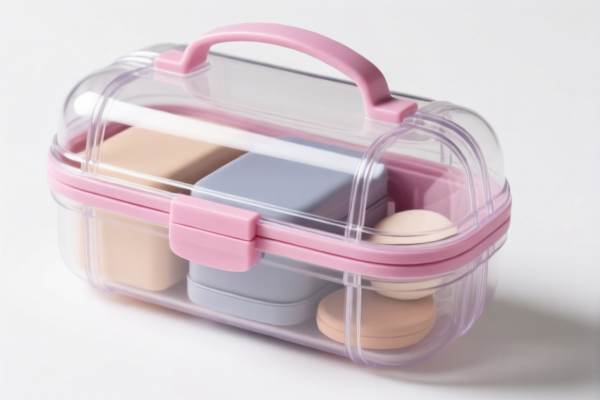
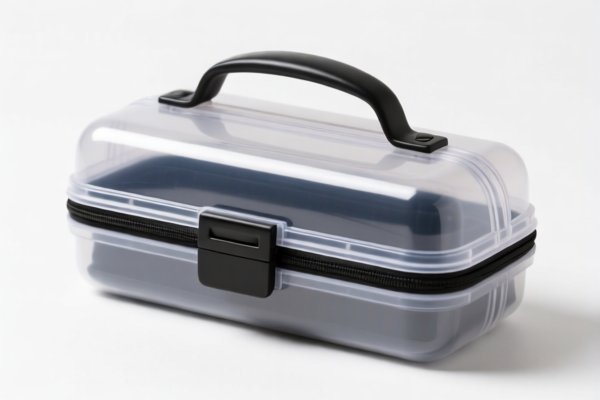
AI Analysis
🧳 Rigid Plastic Shell Vanity Case (Hard Cosmetic Organizer)
🌐 HS Code Reference & Customs Clearance Guide | 2026 Latest Tariff Analysis | Professional Entry Strategies
📌 1. Product Definition & Classification: What exactly is a "Vanity Case"?
A Rigid Plastic Shell Vanity Case is a hard-sided container designed specifically for storing and organizing cosmetics, toiletries, or makeup tools. In international trade, the classification depends heavily on its intended use and specific material composition, even though the base material is plastic.
The key distinction lies in whether it is viewed as a general plastic article, a household item, or a sanitary/toilet article. This distinction drastically alters the tariff burden, especially for imports into the United States from China.
⚠️ Critical Distinction Point:
- If categorized strictly as a general plastic article → HS 3926.10.00.00 (Lower base tax, but subject to Section 122 duties).
- If categorized as a specialty plastic household item → HS 3926.90.99.89 (Higher total burden due to additional 301 tariffs).
- If categorized as a general household supply → HS 3924.90.56.50 (Moderate burden).
- If categorized as a sanitary/toilet article → HS 3924.10.40.00 (Lowest total burden, minimal additional tariffs).
📦 2. HS Code Classification Details (2026 Official Tariff Schedule)
| HS Code | Product Description | Application Scenario | Total Tax Rate | Key Tariff Components |
|---|---|---|---|---|
3926.10.00.00 |
Other plastic articles; boxes, cases, bags (General Plastic) | Generic storage boxes, unbranded rigid cases | 15.3% | Base: 5.3% Sec 122: 10% |
3926.90.99.89 |
Other plastic articles; Other (Specialty Plastic) | Vanity cases classified as specialty plastic goods | 22.8% | Base: 5.3% Sec 301: 7.5% Sec 122: 10% |
3924.90.56.50 |
Household articles of plastic; Other | General household plastic vanity cases | 20.9% | Base: 3.4% Sec 301: 7.5% Sec 122: 10% |
3924.10.40.00 |
Sanitary or toilet articles; Household or personal use | Vanity cases for hygiene/toiletry storage | 13.4% | Base: 3.4% Sec 122: 10% |
🔍 Key Insight:
- The same physical product (a rigid plastic makeup case) can be taxed between 13.4% and 22.8% depending on how you argue its "use."
- Section 122 (10%) applies to ALL four categories for Chinese-origin goods (effective Nov 2025).
- Section 301 (7.5% or 0%) is the differentiator. It applies if the item is not classified under Chapter 3924 (Sanitary/Household articles with specific exclusions).
💰 3. Detailed Tariff Rate Breakdown (Including Add-Ons & Policy Levies)
✅ Applicable Country: United States (US)
✅ Country of Origin: China (CN)
✅ Effective Date: November 10, 2025 (and subsequent imports)
🎯 1. 3926.10.00.00 — Plastic Boxes/Cases (General Plastic Articles)
| Item | Content |
|---|---|
| Base Duty | 5.3% (ad valorem) |
| Section 301 Duty | 0.0% (Exempted for general plastic articles under this subheading) |
| Section 122 Duty | 10.0% (Added to all Chinese plastic goods) |
| Total Effective Rate | 15.3% |
| Calculation Basis | CIF Value × 15.3% |
| De Minimis Exemption | ❌ No (Section 321 de minimis does not apply to Section 122 goods) |
| Legal Pathway | USITC:3926.10.00.00 → FOOTNOTE:122 |
📌 Explanation:
- This is the baseline classification for rigid plastic containers not specifically designated as "household sanitary items."
- Crucial Note: Unlike other categories, this code does NOT attract the additional 7.5% Section 301 tariff, resulting in the lowest base-plus-301 cost, though it still carries the 10% Section 122 levy.
🎯 2. 3926.90.99.89 — Other Plastic Articles (Specialty Vanity Case)
| Item | Content |
|---|---|
| Base Duty | 5.3% |
| Section 301 Duty | 7.5% |
| Section 122 Duty | 10.0% |
| Total Effective Rate | 22.8% |
| Calculation Basis | CIF Value × 22.8% |
| De Minimis Exemption | ❌ No |
| Legal Pathway | USITC:3926.90.99.89 → FOOTNOTE:122 + IEEPA:301 |
📌 Explanation:
- This code is often used as a "fallback" for plastic goods that don't fit neatly into specific household use categories.
- It incurs ALL penalties: Base + 301 + 122. This is the most expensive classification for rigid plastic vanity cases. Avoid this if possible.
🎯 3. 3924.90.56.50 — Household Plastic Articles (Other)
| Item | Content |
|---|---|
| Base Duty | 3.4% |
| Section 301 Duty | 7.5% |
| Section 122 Duty | 10.0% |
| Total Effective Rate | 20.9% |
| Calculation Basis | CIF Value × 20.9% |
| De Minimis Exemption | ❌ No |
| Legal Pathway | USITC:3924.90.56.50 → FOOTNOTE:122 + IEEPA:301 |
📌 Explanation:
- Classification under Chapter 3924 (Household/Toilet Articles) reduces the base duty from 5.3% to 3.4%.
- However, the Section 301 (7.5%) and Section 122 (10%) still apply.
- This is a middle-ground option: Lower base tax than 3926, but higher total tax than 3924.10.40.00.
🎯 4. 3924.10.40.00 — Sanitary or Toilet Articles (Household/Personal Use)
| Item | Content |
|---|---|
| Base Duty | 3.4% |
| Section 301 Duty | 0.0% (Exempted for specific sanitary/household use articles) |
| Section 122 Duty | 10.0% |
| Total Effective Rate | 13.4% |
| Calculation Basis | CIF Value × 13.4% |
| De Minimis Exemption | ❌ No |
| Legal Pathway | USITC:3924.10.40.00 → FOOTNOTE:122 |
📌 Explanation:
- BEST RATE AVAILABLE.
- This code applies if the case is explicitly designed for hygienic/toilet/cosmetic personal use.
- It enjoys 0% Section 301 duty because it falls under the "Sanitary or Toilet Articles" provision which often gets tariff relief in trade negotiations.
- Only the 10% Section 122 and 3.4% Base apply.
🛠️ 4. Customs Clearance Practical Advice (Pitfall Avoidance Guide)
✅ 1. Documentation Checklist (Non-Negotiable)
| Document | Required? | Description |
|---|---|---|
| ✅ Product Specification Sheet | ✔️ | Must explicitly state: "Rigid Plastic," "For Cosmetic/Toilet Storage," "Hard Shell." |
| ✅ High-Res Photos | ✔️ | Show interior compartments, mirrors (if any), and handles. Must look like a vanity/cosmetic case, not a generic toolbox. |
| ✅ Commercial Invoice | ✔️ | Description must be precise: "Rigid Plastic Vanity Case for Cosmetics" (Avoid vague terms like "Plastic Box"). |
| ✅ Material Declaration | ✔️ | Confirm 100% Plastic (no metal hinges, wood frames, or fabric linings that would shift HS codes). |
| ✅ Country of Origin Certificate | ✔️ | Essential for Section 122 and 301 determination. |
✅ 2. Strategic Classification Tips (Key Mantra)
🔥 “Define Use, Not Just Material: ‘Vanity’ vs ‘Box’ Matters!”
| Scenario | Recommended HS Code | Reasoning | Risk Level |
|---|---|---|---|
| Standard Cosmetic Case | 3924.10.40.00 |
Clearly for personal hygiene/cosmetic storage. Qualifies for lowest base + no Sec 301. | 🟢 Low (if documented well) |
| Generic Storage Box | 3926.10.00.00 |
If the product is a plain, unbranded box with no cosmetic-specific design. No Sec 301. | 🟢 Low |
| High-End/Luxury Case | 3926.90.99.89 |
If the case has complex features not fitting standard household use. Highest Tax (22.8%). | 🔴 High (Costly) |
| Mixed Material Case | Incorrect | If it has fabric handles or metal locks, it may not be "Plastic" anymore. Shifts to Chapter 42/83. | 🔴 Very High (Misclassification) |
✅ 3. Special Handling Scenarios
| Scenario | Handling Advice |
|---|---|
| Case includes a Mirror | If the mirror is integral (fixed), it stays in 3924 or 3926. If it’s a separate accessory, it might be classified separately (glass/metal), complicating the process. Keep it fixed/integral for simpler clearance. |
| Case includes Foam Inserts | Ensure the foam is removable or considered part of the case. If the foam defines the structure, customs may argue it’s a "packaging" item, which could shift the code. |
| OEM/White Label | Avoid brand names in the description that might imply "toys" or "medical devices." Stick to "Vanity Case" or "Cosmetic Organizer." |
| Section 122 Compliance | All four codes above are subject to Section 122 (10%). There is no exemption for de minimis (small shipments) for these goods entering the US from China. Budget for this 10% regardless of HS code. |
🌍 5. Global Market Comparison (2026 Overview)
| Market | Recommended HS Code | Est. Total Tax (China Origin) | Key Requirement |
|---|---|---|---|
| 🇺🇸 USA | 3924.10.40.00 or 3926.10.00.00 |
13.4% – 15.3% | Must prove "Vanity/Toilet" use for lower rate. |
| 🇨🇳 China (Export) | 3924.10.40.00 |
0% - 5% | Standard export procedures. |
| 🇪🇺 EU | 3924.10.40.00 |
4.2% + VAT | CE marking not required for plastic, but REACH compliance needed. |
| 🇬🇧 UK | 3924.10.40.00 |
4.2% + VAT | Post-Brexit rules apply; similar to EU. |
| 🇨🇦 Canada | 3924.10.40.00 |
5% | CUSMA eligible if rules of origin met (not applicable for China-made). |
📌 Conclusion:
- The USA is the most complex market due to the layered tariffs (Base + 301 + 122).
- EU/UK/Canada are simpler, with standard MFN rates (~4-5%) and no "Section 122" style penalties.
- Optimization Goal: For US imports, always aim for3924.10.40.00(13.4%) or3926.10.00.00(15.3%). Avoid3926.90.99.89(22.8%) unless the product design forces it.
📌 6. Common Errors & Pitfalls (Lessons Learned)
❌ Error 1: Classifying as 3926.90.99.89 without justification
👉 Result: Pay 22.8% instead of 13.4%.
👉 Fix: Provide clear marketing materials showing it’s used for cosmetics/toiletries to justify Chapter 3924.
❌ Error 2: Ignoring Section 122 in cost calculations
👉 Result: Underestimating landed cost by 10%.
👉 Fix: Always add 10% for Section 122 to any Chinese plastic good entering the US.
❌ Error 3: Describing as "Plastic Container"
👉 Result: Customs may default to general plastic codes (3926) which might have higher base duties or no preferential treatment.
👉 Fix: Use specific terms: "Vanity Case," "Cosmetic Organizer," "Toilet Article."
❌ Error 4: Assuming De Minimis ($800) exemption applies
👉 Result: Shipment held, backdated duties assessed, and penalties applied.
👉 Fix: Section 122 goods are explicitly excluded from Section 321 de minimis. All shipments are subject to duty.
✅ Correct Declaration Example:
"Rigid Plastic Vanity Case for Cosmetics, Hard Shell, Molded Interior, Model VC-100, HS Code: 3924.10.40.00"
🎯 7. Conclusion: Precision Classification for Maximum Profit
🎯 Remember the Mantra:
🔹 “Use Defines Code: Vanity = 3924, General = 3926. Avoid 3926.99 if possible.”
🔹 “Section 122 is Always On (10%), So Save Where You Can (0% Sec 301).”
🔹 “De Minimis is Dead for China-Plastic: Pay the Duty Upfront.”
📌 Pro Tip:
If your vanity case has metal hinges, locks, or fabric covers, you may be classified under Chapter 42 (Articles of leather/plastic sheeting) or Chapter 83 (Base metal accessories). These have different duty structures. Ensure the product is >90% plastic by volume to stay in Chapter 39.
📣 Immediate Action:
📞 Consult a Customs Broker to review your product photos and spec sheet.
📝 Request an Advance Ruling from US CBP if shipping large volumes, to lock in the 13.4% or 15.3% rate.
🚀 Accurate Classification Saves 7–9% in Tariffs. That’s pure profit.
✨ Professional Customs Clearance Starts with Precise Classification!
💼 Your Margin Depends on Your HS Code!
Customer Reviews
About HS Code Classification
The Harmonized System (HS) is an internationally standardized nomenclature developed by the World Customs Organization (WCO) to classify traded products. Over 200 countries use the HS system as the basis for customs tariffs, trade statistics, and import/export regulations.
Each HS code follows a hierarchical structure:
- Chapter (2 digits) — Broad category of goods (e.g., Chapter 84: Machinery and Mechanical Appliances)
- Heading (4 digits) — More specific grouping within the chapter
- Subheading (6 digits) — Internationally standardized breakdown, used by all WCO member countries
- National subdivisions (8-10 digits) — Country-specific extensions for further classification, such as US HTSUS 10-digit codes
Correct HS code classification is essential for smooth customs clearance, accurate duty payment, and compliance with trade regulations. Misclassification can lead to customs delays, overpayment of duties, or penalties.
When importing from CN to US, the applicable tariff rates may include:
- Most-Favored-Nation (MFN) rate — The standard duty rate applied to WTO members
- General rate — Applied to countries without trade agreements
- Trade remedy duties — Additional tariffs such as Section 301 (anti-dumping), Section 232 (national security), or countervailing duties
The information provided on this page is for reference purposes only. For official classification, please consult with your local customs authority or a licensed customs broker.