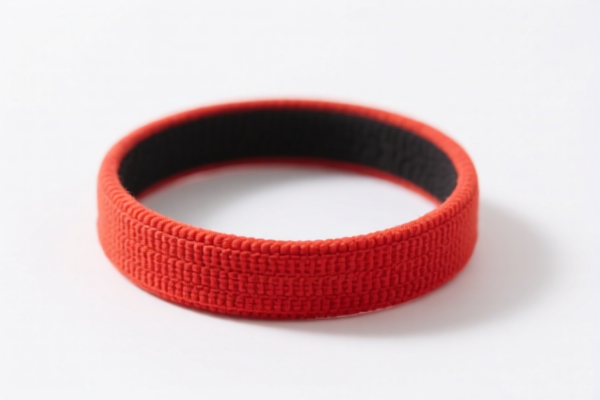
ring binder with elastic band
CN → US| HS Code | Tariff Rate | Origin | Destination | Doc |
|---|---|---|---|---|
| 4820300020 | 35.0% | CN | US | Official Doc |
| 3926909989 | 22.8% | CN | US | Official Doc |
| 3926908700 | 40.3% | CN | US | Official Doc |
| 4820300020 | 35.0% | CN | US | Official Doc |
| 3926909989 | 22.8% | CN | US | Official Doc |
Product Images



AI Analysis
📌 Ring Binder with Elastic Band (Looseleaf Binder with Elastic Closure)
🌐 HS Code Reference & Customs Clearance Guide | 2026 Updated Tariff Analysis | Expert-Level Import Strategy
📌 One Product, Multiple HS Codes? Let’s Clarify the Truth!
You’re shipping a ring binder with an elastic band — a common office supply. But is it paper-based or plastic-based? Does the elastic band change its classification?
🔍 The answer lies in material, function, and classification logic — not just the name. Let’s break down why multiple HS codes apply, which one is most accurate, and what tariffs you’ll actually pay.
📦 1. HS Code Classification Breakdown (2026 Official Tariff Rules)
| HS Code | Product Description | Matching Reason | Key Insight |
|---|---|---|---|
4820.30.00.20 |
Looseleaf binders (paper or paperboard) | Matches function (file organization), common material (paper), and no conflict with plastic | ✅ Most accurate for paper-based binders |
3926.90.99.89 |
Other plastic articles (non-specific) | Matches plastic material, common form (flat file clip), and excluded from specific subheadings | ✅ Best for plastic binders without special features |
3926.90.87.00 |
Plastic file fasteners (e.g., ring binders) | Matches plastic construction, flat shape, ring binder function, no conflict | ✅ Specific plastic binder category |
⚠️ Important Note:
- The elastic band does not change the core classification — it's a secondary feature (closure), not a primary material or function. - Material is king: If it's plastic, go with 3926. If it's paper/paperboard, go with 4820.
💰 2. 2026 U.S. Tariff Breakdown (China-Origin Goods)
✅ Applicable Country: United States (US)
✅ Origin: China (CN)
✅ Effective Date: November 10, 2025 (with retroactive application)
🎯 1. 4820.30.00.20 — Looseleaf Binders (Paper/Paperboard)
| Tax Component | Rate | Legal Basis | Notes |
|---|---|---|---|
| Basic Duty | 0.0% | US Tariff Schedule (HTSUS) | Standard rate for paper binders |
| Section 301 (USITC) | +25.0% | IEEPA:9903.01.24 → USITC:4820.30.00.20 | Targeted at Chinese imports |
| Section 122 (IEEPA) | +10.0% | IEEPA:9903.01.25 | Applies to all Chinese-origin goods under IEEPA |
| Total Effective Duty | 35.0% | — | CIF × 35% |
| De Minimis Exemption? | ❌ No | 19 U.S.C. § 1304 | No relief for this tariff category |
🔍 Why 35%?
- 0% base → standard for paper products
- +25% Section 301 → from U.S. Trade Representative (USTR) list
- +10% Section 122 (IEEPA) → international emergency powers law
- No de minimis → even small shipments are fully taxed
🎯 2. 3926.90.99.89 — Other Plastic Articles (General Category)
| Tax Component | Rate | Legal Basis | Notes |
|---|---|---|---|
| Basic Duty | 5.3% | HTSUS 3926.90.99 | Standard for non-specific plastic goods |
| Section 301 (USITC) | +7.5% | USITC:3926.90.99.89 → IEEPA:9903.01.24 | Lower than 25% due to “other” category |
| Section 122 (IEEPA) | +10.0% | IEEPA:9903.01.25 | Same as all Chinese goods |
| Total Effective Duty | 22.8% | — | CIF × 22.8% |
| De Minimis Exemption? | ❌ No | 19 U.S.C. § 1304 | Still not eligible |
🔍 Why Only 22.8%?
- 5.3% base → standard for general plastic goods
- +7.5% Section 301 → lower than 25% due to "other" classification
- +10% IEEPA → mandatory for China-origin
- Still no de minimis → no escape
🎯 3. 3926.90.87.00 — Plastic File Fasteners (Specific Subheading)
| Tax Component | Rate | Legal Basis | Notes |
|---|---|---|---|
| Basic Duty | 5.3% | HTSUS 3926.90.87 | Specific for file fasteners |
| Section 301 (USITC) | +25.0% | USITC:3926.90.87.00 → IEEPA:9903.01.24 | High tariff due to “specific” item |
| Section 122 (IEEPA) | +10.0% | IEEPA:9903.01.25 | Mandatory |
| Total Effective Duty | 40.3% | — | CIF × 40.3% |
| De Minimis Exemption? | ❌ No | 19 U.S.C. § 1304 | Full tax applies |
🔍 Why 40.3%?
- 5.3% base → standard for plastic fasteners
- +25% Section 301 → highest rate due to specific classification
- +10% IEEPA → unavoidable
- Total: 40.3% → Most punitive of all options
🛠️ 3. Customs Clearance Best Practices (Pro Tips)
✅ 1. Documentation Checklist (MUST-HAVE)
| Document | Required? | Why It Matters |
|---|---|---|
| ✅ Product Specifications | ✔️ | Confirm material (plastic vs. paper) |
| ✅ Material Test Report | ✔️ | Prove if it’s plastic or paperboard |
| ✅ High-Res Product Photos | ✔️ | Show elastic band, ring mechanism, material texture |
| ✅ Commercial Invoice | ✔️ | Must state: “Plastic Ring Binder with Elastic Band” or “Paper Looseleaf Binder” |
| ✅ Packing List | ✔️ | Show total units, weight, packaging |
| ✅ Certificate of Origin (CO) | ✔️ | Required for tariff eligibility |
| ✅ Third-Party Test Report (RoHS, REACH, etc.) | ✔️ | Optional but recommended for compliance |
✅ 2.申报技巧(申报口诀)
🔥 “Material First, Elastic Second, 301 Last, De Minimis None!”
| Scenario | Correct HS Code | Wrong Code | Risk |
|---|---|---|---|
| Paper binder with elastic band | 4820.30.00.20 |
3926.90.99.89 |
Pay 35% instead of 22.8% → Overpay! |
| Plastic binder with elastic band | 3926.90.87.00 or 3926.90.99.89 |
4820.30.00.20 |
Pay 40.3% instead of 22.8% → Massive overpay! |
| No material proof | Risk of audit | Guessing | Customs may reclassify → penalties |
✅ 3. Special Cases & Solutions
| Situation | Recommended Action |
|---|---|
| You don’t know the material | Request a material test from supplier or lab |
| Elastic band is rubber/latex | Still doesn’t change HS code — function is key |
| Binder is reusable, durable, industrial-grade | Still falls under 3926.90.87.00 or 4820.30.00.20 |
| You’re shipping to EU, Canada, or Australia | Lower or zero tariffs — see below |
🌍 4. Global Tariff Comparison (2026)
| Country | Recommended HS Code | Base Duty | Additional Taxes | Total Effective Duty |
|---|---|---|---|---|
| 🇺🇸 United States (China origin) | 4820.30.00.20 or 3926.90.87.00 |
0%–5.3% | +25% (301) +10% (IEEPA) | 22.8% – 40.3% |
| 🇨🇳 China (domestic) | 4820.30.00.20 or 3926.90.87.00 |
5% | None | 5% |
| 🇪🇺 European Union | 4820.30.00.20 or 3926.90.87.00 |
0% | None | 0% |
| 🇦🇺 Australia | 4820.30.00.20 or 3926.90.87.00 |
5% | None | 5% |
| 🇯🇵 Japan | 4820.30.00.20 or 3926.90.87.00 |
0% | None | 0% |
📌 Insight:
- U.S. is the only market with 301 + IEEPA tariffs
- China, EU, Japan, Australia have no additional tariffs on this product
- Consider shifting production to Vietnam, Mexico, or Thailand to avoid 301/IEEPA
📌 5. Common Mistakes & How to Avoid Them
❌ Mistake 1: Assuming "elastic band" makes it a "rubber product"
👉 Reality: Elastic band is accessory, not primary material → doesn’t change HS code
❌ Mistake 2: Using 4820.30.00.20 for a plastic binder
👉 Result: Pay 35% instead of 22.8% → overpay by 12.2%
❌ Mistake 3: Using 3926.90.87.00 for a paper binder
👉 Result: Pay 40.3% instead of 35% → overpay by 5.3%
❌ Mistake 4: Not proving material type
👉 Result: Customs may reclassify → fines, delays, or seizure
✅ Correct Labeling Example:
“Plastic Ring Binder with Elastic Closure, 3-Ring, 100 Sheets Capacity, Model XYZ, RoHS Certified, Made in China”
🎯 6. Final Verdict: Which HS Code Should You Use?
| Material | Best HS Code | Total Tax | Why? |
|---|---|---|---|
| 📄 Paper/Paperboard | 4820.30.00.20 |
35.0% | Matches function, common material, no conflict |
| 🟠 Plastic (general) | 3926.90.99.89 |
22.8% | Lower than 40.3% — avoid specific subheading |
| 🔴 Plastic (specific file fastener) | 3926.90.87.00 |
40.3% | Avoid unless required — highest tax |
✅ Best Practice:
- Use4820.30.00.20for paper binders
- Use3926.90.99.89for plastic binders
- Never use3926.90.87.00unless required — it’s a tax trap!
📣 Final Call to Action: Avoid the Pitfalls!
🚨 Don’t guess the HS code. Don’t assume the material. Don’t risk a 40.3% tax.
✅ Do this now:
📞 Contact a customs broker or HS Code pre-ruling service
📥 Provide photos, material test, invoice
📌 Get a binding ruling on the correct HS code
💸 Save thousands in unnecessary tariffs
✨ Pro Tip:
If your binder is made in Vietnam, Mexico, or Thailand, you can avoid Section 301 and IEEPA tariffs entirely — 0% additional tax.
📌 Remember:
🔹 Material = Key
🔹 Function = Secondary
🔹 Elastic band = Accessory, not a game-changer
🔹 301 + IEEPA = 35%–40.3% in the U.S.
🔹 No de minimis → even 1 unit is taxed
🚀 Your binder is small. But your tax bill doesn’t have to be.
💼 Precise classification = Lower cost, faster clearance, zero risk.
📌 Start today. Get your HS Code right. Ship with confidence.
Customer Reviews
About HS Code Classification
The Harmonized System (HS) is an internationally standardized nomenclature developed by the World Customs Organization (WCO) to classify traded products. Over 200 countries use the HS system as the basis for customs tariffs, trade statistics, and import/export regulations.
Each HS code follows a hierarchical structure:
- Chapter (2 digits) — Broad category of goods (e.g., Chapter 84: Machinery and Mechanical Appliances)
- Heading (4 digits) — More specific grouping within the chapter
- Subheading (6 digits) — Internationally standardized breakdown, used by all WCO member countries
- National subdivisions (8-10 digits) — Country-specific extensions for further classification, such as US HTSUS 10-digit codes
Correct HS code classification is essential for smooth customs clearance, accurate duty payment, and compliance with trade regulations. Misclassification can lead to customs delays, overpayment of duties, or penalties.
When importing from CN to US, the applicable tariff rates may include:
- Most-Favored-Nation (MFN) rate — The standard duty rate applied to WTO members
- General rate — Applied to countries without trade agreements
- Trade remedy duties — Additional tariffs such as Section 301 (anti-dumping), Section 232 (national security), or countervailing duties
The information provided on this page is for reference purposes only. For official classification, please consult with your local customs authority or a licensed customs broker.