riveting gun head
CN → US| HS Code | Tariff Rate | Origin | Destination | Doc |
|---|---|---|---|---|
| 8205594500 | 40.3% | CN | US | Official Doc |
| 8467195090 | 35.0% | CN | US | Official Doc |
| 8467290090 | 17.5% | CN | US | Official Doc |
| 8479896500 | 20.3% | CN | US | Official Doc |
| 8479899599 | 87.5% | CN | US | Official Doc |
Product Images
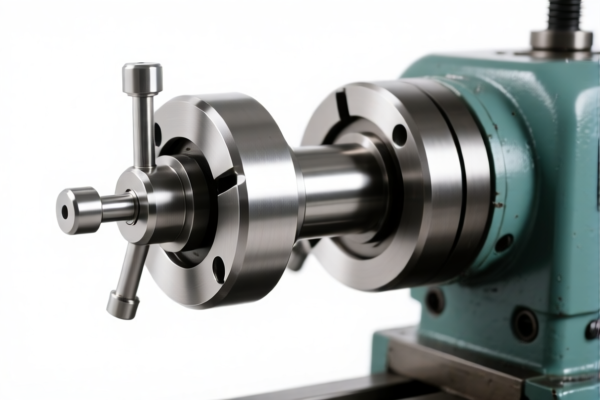
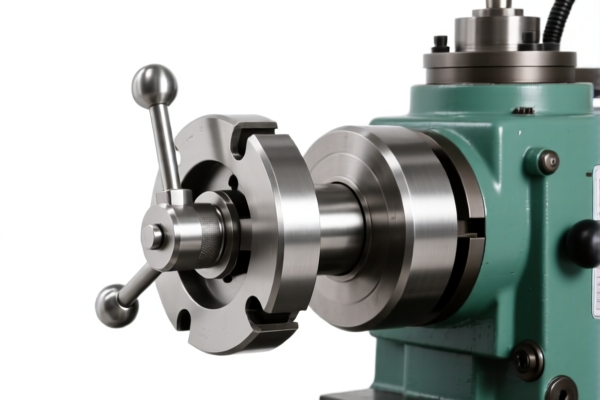
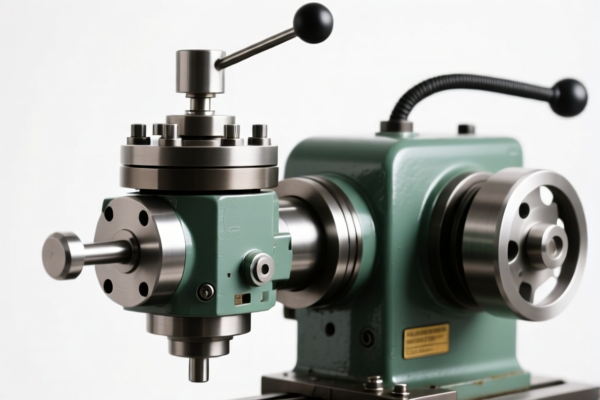
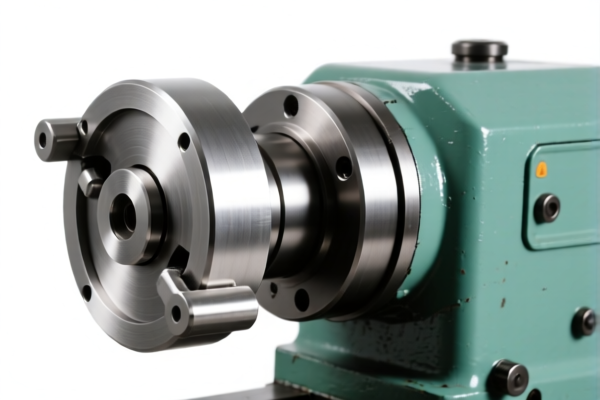
AI Analysis
🔨 Riveting Gun Head (Riveter Noses / Tool Heads)
🌐 HS Code Reference & Customs Clearance Guide | 2024/2026 Latest Tariff Analysis | Professional Clearance Strategy
📌 I. Product Definition & Classification: What is a "Riveting Gun Head"?
A Riveting Gun Head (also known as a riveter nose, die, or tool head) is the interchangeable working end of a riveting tool. It transfers the force from the power source (manual, pneumatic, or electric) to the rivet. Because it is an accessory/component rather than a standalone machine, its classification is highly contested and depends heavily on how customs officers interpret its primary function and form factor.
In international trade, specifically under US Customs regulations, there is significant ambiguity. The data provided highlights four distinct potential classifications, ranging from simple hand tools to complex mechanical devices.
⚠️ Key Distinction Point:
- Is it merely a metal attachment for a hand tool? → Likely Chapter 82 (Hand Tools).
- Is it part of a pneumatic/electric power tool system? → Likely Chapter 84 (Power Tools).
- Is it considered a standalone mechanical device with independent function? → Likely Chapter 84/85 (Machinery).
- Critical Warning: Misclassification can lead to tax differences ranging from 17.5% to 87.5%.
📦 II. HS Code Classification Details (Analysis of Provided Data)
| HS Code | Product Description & Logic | Total Tax Rate | Tax Breakdown |
|---|---|---|---|
| 8205.59.45.00 | Manual/Metal Hand Tool Head: Classified under "Other hand tools" (metal-made). Logic: The head is a metallic attachment for manual operation, falling under the residual category for hand tools. | 40.3% | Base: 5.3% + Section 301: 25.0% + IEEPA (122): 10.0% |
| 8467.19.50.90 | Pneumatic Tool Head: Classified under "Other pneumatic tools". Logic: The head is designed specifically for pneumatic rivet guns, fitting the residual category for pneumatic hand tools. | 35.0% | Base: 0.0% + Section 301: 25.0% + IEEPA (122): 10.0% |
| 8467.29.00.90 | Handheld Power Tool Head (Non-Pneumatic): Classified under "Other handheld tools". Logic: Used in handheld power tools (e.g., electric battery-operated) not excluded by specific subheadings. | 17.5% | Base: 0.0% + Section 301: 7.5% + IEEPA (122): 10.0% |
| 8479.89.65.00 | Mechanical Machine Head: Classified under "Other machines with individual functions". Logic: Viewed as a mechanical device/apparatus with specific independent function, not just a simple hand tool. | 20.3% | Base: 2.8% + Section 301: 7.5% + IEEPA (122): 10.0% |
| 8479.89.95.99 | General Mechanical Apparatus: Classified under "Other machines not elsewhere specified". Logic: Broad residual category for mechanical appliances. | 87.5% | Base: 2.5% + Section 301: 25.0% + Steel/Alu/Cu Surcharge: 50% + IEEPA (122): 10.0% |
🔍 Focus Alert:
- 8479.89.95.99 carries a massive 87.5% rate due to the additional 50% surcharge on steel/aluminum/copper products. This is the highest risk classification. - 8467.29.00.90 offers the lowest rate (17.5%) if the tool is electric/battery-operated and fits the "handheld" definition. - 8205.59.45.00 is the safest "manual tool" fallback but carries a moderate 40.3% rate.
💰 III. 2024/2026 Latest Tariff Rate Breakdown (Detailed Analysis)
✅ Applicable Market: United States (US)
✅ Origin: China (CN)
✅ Note: Rates include Section 301 tariffs and IEEPA (122) provisions as per the provided data.
🎯 1. 8205.59.45.00 — Other Hand Tools (Metal)
| Item | Detail |
|---|---|
| Base Duty | 5.3% |
| Section 301 Surcharge | +25.0% |
| IEEPA (122) Surcharge | +10.0% |
| Total Effective Rate | 40.3% |
| Calculation | CIF Value × 40.3% |
| De Minimis Exemption? | ❌ No (High risk of seizure if below threshold) |
| Legal Basis | HTSUS 8205.59.45.00 → Section 301 List 4 → IEEPA EO |
📌 Explanation:
- This classification treats the rivet head as a hand tool component.
- The 25% Section 301 tariff is mandatory for Chinese-origin hand tools.
- The 10% IEEPA tariff adds further cost.
- Total 40.3% is a significant cost driver for manual tool heads.
🎯 2. 8467.19.50.90 — Pneumatic Hand Tools
| Item | Detail |
|---|---|
| Base Duty | 0.0% |
| Section 301 Surcharge | +25.0% |
| IEEPA (122) Surcharge | +10.0% |
| Total Effective Rate | 35.0% |
| Calculation | CIF Value × 35.0% |
| De Minimis Exemption? | ❌ No |
| Legal Basis | HTSUS 8467.19.50.90 → Section 301 List 3 → IEEPA EO |
📌 Note:
- 35.0% is lower than the hand tool rate because the base duty is 0%.
- This is the optimal classification for pneumatic rivet heads.
- The 25% Section 301 still applies to "other pneumatic tools."
🎯 3. 8467.29.00.90 — Other Handheld Power Tools
| Item | Detail |
|---|---|
| Base Duty | 0.0% |
| Section 301 Surcharge | +7.5% |
| IEEPA (122) Surcharge | +10.0% |
| Total Effective Rate | 17.5% |
| Calculation | CIF Value × 17.5% |
| De Minimis Exemption? | ❌ No |
| Legal Basis | HTSUS 8467.29.00.90 → Section 301 List 4B (or similar) → IEEPA EO |
📌 Advantage:
- 17.5% is the lowest tax rate in the dataset.
- This applies if the head is used with electric/battery tools and Section 301 only imposes a 7.5% surcharge (not 25%).
- Critical: You must prove the tool is handheld and electric (not pneumatic).
🎯 4. 8479.89.65.00 — Other Machines with Individual Function
| Item | Detail |
|---|---|
| Base Duty | 2.8% |
| Section 301 Surcharge | +7.5% |
| IEEPA (122) Surcharge | +10.0% |
| Total Effective Rate | 20.3% |
| Calculation | CIF Value × 20.3% |
| De Minimis Exemption? | ❌ No |
| Legal Basis | HTSUS 8479.89.65.00 → Section 301 List 4B → IEEPA EO |
📌 Explanation:
- If customs views the head as a mechanical device rather than a simple tool part, this rate applies.
- 20.3% is competitive, better than pneumatic (35%) but worse than electric handheld (17.5%).
🎯 5. 8479.89.95.99 — Other Machines (Metallic Surcharge Risk!)
| Item | Detail |
|---|---|
| Base Duty | 2.5% |
| Section 301 Surcharge | +25.0% |
| Steel/Alu/Cu Surcharge | +50.0% |
| IEEPA (122) Surcharge | +10.0% |
| Total Effective Rate | 87.5% |
| Calculation | CIF Value × 87.5% |
| De Minimis Exemption? | ❌ No |
| Legal Basis | HTSUS 8479.89.95.99 → Section 301 → EO 13932 (Metal Surcharge) |
📌 WARNING:
- 87.5% is a catastrophic tax rate.
- The 50% metallic surcharge applies because rivet heads are typically made of steel, aluminum, or copper alloys.
- Avoid this classification at all costs unless no other option exists.
- This classification treats the head as a generic "machine part" with no specific tool designation.
🛠️ IV. Customs Clearance Practical Advice (Pitfall Avoidance Guide)
✅ 1. Preparation Checklist (Non-Negotiable)
| Document | Required | Purpose |
|---|---|---|
| ✅ Product Specifications | ✔️ | Detail material (Steel/Alu), dimensions, compatibility (e.g., "For Brand X Pneumatic Riveter"). |
| ✅ Photos | ✔️ | Show the head alone and attached to a tool. Highlight any branding or model numbers. |
| ✅ Declaration of Use | ✔️ | Explicitly state: "Interchangeable head for pneumatic/electric riveting tool." |
| ✅ Material Certificate | ✔️ | Prove alloy type. If steel, ensure proper HS code to avoid the 50% surcharge if possible. |
| ✅ Commercial Invoice | ✔️ | Description: "Riveting Gun Head, Steel, Model XYZ, For Pneumatic Use." Do NOT use vague terms like "Metal Part." |
| ✅ Packing List | ✔️ | Confirm no other unrelated mechanical parts are included. |
✅ 2. Declaration Strategy (Key Tips)
🔥 "Be Specific, Not Generic! 'Part' is Dangerous, 'Head' is Clear!"
| Scenario | Recommended HS Code | Reasoning |
|---|---|---|
| Pneumatic Tool Head | 8467.19.50.90 |
Matches "Pneumatic Hand Tools." Rate: 35.0%. |
| Electric/Battery Tool Head | 8467.29.00.90 |
Matches "Other Handheld Power Tools." Rate: 17.5%. LOWEST COST. |
| Manual Tool Head | 8205.59.45.00 |
Matches "Other Hand Tools." Rate: 40.3%. |
| Generic Mechanical Part | 8479.89.95.99 |
AVOID. Rate: 87.5% due to metal surcharge. |
| Standalone Mechanical Device | 8479.89.65.00 |
Rate: 20.3%. Use if tool type is ambiguous. |
📌 Critical Tip:
- If your head works with both pneumatic and electric tools, consider declaring it as electric handheld (8467.29.00.90) if physically compatible, as it offers the lowest tax (17.5%).
- Never declare it as "Machine Part" under8479.89.95.99unless you have no other choice.
✅ 3. Special Cases & Mitigation
| Situation | Handling Advice |
|---|---|
| OEM Custom Heads | Provide design drawings showing unique shape/function. Avoid generic descriptions. |
| Mixed Materials | If head has steel body but plastic grip, declare as steel but ensure it doesn't trigger the 50% surcharge by misclassifying as "generic machine." |
| Small Sample Shipments | High Risk. Below $800 de minimis may not apply for China. Prepare full documentation. |
| High-Value Industrial Heads | Consider Advance Ruling (PPO) from CBP to lock in the 17.5% or 20.3% rate. |
🌍 V. Global Market Comparison (2024/2026)
| Country/Region | Recommended HS Code | Est. Tariff (China Origin) | Notes |
|---|---|---|---|
| 🇺🇸 USA | 8467.29.00.90 (Electric) |
17.5% | Lowest Rate. 8467.19.50.90 (Pneumatic) is 35.0%. |
| 🇺🇸 USA | 8205.59.45.00 (Manual) |
40.3% | High due to base duty. |
| 🇺🇸 USA | 8479.89.95.99 |
87.5% | AVOID. Metal surcharge kills profit. |
| 🇪🇺 EU | 8205 / 8467 | 0-6% | No Section 301 or IEEPA. Lower complexity. |
| 🇨🇳 China | 8205 / 8467 | 5-8% | Standard MFN rates. |
📌 Conclusion:
- The US market is the most complex due to layered tariffs (Section 301 + IEEPA + Metal Surcharge).
- Electric tool heads (8467.29.00.90) are the most cost-effective for US export.
- Pneumatic heads are mid-range (35.0%).
- Manual heads are expensive (40.3%).
- Generic mechanical parts are prohibitively expensive (87.5%).
📌 VI. Common Errors & Pitfalls (Blood Lessons)
❌ Error 1: Declaring as "Part for Machine" (8479.89.95.99)
👉 Consequence: 87.5% tax. Profit margin wiped out.
👉 Fix: Use specific tool category (8205 or 8467).
❌ Error 2: Not specifying Power Source (Pneumatic vs. Electric)
👉 Consequence: CBP may assign the highest reasonable rate or audit the shipment.
👉 Fix: Clearly state "For Pneumatic Riveter" or "For Electric Riveter" on invoice.
❌ Error 3: Using "Rivet Nut Setter" instead of "Riveting Gun Head"
👉 Consequence: Confusion in classification.
👉 Fix: Use consistent terminology matching the tool it attaches to.
✅ Correct Declaration Example:
"Interchangeable Riveting Gun Head, Steel, Model ABC, Designed for Use with Electric Pneumatic Riveter, FCC Certified"
🎯 VII. Conclusion: Professional Declaration, Cost Optimization!
🎯 Remember the Golden Rule:
🔹 "Electric is Cheapest (17.5%), Pneumatic is Mid (35%), Manual is High (40.3%), Generic is Disaster (87.5%)."
🔹 "Specify the Power Source! 'Head' not 'Part'!"
📌 Pro Tip:
If your riveting gun heads are compatible with multiple tool types (e.g., both pneumatic and electric), consider declaring them under 8467.29.00.90 (Electric Handheld) if physically viable, to secure the 17.5% rate. Always consult with a customs broker for an Advance Ruling if the shipment value is significant.
📣 Action Required:
📞 Contact a Licensed Customs Broker
📄 Provide Product Photos & Compatibility Info
🚀 Apply for CBP Advance Ruling to lock in the lowest tax rate!
✨ Professional Clearance Starts with Precise Classification!
💼 Your Every Dollar of Tax Saves is Pure Profit!
Customer Reviews
About HS Code Classification
The Harmonized System (HS) is an internationally standardized nomenclature developed by the World Customs Organization (WCO) to classify traded products. Over 200 countries use the HS system as the basis for customs tariffs, trade statistics, and import/export regulations.
Each HS code follows a hierarchical structure:
- Chapter (2 digits) — Broad category of goods (e.g., Chapter 84: Machinery and Mechanical Appliances)
- Heading (4 digits) — More specific grouping within the chapter
- Subheading (6 digits) — Internationally standardized breakdown, used by all WCO member countries
- National subdivisions (8-10 digits) — Country-specific extensions for further classification, such as US HTSUS 10-digit codes
Correct HS code classification is essential for smooth customs clearance, accurate duty payment, and compliance with trade regulations. Misclassification can lead to customs delays, overpayment of duties, or penalties.
When importing from CN to US, the applicable tariff rates may include:
- Most-Favored-Nation (MFN) rate — The standard duty rate applied to WTO members
- General rate — Applied to countries without trade agreements
- Trade remedy duties — Additional tariffs such as Section 301 (anti-dumping), Section 232 (national security), or countervailing duties
The information provided on this page is for reference purposes only. For official classification, please consult with your local customs authority or a licensed customs broker.