robot vacuum cleaner
CN → US| HS Code | Tariff Rate | Origin | Destination | Doc |
|---|---|---|---|---|
| 8479897000 | 35.0% | CN | US | Official Doc |
| 8509801000 | 10.0% | CN | US | Official Doc |
| 8509805095 | 14.2% | CN | US | Official Doc |
| 8479896500 | 20.3% | CN | US | Official Doc |
| 8479897000 | 35.0% | CN | US | Official Doc |
Product Images
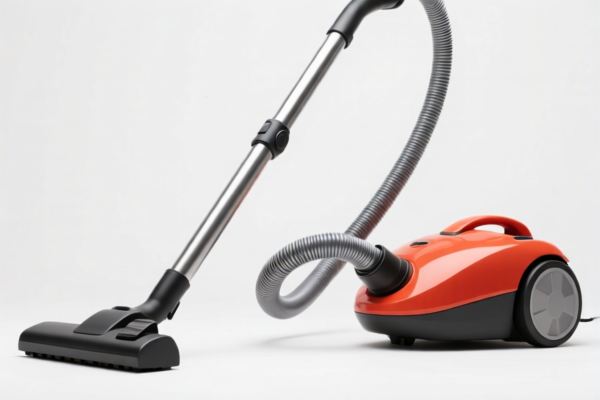

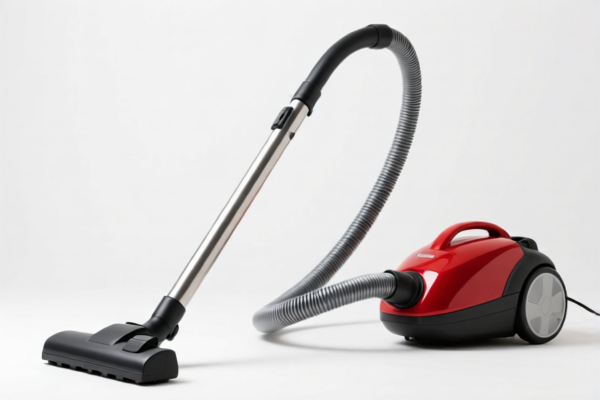

AI Analysis
🤖 Robot Vacuum Cleaner: Ultimate HS Code Classification & Tax Guide (2026 Edition)
🌐 HS Code Reference & Customs Clearance Strategy | 2026 Tariff Breakdown | Professional Logistics Solutions
📌 Part I: Product Definition & Classification Logic
The Robot Vacuum Cleaner is a quintessential smart home appliance, combining autonomous navigation, suction, and automated debris disposal. However, its classification in international trade hinges on mechanical function vs. electrical appliance status:
- Scenario A: "Carpet Cleaning Machine"
If the device is emphasized for heavy-duty carpet cleaning or mechanical brushing, it may fall under 8479 (Machinery/Other). - Scenario B: "Electric Home Appliance"
If the focus is on general electric cleaning (hard floors, dust), it often falls under 8509 (Electric Cleaning Appliances).
⚠️ Critical Distinction:
- 8479 Series: Focuses on "Mechanical Function" & "Independent Machinery". Often attracts higher "Section 232" or "Section 301" tariffs.
- 8509 Series: Focuses on "Electric Home Appliances". Generally lower base tariffs but subject to specific "Section 122" rules.
📦 Part II: HS Code Classification Details (2026 Official Reference)
Below is the breakdown of the 5 potential HS Codes derived from your data, analyzed for tax impact and reasoning.
| HS Code | Classification Logic & Summary | Total Tax Rate | Tax Breakdown (Base + Add-ons) |
|---|---|---|---|
| 8479.89.70.00 | Carpet Cleaning Machine Logic Focuses on the mechanical function of cleaning carpets. The device is treated as an automated machine with high mechanical intensity. |
35.0% | 📉 Base: 0% 📈 Section 301 (Section 232): +25% ⚡ Section 122: +10% |
| 8509.80.10.00 | General Electric Appliance Classified as a "Powered Electric Mechanical Appliance." It is a consumer product with a self-contained motor, focused on ground cleaning. |
10.0% | 📉 Base: 0% 📉 Add-on: 0% ⚡ Section 122: +10% |
| 8509.80.50.95 | Other Electric Appliances Applies to appliances with self-contained motors that are NOT vacuum cleaners (e.g., specific electric scrapers or other cleaning mechanisms). |
14.2% | 📈 Base: 4.2% 📉 Add-on: 0% ⚡ Section 122: +10% |
| 8479.89.65.00 | Other Mechanical Appliances Treated as an "Independent Mechanical Appliance" with a self-contained motor. Fits under "Other Machinery" but differs from carpet-specific machinery. |
20.3% | 📈 Base: 2.8% 📈 Section 301 (Section 232): +7.5% ⚡ Section 122: +10% |
| 8479.89.70.00 | Functional Mapping (Carpet Cleaning) Same as the first entry. Based on the functional equivalence to "Carpet Sweeping Machines" in classification rules. |
35.0% | 📉 Base: 0% 📈 Section 301 (Section 232): +25% ⚡ Section 122: +10% |
🔍 Key Insight:
- 8509.80.10.00 offers the lowest tax burden (10%) but requires proving the product is a standard electric cleaning appliance, not a specialized carpet machine.
- 8479.89.70.00 carries the highest tax burden (35%) due to the heavy "Section 301/232" surcharge (25%) applied to mechanical machinery from China.
💰 Part III: 2026 Tariff Rate Deep Dive
✅ Target Market: United States (US)
✅ Origin: China (CN)
✅ Effective Date: 2026 (Based on provided data context)
🎯 1. The "High Tax" Trap: 8479.89.70.00 (35.0%)
- Logic: Customs treats this as a specialized "Carpet Sweeping Machine" (Machinery).
- Tax Structure:
- Base Duty: 0.0% (Often free for certain machinery).
- Section 301/232 Tariff: +25.0% (The heavy hitter for mechanical goods).
- Section 122 Tariff: +10.0% (Specific China trade measure).
- 💡 Result: Total 35%. This kills profit margins for low-margin robot vacuums.
🎯 2. The "Smart Choice": 8509.80.10.00 (10.0%)
- Logic: Classified as a "Home Electric Appliance" (Electrical).
- Tax Structure:
- Base Duty: 0.0%.
- Section 301/232 Tariff: 0.0% (No additional tariff for this category).
- Section 122 Tariff: +10.0% (Applies broadly to Chinese imports).
- 💡 Result: Total 10%. This is the target classification for most standard robot vacuums to save ~25% in taxes.
🎯 3. The "Middle Ground": 8479.89.65.00 (20.3%)
- Logic: "Other Mechanical Appliances" with self-contained motors.
- Tax Structure:
- Base Duty: 2.8%.
- Section 301/232 Tariff: +7.5%.
- Section 122 Tariff: +10.0%.
- 💡 Result: Total 20.3%. A compromise if the product cannot be fully defined as a "home appliance" but isn't a "carpet machine."
🛠️ Part IV: Customs Clearance Practical Advice (Action Plan)
✅ 1. Preparation Checklist (Must-Haves)
| Document | Why it Matters | Tips for Success |
|---|---|---|
| Product Specification Sheet | Proves the motor type & function. | Explicitly state: "Electrically Driven," "Home Use," "General Floor Cleaning." Avoid words like "Heavy Carpet Mechanism." |
| User Manual / Marketing Copy | Shows the intended use. | Highlight "Whole House Cleaning," "Hardwood & Tile," "Smart Navigation." Avoid focusing solely on "Carpet Deep Cleaning." |
| Circuit Diagram | Distinguishes 8509 vs 8479. | Show it is an Electric Appliance, not a complex industrial machine. |
| Commercial Invoice | Must match the HS Code. | Description: "Robot Vacuum Cleaner (Electric Home Appliance), Model XYZ." |
| Country of Origin Cert. | Essential for Section 122. | Must clearly state "Made in China" to apply the correct 10% add-on. |
✅ 2. Classification Strategy: The "8509" Advantage
🔥 Golden Rule: "Function = Appliance, Not Machine."
| Strategy | Action | Expected Tax |
|---|---|---|
| Optimal | Classify as 8509.80.10.00 (Electric Appliance). | 10% |
| Risky | Classify as 8479.89.70.00 (Carpet Machine). | 35% (Avoid!) |
| Alternative | Classify as 8509.80.50.95 (Other). | 14.2% (Safe, but higher than optimal) |
💡 Pro Tip: If your robot vacuum is marketed primarily for carpet cleaning or has a specialized brush roll system for deep carpet cleaning, Customs officers might lean toward 8479. To stay in 8509, ensure your marketing emphasizes general floor cleaning, smart sensing, and electric home appliance status.
✅ 3. Special Handling & Pitfalls
- ❌ Pitfall: Calling it "Automatic Carpet Sweeper."
- Consequence: Triggers 8479.89.70.00 (35% tax).
- Fix: Call it "Robot Vacuum Cleaner for Multi-Floor Types."
- ❌ Pitfall: Missing the "Self-Contained Motor" proof.
- Consequence: Misclassification leads to audits.
- Fix: Provide a datasheet proving the motor is integrated and portable.
- ✅ Section 122 Note: All Chinese imports face the +10% Section 122 Tariff. Even with the lowest base tax, you cannot escape this 10%. Plan your margin accordingly.
🌍 Part V: Global Market Comparison (US Focus)
| Country | Recommended HS Code | Base Rate | Add-ons | Total Rate | Notes |
|---|---|---|---|---|---|
| 🇺🇸 USA | 8509.80.10.00 |
0% | 10% (Sec 122) | 10% | Best Option |
| 🇺🇸 USA | 8479.89.70.00 |
0% | 35% (Sec 301+122) | 35% | Avoid unless specialized |
| 🇨🇳 China | 8509.80.10.00 |
8% | 0% | 8% | Domestic market tax |
| 🇪🇺 EU | 8509.80.10.00 |
1.7% | 0% | 1.7% | Lower tariffs, no Section 122 |
| 🇦🇺 Australia | 8509.80.10.00 |
5% | 0% | 5% | Standard FTA rates |
📌 Part VI: Conclusion & Final Checklist
🎯 The Verdict:
The Robot Vacuum Cleaner is best declared as an Electric Home Appliance (8509.80.10.00) to secure the 10% total tax rate. Classifying it as a mechanical carpet machine (8479.89.70.00) will cost you an extra 25% in Section 301 tariffs.
🚀 Actionable Steps: 1. Rebrand/Marketing: Ensure marketing materials emphasize "Electric Home Appliance" and "Smart Cleaning." 2. Documentation: Prepare specs showing "Integrated Motor" and "General Floor Use." 3. Declaration: Declare under 8509.80.10.00 with the description: "Robot Vacuum Cleaner (Electric Appliance)." 4. Budget: Plan for the 10% Section 122 Tariff as a non-negotiable cost.
✨ Smart Classification = Higher Margins!
💼 Don't let a 25% tariff error eat your profit. Get it right the first time!
Customer Reviews
About HS Code Classification
The Harmonized System (HS) is an internationally standardized nomenclature developed by the World Customs Organization (WCO) to classify traded products. Over 200 countries use the HS system as the basis for customs tariffs, trade statistics, and import/export regulations.
Each HS code follows a hierarchical structure:
- Chapter (2 digits) — Broad category of goods (e.g., Chapter 84: Machinery and Mechanical Appliances)
- Heading (4 digits) — More specific grouping within the chapter
- Subheading (6 digits) — Internationally standardized breakdown, used by all WCO member countries
- National subdivisions (8-10 digits) — Country-specific extensions for further classification, such as US HTSUS 10-digit codes
Correct HS code classification is essential for smooth customs clearance, accurate duty payment, and compliance with trade regulations. Misclassification can lead to customs delays, overpayment of duties, or penalties.
When importing from CN to US, the applicable tariff rates may include:
- Most-Favored-Nation (MFN) rate — The standard duty rate applied to WTO members
- General rate — Applied to countries without trade agreements
- Trade remedy duties — Additional tariffs such as Section 301 (anti-dumping), Section 232 (national security), or countervailing duties
The information provided on this page is for reference purposes only. For official classification, please consult with your local customs authority or a licensed customs broker.