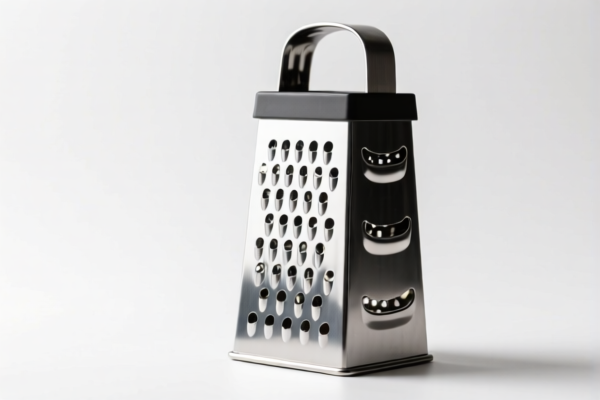
rotary cheese grater
CN → US| HS Code | Tariff Rate | Origin | Destination | Doc |
|---|---|---|---|---|
| 8210000000 | 38.7% | CN | US | Official Doc |
| 7323999030 | 88.4% | CN | US | Official Doc |
| 8205513030 | 38.7% | CN | US | Official Doc |
| 7323930060 | 62.0% | CN | US | Official Doc |
| 8205517500 | 38.7% | CN | US | Official Doc |
Product Images



AI Analysis
🧀 Rotary Cheese Grater (Manual Kitchen Tool)
🌐 HS Code Reference & Customs Clearance Guide | 2026 Latest Tariff Breakdown | Professional Clearance Strategy
📌 Part I: Product Definition & Classification: Do You Really Know Your "Rotary Cheese Grater"?
A rotary cheese grater is a manual kitchen tool designed to shred, grate, or fine-mill cheese (and often vegetables, nuts, or citrus zest) by rotating a cylindrical or flat drum with sharp perforations.
In international trade, it falls under multiple HS Code categories depending on material composition, construction, and intended use:
⚠️ Key Classification Factors:
- Material: Is it made of stainless steel, iron/steel, plastic/metal hybrid, or mixed materials?
- Function: Is it a standalone manual tool or a kitchen accessory?
- Design: Does it include a handle, container, or drum mechanism?
📦 Part II: HS Code Classification Breakdown (2026 Official Tariff Schedule)
| HS Code | Product Description | Material Inferred | Tax Rate (China → US) | Applicable Scenarios |
|---|---|---|---|---|
8210.00.00.00 |
Cheese grater (manual tool for cheese preparation) | Metal or Plastic | 38.7% | General manual cheese grater; hand-held rotary type |
7323.99.90.30 |
Kitchen or tableware grater | Iron/Steel | 88.4% | Heavy-duty steel body with grating surface |
8205.51.30.30 |
Manual kitchen/table utensil | Metal (Iron/Steel) | 38.7% | Standard rotary grater classified as a "hand tool" |
7323.93.00.60 |
Stainless steel kitchen utensil | Stainless Steel/Iron | 62.0% | Specifically for stainless steel graters (no manual tool classification) |
8205.51.75.00 |
Other manual household tools | Metal or Plastic | 38.7% | General rotary grater under "other household tools" |
🔍 Critical Insight:
- Stainless steel graters often fall under7323.93.00.60(62.0% tariff) due to their material classification.
- Mixed-material or plastic-metal graters are safer under8210.00.00.00or8205.51.30.30(38.7% tariff).
- Heavy steel-only graters risk the highest tax (88.4%) if classified as "other tableware" under7323.99.90.30.
💰 Part III: 2026 Tariff Rate Deep Dive (Including Surcharges & Policy Add-ons)
✅ Applicable Country: United States (US)
✅ Origin: China (CN)
✅ Effective Date: November 10, 2025 (and ongoing)
🎯 1. 8210.00.00.00 — Manual Cheese Grater (Metal/Plastic)
| Item | Content |
|---|---|
| Base Tariff | 3.7% |
| Section 301 Surtax | +25.0% (Section 301 of US Trade Act) |
| Section 122 Surtax | +10.0% (China-specific surcharge) |
| Total Tariff | 38.7% |
| Tax Calculation | CIF Value × 38.7% |
| De Minimis Exemption | ❌ No (deny_de_minimis) |
| Legal Reference Path | USITC:8210.00.00.00 → FOOTNOTE:301 → FOOTNOTE:122 |
📌 Explanation:
- Section 301 is the core "25% tariff" targeting Chinese imports;
- Section 122 is an additional 10% surcharge for Chinese goods in specific categories;
- Total = 3.7% + 25% + 10% = 38.7% (high but manageable for plastic/metal hybrid graters).
🎯 2. 7323.99.90.30 — Steel Kitchen Grater (Iron/Steel)
| Item | Content |
|---|---|
| Base Tariff | 3.4% |
| Section 301 Surtax | +25.0% |
| Section 122 Surtax | +10.0% |
| Steel/Aluminum/Copper Surtax | +50.0% |
| Total Tariff | 88.4% |
| Tax Calculation | CIF Value × 88.4% |
| De Minimis Exemption | ❌ No |
| Legal Reference Path | USITC:7323.99.90.30 → FOOTNOTE:301 → FOOTNOTE:122 → FOOTNOTE:Steel+50% |
📌 Critical Warning:
- This 88.4% tariff applies only if the grater is classified as pure iron/steel tableware;
- Avoid this classification unless the product is exclusively steel without plastic components.
🎯 3. 8205.51.30.30 — Manual Kitchen Tool (Iron/Steel)
| Item | Content |
|---|---|
| Base Tariff | 3.7% |
| Section 301 Surtax | +25.0% |
| Section 122 Surtax | +10.0% |
| Total Tariff | 38.7% |
| Tax Calculation | CIF Value × 38.7% |
| De Minimis Exemption | ❌ No |
| Legal Reference Path | USITC:8205.51.30.30 → FOOTNOTE:301 → FOOTNOTE:122 |
📌 Note: Same tax rate as
8210.00.00.00, but different legal basis (manual tool vs. general tool).
🎯 4. 7323.93.00.60 — Stainless Steel Kitchen Utensil
| Item | Content |
|---|---|
| Base Tariff | 2.0% |
| Section 301 Surtax | 0.0% |
| Section 122 Surtax | +10.0% |
| Steel Surtax | +50.0% |
| Total Tariff | 62.0% |
| Tax Calculation | CIF Value × 62.0% |
| De Minimis Exemption | ❌ No |
| Legal Reference Path | USITC:7323.93.00.60 → FOOTNOTE:122 → FOOTNOTE:Steel+50% |
📌 Observation:
- No Section 301 surcharge for stainless steel tableware, but 50% steel surcharge still applies;
- Total = 2% + 10% + 50% = 62.0% (still high, but lower than 88.4%).
🎯 5. 8205.51.75.00 — Other Manual Household Tools
| Item | Content |
|---|---|
| Base Tariff | 3.7% |
| Section 301 Surtax | +25.0% |
| Section 122 Surtax | +10.0% |
| Total Tariff | 38.7% |
| Tax Calculation | CIF Value × 38.7% |
| De Minimis Exemption | ❌ No |
| Legal Reference Path | USITC:8205.51.75.00 → FOOTNOTE:301 → FOOTNOTE:122 |
📌 Note: This is a fallback category for graters not fitting other definitions; same tax rate as
8210.00.00.00.
🛠️ Part IV: Customs Clearance Practical Advice (Avoid Pitfalls)
✅ 1. Documentation Checklist (Must-Have)
| Document | Required | Purpose |
|---|---|---|
| ✅ Product Spec Sheet | ✔️ | Material, dimensions, weight, function |
| ✅ Material Composition Report | ✔️ | Proportion of steel, plastic, alloy |
| ✅ Product Photos (with label) | ✔️ | Clear view of handle, drum, container |
| ✅ Third-Party Test Report | ✔️ | FDA, LFGB, NSF (if food-contact) |
| ✅ Commercial Invoice | ✔️ | Must state "Rotary Cheese Grater" + HS Code |
| ✅ Packing List | ✔️ | Avoid split declarations (tool + parts) |
| ✅ Certificate of Origin (CO) | ✔️ | For non-China origin (if applicable) |
✅ 2. Declaration Tips (Key Rule: "Material Determines Tax!")
🔥 "Material First, Function Second, Name Precise!"
| Scenario | Correct Declaration | Wrong Practice |
|---|---|---|
| Plastic + Metal Hybrid Grater | 8210.00.00.00 (38.7%) |
Declare as "Steel Tableware" → 88.4% |
| All-Steel Grater | 7323.93.00.60 (62.0%) |
Declare as "Manual Tool" → 38.7% (but risk audit) |
| Stainless Steel Grater | 7323.93.00.60 (62.0%) |
Declare as "Other Tools" → 38.7% (but risk audit) |
| With Container/Handle | Declare as one unit | Split into "grater + container" → double tax |
✅ 3. Special Cases & Solutions
| Scenario | Solution |
|---|---|
| OEM Custom Grater | Provide design drawings + material specs to justify 8210.00.00.00 |
| Food-Grade Plastic + Steel | Emphasize "Mixed Material" to avoid 7323.99.90.30 |
| Multi-Function Grater | Clearly state "cheese grater" in invoice to avoid "general tableware" |
| Bulk Import | Use single-unit declaration (tool + container) to prevent split tax |
🌍 Part V: Global Market Comparison (2026)
| Country | Recommended HS Code | Tariff | Certifications | Notes |
|---|---|---|---|---|
| 🇺🇸 US | 8210.00.00.00 / 8205.51.30.30 |
38.7% | FDA, LFGB, NSF | Avoid 7323.99.90.30 (88.4%) |
| 🇨🇳 China | 8210.00.00.00 |
3.7% | CCC | No surcharges |
| 🇪🇺 EU | 8210.00.00.00 |
0% | CE, LFGB | No surcharges |
| 🇬🇧 UK | 8210.00.00.00 |
0% | UKCA | No surcharges |
| 🇯🇵 Japan | 8210.00.00.00 |
0% | JIS | No surcharges |
📌 Conclusion:
- US has the highest tax burden (38.7%~88.4%);
- EU/UK/JP/China have 0%~3.7%;
- Avoid steel-only classification for US to save 50% in taxes.
📌 Part VI: Common Mistakes & Avoidance Guide (Lessons Learned)
❌ Mistake 1: Declaring steel-only grater as "manual tool" → Risk of audit & 88.4% tax
👉 Fix: Use 7323.93.00.60 for stainless steel, 8210.00.00.00 for mixed material.
❌ Mistake 2: Splitting grater + container into separate declarations → Double tax
👉 Fix: Declare as one unit ("Rotary Cheese Grater Set").
❌ Mistake 3: Vague invoice description like "Kitchen Tool" → 88.4% risk
👉 Fix: Use "Rotary Cheese Grater, Mixed Material, FDA Certified".
❌ Mistake 4: Ignoring Section 122 Surtax → Unexpected 10% cost
👉 Fix: Always calculate 3.7% + 25% + 10% = 38.7% for 8210.00.00.00.
✅ Correct Practice:
"Rotary Cheese Grater, Plastic Handle + Stainless Steel Drum, FDA Approved, Model XYZ, 1 Set"
🎯 Part VII: Conclusion: Precision Classification = Cost Savings!
🎯 Golden Rules:
🔹 "Mixed Material = 38.7%, Pure Steel = 62.0% or 88.4%, Avoid 88.4%!"
🔹 "Declare as One Unit, No Split, No Surprises!"
🔹 "Material Report is King, Invoice is Queen, Declaration is the King's Edict!"
📌 Pro Tips:
- If your grater is made in Vietnam, Mexico, or Thailand, you may qualify for IEEPA exemption (0%~5% tax);
- Apply for Advance Ruling before shipping to US to lock in the correct HS Code.
📣 Take Action Now:
📞 Contact a customs broker + Submit material specs + Apply for HS Code Advance Ruling
🚀 Clear customs faster, save 50%+ in taxes, boost profit!
✨ Professional Customs Clearance Starts with Accurate Classification!
💼 Every cent counts—calculate wisely!
Customer Reviews
About HS Code Classification
The Harmonized System (HS) is an internationally standardized nomenclature developed by the World Customs Organization (WCO) to classify traded products. Over 200 countries use the HS system as the basis for customs tariffs, trade statistics, and import/export regulations.
Each HS code follows a hierarchical structure:
- Chapter (2 digits) — Broad category of goods (e.g., Chapter 84: Machinery and Mechanical Appliances)
- Heading (4 digits) — More specific grouping within the chapter
- Subheading (6 digits) — Internationally standardized breakdown, used by all WCO member countries
- National subdivisions (8-10 digits) — Country-specific extensions for further classification, such as US HTSUS 10-digit codes
Correct HS code classification is essential for smooth customs clearance, accurate duty payment, and compliance with trade regulations. Misclassification can lead to customs delays, overpayment of duties, or penalties.
When importing from CN to US, the applicable tariff rates may include:
- Most-Favored-Nation (MFN) rate — The standard duty rate applied to WTO members
- General rate — Applied to countries without trade agreements
- Trade remedy duties — Additional tariffs such as Section 301 (anti-dumping), Section 232 (national security), or countervailing duties
The information provided on this page is for reference purposes only. For official classification, please consult with your local customs authority or a licensed customs broker.